

BOTi Courses Overview – Unleashing the Power of AI for Everyday Work
Welcome to ‘AI Empowered: 10 Ways AI Can Help You Thrive at Work!’
In a world where technology is reshaping the way we work, Artificial Intelligence emerges as a key player in enhancing our professional lives. This course is your gateway to understanding and harnessing the power of AI in your daily work routine.
Why AI Matters for You:
• Streamline tasks, boost efficiency, and reclaim time
for high-value work.
• Unlock new levels of creativity and problem-solving.
• Adapt and thrive in a technology-driven workplace.
What to Expect:
• Explore real-world applications of AI.
• Discover practical ways AI can benefit professionals
in any field.
• Gain insights that can empower you in the ever-
evolving world of work.
Join us on this journey as we uncover ’10 Ways AI Can Help the Average Employee’ and equip you with the knowledge to thrive in the digital age.
Let’s dive in!
Course Content
Session 1: Introduction to AI in the Workplace
• Overview of AI and its impact on daily work.
• Understanding how AI complements human tasks.
• Breaking down misconceptions about AI.
Session 2: Streamlining Repetitive Tasks
• How AI can automate mundane and repetitive tasks.
• Examples of AI-driven process automation.
• Time-saving benefits for employees.
Session 3: Personalized Work Environments with AI
• Tailoring software interfaces and workflows using AI.
• Customizing AI tools for individual preferences.
• Improving productivity through personalized
experiences.
Session 4: AI-Enhanced Decision Support
• Introduction to AI-powered decision-making.
• How AI can assist in data analysis and interpretation.
• Real-world examples of effective AI-driven decision
support.
Session 5: AI for Time Management
• Utilizing AI tools to optimize time allocation.
• Scheduling and prioritizing tasks with AI assistance.
• Balancing workloads for increased efficiency.
Session 6: Collaboration and Communication
• AI-powered tools for improving team collaboration.
• Enhancing communication through natural language
processing.
• Virtual assistants and chatbots in the workplace.
Session 7: Skill Enhancement with AI
• AI-driven personalized learning paths.
• Upskilling and reskilling opportunities using AI.
• Case studies of successful employee skill
development.
Session 8: Work-Life Balance with AI
• How AI can help in managing workloads for better
work-life balance.
• AI tools for stress reduction and mental well-being.
• Promoting a healthy work-life integration.
Session 9: AI in Performance Evaluation
• AI applications in assessing individual and team
performance.
• Providing constructive feedback through AI
analytics.
• Ensuring fair and unbiased evaluations.
Session 10: Future Trends and Continuous Learning
• Emerging trends in AI for employees.
• Encouraging a culture of continuous learning.
• Resources for staying updated on AI developments.
Session 11: Implementation Strategies and Overcoming Challenges
• Practical steps for introducing AI to the average
employee.
• Addressing concerns and overcoming resistance.
• Ensuring a smooth integration of AI tools into the
work environment.
Session 12: Hands-On Workshop and Q&A
• Interactive exercises with AI tools.
• Open floor for participant questions and discussions.
• Course review, key takeaways, and feedback.
This course aims to provide practical insights into how AI can be a valuable ally for the average employee, enhancing their daily tasks, improving work efficiency, and fostering a positive work environment. Adjust the examples and case studies based on the audience and industry context.
Type of Workplace Tasks AI can assist in
• Automated Tasks: AI can handle repetitive and
mundane tasks, freeing up human resources for
more strategic and creative endeavors.
• Data Analysis: AI excels in processing large datasets,
extracting valuable insights, and aiding data-driven
decision-making.
• Customer Support: AI-powered chatbots provide
instant and personalized customer support,
enhancing responsiveness and satisfaction.
• Predictive Analytics: AI algorithms can forecast
trends and future outcomes, allowing businesses to
make proactive decisions.
• Process Optimization: Through machine learning, AI
identifies inefficiencies and suggests improvements,
optimizing workflows for increased productivity.
• Personalized Marketing: AI analyzes customer
behavior to deliver targeted and personalized
marketing campaigns, improving engagement.
• Cybersecurity: AI algorithms can detect and prevent
security threats in real-time, safeguarding business
data and operations.
• Supply Chain Management: AI enhances logistics and
supply chain operations by optimizing routes,
managing inventory, and reducing costs.
• Employee Training: AI-driven learning platforms
provide personalized training programs, fostering
continuous skill development among employees.
• Collaboration Tools: AI-powered collaboration tools
streamline communication, project management, and
knowledge sharing, boosting overall team
productivity.

Course Duration
2 days
All delegates will receive:
- Material, refreshments (lunch, tea), after training assistance for 3 months (Emotional Intelligence Training Course)
- Memory stick (with relevant tools and models that can be easily accessed when applied back at work)

Upcoming Public Courses
Please click on link below for related public course/s:
Interpersonal Skills/ Conflict Management Skills and Diversity Management Skills
Leadership and Supervisory Skills
Customized Courses – Book or Obtain Instant Quote
We also offer the above course across the country: Anytime, Anywhere. Click on the link to get an instant proposal or book your course NOW:
Book Course, Anytime, Anywhere
Or browse all our courses – run at your offices, online or at a BOTI venue:
(Emotional intelligence training course:Johannesburg (Sandton), Cape Town, Durban, Port Elizabeth, Pretoria – South Africa)
Please Phone Us Now To Speak to One of Our Friendly Consultants
Tel:011-882-8853
OR
FOR CELL PHONES CLICK TO CALL
Please Email Us Now – We Will Get Back to You Within 15 minutes
[email protected]
Don’t delay. Skill up at BOTi Today.
BOTi – Get On Course

Online Short Courses in South Africa: Formats, Certificates and How to Choose
This guide to online short courses in South Africa explains the three ways to study online with BOTI, the main subject areas, and how to check whether an online course is accredited before you enrol. If you want a short, live online session for your team, BOTI’s 3-hour online masterclasses cover topics such as Excel, Power BI, Copilot, POPIA and business communication.
Related: Corporate Training Companies in South Africa, Compared.
What are online short courses?
An online short course teaches one practical skill, or a small set of related skills, without the time commitment of a full qualification. You take part over the internet from home or the office, either live with a facilitator or in your own time. Online short courses run from a three-hour session to a few days, and they are built so that you can use what you learn at work straight away. For a broader overview of short courses, in class or online, see what short courses are and the areas BOTI covers.
Short courses online suit working adults who need to close a specific skills gap, employers who want staff in different offices to learn the same skill together, and people who want to try a subject before they commit to a longer qualification. Nobody has to travel, so an online course also works well for teams spread across South Africa.
Three ways to do an online short course with BOTI
BOTI’s catalogue has nearly 400 courses, including 142 self-paced e-learning courses. Online, they come in three formats:
| Format | Length | How it works | Suits |
|---|---|---|---|
| Live online course | Most run for 1 to 3 days | A facilitator teaches the group in real time; delegates join from home or the office | Full course content, questions and practice with a facilitator |
| 3-hour online masterclass | 3 hours | One focused topic, taught live online | Busy staff and managers who need one skill quickly |
| Self-paced e-learning | Your own pace | You work through the course in your own time; each course comes with a certificate | People whose hours make a scheduled class difficult |
Live online courses
BOTI’s courses run in three ways: in-house at your premises anywhere in South Africa, at BOTI’s venue in Sunningdale, Johannesburg, or live online. On a live online course a facilitator teaches in real time, so delegates can ask questions, work through exercises and discuss examples from their own work. Most courses run for one to three days, and a few technical courses run longer, such as the five-day Python Programming Training. Delegates receive a BOTI certificate of attendance.
3-hour online masterclasses
A masterclass covers one focused topic in three hours, live online. It suits people who cannot be away from work for a full day, and teams that want a shared learning session on one subject. Examples include:
- Excel Power Session: XLOOKUP, PivotTables and Dynamic Arrays
- Power BI Foundations: Build Your First Live Report
- Copilot in Word, Excel, Outlook and Teams
- POPIA for Every Employee: Handling Personal Information Safely
- Effective Business Communication: Emails, Reports and Presentations That Land
- Time Management and Focus in a Hybrid Workplace
- Customer Service Excellence: Turning Complaints into Loyalty
Masterclasses are grouped by theme: AI at work, people and communication, personal effectiveness, HR and labour law, and business acumen and customers. Like BOTI’s other short courses, masterclasses are not accredited.
Self-paced e-learning with a certificate
BOTI’s e-learning library has 142 self-paced courses. You work through each course in your own time, and each course comes with a certificate. E-learning suits people whose working hours make a scheduled class difficult, and employers who want staff to cover the same material without taking everyone away from work at once. The certificate shows that you completed the course; it is not an accredited qualification.
Popular subjects for online short courses
BOTI’s short courses are grouped by subject. These are the main areas, with examples of courses in each. To see everything in one place, browse all BOTI short courses and corporate training programmes.
Computer skills, Excel, data and programming
Computer courses run from first steps to data analysis and code. Examples are Excel Beginners (1 day), Data Analytics Fundamentals with Excel and Power BI (3 days), Power BI Basics (3 days) and Getting Started with SQL Server: SQL Querying (2 days). For programming, the two-day Python Short Course is a practical start for beginners. Basic online security is covered in the one-day Cyber Security Awareness Training. See all computer and office software courses.
Artificial intelligence at work
AI courses show staff how to use AI tools in everyday work: Introduction to AI for the Workplace (1 day), Prompt Engineering Essentials (1 day) and AI Tools for Everyday Productivity (1 day). See all artificial intelligence courses.
Leadership and management
For new supervisors, team leaders and managers: Supervisory Skills for Team Leaders (2 days), Management and Leadership Development Training (2 days), Middle Manager Development Training (3 days) and the masterclass Emotional Intelligence for Leaders. See all leadership and management courses.
Communication and business writing
For anyone who writes, presents or speaks for the organisation: Business Writing Skills for Function and Purpose (1 day), the Report Writing Course (3 days) and the masterclass Presenting with Impact: Confident Online and Boardroom Presentations. See all communication and business writing courses.
Office administration and personal assistants
For administrators, secretaries, PAs and office managers: the Office Management Training Course (1 day), Executive Assistant, Personal Assistant and Administrator Training (2 days) and Chairing a Meeting with Confidence and Keeping Good Minutes (1 day). See all administration and office support courses.
HR, labour law and compliance
For HR teams, line managers and every employee who handles personal information: POPIA Basic Training (2 days), Employment Equity Fundamentals Training (2 days) and the masterclasses Labour and Employee Relations: Discipline and Grievances Done Right and Interviewing Skills: Competency-Based Interviews That Reduce Bias. See all human resources, labour and employment equity courses.
Projects, finance and graphic design
Project Management Fundamentals (2 days) and the masterclass Basic Project Management: Plan, Deliver and Keep Teams on Track introduce project work; see all project management, agile and process improvement courses. Managers who need to read the numbers can take Finance for Non-Financial Managers Training (2 days); see all finance courses. For design work, Graphic Design Fundamentals Training (2 days) is listed with the other graphic design and CAD courses.
BOTI’s short courses are not accredited. They are delivered as professional skills programmes, and delegates receive a BOTI certificate of attendance.
Certificate or accreditation: how to tell the difference
Most online short courses end with a certificate, but a certificate is not the same as accreditation. Before you enrol, make sure you know which one you are getting.
- A certificate of attendance or completion shows that you took part in or finished a course. It is useful evidence for a CV or a training record, but it does not carry credits on the National Qualifications Framework (NQF).
- Accredited learning leads to a qualification or part-qualification registered on the NQF, or to a QCTO skills programme, and the provider must be accredited to offer that specific programme. For occupational qualifications, part-qualifications and skills programmes, the provider is accredited by the Quality Council for Trades and Occupations (QCTO), and the QCTO issues the certificate.
How to check whether an online course is accredited
- Ask which registered qualification, part-qualification or skills programme the course leads to, and for its SAQA ID or programme code.
- Ask to see the provider’s accreditation letter, and check that it names that programme and is still valid. QCTO accreditation lasts five years from the date it is granted, and the QCTO can withdraw it.[1]
- Look up the qualification on SAQA’s register at regqs.saqa.org.za and note its last date for enrolment. Older (pre-2009) qualifications are being phased out, and the dates differ from one qualification to the next.[2]
- Ask how the final assessment works. Occupational qualifications and part-qualifications end in an External Integrated Summative Assessment (EISA); QCTO skills programmes end in a Final Integrated Supervised Assessment (FISA).
- Treat “SETA-accredited” with care. Providers apply to the QCTO for accreditation of occupational qualifications and skills programmes; the term fits only older SETA qualifications that are still in their teach-out period.
BOTI is a QCTO-accredited Skills Development Provider and a Level 1 B-BBEE contributor. Its accredited programmes are listed under accredited courses: QCTO occupational certificates, QCTO skills programmes and SETA qualifications.
Short course, skills programme or qualification?
A short course is the quickest way to learn one skill. If you need credits towards a qualification, or the qualification itself, you need an accredited programme instead. The three options compare like this:
| Short course | QCTO skills programme | Occupational certificate | |
|---|---|---|---|
| Size | Three hours to a few days | 8 to 60 credits | 120 credits or more for a full qualification |
| Status | Not accredited; no NQF credits | Recorded by the QCTO; its credits count towards a qualification | Registered on the NQF |
| Final assessment | Not assessed for NQF credits | Final Integrated Supervised Assessment (FISA) | External Integrated Summative Assessment (EISA) |
| What you receive | A BOTI certificate of attendance | A certificate issued by the QCTO | An Occupational Certificate issued by the QCTO |
Some occupational certificates close to new learners soon. BOTI’s Occupational Certificate: Office Administrator (SAQA ID 102161)[3] and Occupational Certificate: Management Assistant (SAQA ID 101876)[4], both at NQF Level 5, take new enrolments only until 30 December 2026.[3][4]
How to choose an online short course
- Start with the outcome. Write down what you or your team must be able to do after the course, then compare course outlines against that list.
- Choose the format. A live online course gives the most depth and time with a facilitator, a masterclass covers one topic in three hours, and e-learning fits around your own hours.
- Be realistic about time. Three hours, one to three days, or a few hours a week at your own pace: choose what you can give without falling behind at work.
- Check the level. Many computer courses come in beginner, intermediate and advanced levels, so start where your skills are now.
- Ask what certificate you will get. Is it a certificate of attendance, or a certificate issued by the QCTO? If a course is described as accredited, ask for the programme code and the accreditation letter.
- Ask the cost questions up front. Is the fee per person or for the group? Does it include course material, the certificate and any exam fees? Is VAT included? What happens if a delegate cannot attend on the day?
- Check the technical set-up. Ask which online meeting tool the session uses and whether delegates need a webcam, a headset or particular software installed.
How employers fund staff training
Employers registered for the Skills Development Levy (SDL) pay 1% of payroll every month through SARS.[5] Part of that levy can come back as a mandatory grant: the employer submits a Workplace Skills Plan (WSP) and an Annual Training Report (ATR) to its SETA by 30 April each year[6] and must be up to date with its levy payments. The mandatory grant is 20% of the levy paid[6], and money that is not claimed moves to the SETA’s discretionary funding by 15 August.[6]
Short courses fit into this cycle: plan them in the WSP, then report the training that took place in the ATR. SETA discretionary grants mainly target PIVOTAL programmes, which are learning programmes that lead to a qualification or part-qualification on the NQF.[7] Skills development spend also counts on the B-BBEE scorecard. The SETA decides every grant application, so BOTI does not promise grants or B-BBEE points; your Skills Development Facilitator (SDF) can confirm what applies to your organisation.
Talk to BOTI about online training
Tell us what you or your team need to be able to do, how many people need training and which format suits you, and we will recommend a course. Phone 011 882 8853 or email [email protected].
Frequently asked questions
Which online courses are accredited in South Africa?
An online course is accredited only when it leads to a registered qualification, part-qualification or QCTO skills programme and the provider is accredited to offer it. For occupational qualifications and skills programmes, providers apply to the QCTO, and that accreditation lasts five years.[1] Many online short courses are not accredited and give a certificate of attendance instead, which suits skills-only goals.
How do I check if an online training provider is accredited?
Ask the provider to show its accreditation or registration certificate, and check which qualifications or skills programmes it covers and until when. QCTO accreditation of a Skills Development Provider lasts five years and can be withdrawn.[1] For older SETA qualifications, also check the last date for enrolment on the qualification’s SAQA record at regqs.saqa.org.za, because dates differ per qualification.[2]
What is the difference between a short course and a skills programme?
A QCTO skills programme is a set learning programme of 8 to 60 credits, recorded by the QCTO, that builds credits towards a qualification and ends in a Final Integrated Supervised Assessment (FISA). A non-accredited short course focuses on one practical skill; at BOTI, delegates receive a certificate of attendance. Choose a skills programme for credits and a short course for a quick, specific skill.
Can I do IT short courses online in South Africa?
Yes. Many IT short courses run online, including programming, data and office software. BOTI, for example, runs Python programming, Excel, Power BI and SQL Server courses online, in-house at your premises, or at its venue in Sunningdale, Johannesburg. These are non-accredited short courses, and delegates receive a BOTI certificate of attendance.
How long do online short courses take?
It depends on the format. BOTI’s online masterclasses take three hours, most of its live online courses run for one to three days, and its self-paced e-learning courses fit around your own hours, so you set the pace.
Do online short courses come with a certificate?
At BOTI, yes. Delegates on live online courses receive a BOTI certificate of attendance, and each course in the e-learning library comes with a certificate. These certificates show that you completed the training; they are not accredited qualifications. For a certificate issued by the QCTO, choose a QCTO skills programme or occupational certificate instead.
If programming is the skill you want, BOTI’s Python Short Course: Introduction to Programming with Python is a practical, instructor-led introduction for beginners. It is not accredited, and delegates receive a BOTI certificate of attendance. It runs online, in-house at your premises, or at our venue in Sunningdale, Johannesburg.
Sources
- For skills development providers – Quality Council for Trades and Occupations (QCTO), 2026.
- Pre-2009 Extended Qualifications – South African Qualifications Authority (SAQA), June 2026.
- SAQA qualification record 102161: Occupational Certificate: Office Administrator – SAQA, 2026.
- SAQA qualification record 101876: Occupational Certificate: Management Assistant – SAQA, 2026.
- Skills Development Levy – South African Revenue Service (SARS), 2026.
- Mandatory Grants – Health and Welfare SETA (HWSETA), 2026.
- Grants Policy 2025/26 – merSETA, 2024.

Junior Management Courses in South Africa
Management is an interesting career path. And there are many ways that people become managers. Certain people are employed in a managerial capacity on first job, once they graduate from university, while others join an organisation upon finishing high school, work their way up the corporate ladder into managerial positions and are seen to be qualified by experience along with any formal studies undertaken during the course of their careers. Others still, may be placed into management positions to fulfil a specific organisational need. One way or the other, there is always a first time for everything, and it is no different with first-time managers no matter what age or stage they may be at. Before we discuss the management process at large, let’s start our junior managers off on the right footing with these 15 tips for anyone embarking on a managerial career.
Junior management is the first level of management, where people take responsibility for the work of others for the first time. This guide sets out 15 practical tips for first-time managers, the common mistakes to avoid, the four functions of the management process and the competencies every new manager needs to build, starting with the tips below. For training at every step from supervisor to senior manager, see BOTI’s leadership and management courses.
- Make every effort to get to know and understand everything you can about the business in which you are operating.
- Brush up on your time management skills and book yourself on a time management skills training course.
- Become an active listener
- Take the leap and learn to lead – this means learning how to lead and motivate employees. Book yourself on a leadership course to get you off on the right footing.
- Actively pursue getting yourself training in any areas that you feel you are lacking expertise.
- Avoid isolating yourself. Instead, network with those around you.
- Don’t think that because you are a manager that you need to know all the answers. No one does.
- Be humble and don’t take all the credit.
- Don’t expect your direct reports to be perfect – no one is.
- You cannot do everything yourself – learn how to effectively delegate.
- Work towards gaining the confidence and respect of senior management.
- Resolve problems when they appear – don’t get into the habit of ignoring problems without putting measures in place to resolve them.
- Create and maintain a sense of urgency to keep the momentum going.
- Question the way things have been done in the past. There is always room for improvement.
- Learn to make decisions without hesitation.
When one is on a new path, it often feels as though one is navigating blindly when faced with new and untried situations. And the territory can seem a little rocky in the beginning. Get used to the idea that mistakes will be made. Notwithstanding, mistakes can be avoided if you are aware of how they occur, and you are equipped ahead of time to find ways to remedy situations when things go wrong. What follows is a list of some of those common mistakes and how to tackle them:
- Beware of giving your staff assignments that are vague or unclear. When employees are confused and frustrated because they have no clear direction they will do the work, but half-heartedly. The work will therefore not be up to the required standards and as a manager, your expectations will not be met. You and your employees alike will not be satisfied with the outcome and this in turn will have a negative effect on business performance.
- Avoid keeping all the interesting work to yourself and merely assigning routine tasks to your direct reports. Since certain situations may indeed provide ideal training opportunities for your employees and help them to grow.
- Guard against trying to fix work that has been poorly done by your staff. Instead, sit with the individuals concerned and help them through the work. This gives your staff a sense of accountability and ownership and you get the opportunity to impart your knowledge and expertise onto others, again helping them to solve problems and grow from challenging experiences.
- Don’t try to impress a new boss by stealing the thunder away from your staff as well as your peers. This type of behaviour breeds mistrust and suspicion and will only serve to alienate you from your colleagues both junior and senior to you.
- Make sure that you don’t spend unnecessary time and effort on the wrong projects or issues. Focus only on those tasks and activities that are in line with your company’s strategic objectives and mission or those that are important to your superiors.
- Missing the opportunity to network with other managers is a huge mistake. Your colleagues have a wealth of knowledge and information to offer – leverage it.
- Avoiding confrontations with staff members who are poor performers or who are otherwise troublesome is not the way to go. Seeking to establish where the real problems lie is paramount. Often, trouble arises when employees themselves are troubled or they are being influenced by others who are troublemakers. Rather than shying away from confrontation, make the effort to tackle situations head on since, one way or the other the problem will not disappear on its own and ultimately poor performers need to be dealt with – there is no other way.
- You may have a great team but there will always be those who stand out as exceptional and those who generally hit the mark around average most of the time. You may be tempted, especially at times when remuneration packages are being renegotiated and bonuses are being awarded, to ‘feel sorry for those who would otherwise deliver good performance but did not make it this time round’ and give them the same rewards as those who genuinely do deserve the rewards and recognition. Remember that assessing individuals performance does not respond well to a ‘one size fits all’ approach.
- When mistakes occur, instead of labelling them as merely mistakes, try to see the learning opportunities involved and leverage those.
What are the functions of the management process?
Essentially, there are four functions of the management process. As such, these functions combine to create, execute and achieve organizational goals and objectives. These management functions form an overall process whereby each function builds upon the previous one. Hence, one needs to carry out each function of the process in the correct order. Thus, the four functions of the management process are:
- Planning
- Organising
- Leading
- Controlling
Planning
In the planning phase, managers set goals that the organization must achieve and develop an action plan as to how they will go about achieving these goals. It is during the planning stage that management makes strategic decisions that will give the organization the direction it needs, in other words the path that needs to be followed in working towards organizational goals. The planning phase requires a thorough analysis of where the organisation is at, while taking into account the vision and mission of the company and assessing what resources are needed to accomplish company goals. Internal as well as external factors that may affect the execution of the plan need to be considered, such as the economy, competitor activities and customer trends and biases. Timelines need to be put in place to achieve these goals. Processes such as SMART which is an acronym that stands for Specific, Measurable, Achievable, Relevant and Time-bound are used to give the business project structure and support, to define more clearly what goals are to be achieved and by when. There are also various levels of planning:
- Strategic planning
Strategic planning is usually a top management or executive function and sets the general goals for the entire organization. The strategic plan often incorporates a SWOT analysis which analyses the company’s Strengths, Weaknesses, Opportunities and Threats. The timeframe for a strategic plan is long term, often up to three years.
- Tactical planning
Tactical planning involves short term planning of goals or objectives that will take up to a year to achieve. Tactical plans are usually undertaken at middle management level of the organisation and are handled at departmental level and tackle areas such as production, marketing, finance and human resources.
- Operational planning
Operational planning involves tactical planning with the objective of achieving a strategic plan. With operational planning a timeframe is developed to accommodate parts of the overall strategic plan.
Organising
The organising phase involves assigning resources and delegating tasks to those designated to achieve company goals in the planning phase. Departments and teams work together in pursuit of common company goals and managers need to create a working environment that is geared towards productivity. When assigning tasks to others, managers need to ensure that employees clearly understand what is required of them. Managers should ensure that individuals are given an appropriate amount of work as well as enough time to complete the tasks at hand.
Leading
In its basic form, leading involves motivating people and influencing behaviours with the goal of achieving organizational objectives. Leading therefore involves managing people in the form of employees, groups and teams as opposed to managing tasks. While managers may lead a team by giving orders and directing as it were, managers who are seen as successful leaders endeavour to connect and engage with their direct reports using interpersonal or ‘soft’ skills that inspire, encourage and motivate people to perform at their best.
Controlling
The controlling phase involves monitoring and evaluating the execution of a plan and making necessary adjustments as and when they are required in pursuit of organisational goals. During this phase managers manage deadlines and deploy staff training where necessary. Employees are monitored and the quality of work is assessed. Employee performance appraisals are conducted with feedback sessions to offer suggestions for improvement if required and positive feedback when employees are doing well.
Competencies that every manager needs to develop
Managing and leading others can be a little frightening in the beginning. While certain people tend to be natural leaders and are comfortable in positions of leadership, there are certain competencies that every manager needs to develop.
Learning to supervise others
If you have had no previous experience in managing others, being a first-timer in a supervisory role can indeed be a challenge. Embarking on training courses that can help you learn what to do and what not to do is a first port of call. For example, if you are newly promoted into a supervisory capacity and are placed in the position of managing those who were once your peers, this can be a highly sensitive situation that needs to be delicately managed and making this transition needs to be handled correctly to keep things in balance.
Learning to resolve conflict
Firstly, what you need to bear in mind is that incidents of conflict in the workplace is inevitable. The importance of resolving conflict should not be underestimated and failure to do so can affect the relationships between individuals as well as groups. Since, if left unattended, unresolved conflict can create a toxic working environment, and negatively impact productivity levels as well as organizational culture. As a leader you need to learn to resolve conflict to the satisfaction of all parties involved. Resolving conflict can be done by finding the source of the problem and using negotiating skills to come to a resolution.
Learning to lead with emotional intelligence
Emotional intelligence or EQ can be defined as “the capacity to be aware of, control, and express one’s emotions, and to handle interpersonal relationships judiciously and empathetically.” Also: “emotional intelligence is the key to both personal and professional success.”
Possessing a high EQ is a sure sign of professional emotional maturity and is a skill that can be learned and applied with practise since it often takes years to learn and master. While some individuals naturally possess a higher EQ than others, it can be learned and it is advisable to undergo Emotional Intelligence training if you feel that you are not naturally that way inclined.
Learning the art of good communication
One of the fundamental competencies any manager needs to have is good written and verbal communication skills. The importance of sharing information cannot be overemphasised. Sharing information within the organization, among groups and teams and with individuals is hugely important. Often, there is a dedicated process within every organization around how information should be shared and disseminated amongst employees. Questions should be asked such as: how often should one communicate with staff? What is the process for communicating new information to employees?
Learning how to manage performance
To effectively be able to manage staff, managers need to understand and apply the principles of performance management. Performance management training is strongly advisable. The principles behind performance management involve, among other things: making sure that expectations are clearly articulated, setting and monitoring employee Key Performance Areas (KPAs), holding individuals accountable, ensure that employees are rewarded for good performance, providing employees with coaching and mentoring and disciplining employees if deemed necessary.
Learning how to develop effective interviewing skills
Knowing how to identify the right talent to match people with positions is vitally important to an organization’s success. This is where learning to develop good interviewing skills can be a tremendous advantage. There are a number of things one can do to improve one’s interviewing skills such as: ensuring that you are adequately prepared for the interview, making sure that you are well versed in the job that is being applied for, knowing how to effectively review candidates’ CVs and application forms and knowing what questions to ask potential candidates. You will also derive tremendous benefits by Enrolling for a training course on how to develop effective interviewing skills.
Learn to develop high performing teams
Building high performing teams that move in tandem with organizational goals and objectives is central to organizational success. This requires one to learn how to foster team spirit in working towards common goals. Team dynamics need to be properly managed to minimise conflict situations and leading teams takes constant practise since we are dealing with human beings that come with different abilities, have their own personal goals, display a variety of strengths and weaknesses and are subject to the ups and downs of life despite the roles they fulfil. Training courses are available to help you manage your team for optimal results.
Learn how to delegate effectively
Delegation is a strategically important part of every manager’s job description. Learning to trust your direct reports to successfully perform tasks means that you have confidence in their abilities and that you are also intent upon growing their skills and capabilities. Delegating effectively also frees up a manager’s time to perform more high-level tasks and shows that they are mature enough to hand over to others those tasks that they themselves would usually take credit for.
Learn how to lead during times of change
Organisations are often forced to change to remain competitive in an economy that has seen more downturns than a canoe paddling through dangerous rapids. Those organizations who prepare for and embrace change stand a better chance than those that are simply swept up in the tides. Indeed, the only constant one can rely on in this world is change. Leaders are better equipped to deal with change if they develop the skills to become a change agent as it were and help their employees adjust and find new ways of doing business.
Learn how to be a good coach
Employees who lack experience and knowledge need to be coached. As a manager, you can offer your staff much when you share your knowledge, experience and lessons you have learned with others. It is a hugely rewarding experience, both for yourself and for your direct reports. Being able to coach someone in developing their skills and knowledge means that you have helped that person to grow and others can benefit from your successes as well as your mistakes when shown the best way to perform tasks.
Learning the art of creative problem solving
Problem solving skills are an integral part of a manager’s job, since, without them, it would be near to nigh impossible to cope with daily trouble shooting when managing people and processes. Problem solving relies on identifying where problems occur, understanding basic problem-solving techniques and facilitating the process of solving work-related issues. It is infinitely worthwhile attending a complex problem-solving training course so as to inculcate problem solving as a matter of course and make it part of one’s daily routine.
Learning how to motivate others
An important aspect of managing others involves understanding what inspires people and how to motivate them to get the work done in discovering a very critical aspect of every individual, that is, ‘what makes them tick’. In this light, many different motivational models exist that can be incorporated into a manager’s strategy when it comes to keeping others motivated. The key here is to find out what motivates people and develop processes and systems that support those motives that drive your employees.
Reference sources: Monster.com, Thethrivingsmallbusiness.com, Indeed.com
Frequently asked questions
What does junior management mean?
Junior management is the first level of management: people who are new to managing others. Some are employed as managers in their first job after graduating, some work their way up, and others are placed in a management role to meet a specific need. Many are newly promoted supervisors now managing former peers. Strategic planning usually sits with top management and tactical planning with middle management, while junior managers learn to plan, organise, lead and control their own team’s work.
What are the four functions of management?
The four functions of the management process are planning, organising, leading and controlling, and each builds on the one before. Planning sets goals and an action plan. Organising assigns resources and delegates tasks. Leading motivates people and influences behaviour towards the organisation’s objectives. Controlling monitors and evaluates the plan, manages deadlines, assesses the quality of work and adjusts course, including through performance appraisals and feedback.
Are directing, coaching and team building management skills?
Yes. Directing sits within the leading function: managers may give direction, but the most successful leaders engage people with interpersonal skills that inspire and motivate. Coaching is a core competency, because sharing knowledge, experience and lessons learned helps less experienced staff grow. Building high performing teams means fostering team spirit, managing team dynamics to minimise conflict and keeping the team moving in line with the organisation’s goals.
What mistakes do new junior managers make?
Common mistakes include giving vague or unclear assignments, keeping the interesting work and handing out only routine tasks, fixing poor work yourself instead of helping the person through it, taking credit from staff and peers to impress a new boss, spending time on projects that do not support company objectives, not networking with other managers, avoiding confrontation with poor performers, and giving everyone the same rewards regardless of performance.
For a practical start in the role, book BOTI’s Supervisory Skills for Team Leaders course. Over two days, new supervisors, team leaders and junior managers practise setting expectations and goals, delegating, giving feedback, managing their time and resolving conflict. It runs in-house at your premises, at BOTI’s venue in Sunningdale, Johannesburg, or online.

Small business management course in South Africa
If you are comparing small business courses in South Africa, this guide helps you test whether you are ready to run a business, explains business structures, start-up costs and cash flow, and sets out the accredited New Venture Creation qualification that covers these skills in depth. For shorter options, our business management and leadership courses include the three-day Essentials of Business Management course and the one-day Entrepreneurship Training Course.
In South Africa, Small, Medium and Micro Enterprises, otherwise known as SMMEs account for approximately 40% of South Africa’s GDP and make up over 50% of the private sector workforce. And as far as world economies are concerned, an estimated 80% of new jobs are being created by SMMEs worldwide. Hence, small business is a key driver in growing South Africa’s economy. Further estimates indicate that over 1.5 million self-employed individuals comprise the SMME sector in South Africa and contribute approximately 40% of South Africa’s total remuneration.
Where to start
At the outset it is worth mentioning that starting a new business is no mean feat and definitely not for the fainthearted, since a whopping 80% of start-ups in South Africa do not make the grade and fail within the first five years of operation. Simply having the desire to be your own boss is an insufficient guarantee of success and before your doors open for business you need to seriously consider whether you possess the right qualities to set you on the entrepreneurial path such as leadership skills, a dedicated support system ad whether or not you indeed have the right temperament to be an entrepreneur.

Honestly Appraise your Strengths and Weaknesses
By conducting an honest assessment of your strengths and weaknesses, you will gain insights into those areas that need improvement. And, after evaluating what the overall picture reveals, you will have a better feel as to whether entrepreneurship is indeed your calling as it were. So, take time to go through the questions that follow and ask yourself if you have what it takes to join the world of entrepreneurship.
Self-starter or needing a push?
There are certain individuals who are ‘self-starters’ by nature and those that need a little push to get them going. As an entrepreneur, you will need to have the stamina and staying power needed to initiate, develop as well as drive projects. You will also need good time management skills and be able to follow through on the nitty gritty details involving any project.
Decision-maker or hesitant?
As a business owner, you are required to think on your feet, often while under pressure and you will frequently be placed in the position of having to make on-the-spot decisions without consulting with others.
Long work hours
Owning and running a business means that you are in it for the long haul. That is, 24 hours a day, 7 days a week. Especially in the first couple of years, your business will literally become like nursing your own child. Do you have what it takes to dedicate yourself to working round the clock?
Planning versus let’s wait and see what happens
Planning is all about creating a dedicated road map and then sticking to it. Research reveals that many start-ups fail due to bad planning. Organising business finances, inventory management, working towards dedicated schedules are all elements of good planning that ensure the smooth running of any business.
Investing in the business
For any business to succeed certain sacrifices need to be made. Investing the necessary time and effort as well as financial capital is a prerequisite. This may mean that you will need to tap into your personal savings and investments.
External sources of funding
One of the main reasons that businesses fail is due to insufficient capital investment. Often, it is not only banks that will give you a source of funding but, you may also need to rely on family members and friends to help you raise required funding. Many businesses are funded in this manner.
Can you keep yourself motivated?
Managing a business can be extremely taxing and can often lead to periods of burnout. Especially during times when your business appears to be going through a down cycle, it takes true grit and a steely determination to push forward to keep yourself motivated to stay in the game.
Balancing your business and family responsibilities
Running a business can have an impact on your family. Working long hours can mean less time spent with your spouse and children and often, there are financial sacrifices that need to be made in getting your business off the ground. This may impact your standard of living as well as your family relationships.
If you have honestly considered your responses to any of these points and you are comfortable with each one, then you are more than likely comfortable with the idea of becoming an entrepreneur. If not, it is likely that the world of entrepreneurship may not be the right choice for you.
How will you form your business?
In South Africa, there are many ways to legally get your business up and running. This largely depends upon a number of factors such as how many people are involved, future plans and personal risk factors.
If you register as a Sole Proprietor income is paid directly to you and other than meeting any tax requirements there are no messy statutory returns. The drawback to this type of structure is that since the business is not a separate legal entity, you, as the owner, are liable for any debts accrued. Should you pass away, the business will no longer exist.
In a partnership, this structure allows for up to 20 partners sharing in on the overall responsibility, skills deployment as well as absorbing the liability of the business. A partnership necessitates the requirement for a contract to be in place to formalise each partner’s contribution to the business, their responsibilities, what profit share they will be awarded, how disputes will be resolved, arrangements around death/disability insurance and what procedures will need to be followed if the partnership is dissolved or changed in some form.
(Pty) Ltd Company
Forming a (Pty) Ltd company means that the business is a separate legal entity and all directors are protected from individual liability. Shares can be made available to staff as a ‘Private Company’ or to the public as a ‘Limited’ company. (Pty) Ltd companies must undergo an annual audit and this structure is best suited to those who eventually intend to list on the stock exchange or sell the business to a larger competitor.
Costs involved in starting a business
Essentially, one needs to consider that funds will be required in terms of once-off start-up costs and thereafter at least six months funding will be needed for working capital. It is wise to inflate estimated costs to cover any unanticipated expenses and include these in the overall business plan. If you are unsure of what your expenses may amount to, make every effort to determine what these projections are as part of your due diligence. If necessary, enlist the services of a lawyer or an accountant who has experience in working with start-up operations.
Cash flow management
It goes without saying that failure to manage business cash flow is one of the leading causes of business failure. While you may still generate profits, bankruptcy can happen if there is simply no cash flow. A cash flow forecast will give you an idea of estimated funds flowing into and out of the business over a specific time period which will in turn enable you to establish budgets, set targets and monitor business performance.

10 Tips to get your business up and running
1. Invest in the right advertising
Once you have established the profile of your ideal customer and you have a good idea of who makes up your target audience don’t waste your time and money targeting those who are not interested in your products or services. It is important to only advertise to those who would be interested in what you have to sell. This will save you time and money and help you generate better quality leads. Now that we are living in a fully-fledged digital world, and over 3 billion of the world’s population are connected to the Internet, consider your website as your ‘online office’. Your target audience needs to know who you are, what you are selling and at what price. Don’t waste valuable customer time with essays about the history of your business, people are simply not interested. Your primary goal should be to create the ultimate customer experience. Hence, your website needs to make things easier for people to find what they are looking for. You need to give your customers every good reason to choose you over your competitors.
2. Invest in the right team
One thing that you need to bear in mind at the outset is that you simply cannot do everything on your own. There are times when you need to let go of the reins and delegate the work to members of your team. It is important that you focus on what you do best and delegate the less important tasks to your staff. But, having said that it is vitally important that you have employees that you can rely on and who can be trusted since your staff is a major element of your company reputation and image. Your customers will judge you on the quality of work and the level of service that your staff delivers. Having a good team means that you need to be selective as to who you hire and what they have to offer. It is important that your staff fit into the overall culture of your business and that they can work well together in pursuit of company goals. As the owner of the business, you also need to maintain a balance between being the team leader and actually managing the team since at certain times you will need to take a firm control over problematic situations, yet, at other times you can hand over to your team. This is where the competence and reliability of your staff really comes into the picture. Essentially, your business should be able to effectively run in your absence. This is when you know you have the right people on board.
3. Be poised to embrace change
For your business to survive it needs to be flexible in the face of change. Since, no matter which way you look at it, change is inevitable. In fact, the only constant we can rely on in this world is change. And it goes without saying that this is abundantly clear and true in light of recent changes ushered in by the ‘new normal’ that has come about as a result of the Covid-19 pandemic. Not to mention that technology is the single most important driver of change in the new era of the 4th Industrial Revolution. Staying abreast of the latest technologies and trends relative to your industry and keeping up to date with those trends and technologies is critical to business survival. Gearing up for change can be made easier if you are prepared for change. Bear in mind also that as your business evolves, so do your customers and your target too markets will change. Hence, it is vital to constantly analyse and monitor consumer behaviour trends.
4. Keep on networking
The old adage: ‘it’s not what you know but who you know’ applies here. Networking is a powerful tool that can lead to a whole host of new opportunities for your business. Networking is also considered to be one of the most powerful marketing tactics for making new business connections, building new relationships and generating potential new business leads. It is also a good way to improve your knowledge by learning from the successes as well as the mistakes of others.
5. Stay firm in the face of rejection
Often, the answer is ‘no’ when clinching a potential deal. For instance, with cold calling, only 2% out of every 100 calls made will result in an appointment or even a conversion. The trick here is not to lose heart and let disappointment rule the day. Things don’t always pan out the way we would like them to but there are always opportunities so stay firm.
6. Remain confident in the face of insecurities
It is completely normal to sometimes feel insecure when you are trying your utmost to run a successful business. Yet, you need to maintain an air of confidence so that your customers have confidence in you and your business.
7. Focus on increasing customer service
Customer service has to be the single most important aspect of any business and showing your customers that you are genuinely concerned about their needs and wants will help your business tremendously. Since, among other things, making the needs of your customers a priority embeds trust and generates positive referrals.
8. Manage your business account responsibly
Since growing your business requires dedicated resources, bear in mind that each time you draw from your business funds you are robbing your company of those precious resources. While you deserve adequate compensation in the form of a salary, make reinvesting in your business a chief priority.
9. Seek out new markets
While your current market may be serving you well, there are always new markets to explore. Especially in the light of change, when one door closes new ones are always opening up, most likely along avenues that you never thought would be viable or even possible. So, do your research and establish what other markets you could serve.
10. You cannot please all of the people all of the time
Another old adage that applies to our point of discussion is: you cannot please all of the people all of the time. This literally means that you simply cannot do everything and be all things to all people. The trick here is to know what is beyond your control and to accept that there will always be situations beyond your reach. What this really boils down to is that you have to know where best to focus your energies in order to obtain the best results.
Further Education and Training Certificate: New Venture Creation
SAQA I.D. 66249
NQF Level: NQF Level 04
Credits: 149[1]
This is a legacy SETA qualification, accredited under BOTI’s Services SETA accreditation (12582): new learners must enrol by 30 June 2027[1]
Course duration: 30 contact days over 9 – 12 months
What you will learn
The Further Education and Training Certificate: New Venture Creation will enable you to develop the appropriate knowledge and skills required in order to establish and develop a small to medium business venture, and address the administrative, economic and behavioural barriers that contribute to the success of starting the venture and ensuring that it is sustainable.
Course outcomes
Upon completion of this course you will be able to effectively:
- Apply innovative thinking to the development of a small business
- Apply the principles of costing and pricing to a business venture
- Be able to demonstrate an understanding of an entrepreneurial profile
- Competently demonstrate an understanding of the function of the market mechanisms pertaining to a new venture
- Explain and apply the concept, principles and theories of motivation in a leadership context
- Finance a new venture
- Implement an appropriate action plan for a new venture
- Manage the finances of a new venture
- Manage the general administration of a new venture
- Negotiate an agreement or deal in an authentic work situation
- Plan strategically in order to improve new venture performance
- Develop and produce business plans for a new venture
- Research the viability of new venture ideas and opportunities
- Implement and manage human resource and labour relations policies and acts
- Accommodate the audience and context needs in respect of oral and signed communication
- Interpret and use information from written text
- Use correct language and communication in occupational learning programmes
- Write, present and sign texts in respect of a range of communicative contexts
- Apply knowledge of statistics and probability in order to critically interrogate and effectively communicate findings regarding life -related problems
- Engage in sustained oral and signed communication and evaluate spoken and signed texts
- Read, view, analyse and respond to a variety of texts
- Represent, analyse and calculate shape and motion in 2-and 3- dimensional space within various different contexts
- Use correct language and communication in occupational learning programmes
- Apply mathematics to investigate and monitor the financial aspects of personal, business, national and international affairs
- Write, present and sign for a wide range of contexts
- Interpret basic financial statements
- Motivate and build a team
- Tender to secure business for a new venture
Who is this course suitable for?
This course is aimed at those who wish to start, operate, manage and grow a new small to medium business venture.
Click here to book your seat on the course that will set you on the path of entrepreneurship.
Frequently asked questions
What does a small business management course cover?
The Further Education and Training Certificate: New Venture Creation covers the skills to start and run a small to medium business: researching whether an idea is viable, writing a business plan, costing and pricing, financing a new venture and managing its finances, general administration, human resources and labour relations, negotiating deals, tendering for business, and planning strategically to improve performance.
Is the New Venture Creation qualification accredited?
Yes. The Further Education and Training Certificate: New Venture Creation (SAQA ID 66249, NQF 4, 149 credits)[1] is a legacy SETA qualification that BOTI delivers under its Services SETA accreditation (12582). It remains open under the Minister’s transitional arrangements for pre-2009 qualifications[2]: new learners must enrol by 30 June 2027, and learners enrolled by then have until 30 June 2030 to complete[1].
How long does the New Venture Creation course take?
The Further Education and Training Certificate: New Venture Creation runs over 30 contact days, spread across 9 to 12 months. The contact days can be held in-house at your premises, at BOTI’s venue in Sunningdale, Johannesburg, or online, and scheduled around your work. It suits people who want to start, operate, manage and grow a new small to medium business.
Which business structure should I choose in South Africa?
It depends on how many people are involved, your future plans and your personal risk. A sole proprietor’s business is not a separate legal entity, so the owner is personally liable for its debts. A (Pty) Ltd company is a separate legal entity. A partnership needs a written agreement covering each partner’s contribution, responsibilities, profit share, disputes and what happens if it changes or ends.
How much money do I need to start a small business?
Budget for two things: the once-off start-up costs, and working capital to keep the business running for at least the first six months. Inflate your estimates to cover unexpected expenses and include them in your business plan. A cash flow forecast then shows what will flow in and out over time, so you can set budgets and targets and monitor performance.
To build these skills with a recognised qualification, enrol on the Further Education and Training Certificate: New Venture Creation (SAQA ID 66249, NQF 4)[1], delivered under BOTI’s Services SETA accreditation (12582). It runs over 30 contact days in-house, at our venue in Sunningdale, Johannesburg, or online. New learners must enrol by 30 June 2027[1].
Sources
- Further Education and Training Certificate: New Venture Creation (SAQA ID 66249) – South African Qualifications Authority (SAQA), 2026.
- Directive on the implementation of transitional arrangements for pre-2009 qualifications (Government Gazette 54858) – Minister of Higher Education and Training, 17 June 2026.

Artificial Intelligence short course in South Africa
Looking for an artificial intelligence course in South Africa? BOTI runs practical AI short courses for business users, from a one-day introduction to AI at work to hands-on ChatGPT, Copilot and prompt-writing training. They are listed in our artificial intelligence and Copilot short courses. They need no coding background and run in-house, at our Johannesburg venue or live online.
What exactly is Artificial Intelligence (AI)?
The term Artificial Intelligence, or AI, used to belong mostly to science fiction. That is no longer the case in the era of the 4th Industrial Revolution. Before we look at the 4th Industrial Revolution as a whole, let us first look at what is meant by Artificial Intelligence.
Artificial Intelligence, sometimes called machine intelligence, is intelligence shown by machines, as opposed to the natural intelligence of humans and animals. The term usually describes computers that can mimic cognitive functions we associate with the human mind, such as learning, creative problem solving and critical thinking.
As a field of research, Artificial Intelligence draws on many disciplines. These include information engineering, computer science, psychology, mathematics, philosophy and linguistics.
AI became an academic discipline in the mid-1950s. It started from the assumption that human intelligence can be described so precisely that a machine can be built to simulate it. That assumption raises philosophical questions about the mind, and about whether it is ethical to create machines with human-like abilities. Philosophy, myth and science fiction have explored these questions for a long time. Some people consider AI potentially dangerous if it develops without proper oversight. Others are concerned that it could lead to large-scale job losses.
AI has advanced quickly because computers can now process very large amounts of data. AI techniques are now part of everyday technology. They help solve problems in software engineering, operations research and computer science, and in ordinary business tasks such as drafting, summarising and analysing information.

How is Artificial Intelligence being used in South Africa?
South African organisations are testing and adopting AI in many ways. Some run small pilots, and others build AI into everyday tools. Common examples include:
- Robotic process automation for repetitive back-office tasks
- Chatbots that answer routine customer questions
- Advanced analytics that spot trends in sales, stock and customer data
- AI assistants built into office software that help staff draft emails, summarise meetings and analyse spreadsheets
Machine Learning
Machine learning is the branch of AI most businesses meet first. It lets software learn patterns from data instead of following fixed rules. Biometrics, such as fingerprint and face recognition, and robotics are other well-known applications.
Technical skills are only part of what holds AI adoption back. Organisations also need a culture of careful experimentation, in which staff try new tools, check the results and share what works. Training helps here, because people who understand what AI can and cannot do are more willing to use it sensibly.
Future expectations on the Artificial Intelligence (AI) horizon
Most businesses that invest in AI expect it to help in two main areas: automation, which means doing routine work faster, and prediction, which means using data to forecast demand, risk or customer behaviour. Uses range from raising productivity to predicting which prospects are likely to buy.
South Africa has high unemployment, and general understanding of AI is still limited. New technology can be exciting, but it also creates fear of job losses. That fear is understandable in labour-intensive sectors such as mining, and in administrative roles where routine tasks can be automated.
In light of the 4th Industrial Revolution and the spread of Artificial Intelligence, the important question is how we position ourselves to work with these technologies in the next few years. Customer service, credit administration and many office functions already use self-service portals, virtual assistants and chatbots. Staff who know how to use and supervise these tools stay valuable.
Changes to the South African business landscape brought about by the advent of 4th Industrial Revolution technologies
4th Industrial Revolution technologies will change the South African business landscape in several ways.
Customers
Customers are at the heart of the economy. 4th Industrial Revolution technologies are changing how organisations deliver customer service, from faster responses to more personal service.
Products
Digital features add value to products and services, and other innovations can make products last longer. Data and analytics are also changing how maintenance is planned and handled.
Innovation
As with open-source technologies, connectivity and innovation both make collaboration possible and demand it. Machine learning, Artificial Intelligence, mobile computing and automation are part of everyday work now. Labour-intensive emerging markets like South Africa may be tempted to resist these technologies. However, global competition and the efficiency gains of more established economies mean that falling behind carries risks too: slower growth, less investment and higher unemployment.
Organisations therefore need to strike a balance. They should adopt new technologies with a clear strategy, and make sure their current and future workforce is prepared for a fast-changing business landscape.
An experiment: Artificial Intelligence as human companion
Another view is worth noting: humans and machines work well as partners, rather than one replacing the other.
In one published experiment, groups of people played an online game in which they had to coordinate their actions to reach a shared goal. Some groups included anonymous bots, programmed to behave with different levels of randomness and sometimes to make deliberate mistakes. The researchers found that the bots helped the human players solve problems faster, especially as tasks became harder. Players who improved also lifted the performance of the people around them.
Augmented Intelligence
Augmented intelligence, also called intelligence augmentation (IA) or cognitive augmentation, treats AI as a complement to human intelligence rather than a replacement. The aim is to help people work better and faster by combining human judgement with machine speed. AI is not perfect. It can make errors or produce unintended results because of bad data, poor models or wrong interpretation. That is why human supervision remains necessary in most business uses of AI, and why staff need training to check what AI tools produce.

AI short courses at BOTI
BOTI’s artificial intelligence courses are built for people who use AI at work, not for programmers. Delegates practise with real business tasks so they can use AI tools safely and productively from the next working day. The main options are:
- Introduction to AI for the Workplace (1 day): what AI is, where it helps in everyday work, its limits and risks, and how to use it responsibly.
- ChatGPT for Business (1 day): drafting, summarising, research and idea generation with ChatGPT, plus checking outputs and protecting company information.
- Unleashing the Power of AI for Everyday Work (2 days): a longer, hands-on programme for teams that want to build AI into their daily workflows.
- Microsoft Copilot for Productivity (1 day): using Copilot in Word, Excel, Outlook and Teams.
- Prompt Engineering Essentials (1 day): writing prompts that give accurate, useful results.
- AI Tools for Everyday Productivity (1 day): a practical tour of AI tools for writing, planning and organising work.
BOTI does not run degree-level machine learning or data science programmes. These courses focus on practical workplace use of AI.
IT courses to take before or alongside an AI course
Many people who search for IT courses online want the computer skills that make AI tools easier to use. Confident use of Word, Excel and Outlook helps, because most workplace AI assistants now sit inside these programs. BOTI’s Microsoft Office and computer skills courses run from beginner to advanced level. Staff who want to understand how software is written can start with Python Programming Training.
How to choose the right AI course for your team
- Start with the task, not the tool. List the work your team wants to speed up, such as reports, emails, customer replies or data analysis, and choose the course that covers it.
- Match the level. Staff new to AI do well with a one-day introduction. Teams already experimenting gain more from tool-specific courses such as ChatGPT or Copilot.
- Agree the rules first. Decide which information may and may not be entered into AI tools, so training and company policy line up.
- Train managers too. Leaders who understand AI can set realistic expectations and check the quality of AI-assisted work.
Train up on Artificial Intelligence for the 4th Industrial Revolution
How do we prepare for Artificial Intelligence and the other 4th Industrial Revolution technologies? Technical skills matter. Understanding the bigger trends, and how to use them to keep a business competitive, also helps us move forward with confidence and anticipate what comes next.
For managers who want this wider strategic view, BOTI runs a two-day course, Prepare for the Fourth Industrial Revolution (4IR) in South Africa. A brief introduction follows.
Course Introduction
The world of work is changing quickly as the 4th Industrial Revolution (4IR) takes hold. The course looks at its economic, social and individual impact, and helps delegates plan practical changes for themselves and their organisations. The central question is: how do we as individuals and companies prepare for the 4IR?
What does the 4th Industrial Revolution involve?
The 4th Industrial Revolution spans many fields, with breakthroughs in areas including:
- Fully autonomous vehicles
- Robotics
- The Internet of Things
- Industrial Internet of Things (IIOT)
- Artificial Intelligence (AI)
- Fifth-generation wireless technologies (5G)
- Additive manufacturing/3D printing
The 4th Industrial Revolution builds on the digital era by combining digital, physical and biological technologies, with connectivity at its core. These technologies can connect many more people to the internet and improve business efficiency. They can also support the environment through better management of assets and resources.
Course Outline
Course notes add a South African perspective throughout. Topics covered in the course on the 4th Industrial Revolution, Industry 4.0 or 4IR include:
- Introduction to The Fourth Industrial Revolution (4th Industrial Revolution or Industry 4.0 or 4IR)
- Events that led up to the 4th Industrial Revolution (historical context) and their impact
- Reasons for the 4IR: Megatrends, Digital, Physical, Biological, Point of no return
- How the 4IR will impact: the economy, growth, type of work, business, collaboration and new ways of doing things
- The international and South African effect of the 4th Industrial Revolution. Impact on governments, countries, regions and cities as well as security
- How the 4th Industrial Revolution will shape society: Inequality and the Middle Class
- The impact of the Revolutions on individuals
- The impact of 4IR on universities, companies and organisations
- Brainstorming a way forward.
Course Duration
2 days
Who should attend
This course is designed to bring managers and executives up to speed with the impact of 4th Industrial Revolution technologies on the way we live and the way we work.
Frequently asked questions
What AI short courses does BOTI offer in South Africa?
BOTI offers Introduction to AI for the Workplace, ChatGPT for Business, Microsoft Copilot for Productivity, Prompt Engineering Essentials, AI Tools for Everyday Productivity and the two-day Unleashing the Power of AI for Everyday Work. Most are one-day courses for business users.
Do I need IT or coding skills to do an artificial intelligence course?
No. BOTI’s AI courses are designed for everyday business users and need no programming background. Basic confidence with a computer, email and Microsoft Office is enough.
Can I do an AI course online?
Yes. BOTI’s AI courses can be attended live online with a facilitator. They also run in-house at your premises or at BOTI’s venue in Sunningdale, Johannesburg.
Are BOTI’s AI courses accredited?
No. BOTI’s AI short courses are professional skills programmes. Delegates receive a BOTI certificate of attendance.
Can BOTI run an AI course for our whole team?
Yes. BOTI can run any of its AI courses in-house for a group, using examples from your team’s own work, either at your premises or live online.
To give your team a practical, safe start with AI, book Introduction to AI for the Workplace. Training runs in-house at your premises, at BOTI’s venue in Sunningdale, Johannesburg, or live online. Call BOTI on 011 882 8853 or email [email protected], or request a quote. This course is not accredited. It is delivered as a professional skills programme, and delegates receive a BOTI certificate of attendance.

How to Become ISO Certified In South Africa
ISO certification in South Africa follows the same basic route for every standard: choose the standard that fits your organisation, build a management system that meets its requirements, train the people who run and audit it, and prepare for the certification audit. This guide covers ISO 9001, ISO 14001 and ISO 17025 and the ISO training your team will need. For related training on managing risk and governance, see BOTI’s strategy, risk, governance and compliance courses.
See all BOTI accredited courses and qualifications.
Related: CATHSSETA: Accredited Training Providers, Grants and Bursaries.
Related: What is Skills Development in The Workplace?.
International standards are a practical tool for some of an organisation’s most pressing challenges: consistent quality, safe workplaces, environmental impact and the confidence of customers. Many organisations know that ISO certification can benefit their business, but fewer know how the process works or where to start. This article explains how to become ISO certified in South Africa, what the main standards require, and where training fits in.
What is ISO?
ISO is the International Organization for Standardization, a worldwide federation of national standards bodies. It is an independent, non-governmental organisation made up of standards bodies from more than 160 countries, and it develops standards to ensure the quality, safety and efficiency of products, services and systems.
In a global marketplace, checks and balances need to be in place. Without them it would be difficult to keep quality consistent across industries and countries. International standards help to keep a level playing field, and ISO is the organisation that publishes them.
What is ISO certification?
ISO certification confirms that a management system, manufacturing process, service or documentation procedure meets all the requirements of a particular standard. ISO standards exist in many areas, from quality, energy management and social responsibility to medical devices. They are in place to ensure consistency. Each standard has its own requirements and criteria and is identified by a number, such as ISO 9001 or ISO 14001.
In South Africa, ISO certification gives organisations a framework and tools for improving quality, meeting clients’ requirements consistently and improving processes. Certification is not a once-off exercise: the management system has to keep improving after the certificate is issued.

Common ISO standards in South Africa
Every organisation has its own needs and objectives at different stages of its life, so it is not always obvious which standard is the right fit. Some standards are industry-specific, but many of the most popular are generic and can be implemented in an organisation in any sector. Widely used ISO standards include:
- ISO 9001: quality management
- ISO 14001: environmental management, used to increase resource efficiency, reduce waste and drive down costs
- ISO 45001: occupational health and safety, used to reduce workplace hazards and protect the safety, health and welfare of the people in your workplace
- ISO 17025: general requirements for the competence of testing and calibration laboratories
- ISO 27001: information security
- ISO 27002: guidelines for information security management practices
- ISO 27005: information security risk management
- ISO 27032: cyber security
- ISO 27035: information security incident management
- ISO 20000: IT service management
- ISO 13485: quality management systems for medical devices
- ISO 22000: food safety management systems
- ISO 50001: energy management systems
- ISO 18788: security operations management systems
- ISO 20121: event sustainability management systems
- ISO 37101: management systems for sustainable development in communities
- ISO 21001: management systems for educational organisations
- ISO 26000: social responsibility
- ISO 20400: guidelines for sustainable procurement
Some of these, such as ISO 27002 and ISO 20400, give guidelines rather than requirements, so check what a standard is for before you plan to certify against it. If your organisation is not yet certified to any ISO standard, the three covered in detail below, ISO 9001, ISO 14001 and ISO 17025, are a sensible place to start.
How to become ISO certified in South Africa: the steps
The route to ISO certification in South Africa is much the same whichever standard you choose.
- Choose the standard. Start from what you need to achieve or what your customers ask for: ISO 9001 for quality, ISO 14001 for environmental management, ISO 45001 for occupational health and safety, or ISO 17025 if you run a testing or calibration laboratory.
- Build the management system. Set up a management system that meets the standard’s requirements. ISO 9001 and ISO 17025, for example, both call for control of management system documents, records control, internal audits, corrective action, handling of risks and opportunities, management reviews and continual improvement.
- Train the people who run it. Staff need to understand the standard, and someone in the organisation must be able to audit the system internally, find gaps and follow up corrective action before the certification audit.
- Check that it works. Run internal audits and a management review, record what you find and deal with any non-conforming work.
- Prepare for the certification audit. An external auditor assesses the management system against the standard. Laboratories follow a similar route to ISO 17025 accreditation, where a laboratory accreditation body assesses their competence.
- Keep improving. Certification is not once-off. The system has to keep working and improving for as long as you hold the certificate.
A note on the words: organisations are certified against management system standards such as ISO 9001 and ISO 14001, while laboratories are accredited against ISO 17025, which looks at technical competence as well as the management system.
ISO 9001 certification in South Africa
What does ISO 9001 mean?
ISO 9001 is the most popular standard in the ISO 9000 family. It defines the requirements for a quality management system (QMS): a process approach to documenting the procedures, responsibilities and quality objectives of an organisation so that it produces quality products and services and keeps improving. The standard is customer-focused, and it emphasises continual improvement and the involvement of top management throughout the organisation.
For South African organisations, ISO 9001 certification is a way to work to international quality standards and to show customers and partners that they do.

Benefits of ISO 9001
Implementing ISO 9001 helps an organisation adopt continual improvement practices and gives it the techniques to improve its working processes. Processes become aligned and understood across the organisation, which can raise productivity and lower costs. An ISO 9001 quality management system helps an organisation to:
- offer consistent, quality products and services
- identify and address organisational risks through risk-based thinking
- achieve customer satisfaction
- reduce costs and increase effectiveness
- streamline operations and improve performance
- increase the efficiency of supply chain management
- gain a competitive advantage, since many clients require ISO 9001 certification before they do business with a supplier
- build continual improvement into everyday work
How do I get ISO 9001 certified?
Follow the steps above with ISO 9001 as the standard. Document your procedures, responsibilities and quality objectives, put the quality management system into practice, and train the people who work in it. Then audit the system internally, hold a management review, correct what the audits find, and book the certification audit.
Internal audits need people who know the standard and how to audit against it. BOTI’s two-day ISO 9001:2015 / ISO 45001 Awareness & Internal Auditor course is aimed at this stage: understanding the standards and auditing the system internally.
ISO 17025 accreditation for laboratories
What does ISO 17025 mean?
ISO/IEC 17025 is the international standard for testing and calibration laboratories. It sets out the requirements that laboratories use to show that they operate a quality management system and that they are technically competent to do the work they do. For calibration and testing laboratories around the world, it is the key standard.
Laboratory accreditation bodies use ISO 17025 to assess the factors that affect a laboratory’s ability to produce precise, accurate test and calibration data, including:
- traceability of measurements and calibrations to national standards
- technical competence of staff
- maintenance of test equipment
- quality assurance of test and calibration data
- validity and appropriateness of test methods
- appropriate handling and transportation of test items
- quality of the testing environment and sampling
The most recent edition is ISO/IEC 17025:2017. Its requirements cover two broad areas: management requirements, which concern how well the laboratory’s quality management system performs, and technical requirements, which focus on the competence of staff, test methods, equipment, and the test and calibration results.
Management requirements
On the management side, a laboratory needs to show how it handles:
- its organisation: legal status, facilities, the responsibilities of key staff and how confidential information is handled
- a management system appropriate to the scope of its work, with a quality policy
- document control: approving, issuing and changing documents
- reviewing requests, tenders and contracts
- subcontracting, and buying services and supplies that may affect the quality of tests and calibrations
- service to the client, including protecting clients’ confidentiality
- complaints
- non-conforming testing and calibration work
- improvement, corrective action, and risks and opportunities
- control of records
- internal audits
- management reviews
Technical requirements
On the technical side, the laboratory needs to show how it handles:
- personnel: making sure all laboratory staff are properly skilled and qualified
- accommodation and environmental conditions, monitored and recorded so that testing and calibration are done correctly
- test and calibration methods and method validation, including sampling, transport, storage, uncertainty and control of data
- equipment that is available, suitable and properly maintained
- measurement traceability
- sampling
- handling of test and calibration items
- assuring the validity of test and calibration results
- reporting results clearly and objectively
Why is ISO 17025 accreditation important?
Accreditation against ISO 17025 shows that a laboratory operates competently and can generate valid results. Many customers prefer to receive services from accredited laboratories, so accreditation can give a laboratory access to more testing and calibration contracts. It can also help a laboratory to:
- improve its reputation
- create new business connections
- gain a competitive advantage
- increase its effectiveness and improve work processes
- offer more reliable and efficient testing and results
- build customer confidence
For customers, ISO 17025 accreditation reduces risk. It shows that the laboratory is technically competent and has a sound quality system in place, and it helps avoid expensive retesting, because the work has been done by a laboratory that has been assessed by a third party.
Who needs ISO 17025?
ISO 17025 accreditation is voluntary, not mandatory. It is, however, proof of competence that is recognised internationally, and any laboratory that wants formal and international recognition of its testing or calibration competence needs it. The standard is also useful for anyone who wants to understand the basic concepts of laboratory management systems.
How does a laboratory get ISO 17025 accreditation?
The route mirrors ISO certification. The laboratory puts the management and technical requirements in place, trains its staff, runs internal audits and management reviews, deals with non-conforming work and corrective action, and then applies for assessment by a laboratory accreditation body. BOTI’s ISO training covers ISO 9001 and ISO 45001; it does not cover ISO 17025.
What is the difference between ISO 17025 and ISO 9001?
The main difference is scope. ISO 9001 applies to all types of organisations in all industries, whereas ISO 17025 applies only to testing and calibration laboratories. ISO 17025 includes a minimum set of quality management requirements similar to those in ISO 9001:
- improvement
- management reviews
- control of management system documents
- documentation of the management system
- corrective actions
- handling risks and opportunities
- records control
- internal audits
On top of these, ISO 17025 adds the technical requirements on staff competence, methods, equipment, measurement traceability and the validity of results.
ISO 14001 certification
What does ISO 14001 mean?
ISO 14001 is the international standard that specifies the requirements for an effective environmental management system (EMS). It belongs to the ISO 14000 family of standards, much as ISO 9001 belongs to the ISO 9000 family. Rather than setting environmental performance requirements, it gives organisations a framework to follow, based on the Plan-Do-Check-Act (PDCA) model of continual improvement. It is a voluntary standard, adopted by organisations that want to improve their processes.
When did ISO 14001 start?
ISO created the ISO 14000 family of standards, which includes ISO 14001, in 1996. ISO 14001 was first revised in 2004 and again in 2015, when ISO 14001:2015 was published in September. Standards are reviewed from time to time, so confirm which edition applies before you start.
Who needs ISO 14001?
ISO 14001 can be used by any organisation that wishes to set up, improve or maintain an environmental management system that conforms to its environmental policy and requirements. It is relevant to all organisations, regardless of size, location, sector or industry.
The requirements of the standard can be built into any environmental management system. How far they go depends on several factors, including the organisation’s industry, environmental policy, products and services, and location.
Benefits of ISO 14001
Organisations that use ISO 14001 find that it helps them to:
- improve resource efficiency
- reduce waste
- drive down costs
- have assurance that environmental impact is being measured
- gain a competitive advantage in supply chain design
- increase new business opportunities
- meet legal obligations
- increase stakeholder and customer trust
- improve overall environmental impact
- manage environmental obligations consistently
How do I get ISO 14001 certified?
Follow the same steps with ISO 14001 as the standard, using the Plan-Do-Check-Act cycle. Plan the environmental management system around your environmental policy and obligations, put it into practice, check it through monitoring and internal audits, and act on what you find. Train the people involved, then prepare for the certification audit.
ISO training in South Africa with BOTI
Every ISO management system depends on people who understand the standard and can check that the system works in practice. BOTI (Business Optimization Training Institute) runs the two-day ISO 9001:2015 / ISO 45001 Awareness & Internal Auditor course for teams that work with ISO 9001 quality management systems and ISO 45001 occupational health and safety systems. It is aimed at staff who need to understand these standards and audit their organisation’s system internally.
The course runs in-house at your premises, at BOTI’s venue in Sunningdale, Johannesburg, or online. This course is not accredited. It is delivered as a professional skills programme, and delegates receive a BOTI certificate of attendance.
BOTI is a training provider. It does not issue ISO certificates or carry out certification audits; it trains the people who run and audit the system inside your organisation.
Because ISO 45001 deals with workplace health and safety, teams working towards it may also look at the Occupational Health and Safety (OHS) Course and BOTI’s other health, safety and wellness courses. For the risk-based thinking that ISO 9001 asks for, see Conquering Risk Management: Risk Assessment and Contingency Planning.
Conclusion
To become ISO certified in South Africa, choose the standard that fits your goals, build a management system that meets its requirements, train the people who run and audit it, and prepare for the certification audit. For ISO 9001, ISO 14001 and ISO 17025 alike, the certificate or accreditation is the start of continual improvement, not the end of it.
To discuss ISO training for your team, contact us, call 011 882 8853 or send us an email at [email protected].
Frequently asked questions
How do I become ISO certified in South Africa?
First choose the standard that fits your goal, for example ISO 9001 for quality, ISO 14001 for environmental management or ISO 17025 for testing and calibration laboratories. Then build a management system that meets its requirements, including document control, records, internal audits, corrective action and management reviews. Train the people who will run and audit it, and prepare for the certification audit. Certification is not once-off: the system must keep improving.
What is ISO 9001 certification?
ISO 9001 sets out the requirements for a quality management system: how an organisation documents its procedures and responsibilities so that it consistently delivers quality products and services and keeps improving. It is customer-focused, uses risk-based thinking and applies to all types of organisations in all industries. Certification shows that your quality management system meets those requirements.
What is the difference between ISO 9001 and ISO 17025?
ISO 9001 applies to any type of organisation in any industry and covers quality management. ISO 17025 applies only to testing and calibration laboratories: it includes quality management requirements similar to ISO 9001, such as document control, internal audits, corrective action and management reviews, and adds technical requirements on staff competence, test methods, equipment, measurement traceability and the validity of results. Laboratories are accredited against ISO 17025.
Is ISO certification compulsory in South Africa?
The standards in this guide are voluntary. ISO 14001 is a voluntary standard that organisations adopt to improve their environmental processes, and ISO 17025 accreditation is voluntary too, although laboratories that want formal recognition of their testing competence need it. In practice, customers often decide the question: many prefer certified suppliers and accredited laboratories, so certification can be a condition of winning work.
Every ISO management system needs people who understand the standard and can audit it internally before the certification audit. BOTI’s two-day ISO 9001:2015 / ISO 45001 Awareness & Internal Auditor course runs in-house at your premises, at our venue in Sunningdale, Johannesburg, or online. It is not accredited; delegates receive a BOTI certificate of attendance. Call 011 882 8853.

Learnership Meaning: Why learnerships are important?
Learnership meaning, in one line: a structured learning programme that combines theory with practical workplace experience and leads to a qualification registered on the National Qualifications Framework (NQF). This guide then covers the difference between learnerships and internships, who qualifies, the advantages and disadvantages, the rules and the costs. Employers planning a learnership intake can compare BOTI’s SETA qualifications, and should check each one’s last date for enrolment on its SAQA record before anyone signs a learnership agreement.
This post provides a basic yet in-depth understanding of what a learnership is and why it is important.
It explains:
- the difference between learnerships and internships
- who qualifies for learnership
- the advantages and disadvantages of learnerships
- learnership rules
- and lots more about learnerships
Before explaining what learnerships and internships mean and why they are important, it’s necessary to know that both learnerships and internships provide a structured platform for learning and gaining some exposure in the career field you choose to pursue.
What do Learnerships And Internships Mean and why they are important? What is the difference between Learnership and Internship?
What does an Internship mean?
- An internship is a structured program that provides you with an exposure and working experience that aligns with your particular field of study.
- The essence of an internship is to make you experience what a particular role feels like in a full-time working environment. An internship also facilitates your personal and career development.
- One thing to note is that internships always have a specific timeframe allocated to them by an organization – one month, three months, six months, or even a year. An internship has an option for a part-time or full-time program. Also, an internship may be paid or unpaid.
- Another thing to note about an internship is that it is taken up majorly by students and graduates in expectation to build more skills and acquire increased experience.
What does a Learnership mean?
- Learnerships slightly differ from internships although both are used by organizations to develop individual skills and introduce real-life work experience.
- A learnership is a more structured training program with both theoretical and practical elements that enables you to obtain the National Qualifications Framework (NQF) registered qualification without having received formal education from a tertiary institution.
- In a nutshell, learnerships can be described as a well-structured learning program that enables participants to adequately acquire both practical skills and theoretical knowledge that earn them an NQF-registered qualification. At the end of the learnership program, learners would receive a certificate that bears their qualification and their area of skill development.
Please note that to acquire an artisan equivalent qualification, which equals to NQF Level 4, a learner must have undergone and completed 4 different learnership programs (NQF Levels 1, 2, 3, and 4).
- Although learnerships also have a specific timeframe and different durations, the average timeframe is about 18 months.
- From the explanations above, it can be seen that learnerships enable you to gain the same theoretical knowledge, practical skills, and real-life working exposure achievable through internship but without undergoing formal education or having the qualification of a graduate.
- Hence, the learnership program targets individuals and students who have a school qualification, such as the National Senior Certificate (NSC), as their highest educational qualification and helps them to acquire a national qualification while they work simultaneously.
- While an internship can be said to be time-based, learnership can be said to be work-based, yet most learners are paid.
Who Qualifies For a Learnership?
Anybody between the age of 16 and 35, and who has completed school or college qualifies for a learnership program.
More so, unemployed South Africans are also qualify for learnerships as long as there is an employer ready to provide them with the necessary work experience. In this case, the learner is legally bound by the contract between both parties (the learner and the employer). It is also required of the learner to be fully employed by the employer for only the specified period of the learnership program. However, at the expiration of the learnership program, the employer may decide to continue with the employment or not.
Learnership Rules
Note: Learnerships are managed by the Sector Education and Training Authorities (SETA). There are 21 of these authorities and they all manage and oversee the registration of learnerships to meet the needs of skills development across the sectors.
These bodies also set out the basic requirements for the applicable learnership program. So, it is important to always find out from the relevant SETA about your chosen career path.
Also, since each learnership program ends in an NQF-registered qualification, a Learnership is designed to meet the necessary criteria for the NQF qualification laid out by the South African Qualification Authority (SAQA).
Even when you qualify for the learnership program, there are some learnership rules you need to observe and obey. Here are some of the basic rules:
- After identifying the learnership program that suits and supports your career path, you must find out the basic and entry requirements for that specific learnership program.
- Note that different learnership programs have different entry requirements. Therefore, you’re required to contact the prospective employer or training provider of the learnership program for full information or the specific requirements for your chosen learnership program.
- You cannot register for more than one learnership program at a time with a SETA as each learner’s details and results are also stored on the National Learner Records Database for assessment and there must not be a duplicate record.
- The minimum entry requirements for most learnership programs are computer literacy and the National Senior Certificate (NSC) or National Certificate (vocational). However, prospective learners may expect more specific skills requirements or subject requirements.
4 Advantages of Learnership
Learnership programs hold benefits for both the employer and the learner. Here are some of the advantages of learnership to both the learners and the employers:
4 Advantages of Learnership to Employers
- Learnership involves on-the-job training. Hence, the employer will have a larger workforce to drive the productivity of the organization.
- The employer may receive financial support. Foremost, SETAs may offer grants for learnership programmes, depending on their funding rules and windows. Secondly, a government tax incentive for learnerships may apply to qualifying employers.
- Learnership training can count towards the skills development element of the B-BBEE scorecard, although points are never guaranteed.
- Learnership programs create skilled employees, who will, in turn, add value to the organization or support organizational growth and development.
Other benefits of the learnership training include:
- National recognition. Learnership creates an avenue for further learning and because it’s registered on the NQF, it’s also recognized nation-wide.
4 Advantages of Learnership to Learners
- Learners will still earn an income while undergoing learnership. This will not only motivate them but also enhance their career prospects.
- Learners are given the opportunity for further learning and to obtain a national-recognized qualification that can be used across organizations.
- Learnership creates an avenue for personal development and self-esteem improvement. This is especially true when a learner obtains a good qualification.
- Learners don’t have to acquire formal education from a tertiary institution before participating in learnership.
4 Disadvantages of Learnership
Despite the interesting advantages of learnerships, they also have their disadvantages. Some of the disadvantages of learnerships include:
- Learners are seen more as an assistant. Since learners are not yet skilled but only receiving on-the-job training, they are treated more like assistants than prospective employees. This may be considered as inequality.
- Learners earn low salaries. Although learners earn an income during the learnership, this is a mere incentive and not a competitive payment that attracts talented individuals. Sometimes, learners may find themselves in a bad financial situation.
- Learners get labeled. As long as they are undergoing the learnership program, they are given the title “learners.” This action may be patronizing and makes learners forfeit the necessary respect.
- Learners may be made to do grunt works. Hence, they are made to perform menial or mindless tasks.
Learnership Obligations
Here are some learnership obligations required of both employers and learners:
An employer:
- Must be registered and accredited as a workplace training provider with the appropriate Sector Education and Training Authority (SETA) in charge of the learnership.
- Must select and recruit learners for the learnership program.
- Must provide all the necessary skills, training, mentorship, supervision, and work experience needed by the learners for the particular learnership program.
- Must allow the learner to attend appropriate and useful training.
- Must ensure that the learner is easily assessable by any registered learnership evaluator.
A learner:
- Must register with an organization/training provider for the learnership program.
- Must be ready, willing, and available to participate in all the learning processes, learning sessions, and real-life work exposures (theoretical or practical) required by the learnership program.
- Must participate in all induction programs
- Must work diligently for the employer/organization as part of the learning process
- Must comply with all the policies and procedures set up by the employer/organization/training provider.
- Complete any assessment tool – logbooks, timesheets, etc. – provided by the employer/training provider.
Also, learners are required to sign two legal documents: the Learnership Agreement and the Employment Contract.
The learnership agreement is a document that contains the rights and responsibilities of the learner, the employer, and the training provider and must be signed by these three parties.
The employment contract is an agreement between the employer and the learner and must be signed with the employer. The employment contract is valid only for the timeframe of the learnership program.
While undergoing the learnership program, learners are required to complete learnership test questions, tasks, assignments, practical tests, and projects. All these tests, tasks, and projects will be formally evaluated both in the workplace and classroom.
How Much Does the Learnership Program Cost?
The following costs may be incurred during the learnership program where applicable:
- Tuition costs
- Professional registration fees
- Learner allowances
- Assessment costs
However, note that a Learnership Program may be funded by the relevant SETA. More so, the cost of a learnership program varies according to the SETA and also depends on the type of qualification to be acquired and levels of qualifications in view. Therefore, it is very important to always contact the relevant SETA for more and latest information.
Click the links below to view the learnerships BOTI offers. Most are legacy (pre-2009) qualifications, and each has its own last date for enrolment on its SAQA record, so check the course page before you plan an intake:
Occupational Certificate: Project Manager NQF Level 05 (new learners must enrol by 30 December 2026)[1]
National Certificate: Information Technology: End User Computing NQF Level 03 (closed to new enrolment on 30 June 2026; enrolled learners only)[2]
Please Phone Us Now To Speak to One of Our Friendly Consultants to Provide A Course around your objectives
Tel:011-882-8853
Please Fill in the Form
Please Email Us Now
[email protected]
Frequently asked questions
What are the 7 advantages of learnerships?
From this guide, seven advantages stand out. For learners: you earn an income while you learn; you work towards a nationally recognised, NQF-registered qualification; you do not need a tertiary qualification to start; and you build confidence at work. For employers: on-the-job training builds a skilled workforce; SETA grants and tax incentives may help fund it; and learnership spend counts towards the skills development element of the B-BBEE scorecard.
What is the difference between an internship and a learnership?
An internship gives students and graduates structured work experience in their field for a set period, such as one, three or six months or a year, and may be paid or unpaid. A learnership combines theory with practical workplace learning and leads to an NQF-registered qualification, so you can earn a national qualification without first studying at a tertiary institution. Most learners on a learnership are paid an allowance.
What is the meaning of a learnership in Life Orientation?
In Life Orientation, a learnership means the same as in the workplace: a structured learning programme that combines classroom theory with practical experience at a workplace and leads to a qualification registered on the NQF. The learner signs a learnership agreement with the employer and training provider, usually works under a fixed-term employment contract, is paid an allowance, and is assessed both in the workplace and in the classroom.
What does the learner title mean on a learnership?
On a learnership, ‘learner’ is the title given to the person training under the learnership agreement for as long as the programme runs. It shows that the person is working towards a qualification under a contract that lasts only for the learnership, rather than being a fully qualified employee. Some people find the label patronising, but it ends with the programme, when the employer may offer ongoing employment.
Planning a management learnership? BOTI’s Further Education and Training Certificate: Generic Management (NQF Level 4), listed above, is a legacy qualification on a 24-month extension[2], so check its last date for enrolment on the course page. BOTI runs it in-house at your premises or at our venue in Sunningdale, Johannesburg. Call 011 882 8853.
Sources
- Occupational Certificate: Project Manager (SAQA ID 101869) – South African Qualifications Authority (SAQA), 2026.
- Pre-2009 Extended Qualifications – South African Qualifications Authority (SAQA), June 2026.

Feeling like a castaway? Need a coach or mentor but no response to your SOS on SMS? Don’t send a message in a bottle, no man or woman is an island, we’re on to it!

The news that a message in a bottle has been found floating in the ocean or washed up on a beach conjures up the idea that someone must have gone to a great deal of effort to get their message out there
Some interesting facts about the message in a bottle:
- Messages in bottles have been used since time immemorial to send distress signals, monitor ocean currents and carry letters to loved ones from those stranded at sea.
- The Greek Philosopher Theophrastus was the first to send a message in a bottle in 310 B.C. by tossing it into the Mediterranean Sea as part of an experiment. Ever since, people have often relied on the oceans to get the word out in times of distress.
- Invitations to prospective pen pals and letters to actual or imagined love interests have also been sent as messages in bottles.
- In 2005 a group of teenaged migrants were abandoned in a boat off the Costa Rica coast by the crew who was smuggling the passengers illegally. Without the aid of any typical means of modern communication the passengers placed a message in a bottle that read “Please help us” and cast it adrift on the ocean in the hope that it would soon be found. Fisherman subsequently discovered the bottle and delivered it to a nearby World Heritage site island. The island staff notified their headquarters and the castaways were rescued and taken to the island to recuperate.
Coaching towards success
- Coaching allows you to define your career goals in a realistic way. With the assistance of a coach, you can set these goals and then actively work towards them
- Having a coach gives you a safe space to go and talk through sensitive issues
- Through coaching you can learn more about yourself, discover more about how others perceive you and improve aspects of your personality that you are not satisfied with
So, if right now you are looking for that extra little bit of attention and are wondering whether you need some coaching and mentoring don’t hit the bottle
Simply follow the links below to view some of our Coaching and Mentoring training courses and book your seat on any Coaching and Mentoring course before 31 March 2020 and receive a 20% discount. You can also take a look at all our public courses here or download our 2020 Training Catalogue right now!
See all BOTI finance courses.

Is your fear of Excel greater than your fear of flying? Has Excel become the bad guy in your life? If so, then sum-thing good is about to happen….
If Excel makes you nervous, a short, structured course is the quickest fix: BOTI’s Excel training classes start from a blank spreadsheet and build up one function at a time, in-house, at its venue in Sunningdale, Johannesburg, or live online. See all BOTI Microsoft Office and computer skills courses.

Is your fear of Excel greater than your fear of flying? Has Excel become the bad guy in your life? If so, then sum-thing good is about to happen….
So, if:
• You think that Excel has become the bad guy in your life
• You start sweating every time someone mentions the dreaded ‘E’ word
• You think you are allergic to numbers
• The word ‘statistics’ causes you to break out into a nervous rash
Then:
There’s sum-thing you ought to know
The simple fact about Excel is that with it you can do a number of useful things such as automatically add up a list of invoice amounts, keep a running total of stock, calculate your business expenses over time or solve problems. Apart from business tasks, you can keep track of your personal affairs such as budgets, shopping lists, But, without it you might find yourself flailing blindly when the numbers just don’t add up.
And sum good news
A fear of Excel is easier to conquer than a fear of flying: it fades quickly once someone explains a few functions step by step and you practise them on your own work.
And sum useful tips for overcoming your fear of Excel
- Remember, anyone who is adept at working with Excel spreadsheets was taught by someone at some stage.
- Everyone who uses Excel started with a blank spreadsheet.
- Study one function at a time before you move on to the next one.
- You don’t need to know the purpose of every single function of Excel. Only use the ones you need.
- Practise. Practise. Practise.
And sum-thing else you ought to know is that no one is born an Excel expert but we can help you become an Excel tough guy.
So, don’t hit a blank when you see a blank spreadsheet and wonder what the heck to do with it. Excel is not the bad guy. Let us help you become an Excel tough guy. Follow the links below to see BOTI’s Excel courses, from beginner to advanced:
Microsoft Excel Beginners to Intermediate (2 days)
Microsoft Excel Intermediate to Advanced (2 days)
Excel Pivot Tables, Dashboards and Power Pivot (2 days)
Frequently asked questions
Where can I find Excel training classes?
BOTI runs Excel training classes at its venue in Sunningdale, Johannesburg, in-house at your offices and live online, from beginner to advanced level.
I am nervous about Excel. Where should I start?
Start with a beginners’ course that builds up one function at a time from a blank spreadsheet, and practise each function on your own work before you move on.
How long does it take to learn the basics of Excel?
BOTI’s Microsoft Excel Beginners course covers the basics in one day, and the Beginners to Intermediate course runs over two days.
Can I learn Excel online?
Yes. BOTI runs its Excel courses live online as well as in-house and at its venue in Sunningdale, Johannesburg.
Start with BOTI’s Microsoft Excel Beginners (1 day) course. Training runs in-house at your premises, at BOTI’s venue in Sunningdale, Johannesburg, or live online. Call BOTI on 011 882 8853 or email [email protected], or request a quote. This course is not accredited. It is delivered as a professional skills programme, and delegates receive a BOTI certificate of attendance.

Professional Report Writing Skills Training Course
Don’t be scared of writing…Anyone can Write clearly and easily with our Report Writing Course: Professional Report Writing Skills Training Course!

This course (Professional Report Writing Skills Training Course: A Report Writing Course ) is designed for individuals who need to present information in report format.

The Challenge Johannesburg (Sandton), Cape Town, Durban, Port Elizabeth, Pretoria – South Africa
In today’s world a number of important decisions are made on the strength of reports. It is logical that if you wish to play a key role in an organization, your report writing skills will be regularly tested.
Learning and honing business writing skills can have a positive impact on an individual’s career advancement. Effective channels of communication make an organization run smoothly. Professional quality writing (taught via out Report Writing Course) improves productivity and the ability of all functional areas to work together, particularly in an increasingly global workplace where collaboration is the norm.
The Solution (Professional Report Writing Skills Training Course: Johannesburg (Sandton), Cape Town, Durban, Port Elizabeth, Pretoria – South Africa)
The outcomes of the course (Professional Report Writing Skills Training Course) include:
- Relate the purpose, content, form, frequency and recipients of a range of reports.
- The regular reports are identified for a selected organisation.
- The information needs of the organisation are linked to the purpose of each identified report.
- A template is drawn up for each report in the company specific format including the mandatory content headings.
- Liasing with relevant parties and verifying that reported information is in accordance with requirements and purpose of the report.
- Identify information sources & organisational procedures for obtaining & distributing information.
- List each report and the information sources required for input to the report.
- Draw up list of each information source, from whom it is obtainable, when it is available, its level of confidentiality, and to whom it should be returned.
- Compile reports related to a selected business function. The identified reports are compiled using current information. The created templates are used to write the reports and any necessary modifications are made and noted, to ensure compliance with business requirements. Possible amendments to reports are made in line with suggestions from recipients.
TRAINING APPROACH
Our two day training course is designed so that the knowledge acquired is applied practically, so that the business environment can be enhanced.
The course has a strong focus on an outcomes based approach and is presented to encourage group participation and involvement. Key mechanisms used include:
- Role-plays
- Practical relevant Exercises
- Speeches and Presentations
- Team sessions
- Practical Demonstrations
- Questionnaires
- Discussions and
- Case examples
All delegates (for Professional Report Writing Skills Training Course or Report Writing Course: Johannesburg (Sandton), Cape Town, Durban, Port Elizabeth, Pretoria – South Africa) will receive:
- Material, refreshments (lunch, tea),
- Memory stick (with relevant tools and models that can be easily accessed when applied back at work) (Reception and telephone etiquette Training Course)
Professional Report Writing Skills Training Course is an essential skill.
Public Course Schedule and Costs
Please click on link below for our closely linked public course:
See all BOTI communication and business writing courses.
Customized Courses – Book or Obtain Instant Quote
We also offer the above course across the country: Anytime, Anywhere. Click on the link to get an instant proposal or book your course NOW:
Book Course, Anytime, Anywhere
Or browse all our courses – run at your offices, online or at a BOTI venue:
Please Phone Us Now To Speak to One of Our Friendly Consultants
Tel:011-882-8853
OR
FOR CELL PHONES CLICK TO CALL
Please Fill in the Form – We Will Get Back to You Within 15 minutes
Please Email Us Now – We Will Get Back to You Within 15 minutes
[email protected]

Human Resources Management and Labour Relations Training
Human resource management short courses give managers and HR administrators the practical skills to recruit fairly, review performance, apply the Basic Conditions of Employment Act and handle disciplinary hearings. BOTI’s two-day Effectively Manage Human Resources & Labour Relations course covers all four. You can compare it with other HR administration courses in BOTI’s Human Resources, Labour and Employment Equity courses. Below the course summary you will also find a plain-language guide to how the Labour Relations Act works.
Related: Talent Management Strategies in South Africa.

Course Introduction
This practical course prepares managers to:
- Recruit and select people for defined positions within an organisation or the personnel recruitment industry
- Undertake a performance review
- Understand labour legislation
- Deal with disciplinary hearings
The Challenge
The human resources function is key to any organisation achieving its strategic objectives. People are one of a company’s most important resources, and they need to be managed fairly, consistently and within the law.
The Solution
Key outcomes of this course include:
- Formulating performance standards for team members in a unit
- Establishing systems for monitoring the performance of team members
- Preparing for a performance review of a team member
- Conducting a performance review interview
- Planning and preparing for recruitment and selection
- Recruiting applicants
- Selecting staff
- Demonstrating an understanding of the purpose and application of the Basic Conditions of Employment Act
- Describing the regulation of working time and leave as set out in the Basic Conditions of Employment Act
- Describing the particulars of employment, remuneration and termination of employment as set out in the Basic Conditions of Employment Act
- Demonstrating an understanding of the monitoring, enforcement and legal proceedings set out in the Basic Conditions of Employment Act
- Handling hearings effectively and reaching reasoned decisions based on the evidence presented
Delivery Method
- A two-day, instructor-led HR workshop, run in-house at your premises, at BOTI’s venue in Sunningdale, Johannesburg, or live online
- Strong delegate participation and practical application of theory
The aim of the course is to give delegates tools and knowledge that are easy to use and apply back at work.
Upcoming Public Courses
The link below lists the related public course dates:
Human Resources and Labour Legislation
In-House Courses: Book or Request a Quote
BOTI runs this HR management course for teams in-house at your premises, at BOTI’s venue in Sunningdale, Johannesburg, or live online. Use the button below to book, or request a quote.
Book Course, Anytime, Anywhere
Or browse all our courses, run at your offices, online or at a BOTI venue:
Phone BOTI to Speak to a Consultant
Tel: 011 882 8853
OR
FOR CELL PHONES CLICK TO CALL
Fill in the Enquiry Form
Email BOTI
[email protected]
Getting to Grips with the Labour Relations Act of South Africa: How It Operates
This is a plain-language summary of the Labour Relations Act, which gives effect to section 23 of the Constitution. Section 23 guarantees the right to fair labour practices, the right of workers and employers to form and join trade unions and employers’ organisations, and the right to engage in collective bargaining.
Together with the Basic Conditions of Employment Act, the Labour Relations Act sets out the rights and duties of employers and employees. It also regulates the organisational rights of trade unions and promotes collective bargaining. It deals with strikes and lockouts, workplace forums and other ways of resolving disputes, through the Commission for Conciliation, Mediation and Arbitration (CCMA), the Labour Court and the Labour Appeal Court.

Who does the Labour Relations Act apply to?
The Labour Relations Act applies to employers, employees, trade unions and employers’ organisations. It does not apply to members of:
- The National Defence Force
- The State Security Agency (which took over from the former National Intelligence Agency and South African Secret Service)
For everyone else, the Act sets the rules that govern collective labour relations in South Africa.
Employer and Employee Organisations
In terms of the Act, all employees and employers have freedom of association. This means they have the right to form, join and take part in the activities of trade unions and employers’ organisations, and they may not be discriminated against because of their membership.
The difference between a registered and unregistered union
Unions register with the Registrar of Labour Relations in the Department of Employment and Labour. A registered union’s constitution must provide for a ballot of members before a strike, and it may not discriminate on grounds such as race or gender. Unions do not have to register. However, registered unions have more organisational rights than unregistered ones.
What organisational rights entail
Trade union representatives may carry out the following activities, provided that they do not disrupt work:
- Enter the employer’s premises to recruit new members
- Hold meetings and ballots in the workplace
- Have union subscriptions deducted from members’ salaries
- Request relevant information from the employer that is not legally privileged
Where a registered union has at least 10 members in a workplace, those members may elect a trade union representative to exercise organisational rights.
The more members a union has in the workplace, the more representatives it can elect. A union with organisational rights in the workplace has representatives who are entitled to:
- Assist employees in grievance and disciplinary hearings
- Monitor the employer’s compliance with labour law
- Report contraventions of the Labour Relations Act
Union representatives are also entitled to a reasonable amount of paid leave to perform these tasks.
How a union acquires organisational rights
A registered trade union must follow the correct procedure before it exercises organisational rights in a workplace. It must give the employer written notice of its intention to exercise its rights, and it must show that it has enough support among the employees.
If the parties cannot agree on organisational rights, the matter can be referred to the CCMA. A commissioner will try to resolve the dispute through conciliation. If that fails, either party can ask for the dispute to be decided through arbitration.
- The right to strike
Instead of approaching the CCMA, a union may choose to strike over organisational rights. If it does, it must wait 12 months before it can ask the CCMA to decide the issue through arbitration.
Union Security Agreements
Two types of agreement give a union extra security and bargaining power.
- Agency shop agreement
Under an agency shop agreement, employees who are not union members pay an agency fee into a separate fund, because they benefit from the union’s activities in the workplace or sector.
- Conditions
- An agency shop agreement can only be concluded with a union, or unions acting together, whose members make up the majority of employees in the workplace or sector
- The fee paid by non-members may not be more than a member’s subscription
- The fund may only be used to advance the socio-economic interests of employees. For example, it may not be paid to a political party.
- The closed shop agreement
Under a closed shop agreement, the employer and the union agree that union membership is compulsory. Employees who refuse to join the union, or who are expelled from it, may be dismissed, subject to the protections described below.
- Conditions
- The union must be a majority union, and the employer and the union must both agree to the closed shop.
- A ballot must be held among the employees to be covered, and at least two thirds of those who vote must support the closed shop.
- Membership fees may only be used to advance the socio-economic interests of employees.
BOTI runs training on the Labour Relations Act for managers and HR teams. See the Effectively Manage Human Resources & Labour Relations course.
What happens when employees do not wish to join a union
Employees who refuse to join a union on grounds of conscience are called conscientious objectors. Under an agency shop agreement, they can ask for their agency fee to be paid into a fund administered by the Department of Employment and Labour. Under a closed shop agreement, conscientious objectors and employees who were already employed when the agreement was concluded may not be dismissed for refusing to join. If a dismissal is challenged in the Labour Court and found to be unfair because of the closed shop, the court may order the union, not the employer, to pay compensation.
At least three years after a closed shop agreement was concluded, if at least one third of the employees covered sign a petition, a ballot must be held to decide whether the agreement should continue.
Collective bargaining
The Labour Relations Act promotes centralised collective bargaining. This means that employers in a sector or area join forces to bargain with one or more unions representing their employees. For example, the employers in an industry may bargain together with the unions that represent workers in that industry.
Three structures are involved in collective bargaining.
- Collective agreement
A collective agreement is a written agreement between one or more employers or employers’ organisations and one or more registered trade unions. In general, it binds the parties to it and their members.
- Conditions
- Both parties must agree to the collective agreement.
- Bargaining councils
A bargaining council agreement can cover a wide range of issues, such as wages, benefits and grievance procedures. Where certain requirements are met, it can be extended to all employers and employees in the council’s sector and area.
- Conditions
- To establish a bargaining council, the unions and employers’ organisations must be sufficiently representative. The National Economic Development and Labour Council (NEDLAC) considers the sector and area the council will cover, and the Registrar of Labour Relations decides on representivity.
- Rights
- Bargaining council agents monitor and enforce collective agreements. They can issue compliance orders, publish the contents of collective agreements and investigate complaints.
Statutory Councils
A statutory council has fewer powers than a bargaining council. Its agreements cannot be extended to parties outside the council without the approval of the Minister of Employment and Labour.
- Conditions
- A statutory council can be established when a registered union whose members make up at least 30% of the employees in a sector applies, or an employers’ organisation whose members employ at least 30% of the employees in that sector applies.
- Rights
- Unions that are members of a statutory council have organisational rights of access, meetings, ballots and stop-order facilities, even in workplaces where they have no members.
Public Service Co-ordinating Bargaining Council
The Public Service Co-ordinating Bargaining Council (PSCBC) is established by section 35 of the Act. It is one of the most important bargaining councils and negotiates matters common to employees across the public service. It may establish further bargaining councils for sectors within the public service.
The Labour Relations Act Makes Provision for Workplace Forums
The Labour Relations Act provides for workplace forums, which allow all employees, including those who are not union members, to take part in decisions in the workplace. A workplace forum is made up of elected employees who meet with the employer regularly to discuss workplace issues. These issues are better resolved through consultation than through collective bargaining. Examples include education and training, job grading, criteria for increases or bonuses, product development plans, and mergers or transfers of ownership.
Workplace forums may also put other proposals to the employer, who must consider them. If the employer rejects a proposal, it must give the forum its reasons.
The aim of workplace forums is to build dialogue that improves efficiency in the workplace. Workplace forums do not remove the employer’s right to make decisions, but they increase employee participation.
Joint decision-making issues
The Act sets aside certain issues for joint decision-making. On these issues, the employer is required to consult the workplace forum and reach consensus:
- Disciplinary codes and procedures
- Changes to the rules that govern social benefit schemes, such as housing schemes or provident funds
- Workplace rules about employee conduct that is not related to work performance
- Measures to protect and advance people disadvantaged by unfair discrimination (affirmative action measures)
Collective agreements between the employer and a representative trade union can add issues to this list or remove them from it.
On these issues, the employer and the forum must try to reach agreement. If they cannot agree, the matter can be referred to the CCMA. If it is still not resolved, the employer can refer the dispute to arbitration.
N.B. Did you know? In terms of the Labour Relations Act, employees cannot strike over joint decision-making issues.
Establishing a workplace forum
Only a representative registered trade union, or a group of unions acting together, may apply to establish a workplace forum. A forum may only be set up in a workplace with more than 100 employees. The CCMA oversees the process and appoints a commissioner to help the parties agree on how the forum will work. If they cannot agree, the CCMA will establish a forum in line with the rules of the Act.
Guidelines for the constitution of a workplace forum, including how its members are elected, are set out in Schedule 2 of the Act.
Special rights apply to a trade union that the employer recognises as the bargaining agent for all employees. Such a union may apply to the CCMA to set up a trade union based workplace forum. This means the union can appoint the forum members without holding an election.
A workplace forum can be dissolved under the terms of its own agreement. If there is no such agreement, a representative trade union may request a ballot, and the forum is dissolved if a majority of employees vote in favour.
- The rights of workplace forum members
- Each member of the workplace forum must be given reasonable paid time off to carry out their duties and to receive training.
- The employer must provide the facilities the forum needs to operate.
- Workplace forums may invite experts to attend meetings.
Workplace forums: how they operate
Workplace forums hold three types of meeting:
- Regular meetings of the forum members
- Regular meetings with the employer, at which the employer reports on the company’s performance and financial situation. The employer must also report on the company’s financial position and future plans once a year.
- Meetings with the other employees in the workplace, to report on the forum’s activities and on joint decisions made with the employer
Meetings take place during working hours, and the employees concerned are entitled to their full wages.
Managers who deal with unions and workplace forums can build these skills on the Effectively Manage Human Resources & Labour Relations course.
Industrial Action
The Labour Relations Act regulates all industrial action, including strikes, lockouts and picketing. It protects employees’ constitutional right to strike and gives employers recourse through lockouts.
When workers can strike and when an employer can lock out
Strikes and lockouts may arise from disputes over matters of mutual interest between employers and employees. These include:
- Wage increases
- The demand for the recognition of a union as a collective bargaining agent
- The demand to establish or join a bargaining council
- The demand for organisational rights
- The demand to suspend or negotiate unilateral changes in the workplace
- Unprotected lockouts or strikes by the other party
- In certain cases, retrenchments
What a lockout entails
A lockout takes place when an employer excludes employees from the workplace during a labour dispute in order to force them to accept a demand.
Strikes
Refusing to work only counts as a strike if two or more workers take part. The workers may work for different employers, as long as the refusal has a common work-related purpose. For example, a single domestic worker cannot strike alone, but mineworkers employed by different employers can strike together.
Strike action can take different forms, including:
- go-slows, where workers reduce their pace of work
- work-to-rule, where employees do no more than the bare minimum required by the workplace rules
- intermittent strikes, where employees start and stop the same strike action over a period of time
- overtime bans, where workers refuse to do any voluntary or compulsory overtime
There are two types of strike action: protected and unprotected.
Protected Strikes
Workers in a protected strike have a measure of security. They cannot be dismissed for striking unless they commit misconduct during the strike, and the employer cannot get a court interdict to stop the strike. Employers also cannot claim damages for production lost during the strike. They do not have to pay wages for time not worked. However, where food or accommodation forms part of employees’ pay, they must continue to provide it, and they can apply to the Labour Court to recover its value once the strike has ended.
In terms of the Labour Relations Act, workers must follow these steps for a strike to be protected:
- The issue in dispute must first be referred to a bargaining council, a statutory council or the CCMA.
- The council or CCMA must try to resolve the issue through conciliation within 30 days.
- A certificate must be issued stating that the dispute remains unresolved, or the 30-day period must have passed.
- The employer must be given at least 48 hours’ notice of the strike in writing. Where the employer is the State, at least 7 days’ notice is required.
Union members can require a registered union to hold a ballot before a strike, in line with its constitution. A special procedure applies to disputes about a refusal to bargain. Here the dispute must first go to advisory arbitration, and an advisory award must be made before the strike. The award does not force the parties to bargain.
- Exceptions
In certain situations, workers do not need to follow this procedure:
- The strike is a response to a lockout that did not follow the required procedure
- The strike follows the procedures in a collective agreement
- The parties to the dispute are members of a council, and the dispute has been dealt with under the council’s constitution
- In some cases, the employer has unilaterally changed employees’ terms and conditions of employment
Unprotected Strikes
A strike is not protected if the proper procedure is not followed, or if any of the following apply:
- A collective agreement prohibits strike action over the issue in dispute
- The Act, or a collective agreement, requires the issue to be referred to arbitration or to the Labour Court
- The issue is regulated by an arbitration award, a collective agreement or a sectoral determination
- The employees work in an essential service, such as the South African Police Service or a service whose interruption endangers life, personal safety or health. The same applies to a maintenance service, where interrupting the service would cause physical destruction of the working area or plant.
Lockouts
As with strikes, there are protected lockouts and unprotected lockouts.
Protected Lockouts
Workers cannot get a court interdict against a protected lockout, and the lockout is not a breach of contract by the employer. As with protected strikes, employers do not have to pay wages during a protected lockout, and employees cannot sue the employer for their losses. However, an employer may not dismiss an employee because of a lockout. Replacement labour may only be used if the lockout is in response to a strike, and only for the duration of the lockout. As with protected strikes, the same rules apply to pay in kind, such as food and accommodation.
For a lockout to be protected, the employer must follow the same procedure as for a protected strike:
- The issue in dispute must first be referred to a bargaining council, a statutory council or the CCMA.
- The council or CCMA must try to resolve the issue through conciliation within 30 days.
- A certificate must be issued stating that the dispute remains unresolved, or the 30-day period must have passed.
- The employer must give the union or the employees at least 48 hours’ notice of the lockout in writing. Where the employer is the State, at least 7 days’ notice is required.
- Exceptions
As with protected strikes, this procedure does not have to be followed when:
- the parties to the dispute are members of a council that has dealt with the dispute under its constitution
- the lockout follows the procedures in a collective agreement
- the lockout is a response to a strike that did not follow the required procedure.
Picketing
Only a registered trade union may authorise a picket. A picket may be held in a public place outside the employer’s premises, or inside the premises with the employer’s permission. The picket must be peaceful and must follow the Code of Good Practice on Picketing issued by NEDLAC.

Dismissal and Disciplinary Procedure
What counts as a dismissal
Dismissal includes any of the following:
- The employer has terminated a contract of employment, with or without notice.
- An employee reasonably expected the employer to renew a fixed-term contract on the same or similar terms, but the employer offered to renew it on less favourable terms or did not renew it at all.
- The employer refused to allow an employee to resume work after she took maternity leave in terms of any law, collective agreement or her contract of employment.
- The employer dismissed a number of employees for the same or similar reasons and has offered to re-employ one or more of them, but has refused to re-employ another.
- An employee terminated the contract of employment, with or without notice, because the employer made continued employment intolerable.
When can an employee be dismissed?
An employee may only be dismissed for misconduct, incapacity or business-related (operational) reasons. In every case, the employer must have a fair reason and must follow a fair procedure.
Misconduct means that an employee has deliberately or carelessly broken a workplace rule, for example by stealing. In such cases, the employee may only be dismissed once the employer has followed a fair procedure for dismissal for misconduct. This normally includes an investigation and a disciplinary hearing at which the employee can respond to the allegations.
Incapacity means that the employee cannot perform their duties properly because of ill health or injury, or because of poor work performance. An employee who is not doing the job properly may only be dismissed once the employer has followed the correct procedure. This includes giving guidance, training and a fair chance to improve, or exploring alternatives in the case of ill health.
Related HR and Labour Courses
If your team needs more depth in one area, these BOTI courses build on the topics above:
- Labour Relations and Labour Law Fundamentals (3 days), for managers and HR staff who work with labour legislation every day
- Chairing Disciplinary Hearings Course (3 days), for supervisors and managers who run hearings
- Employee Recruitment and Selection Course (1 day), for HR administrators and hiring managers
- Performance Management Course (1 day), for line managers who set standards and run reviews
- Corporate training programmes and short courses, for wider staff training courses across the organisation
Frequently asked questions
What do human resource management short courses cover?
A practical HR short course for managers covers the tasks line managers handle every week: setting performance standards and running performance reviews, planning recruitment and selecting staff, applying the Basic Conditions of Employment Act, and preparing for and handling disciplinary hearings. BOTI’s two-day Effectively Manage Human Resources and Labour Relations course covers all of these with practical exercises.
Which HR administration courses suit HR officers and line managers?
For a broad grounding in HR and labour legislation, start with Effectively Manage Human Resources and Labour Relations. HR officers who focus on one task can add a one-day course such as Employee Recruitment and Selection or Performance Management. Supervisors who run hearings can take the Chairing Disciplinary Hearings Course. BOTI can recommend a combination once it understands your team’s roles.
Does BOTI offer an advanced collective labour law course?
BOTI does not run a separate course with that title. The closest BOTI course is Labour Relations and Labour Law Fundamentals, a three-day course. This article summarises the collective parts of the Labour Relations Act, such as organisational rights, collective agreements, bargaining councils, workplace forums, strikes and lockouts. BOTI can confirm which topics a course covers before you book.
Can BOTI run staff training courses at our premises?
Yes. BOTI runs its HR and labour relations training in-house at your premises, at BOTI’s venue in Sunningdale, Johannesburg, or live online. In-house training lets you train a whole team at the same time and discuss examples from your own workplace.
Can I register for HR training workshops after hours?
Public course dates are listed on the course page. For in-house groups, dates and times are agreed with your organisation, so ask BOTI whether a schedule outside normal working hours can be arranged for your team. Live online delivery also saves delegates travel time.
To give your managers and HR team practical skills in recruitment, performance reviews, the Basic Conditions of Employment Act and disciplinary hearings, book Effectively Manage Human Resources & Labour Relations. Training runs in-house at your premises, at BOTI’s venue in Sunningdale, Johannesburg, or live online. Call BOTI on 011 882 8853 or email [email protected]. This course is not accredited. It is delivered as a professional skills programme, and delegates receive a BOTI certificate of attendance.

Negotiation and Conflict Management Training

Don’t be scared of conflict- Rather know how to deal with it and reduce stress in the workplace!
Course Introduction
The Conflict Management and Negotiation Skills Training Course aims to teach delegates the knowledge, skills, and competencies required to support and master conflict and negotiation skills.
The Challenge
Conflict is part of our current reality in the rapidly changing global environment. Employees of private and state owned entities need to be ready to deal with all differing types of conflict. These include personal conflicts and organizational conflicts. Conflict management and negotiation skills are critical skills for any leader in the workplace.
It is essential that managers become familiar with the theory, processes, and methods for conflict management and negotiations.
The Solution
Key outcomes of this course include:
- Develop the attributes of a good conflict manager
- Describe the main sources of conflict
- Describe appropriate techniques to manage conflict
- Implement a strategy to resolve conflict
- Communicate effectively with an employer with regard to conflict issues.
- Describe the main sources of conflict
- Understand Organizational conflict modes are explained with examples.
- Describe the appropriate action plan and strategies to manage conflict.
- Explain appropriate techniques in conflict management.
- Explain the attributes of an effective conflict manager.
- Work effectively with individuals and teams in order to understand conflict and the resolution thereof.
- Organise oneself and one`s activities so that conflict can be identified and dealt with.
- Collect, analyse and identify information supplied by parties to a conflict in order to accurately convey them to affected parties.
This course can also be described as Conflict Management in the Workplace Training as it is designed specifically for Corporate situations.

Delivery Method
- Two-day Instructor Led classroom based training
- Strong delegate participation and practical application of theory
The objectives of Conflict Management Courses in South Africa or Negotiation and Conflict Management Training Courses or Negotiation and Conflict Management Courses, is to ensure that the acquired tools and knowledge are user friendly and easily applied in the workplace.
All delegates will receive:
- Material
- Refreshments (lunch, tea)
- Memory stick (with relevant tools and models that can be easily accessed when applied back at work)
- Attendance Certificate
- After training assistance for 3 months
Conflict Management and Negotiation Skills Training Course is an essential skills. As JFK said: “Leadership and learning are indispensable to each other.”
Upcoming Public Courses
Please click on link below for related public course/s:
Book Now or Obtain Instant Quote
We also offer Conflict Management Courses in South Africa or Negotiation and Conflict Management Training Courses or Negotiation and Conflict Management Courses and other customized courses across the country: Anytime, Anywhere. Click on the link to get get instant proposal or book you course:
Book This Course Or Obtain Quote – Now
See all BOTI leadership and management courses.
Please Phone Us Now To Speak to One of Our Friendly Consultants
Tel:011-882-8853
OR
FOR CELL PHONES CLICK TO CALL
Please Fill in the Form – We Will Get Back to You Within 15 minutes
Please Email Us Now – We Will Get Back to You Within 15 minutes
[email protected]

Recognition of Prior Learning (RPL) Learnerships / Qualifications Program: National Certificate: Generic Management
Recognition of prior learning (RPL) lets an experienced manager earn a qualification for skills already gained at work: you prove competence through portfolios of evidence instead of attending the full programme. BOTI offers RPL on the National Certificate: Generic Management (NQF Level 5) and the four other Services SETA qualifications below – see all SETA qualifications and learnerships.
Recognition of Prior Learning (RPL) Learnerships / Qualifications Program:
National Certificate: Generic Management
Introduction to the Recognition of Prior Learning (RPL) Program
BOTI offers 5 different Recognition of Prior Learning (RPL) qualifications as follows:
| Qualification | SAQA ID | Level |
| National Certificate: Business Administration Services | 23833 | 2 |
| National Certificate: Business Administration Services | 67465 LP 23655 | 3 |
| Further Education and Training Certificate: Generic Management | 57712 LP 74630 | 4 |
| Further Education and Training Certificate: Business Administration Services | 61595 | 4 |
| National Certificate: Generic Management | 59201 LP 60269 | 5 |
What is RPL?
RPL is the process of comparing what a learner already knows and can do, however it was learnt, with the learning outcomes a qualification requires, and giving credit for what meets them. The learner is assessed to prove competence against the chosen qualification.
BOTI guides you through the RPL application, the portfolio workshops and the assessment, in-house at your premises, at its venue in Sunningdale, Johannesburg, or live online.
How does it work?
Learners who pre-qualify (based on experience and past educational level) for the RPL Program will be required to demonstrate their competence and prior learning by preparing various Portfolios of Evidence (POE). BOTI will provide a guided approach to completing the relevant POEs. Upon completion and submission, if the POE indicates that a learner is competent (after assessment and moderation) the relevant qualification will be awarded after submission/ acceptance by the Services SETA. In the case of Learnerships, it is the responsibility of the employer to complete and submit a learnership agreement to their relevant SETA for registration purposes. BOTI will register the students on the LMIS System of the Services SETA against the selected Qualification (Learnership).
National Certificate: Generic Management
SAQA I.D. 59201 NQF Level: 05 Credits: 162
RPL route: 7 contact days over 12 months
New learners can enrol on the National Certificate: Generic Management until 30 June 2028 and must complete it by 30 June 2031[1]. Learners who need the full qualification rather than RPL follow BOTI’s 30-day programme.
Portfolio of Evidence (POE)
A series of 7 workshops will guide delegates through the process of completing 5 Portfolios of Evidence and upon assessment, if deemed competent and based on prior experience, the qualification will be awarded. The portfolio of evidence will cumulatively cover following areas, amongst others:
- Management of Performance
- Leading & Managing a Team
- Developing Operational Plans / Strategies
- Relationship Management
- Development of Staff
- Ethics and Risk Principles
Who is this recognition of prior learning (RPL) program aimed at?
- Middle managers
- Senior managers
What are the pre-requisites for the RPL?
Registration is available to learners who have a minimum of 2 years in a management position and are competent in maths, communication and computers at NQF 4 (Grade 12 or higher).
What is this qualification about?
This qualification deals with managing first line managers in an organisational entity. First line managers may include team leaders, supervisors, junior managers, section heads and foremen. The qualification deals with a range of knowledge, skills, attitudes and values including:
- Initiating, developing, implementing and evaluating operational strategies, projects and action plans, and where appropriate, recommending change within teams and/or the unit so as to improve the effectiveness of the unit.
- Monitoring and measuring performance and applying continuous or innovative improvement interventions in the unit in order to attain its desired outcomes, including customer satisfaction, and thereby contributing towards the achievement of the objectives and vision of the entity.
- Leading a team of first line managers, by capitalising on the talents of team members and promoting synergistic interaction between individuals and teams, to enhance individual, team and unit effectiveness in order to achieve the goals of the entity.
- Building relationships using communication processes both vertically and horizontally within the unit, with superiors and with stakeholders across the value chain to ensure the achievement of intended outcomes.
- Applying the principles of risk, financial and knowledge management and business ethics within internal and external regulatory frameworks in order to ensure the effectiveness and sustainability of the unit.
- Enhancing the development of teams and team members through facilitating the acquisition of skills, coaching, providing career direction, and capitalising on diversity in the unit.
Qualification outcomes that successful delegates will be required to demonstrate
- Apply the principles of knowledge management
- Build teams to achieve goals and objectives
- Create and manage an environment that promotes innovation
- Develop, implement and evaluate an operational plan
- Devise and apply strategies to establish and maintain workplace relationships
- Formulate recommendations for a change process
- Lead people development and talent management
- Manage a diverse work force to add value
- Monitor and evaluate team members against performance standards
- Monitor, assess and manage risk
- Select and coach first line managers
- Analyse leadership and related theories in a work context
- Apply a systems approach to decision making
- Apply mathematical analysis to economic and financial information
- Apply the principles of ethics to improve organisational culture
- Develop, implement and evaluate a project plan
- Manage the finances of a unit
- Use communication techniques effectively
- Identify brand mix elements
- Conduct negotiations to deal with conflict situations
- Recruit and select candidates to fill defined positions
- Demonstrate ways of dealing with the effects of dread diseases and in particular HIV/AIDS
Request a quote
You might also enjoy:
Frequently asked questions
What is RPL in South Africa?
Recognition of prior learning (RPL) is the process of assessing the knowledge and skills a person already has, however they were gained, against the outcomes of a registered qualification. Where the evidence meets the outcomes, the learner receives credit towards, or the full award of, that qualification.
Which RPL qualifications does BOTI offer?
BOTI offers RPL on five Services SETA qualifications: the National Certificate: Business Administration Services at NQF Levels 2 and 3, the Further Education and Training Certificate: Generic Management and the Further Education and Training Certificate: Business Administration Services at NQF Level 4, and the National Certificate: Generic Management at NQF Level 5.
Who qualifies for RPL on the National Certificate: Generic Management?
Learners need at least two years in a management position and must be competent in mathematics, communication and computer use at NQF Level 4, which is Grade 12 or higher.
How do I get an RPL certificate?
You build portfolios of evidence with BOTI’s guidance, BOTI assesses and moderates them, and when you are found competent the results are submitted to the Services SETA, which awards the qualification.
Until when can I enrol for this qualification?
New learners can enrol on the National Certificate: Generic Management until 30 June 2028, and learners must complete it by 30 June 2031.
Start your RPL or the full qualification with BOTI’s National Certificate: Generic Management (NQF Level 5) course. Training runs in-house at your premises, at BOTI’s venue in Sunningdale, Johannesburg, or live online. Call BOTI on 011 882 8853 or email [email protected], or request a quote.
Sources
- Pre-2009 Extended Qualifications – South African Qualifications Authority (SAQA), June 2026.

Project Management Fundamentals Training

Course Introduction
At the end of the course, delegates will be able to identify the characteristics and nature of a project; the stages of the project management process – including how to complete a project charter, define the project scope, understand and develop work breakdown structures. In addition, components of time management will be explored which will enable efficient schedule development. A number of mathematical techniques will be acquired and these will assist with competency in budget, schedule and risk analysis. The responsibilities of a project manager will include conducting an analysis on environmental, socio-economic and organizational structure issues and their possible effects.
Course activities also cover estimating resource costs, controlling project costs; creating a capital budget, and calculating a project’s estimate and variance at completion. The manual is filled with theory and interactive exercises that help ensure knowledge and skills transfer.
Course Outline
Key outcomes of this course include:
Module 1
Project Definition and Project management process
Module 2
Nature of a project including the project environment, manager and team
Module 3
Beginning and planning a Project
Module 4
Scope definition, verification, and controlling change
Module 5
Management of project time including Activity sequencing and duration
Module 6.
Schedule control and development
Module 7
Cost approximating and resources
Module 8
Cost control and budgeting
Course duration
2 days
Who should attend?
This course is suitable for those individuals who manage projects as part of their job function or those who wish to move into the field of project management and need to upgrade their skills.
Prior learning requirements
The course (Project Management Fundamentals Training Course) is designed for the following attendees:
This course will provide delegates with an understanding of project management concepts; the project management process and how to modify and create project plans.
For the Project Management Fundamentals Training Course it is advisable that you have the following experience/knowledge:
None
Related Public Course Schedule and Costs
Please click on link below for our related public course/s
Book Now or Obtain Instant Quote
We also offer customized courses across the country: Anytime, Anywhere. Click on the link to get get instant proposal or book you course:
Book This Course Or Obtain Quote – Now
Please Phone Us Now To Speak to One of Our Friendly Consultants
Tel:011-882-8853
OR
FOR CELL PHONES CLICK TO CALL
Please Fill in the Form – We Will Get Back to You Within 15 minutes
Please Email Us Now – We Will Get Back to You Within 15 minutes
[email protected]
Don’t delay. Skill up at BOTi today.
BOTi – Get on Course

Time Management Skills Training

Course Introduction
Time Managing Skills Training will provide you with the skills you need to analyse and manage your time at a business as well as a personal level. You will learn to choose and implement the most appropriate solutions to suit your position and work-style and meet deadlines in your professional and personal life.

The Challenge
Time Management skills are essential business skills as demonstrated by:
- The fact that time is limited
- Learning more about how you can manage your time will help you achieve your goals
- Good time management skills help to reduce stress
- Higher quality work can be achieved
- Instilling discipline
- Enables you to accomplish more with less effort
- Helps you make better decisions
- Helps you to become more successful
The Solution
This course aims to teach you how to effectively:
- Receive and capture diary information online, or process it manually.
- Schedule time to complete tasks according to specific deadlines and reporting incomplete activities timeously.
- Plan and follow a work schedule.
- Create, use and maintain a task list. The value of using and maintaining a task list is known and understood in terms of a specific work context. Steps or stages are identified. Information and documentation required is recorded. Additional information received is captured online or processed manually. Completed tasks are reported to the appropriate authority
- Use and maintain a diary . The purpose of keeping a personal diary as a self-management tool. Relevant information is recorded. Diary entries are used to create an action plan.
- Prioritise tasks. Tasks are identified in order to create a task list. Tasks are sorted and prioritised according. Time needed to complete tasks is scheduled to meet deadlines.
Training Approach
The course has a strong focus on an outcomes based approach and is presented to encourage group participation and involvement. Key mechanisms used include:
- Role-plays
- Practical relevant Exercises
- Speeches and Presentations
- Team sessions
- Practical Demonstrations
- Questionnaires
- Discussions and
- Case examples
Course duration
2 days
All delegates will receive:
- Material, refreshments (lunch, tea), after training assistance for 3 months
- Memory stick (with relevant tools and models that can be easily accessed when applied back at work)
Public Course Schedule and Costs
Please click on link below for related public course/s:
See all BOTI leadership and management courses.
Book Now or Obtain Instant Quote
We also offer customized courses across the country: Anytime, Anywhere. Click on the link to get get instant proposal or book you course:
Book This Course Or Obtain Quote – Now
Please Phone Us Now To Speak to One of Our Friendly Consultants
Tel:011-882-8853
OR
FOR CELL PHONES CLICK TO CALL
Please Fill in the Form – We Will Get Back to You Within 15 minutes
Please Email Us Now – We Will Get Back to You Within 15 minutes
[email protected]

Creating High Performing Teams through Performance Management
Creating High Performing Teams through Performance Management
Your journey towards mastering leadership continues with getting to the nitty-gritty of how well you and your team are performing and whether each team member is up to scratch in delivering on their assigned tasks. You want to know if there are any misunderstandings, incidents involving miscommunication or problems with specific team members that could create project inefficiencies. You also want to know whether anyone is pulling more than their fair share of the weight.
Essentially, you are acutely aware that any chain is only as strong as its weakest link, therefore you want to see if there are any weak links in the performance chain and make sure that other team members or the project itself do not take unnecessary strain as a result. You are also acutely aware that at the end of the day, you are responsible to ensure that all key performance areas are sufficiently addressed.
How do you establish whether you and your team are performing to the required standards? You will find that the material covered in this course might be just what you were looking for since, from the outset you will learn how to effectively formulate a development plan and set realistic performance goals and measures that will help to keep everything and everyone on track. You will also learn to master the art of monitoring and evaluating performance against assigned objectives and do this in such a way that your team stays the course.
Get top performance from your team when you enrol now on BOTI’s Creating High Performing Teams through Performance Management course. BOTI offers leadership skills training, management training programmes and leadership and management courses. BOTI offers business training programmes across South Africa.
Course duration
3 days
All teams go through four stages: forming, storming, norming then performing. Get your team performing and learn how to:
- Formulate development plans.
- Set realistic and achievable goals and measures.
- Monitor and evaluate performance against assigned objectives.
- Leverage your individual leadership style.
- Leverage your communication skills.
- Apply the management functions of Planning Organising Leading and Controlling.
- Motivating a team.
- Recognise the importance of trust.
Get top performance from your team when you enrol now on BOTI’s Creating High Performing Teams through Performance Management course. BOTI offers leadership skills training, management training programmes and leadership and management courses. BOTI offers business training programmes across South Africa.
Benefits of attending: Creating High Performing Teams through Performance Management course
Upon successful completion of this course you will have mastered the techniques involved in creating high performing teams using performance management techniques and will have developed your skills in the following areas:
- Setting performance goals that are measurable, clear, achievable and aligned to individual career paths, organizational objectives and legislative requirements.
- Setting performance goals that are in line with legislative requirements including the Skills Development Act and the Employment Equity Act.
- Quantify performance measures to facilitate performance evaluation.
- Undertake appropriate actions to obtain agreement from relevant parties in terms of identified performance goals and measures.
- Formulate plans in a clear manner in terms of specific improvement actions, time frames and accountability.
- Formulate plans that are focused on competencies needed to achieve performance goals of the individual, the department and the organization.
- Take appropriate facilitation actions to obtain agreement on development plans from relevant parties.
- Monitor and evaluate performance using performance evaluation techniques that are valid, current and sufficient.
- Align performance goals and measures with organizational and industry practices and values,.
- Monitor and assess performance against performance goals on an ongoing basis.
- Record progress and update records as part of the performance management process.
- Analyse performance records to identify performance variations and compile appropriate action plans.
- Provide feedback to address competence gaps and poor performance, recognize good performance and revise performance goals.
- Provide feedback that is constructive, tactful, hones and respectful and is focused solely in performance.
Get top performance from your team when you enrol now on BOTI’s Creating High Performing Teams through Performance Management course. BOTI offers leadership skills training, management training programmes and leadership and management courses. BOTI offers business training programmes across South Africa.
Who is this course suitable for?
This course is aimed at supervisors, team leaders and junior managers who manage a team.
This Unit Standard course is aligned to Unit Standard 11473: Manage individual and team performance

Upcoming Public Courses
Please click on link below for related public course/s:
Leadership and Supervisory Skills
You might also enjoy: Effectively Manage Human Resources & Labour Relations , Cape Town
Creative Problem Solving and critical thinking course, DURBAN
Developing your Interpersonal Skills to Effectively Resolve Conflict , DURBAN
Get top performance from your team when you enrol now on BOTI’s Creating High Performing Teams through Performance Management course. BOTI offers leadership skills training, management training programmes and leadership and management courses. BOTI offers business training programmes across South Africa.
Public Course Schedule and Costs
Please click on link below for our closely linked public course:
See all BOTI human resources, labour and employment equity courses.
Customized Courses – Book or Obtain Instant Quote
We also offer the above course across the country: Anytime, Anywhere. Click on the link to get an instant proposal or book your course NOW:
Book Course, Anytime, Anywhere
Or browse all our courses – run at your offices, online or at a BOTI venue:
Please Phone Us Now To Speak to One of Our Friendly Consultants
Tel:011-882-8853
OR
FOR CELL PHONES CLICK TO CALL
Please Fill in the Form – We Will Get Back to You Within 15 minutes
Please Email Us Now – We Will Get Back to You Within 15 minutes
[email protected]

Mastering Data & Records Management
Mastering Data & Records Management
Keeping records, although often considered to be a tedious task, is of the utmost importance in literally keeping things on track. It’s only when one is under pressure to find information that has not been properly updated or kept in the right place or has been misfiled in a nebulous system that the importance of keeping administrative records becomes painfully evident and really hits home in a big way..
The material covered in this course will help you to maintain systems that will enable you to control and manage all types of confidential information and administrative records. You will also learn how to install and maintain an efficient and effective system for the ordering and distribution of office stationery.
BOTI offers office administration courses, business admin training and office management training programmes. Book your seat now on BOTI’s Mastering Data & Records Management course. BOTI offers business training programmes across South Africa.
Course duration
2 days
Get your records up to date and learn how to:
- Control and deal with confidential information and documents.
- Control and evaluate ordering and distribution of office stationery.
- Implement control measures with individuals.
- Identify and solve problems related to co-ordination and maintenance of effective office procedures and processes.
- Effectively work with others when controlling confidential information.
- Effectively work with others when maintaining stationery stock.
- Collect, analyse, organize and critically evaluate information pertaining to the smooth running of an office.
- Effectively communicate with individuals while co-ordinating and maintaining effective procedures and processes.
BOTI offers office administration courses, business admin training and office management training programmes. Book your seat now on BOTI’s Mastering Data & Records Management course. BOTI offers business training programmes across South Africa.
Benefits of attending Mastering Records & Data Management course:
Upon successful completion of this course you will have mastered the techniques of good records management and will have developed your skills in the following areas:
- Understanding the nature of confidential information.
- Understanding the systems and procedures for dealing with confidential information.
- Securing documents in an appropriate manner.
- Securing documents within an appropriate timeframe.
- Securing documents and information without compromising any relevant stakeholder.
- Appropriate methods for the ordering and distribution of office stationery.
- Implementing a plan to effectively control office stationery policies, procedures and strategies.
- Developing plans to monitor, maintain and improve stationery stock levels in terms of organizational requirements.
- Developing and implementing effective shrinkage controls.
- Implementing control measures with individuals to ensure smooth running systems.
- Producing accurate reports that reflect stationery movements for a given period of time.
BOTI offers office administration courses, business admin training and office management training programmes. Book your seat now on BOTI’s Mastering Data & Records Management course. BOTI offers business training programmes across South Africa.
Who is this course suitable for:
This course is aimed at those individuals who wish to improve their office administration skills.
This Unit Standard course is aligned to Unit Standard 110009: Manage administration records.
Public Course Schedule and Costs
Please click on link below for related public course/s:
Customized Courses – Book or Obtain Instant Quote
We also offer the above course across the country: Anytime, Anywhere. Click on the link to get an instant proposal or book your course NOW:
Book Course, Anytime, Anywhere
See all BOTI leadership and management courses.
Or browse all our courses – run at your offices, online or at a BOTI venue:
Please Phone Us Now To Speak to One of Our Friendly Consultants
Tel:011-882-8853
OR
FOR CELL PHONES CLICK TO CALL
Please Fill in the Form – We Will Get Back to You Within 15 minutes
Please Email Us Now – We Will Get Back to You Within 15 minutes
[email protected]
You might also enjoy: Slick and Confident Telephone Management Techniques
Professional Receptionist Training
BOTI offers office administration courses, business admin training and office management training programmes. Book your seat now on BOTI’s Mastering Data & Records Management course. BOTI offers business training programmes across South Africa.

Advanced Microsoft Excel Training

Course Introduction
The Advanced Microsoft Excel Training Course will help you master the art of Excel when you learn how to design, construct and effectively use robust financial spreadsheets. This is a practical course that will give you the tools and techniques needed to design models to suit a wide range of purposes. ou will learn how to use the Excel Table feature like a pro, automate tasks with marvellous macros and become a chart wizard!

See all BOTI Microsoft Office and computer skills courses.
The Challenge
Managers are often faced with the task of analysing high volumes of data in order to provide useful data for decision making. Microsoft Excel is a very powerful tool in the hands of those who know how to use it effectively. On the other hand, if you are not au fait with the advanced features, you will not reap the benefits of all that it has to offer.
The Solution
Mastering this course will enable you to:
- Understand and use advanced functions such as logic and lookup functions.
- Consolidate data from multiple workbooks.
- Protect a Microsoft Excel Workbook and save with a backup
- Create and modify Pivot Tables and Pivot Charts.
- Protect workbooks, worksheets and cells within worksheets.
- Work with calculated fields and summary tools.
- Analyse multiple data sources with the Power Pivot ad-in.
- Automate Pivot Tables with macros.
- Create and modify Macros.
- Use advanced functions.
- Export and import data.
- Use conditional formatting.
This course is specifically for individuals who work within top management and key skills learnt include the ability to:
- Auto Calculate
- Cell edit
- Work with multiple worksheets
- Understand data entry ranges
- Calculate across worksheets
- Worksheet and workbook linking
- Data consolidation, analysis and management
- Export and import
- Query external databases
- Import data
- Import CSV files
- Work with the Text Import Wizard
- Export data
- Choose a specific format
- Export to Word
- Past data with a link
- Copy a graph with a link
- Work with sub totals and summarizing
- Manipulate display of totals
- Worked with advanced value field settings
- Work with advanced data management
- Validate cell entries
- Work with Pivot Table Reports and layout
- Refresh data
- Work with macros
- Work with conditional formatting and Smart Art
- Work with conditional formatting with graphics
- Work with Smart Art graphics
Training Approach
This course has a strong focus on an outcomes based approach and is presented to encourage group participation and involvement. Key mechanisms used include:
- Practical relevant exercises
- Speeches and presentations
- Team sessions
- Practical demonstrations
- Role-plays
- Questionnaires
- Discussions
- Case examples
Related excel courses include:
- Beyond Advanced Excel 2010 Training Course
- Ms Office Excel Beginners 2013 Training Course
- Ms Office Excel Intermediate 2013 Training Course
All delegates will receive
- Material and refreshments
- Memory stick (with relevant tools and models that can be easily accessed when applied in the workplace)
Upcoming Public Courses
Please click on link below for related public course/s:
Accredited Computer Courses
Please Phone Us Now To Speak to One of Our Friendly Consultants
OR
Please Fill in the Form – We Will Get Back to You Within 15 minutes
Please Email Us Now – We Will Get Back to You Within 15 minutes

Slick and Confident Telephone Management Techniques
Slick and Confident Telephone Management Techniques
You don’t hold the line when you think you may have dropped a call. No, you are not one of those people who cuts your customer off at the knees mid-sentence when they are upset and need a quick solution to a problem. When a call comes in you know exactly how to communicate in a clear, professional manner and with confidence; and always with the needs of the customer in mind. Put yourself in your customer’s shoes. Does this sound like what you would like to experience when you call on a company? Imagine for just a moment that you are the person who answers the telephone when a difficult customer calls and you are the one who solves the customer’s query with an attitude of such cool, calm collectedness that by the end of the call you can almost feel the tension subside and tempers cooling down on the other end of the line as your customer thanks you for making their problem seem like water off a duck’s back.
The techniques covered in this course will give you the confidence you need to be in control every time the phone rings.
BOTI offers call centre training, call centre management courses and switchboard training courses. Book your seat now on BOTI’s Slick & Confident Telephone Management Techniques course. BOTI offers business training programmes across South Africa.
Course duration
2 days
Answer your calling and you will learn how to:
- Take and transfer incoming calls and messages in line with organizational requirements.
- Make a decision whether to disclose information or not based on organizational requirements.
- Use and describe methods for dealing with abusive callers and emergency situations in line with organizational requirements.
- Answering calls with professionalism.
- Handle customer queries.
- Take messages and relay them to appropriate parties.
- Master telephone techniques appropriate to the workplace.
- Handle difficult callers.
BOTI offers call centre training, call centre management courses and switchboard training courses. Book your seat now on BOTI’s Slick & Confident Telephone Management Techniques course. BOTI offers business training programmes across South Africa.
Benefits of attending: Slick and Confident Telephone Management Techniques course
Upon successful completion of this course you will be in control every time the phone rings and become adept at:
- Understand what constitutes disclosable and non-disclosable information and make a decision whether or not to disclose certain information in line with organizational requirements.
- Apply the various ways of finding telephone numbers.
- Prepare necessary documentation and equipment such as computers, writing materials and notes prior to making outgoing calls.
- Keep abreast of new switchboard technology being introduced into the ortanisation so as to become competent as a user.
- Answer and transfer incoming calls and take messages in line with organizational requirements.
- Acknowledge and keep callers informed of reasons for delays.
- Understand the different way a person answers their own private telephone as opposed to the way in which a switchboard is answered in terms of assisting customers.
- Apply standard telephone etiquette when answering, transferring and making calls.
- Understand the importance of body language in communicating with others while on a call.
- Understand and apply various methods of dealing with abusive callers in line with organizational requirements.
- Understand and apply various methods of dealing with emergency situations in line with organizational standards.
BOTI offers call centre training, call centre management courses and switchboard training courses. Book your seat now on BOTI’s Slick & Confident Telephone Management Techniques course. BOTI offers business training programmes across South Africa.
Who is this course suitable for?
This course is aimed at anyone who is interested in improving their telephone skills and in particular is suitable for switchboard operators, call centre agents, receptionists, secretarial and administrative staff.
This Unit Standard course is aligned to Unit Standard 14348: Process incoming and outgoing telephone calls
Testimonials
Zainab Samuels – Cape Union Market
‘I definitely gained perspective and an action plan that has provided a blueprint for the next few months (in terms of) awareness, team motivation (and) assessing oneself. The best thing about this course was that it allows one to think and gain perspective (and) guidelines to improve oneself and in your role.’
Public Course Schedule and Costs
Please click on link below for related public course/s:
You might also enjoy: Professional Receptionist Training
Powerful Project Management (as a project team member)
BOTI offers call centre training, call centre management courses and switchboard training courses. Book your seat now on BOTI’s Slick & Confident Telephone Management Techniques course. BOTI offers business training programmes across South Africa.
Professional Receptionist Training
Professional Receptionist Training
At any given point in time during normal office hours you simply never know who next might walk through the door; and whether or not any of these individuals could be of strategic importance or even a threat to the organization – for all you know the next person to enter the premises could be a client or customer, a potential employee, a person with criminal intentions or even a spy from a competitor organization. First impressions make lasting ones and to create a good impression of your business you need to have good security measures in place, a tidy and presentable waiting area, clean facilities and a professional and welcoming manner when dealing with the public at large.
The purpose of this course is to help you manage your reception area so as to ensure that it is clean and safe as per organizational standards as well as to see that the general presentation of the reception area is in line with corporate policies and branding. You will also learn how to monitor and control stationery requirements.
BOTI offers office management training, reception courses and secretarial training courses. Book your seat now on BOTI’s Professional Receptionist Training course. BOTI offers business training programmes across South Africa.
Course duration
2 days
Roll out the red carpet and make good first impressions of your reception area lasting ones when you learn how to:
- Monitor the presentation of the reception area.
- Monitor the implementation of security procedures in the reception area.
- Monitor the maintenance of a clean and safe reception area as per organizational requirements.
- Answer the telephone in a professional manner.
- Deal with visitors in a professional manner.
- Manage mail deliveries.
- Manage hospitality.
- Take messages and relay to appropriate individuals in a professional manner.
BOTI offers office management training, reception courses and secretarial training courses. Book your seat now on BOTI’s Professional Receptionist Training course. BOTI offers business training programmes across South Africa.
Benefits of attending: Professional receptionist training course
Upon successful completion of this course you will have acquired an in-depth understanding of how to manage a reception area and will have developed your skills in the following areas:
- Monitoring the maintenance of a clean and safe reception area as per organizational requirements.
- Implementation of housekeeping standards in line with workplace policy.
- Understanding the importance of ensuring that housekeeping operations are maintained so as to ensure that there are no disruptions to operational services.
- Identify areas that do not meet the required standards and record for possible remedial action.
- Maintain presentation of reception area according to organizational standards.
- Identify areas of non-conformance in terms of presentation and record for possible remedial action.
- Monitor the implementation of and consistent availability of security procedures in the reception area.
- Attend to visitors’ cards and permits and ensure consistent security measures are in place with security personnel.
- Monitor and maintain firearm procedures in line with workplace policy.
- Report and rectify discrepancies and problems to ensure safety of the workplace.
BOTI offers office management training, reception courses and secretarial training courses. Book your seat now on BOTI’s Professional Receptionist Training course. BOTI offers business training programmes across South Africa.
Who is this course suitable for?
This course is aimed at individuals involved in secretarial or administrative functions who are required to maintain a dedicated reception area.
This Unit Standard course is aligned to Unit Standard 13928: Monitor and control reception area
Testimonials
Goitsemeng Mothupi – Famous Brands Management Co. (Pty) Ltd
‘I really gained more experience. I learned how to treat an angry customer and how to handle difficult people. The facilitator was very friendly which I enjoyed because I understood everything. I was happy about everything.’
Tsitsi Mwarira – Famous Brands Management Co. (Pty) Ltd
‘Some of the things that I thought were wrong were proved correct. Most of the things that I wanted to know were clearly explained. The best thing about this course was learning how to take care of customers and how to control your emotions.’
Public Course Schedule and Costs
Please click on link below for related public course/s:
You might also enjoy: Events Management Expertise
Powerful Project Management (as a project team member)
Organizational Ethics & Conduct Training
BOTI offers office management training, reception courses and secretarial training courses. Book your seat now on BOTI’s Professional Receptionist Training course. BOTI offers business training programmes across South Africa.

Events Management Expertise
Events Management Expertise
Minor events don’t always take place at the office. There are times when teams will be required to be offsite for many different reasons such as team building exercises, workshops, conferences, specialized meetings, promotional campaigns, client entertainment functions, golf days and training exercises. In these circumstances the general idea is to ensure that over and above the necessary travel and accommodation arrangements, all delegates are provided with the normal facilities that they have become accustomed to at the office.
This practical course will introduce you to the art of events co-ordination. You will learn how to effectively liaise with meeting or event attendees regarding availability and final arrangements whilst observing specific individual needs such as special dietary requirements; make travel and accommodation and car hire arrangements, identify a suitable date, time and venue, book catering and venue as well as process and distribute any documentation that may be required for the event.
BOTI offers secretarial training programmes, marketing courses and events training. Book your seat now on BOTI’s Events Management Expertise course. BOTI offers business training programmes across South Africa.
Course duration
2 days
In any event, you will excel when you learn how to:
- Make travel, car hire and accommodation arrangements.
- Identify a date, venue and time for the meeting or event.
- Process and distribute all documentation required for the meeting or event.
- Liaise and/or negotiate with meeting or event attendees regarding availability.
- Book venues and catering.
- Finalise meeting room arrangements.
- Notify and confirm arrangements with attendees, delegates or stakeholders.
- Confirm final arrangements with attendees, delegates or stakeholders.
BOTI offers secretarial training programmes, marketing courses and events training. Book your seat now on BOTI’s Events Management Expertise course. BOTI offers business training programmes across South Africa.
Benefits of attending: Events management expertise course
Upon successful completion of this course you will have acquired an in-depth understanding of how to manage and event and will have developed your skills in the following areas:
- Arrange a date, time and venue for the event based on responses to range of dates provided.
- Book and confirm meeting/event to all attendees in writing.
- Forward all event related documentation to attendees.
- Arrange venue and catering requirements taking into account any religious and special dietary requirements.
- Forward agenda for the event to venue provider and caterers to ensure that correct times for means and breaks are incorporated.
- Make travel, car hire and accommodation arrangements.
- Process invoices relating to travel, car hire and accommodation.
- Process relevant advance disbursements for travel, car hire and accommodation.
- Assemble and distribute documentation for the event to all attendees timeously.
BOTI offers secretarial training programmes, marketing courses and events training. Book your seat now on BOTI’s Events Management Expertise course. BOTI offers business training programmes across South Africa.
Who is this course suitable for?
This course is aimed at those individuals who are involved in a secretarial, administrative or marketing function and who are responsible for co-ordinating small events.
This Unit Standard course is aligned to Unit Standard 13929: Co-ordinate meetings, minor events and travel arrangements
Testimonials
Nomakhosi Khoza – Multichoice (Pty) Ltd
‘I gained good knowledge on how to prepare different types of events. All went very well as Lynnaire was very clear on each topic and made me understand things need to be done. The best thing about this course was one on one undivided attention.’
Public Course Schedule and Costs
Please click on link below for related public course/s:
You might also enjoy: Powerful Project Management (as a project team member)
Organizational Ethics & Conduct Training
Mastering Service Level Agreements and Contracts
BOTI offers secretarial training programmes, marketing courses and events training. Book your seat now on BOTI’s Events Management Expertise course. BOTI offers business training programmes across South Africa.

Powerful Project Management (as a project team member)
Powerful Project Management (as a project team member)
You have been given a large project to manage involving many diverse aspects. You know that you need to be organized in your approach so as to ensure that the process runs smoothly. At first glance, the exercise appears to be anything but simple and in fact seems rather overwhelming in that everything looks like it is literally all over the place. For the project to succeed you need to devise a suitable project plan and assign tasks, deadlines and deliverables that are realistic and achievable and when you master the techniques you will find that you are working with a cohesive process that makes a complicated one seem like child’s play.
The purpose of this course is to get you up to speed with the fundamentals of the project management process and upskill you to become an effective project team member. You will gain an in-depth understanding of the nature of a project and learn about the types of structures that are found in a typical project environment and what processes and activities are required to manage a project.
BOTI offers pm training, project management courses and project leadership training. Book your seat now on BOTI’s Powerful Project Management (as a project team member) course. BOTI offers business training programmes across South Africa.
Course duration
3 days
Power your project. You will learn:
- The nature of a project.
- The nature and application of project management.
- What types of structures are found in a project environment.
- The major processes and activities required to manage a project.
- The application of organization structures in a project environment.
- To work as an effective team member.
- To collaborate with other project team members to improve performance.
- To build relations between project team members and other stakeholders.
- A variety of strategies to deal with potential or actual conflict in a project team.
BOTI offers pm training, project management courses and project leadership training. Book your seat now on BOTI’s Powerful Project Management (as a project team member) course. BOTI offers business training programmes across South Africa.
Benefits of attending: Powerful project management (as a project team member) course
Upon successful completion of this course you will have acquired an in-depth understanding of the project management process and will have developed your skills in the following areas:
- Understanding the nature of a project.
- Understand the characteristics of a project.
- Understand the differences between project and non-project work.
- Understand the basic project life cycle and possible phases.
- Understand the reasons for undertaking projects.
- Understand the types of projects and their complexity ranging fromm simple, complex, closed to open, “fog, quest, movie or paint by number”, technical, business, community based, development and research and development of new products.
- Understand the nature and application of project management.
- Understand the major project management processes in terms of recognized best practice.
- Understand the differences between project management and general management.
- Understand the difference between project management processes and technical (end product related) processes.
- Understand the types of structures found within project management.
- Understand the various behaviours conducive to working as a team member.
- Understand team interfaces and team roles.
- Understand how to collaborate with other team members to improve performance.
- Understand the importance of consultation and joint decision-making and how this affects team performance.
- Build relationships between team members and other stakeholders
BOTI offers pm training, project management courses and project leadership training. Book your seat now on BOTI’s Powerful Project Management (as a project team member) course. BOTI offers business training programmes across South Africa.
Who is this course suitable for?
This course is aimed at those individuals who work as a project team member with a view to managing a project and who wish to improve their project management skills.
This Unit Standard course is aligned to Unit Standard 120372: Explain fundamentals of project management and 120379: Work as a project team member
Public Course Schedule and Costs
Please click on link below for related public course/s:
You might also enjoy: Organizational Ethics & Conduct Training
Mastering Service Level Agreements and Contracts
Mastering Asset and Inventory Management
BOTI offers pm training, project management courses and project leadership training. Book your seat now on BOTI’s Powerful Project Management (as a project team member) course. BOTI offers business training programmes across South Africa.

Organizational Ethics & Conduct Training
Organizational Ethics & Conduct Training
What is meant by the term ethics? Essentially, ethics deals with those issues where good judgement is required in dealing with organizational matters according to a set of norms, mores and values determined to be commonly accepted behaviours within and throughout the organization. This is also known as the organizational code of conduct. The importance of complying with corporate ethics is evident in matters involving personal integrity and how decisions involving appropriate conduct impacts the health of the organization whereby the boundaries between what is constituted as ethical or non-ethical behaviour may be crossed.
This intense course will help you to understand and apply the necessary approach towards dealing with matters involving corporate ethics in maintaining organizational health and help you to understand the organizational code of conduct and the importance of following and adhering to its policies and principles.
BOTI offers organizational management training, business leadership training and management classes. Book your seat now on BOTI’s Organizational Ethics and Conduct Training course. BOTI offers business training programmes across South Africa.
Course duration
2 days
Get clued up on the corporate code of conduct when you learn:
- The aspects involved with the corporate code of conduct.
- How to identify and understand ethical issues within the organization.
- The importance of adhering to the corporate code of conduct.
- The meaning of the term ‘ethics’.
- What is meant by the term inappropriate conduct.
- What is meant by the term personal integrity.
- The consequences of inappropriate conduct.
- The importance of maintaining organizational values.
BOTI offers organizational management training, business leadership training and management classes. Book your seat now on BOTI’s Organizational Ethics and Conduct Training course. BOTI offers business training programmes across South Africa.
Benefits of attending: Organizational Ethics & Conduct Training course
Upon successful completion of this course you will have acquired a working knowledge of organizational ethics and have developed your skills in the following areas:
- Understanding the code of conduct and ethical issues.
- Understanding the purpose of the code of conduct.
- Identify the principles of a code of conduct.
- Understand the relationship between the code of conduct and successful marketing.
- Understand the implications of the code of conduct on the organization.
- Understand the importance of adhering to the code of conduct.
- Source and obtain code of conduct.
- Apply and implement code of conduct.
- Identify deviations from the code and take remedial action to ensure compliance.
- Identify and understand organizational ethical issues.
- Identify deviations from ethical issues and take remedial action to ensure compliance.
BOTI offers organizational management training, business leadership training and management classes. Book your seat now on BOTI’s Organizational Ethics and Conduct Training course. BOTI offers business training programmes across South Africa.
Who is this course suitable for?
This course is aimed at individuals who are seeking to improve their general management skills.
This Unit Standard course is aligned to Unit Standard 10022: Comply with organizational ethics
Testimonials
Nomfundo Sithole – Givaudan South Africa (Pty) Ltd
‘I was personally refreshed on my rights as an employee, consumer and human. I now know what ethics are. The best thing about this course was the integration of business principles and ethics into our daily lives.’
Kopano Lentsoane – Givaudan South Africa (Pty) Ltd
‘The benefits of this course were learning about the entire scope of business ethics. The overall understanding of the topic and the effects thereof to any business. What went well for me were the effects of the info given with regards to the legal aspects which I wasn’t aware of. ‘
You might also enjoy: Mastering Service Level Agreements and Contracts
Mastering Asset and Inventory Management
Essential Time Management Skills
BOTI offers organizational management training, business leadership training and management classes. Book your seat now on BOTI’s Organizational Ethics and Conduct Training course. BOTI offers business training programmes across South Africa.

Mastering Service Level Agreements and Contracts
Mastering Service Level Agreements and Contracts
By no means does any business operate in isolation. A company may provide product and service offerings that rely on other service providers to help them deliver on their customer value proposition. For instance, a motor vehicle manufacturer relies on various other service providers to supply various parts and components to build complete vehicles. Service providers first need to be identified and also verified as to their ability to deliver. Hence, it is therefore necessary to ensure that every service provider delivers to the required standard and during a stipulated timeframe to ensure all round seamless delivery. One way to do this is to have a service level agreement (SLA) in place with each and every supplier so that appropriate contracts may be drawn up and realistic delivery standards put in place.
The material covered in the Mastering Service Level Agreements and Contracts course will help you to identify the most appropriate service provision required and to source and select appropriate service providers for your needs as well as verify their ability to make good on their promise.
BOTI offers business management courses, business training programmes and management programmes. Book your seat now on BOTI’s Manager Service Level Agreements and Contracts course. BOTI offers business training programmes across South Africa.
Course duration
3 days
Manage service providers with a Service Level Agreement in place when you learn how to:
- Select service providers for identified projects or programmes.
- Contract service providers.
- Identify and verify the nature of service provision required.
- Draft basic terms of reference to outline the nature of the service provision.
- Utilise the most appropriate tool to source applications from prospective service providers.
- Involve relevant stakeholders.
- Understand the tender process.
- Understand the Service Level Agreement (SLA).
BOTI offers business management courses, business training programmes and management programmes. Book your seat now on BOTI’s Manager Service Level Agreements and Contracts course. BOTI offers business training programmes across South Africa.
Benefits of attending: Mastering Service Level Agreements and Contracts course
Upon successful completion of this course you will have acquired an in-depth understanding of mastering service level agreements and contracts and will have developed your skills in the following areas:
- Identify and verify the need to contract service providers.
- Identify the nature of services to be provided with a view to obtaining an outside provider to deliver the service.
- Inform relevant stakeholders and role players and incorporate their inputs regarding the appropriateness of the need for service providers.
- Draft basic terms of reference (ToR) to outline the nature of the service provision required.
- Divide nature of the service provision into relevant clusters in accordance with the nature of the services.
- Outline specifications for the services required in terms of possible service providers.
- Sourcing appropriate and relevant service providers.
- Contract service providers in terms of assessing applications/tenders from the most appropriate service providers.
- Obtain sign off on the service provider agreement from appropriate authority figure.
- Advise decision of the appointment team to all tenderers in writing.
BOTI offers business management courses, business training programmes and management programmes. Book your seat now on BOTI’s Manager Service Level Agreements and Contracts course. BOTI offers business training programmes across South Africa.
Who is this course suitable for?
This course is aimed at supervisors, team leaders and managers who are seeking to improve their general management skills.
This Unit Standard course is aligned to Unit Standard 14552: Contract service providers
Testimonials
Deon Binneman – Airports Company South Africa Soc (Limited)
‘I have benefited a lot. I will be able to apply some of the learnings daily and in future. The training was very informative. I’ve learnt a lot about contracts and over and above that most of the stuff that I have learnt I will be able to apply daily.’
You might also enjoy: Mastering Service Level Agreements and Contracts
Public Course Schedule and Costs
Please click on link below for related public course/s:
Mastering Asset and Inventory Management
Essential Time Management Skills
BOTI offers business management courses, business training programmes and management programmes. Book your seat now on BOTI’s Manager Service Level Agreements and Contracts course. BOTI offers business training programmes across South Africa.

Customer Service Excellence Training
Customer Service Excellence
‘The customer is king’ may be an old cliché yet it is still widely used when dealing with customer service excellence. Without the customer, there is no business, hence, for any business to succeed it needs to develop a customer service excellence culture that takes a serious approach towards achieving and maintaining high levels of customer satisfaction and whereby measures are in place to consistently monitor and strive to improve customer service levels on an ongoing basis.
The material outlined in this course will help you develop the skills you need to effectively improve your understanding of the importance of the customer or client to the success of any business. You will learn how to monitor customer service levels between an organization and its customers, both internal and external and take remedial steps towards improving customer service levels where necessary.
Customised training for your team. BOTI tailors this course to your organisation and runs it in-house at your premises, at its venue in Sunningdale, Johannesburg, or live online. Request a quote or call 011 882 8853.
See all BOTI Microsoft Office and computer skills courses.
Course duration
2 days
‘The customer is king’ – make your business his kingdom when you learn how to:
- Identify internal and external customers.
- Measure customer satisfaction on an ongoing basis.
- Recommend corrective action where necessary.
- Understand and describe the levels of customer service expected by the organization.
- Understand and describe the importance of the customer/client to the organization.
- Know your customer.
- Build a customer service centre of excellence.
- Monitor customer service levels between the organization and its customers/clients.
Benefits of attending: Customer service excellence course
Upon successful completion of this course you will have gotten to know your customer on many levels and become adept at:
- Identifying internal and external customers in the ‘supply chain’ including internal and external suppliers and customers, contractors, service providers, consultants and sales team members.
- Understanding what is required by the organization in terms of customer service standards and determine key performance areas.
- Understand the importance of maintaining and achieving customer service levels.
- Understanding the consequences of poor service on the goals and objectives of the organization.
- Measure customer satisfaction levels on an ongoing basis with key performance areas in line with organizational standards.
- Provide feedback to team members in line with Standard Operating Procedures.
- Record and evaluate the results of measuring activities involving levels of customer satisfaction and recommend corrective action where necessary.
Who is this course suitable for?
This course is aimed at managers who are seeking to improve their knowledge and skills of customer relations.
This Unit Standard course is aligned to Unit Standard 242829: Monitor the level of service to a range of customers
You might also enjoy: Creative Problem Solving and critical thinking course
BOTI offers customer service programmes, customer service courses and training in customer service. Book your seat now on BOTI’s Customer Service Excellence course. BOTI offers business training programmes across South Africa.

BOTi Courses Overview – Creative Problem Solving and Critical Thinking Training

Course Introduction
You will dig this course. Yes, literally, you will be digging….for problems! Since, during the course of most if not all projects, every manager will discover that certain things may go awry that are completely unanticipated and more often than not lie beyond the realms of control. Yet, often, the root causes may not be immediately obvious and various aspects of the project may need to be investigated in order to establish where problems may have occurred and how to rectify them in order to get things back on track.
The purpose of this course is to help you to become an expert interrogator and investigator of problems and to get you into the right space that enables you to excel at applying creative thinking to problem solving. You will first learn how to suitably investigate and accurately define the problem and from there how to generate appropriate solutions. You will then be taken through the steps of how to go about implementing the required solutions as well as how to evaluate their overall effectiveness in terms of achieving excellence in project delivery.
BOTI offers management classes, training courses for managers and leadership programs for managers. Book your seat now on BOTI’s Creative Problem Solving and Critical Thinking course. BOTI offers business training programmes across South Africa.
Course Outline
Interrogate and identify……the problem that is. Then get digging and solve and you will discover how to:
- Thoroughly investigate the problem.
- Define the problem.
- Generate problem solutions.
- Implement solutions.
- Evaluate the effectiveness of solutions.
- Involve various stakeholders in problem solving process.
- Effectively use problem solving techniques.
- Involve stakeholders prior to implementing solutions in order to obtain commitment.
BOTI offers management classes, training courses for managers and leadership programs for managers. Book your seat now on BOTI’s Creative Problem Solving and Critical Thinking course. BOTI offers business training programmes across South Africa.

The Solution
Benefits of attending: Creative Problem Solving and critical thinking course
Upon successful completion of this course you will have acquired the necessary skills to effectively apply critical thinking to problem solving and will have become proficient in the following areas:
- Define the problem in line with verified information.
- Understand what constitutes verified information including facts and opinions whether positive or negative, future implications of no action and emotions.
- Consult with stakeholders and role-players to ensure that they contribute to the various stages of the problem-solving process.
- Explore techniques in the formulation of the problem definition according to theory and practice and select a technique in line with the problem context.
- Investigate the problem to ascertain the various components.
- Obtain further information as required and critically examine in terms of relevance to the problem.
- Develop problem solutions using a range of problem solving techniques including the Delphi Technique, Mapping, Computer Modelling, Observation, Questionnaires, Experiments, Brainstorming and other creative thinking techniques.
- Identify and assign appropriate weightings to criteria to enable ranking of proposed solutions in terms of feasibility, time, cost, resource implications, stakeholder commitment and logistics.
- Evaluate possible solutions against established criteria in order to determine suitability.
- Implement the most viable solutions in accordance with given criteria.
- Evaluate the effectiveness of the solution in terms of the problem definition and apply corrective action where necessary.
BOTI offers management classes, training courses for managers and leadership programs for managers. Book your seat now on BOTI’s Creative Problem Solving and Critical Thinking course. BOTI offers business training programmes across South Africa.
Course duration
2 days
Who is this course suitable for?
This course is aimed at supervisors, team leaders and managers who are interested in learning about business problem solving techniques and seeking to broaden their management skills.
This Unit Standard course is aligned to Unit Standard 242817: Solve problems, make decisions and implement solutions
Public Course Schedule and Costs
Please click on link below for related public course/s:
You might also enjoy: Conquering risk management
Efficient & Effective Meeting Agenda & Minutes Training
Chairing a Meeting with Confidence
BOTI offers management classes, training courses for managers and leadership programs for managers. Book your seat now on BOTI’s Creative Problem Solving and Critical Thinking course. BOTI offers business training programmes across South Africa.
Don’t delay. Skill up at BOTi today.
BOTi – Get on Course.

Conquering Risk Management Course
Conquering Risk Management
On a daily basis, every business faces many different types of risk. In fact, we are constantly up against many factors that are beyond our immediate realms of control. These can include environmental risk factors, such as changes to systems, location and changes to the environment. We can also encounter financial risk, risks involving occupational health as well as safety and environmental risks. There remains no doubt that strategies need to be put in place that deal with risk mitigation or risk avoidance tactics.
This highly informative course will help you understand risk related matters whereby you will learn how to identify potential risks and assess their impact on a business unit and develop appropriate contingency plans for managing and mitigating risk.
BOTI offers risk management courses, risk assessment training and risk courses. Book your seat now on BOTI’s Conquering Risk Management course. BOTI offers business training programmes across South Africa.
Course duration
3 days
Don’t put yourself at risk, get busy with contingency plans when you learn how to:
- Understand the impact of risk on business processes and potential risks to staff.
- Identify potential risks and assess potential business unit impact.
- Develop contingency plans for managing risk.
- Test and revise contingency plans where necessary.
- Identify financial risk.
- Identify environmental risk.
- Understand the Occupational Health and Safety Act as it applies to risk.
- Understand risk avoidance tactics.
BOTI offers risk management courses, risk assessment training and risk courses. Book your seat now on BOTI’s Conquering Risk Management course. BOTI offers business training programmes across South Africa.
Benefits of attending: Conquering Risk Management Course
Upon successful completion of this course you will have acquired the necessary skills to effectively manage risk in the workplace and have acquired a working knowledge of:
- The concept of risk in terms of accepted theory and practice as it pertains to potential risks to a unit.
- The various factors that could be identified as potential risk situations to a unit.
- The role of organizational policies and procedures as they relate to risk management.
- Identify and document potential risk factors for critical processes in a unit.
- Identify and document potential scenarios that could constitute a risk to a unit.
- Evaluate the possibility of each potential risk scenario that could occur and record for future use.
- Perform and document an analysis to rate the impact of each risk scenario on a unit.
- Determine and document priorities result from the impact analysis for implementation in the event of the risk occurring.
- Determine and document contingency plans in line with organizational policies and procedures.
BOTI offers risk management courses, risk assessment training and risk courses. Book your seat now on BOTI’s Conquering Risk Management course. BOTI offers business training programmes across South Africa.
Who is this course suitable for?
This course is aimed at managers who are seeking to improve their general management skills.
This Unit Standard course is aligned to Unit Standard 252025: Monitor, assess and manage risk
Public Course Schedule and Costs
Please click on link below for related public course/s:
You might also enjoy: Efficient & Effective Meeting Agenda & Minutes Training
Chairing a Meeting with Confidence
Taking charge as a Team Leader in achieving company goals
BOTI offers risk management courses, risk assessment training and risk courses. Book your seat now on BOTI’s Conquering Risk Management course. BOTI offers business training programmes across South Africa.

Efficient & Effective Meeting Agenda & Minutes Training
Efficient & Effective Meeting Agenda & Minutes Training
Preparing meeting communications is like preparing the menu for a meal. For starters we have the agenda which is an appetizer that contains all the main ingredients for the items to be discussed at the meeting. We then have the main course which is a special recipe that contains the nutrients, that is, the documents that you will require for the meeting and for dessert we get to take the minutes which if you so desire, you can go back for seconds!
This mouth-watering course will help you understand the importance of the meeting agenda and why it is necessary to take the minutes of a meeting. You will also learn how to take your own minutes. Don’t waste a second!
Learn minute taking. BOTI offers office admin courses at training centres in gauteng. Book your seat now on BOTI’s Efficient & Effective Meeting Agenda & Minutes Training course. BOTI offers business training programmes across South Africa.
Course duration
3 days
Taste what the meeting chef has prepared when you learn:
- The importance and objectives of the meeting agenda.
- How to prepare a meeting agenda
- The purpose and objectives of the minutes of the meeting.
- How to take minutes at a meeting.
- Distribution of meeting documentation prior to the meeting.
- The use of a proxima for slide presentations.
- Electronic versus hard copy requirements.
- Use of name plates and other appropriate signage.
Learn minute taking. BOTI offers office admin courses at training centres in gauteng. Book your seat now on BOTI’s Efficient & Effective Meeting Agenda & Minutes Training course. BOTI offers business training programmes across South Africa
Benefits of attending: Efficient & Effective Meeting Agenda & Minutes Training course
Upon successful completion of this course you will have mastered the skills needed to prepare the required documents for a meeting and will be proficient in the following areas:
- Understanding the advantages of a well-constructed agenda.
- Ensuring that the matters on the agenda appear in a logical and systematical order.
- Understanding what matters are required to be placed on the agenda.
- Produce an agenda in the required format and within the required time frame.
- Understand the types of minutes of a meeting and the purpose behind taking minutes at a meeting.
- Understand the importance of accuracy in recording the minutes of a meeting.
- Understand and apply appropriate methods of distributing minutes of a meeting.
- Understand the reasons for timeous distribution of minutes.
- Understand what items need to be included in the minutes.
- Identify relevant meeting attendees.
- Understand the characteristics of what constitutes good minutes.
- Produce minutes that are concise and accurate and reflect proceedings.
This Unit Standard course is aligned to Unit Standard 13934: Plan and prepare meeting communications
Learn minute taking. BOTI offers office admin courses at training centres in gauteng. Book your seat now on BOTI’s Efficient & Effective Meeting Agenda & Minutes Training course. BOTI offers business training programmes across South Africa.

Chairing a Meeting with Confidence & Keeping Good Minutes
Chairing a Meeting with Confidence
An important part of your managerial training involves understanding the importance of the need to formulate structured meetings with due formalities involving elements such as the preparation of an agenda, taking minutes and distributing information. Arranging meetings with key stakeholders when, for example, round table discussions need to take place and strategic forums need to meet to make joint decisions requiring that all key parties present are a normal and necessary part of the management process to ensure that all parties remain involved and informed.
This practical course will enable you to learn the techniques and processes involved in conducting a meeting and how to prepare and make the necessary arrangements and manage the provision and distribution of any required documentation. You will also learn how to deal with differing individual viewpoints in a courteous and professional manner.
Learn the art of minute taking. BOTI offers office admin courses and business training. Book your seat now on BOTI’s Chairing a Meeting with Confidence course. BOTI offers business training programmes across South Africa.
Course duration
2 days
We invite you to learn how to:
- Conduct a structured meeting.
- Prepare for a meeting.
- Prepare an agenda
- Take minutes
- Book meeting venue
- Arrange catering requirements
- Distribute required documentation for a meeting.
- Deal with differing views in a meeting.
Learn the art of minute taking. BOTI offers office admin courses and business training. Book your seat now on BOTI’s Chairing a Meeting with Confidence course. BOTI offers business training programmes across South Africa.
Benefits of attending: Chairing a meeting with confidence course
Upon successful completion of this course you will have mastered the skills needed to chair a meeting with confidence and will be proficient in the following areas:
- Preparing for a meeting in making sure that physical arrangements and attendees required for the meeting are identified and prepare a check list in line with Standard Operating Procedures.
- Preparing an agenda in terms of the expected outcomes of the meeting and placing items on the agenda in terms of Standard Operating Procedures.
- Understand the purpose for recording a meeting.
- Check documents required for the meeting in terms of accuracy and completeness and distribute according to Standard Operating Procedures.
- Check minutes of previous meeting for accuracy and completeness.
- In line with recognized theory and practice Identify techniques to deal with the potential lack of progress due to differing opinions during the meeting.
- Apply techniques to enhance progress during a meeting including summarizing, redirecting, paraphrasing, rephrasing, gate keeping and repeating.
- Distribute records for a meeting in such a manner as to enable easy implementation of meeting decisions.
- Review meeting with a view to suggesting improvements to enhance the effectiveness of future meetings.
Learn the art of minute taking. BOTI offers office admin courses and business training. Book your seat now on BOTI’s Chairing a Meeting with Confidence course. BOTI offers business training programmes across South Africa.
Who is this course suitable for?
This course is aimed at managers who are seeking to improve their general management and business communication skills.
This Unit Standard course is aligned to Unit Standard 242816: Conduct a structured meeting
Public Course Schedule and Costs
Please click on link below for related public course/s:
You might also enjoy: Taking charge as a Team Leader in achieving company goals
Developing your Interpersonal Skills to Effectively Resolve Conflict
Monitoring Individual Performance to create High Functioning teams
Learn the art of minute taking. BOTI offers office admin courses and business training. Book your seat now on BOTI’s Chairing a Meeting with Confidence course. BOTI offers business training programmes across South Africa.

Taking charge as a Team Leader in achieving company goals
Taking charge as a Team Leader in achieving company goals
As first line management, your role as a team leader or junior manager is critical when managing a team to ensure that strategies and plans as guided by senior management are effectively executed in line with business objectives.
This informative course will equip you with the basic skills required to effectively manage your team and tasks and will provide you with the tools and techniques needed to ensure that you are able to address the needs, challenges and desired outcomes encountered in the course of business on a day to day basis.
In taking up this course, you will learn many skills that will enable you to take charge and better manage yourself and your team that involve identifying and solving problems and making decisions, managing and organizing yourself and your team with respect to the implementation of agreed performance objectives, collecting, organizing and critically evaluating information and delegating and communicating effectively.
BOTI offers management and leadership training, management courses and leadership skills classes. Book your seat now on BOTI’s Taking charge as a Team Leader in achieving company goals course. BOTI offers business training programmes across South Africa.
Course duration
2 days
Take charge of your team when you learn how to:
- Identify and solve problems as well as make decisions in contracting with team members and monitoring performance against objectives.
- Organise and manage yourself with respect to the implementation of agreed performance plans.
- Collect, organise and critically evaluate information by monitoring achievement against objectives.
- Communicate effectively in consulting and allocating tasks, as a result gaining commitment for performance objectives.
- See the world as a set of related systems when relating your team’s purpose and performance to organizational requirements.
- Understand the management functions of planning, leading, organizing, co-ordinating and controlling.
- Networking and building relationships.
- Understand conflict management and the need for corrective strategies.
BOTI offers management and leadership training, management courses and leadership skills classes. Book your seat now on BOTI’s Taking charge as a Team Leader in achieving company goals course. BOTI offers business training programmes across South Africa.
Benefits of attending: Taking charge as a Team Leader in achieving company goals
Upon successful completion of this course you will have mastered your leadership skills in the following areas:
- Understand the role of a team leader in an organization with reference to the dedicated job description.
- Understand the responsibilities of a team leader within the context of the workplace.
- Understand the concepts of authority, responsibility and accountability with reference to a team leader’s own position within an organization.
- Understand how workers are organized in teams in terms of recognized theory and practice.
- Understand the purpose of a team.
- Understand the role and expected outputs of each team member in relation to the overall purpose.
- Implement tasks, performance plans, targets and standards as agreed in terms of organizational requirements.
- Implement timing plans for achieving individual and team objectives through consultation.
- Implement plans according to standard operating procedures.
- Anticipate potential difficulties in carrying out plans through reflection and feedback.
- Monitor team outputs against agreed targets and time allocation.
- Identify variances to required outputs and take corrective action where necessary.
BOTI offers management and leadership training, management courses and leadership skills classes. Book your seat now on BOTI’s Taking charge as a Team Leader in achieving company goals course. BOTI offers business training programmes across South Africa.
Who is this course suitable for?
This course is aimed at supervisors, team leaders and junior managers who manage a team.
This course is aligned to Unit Standard 242821: Identify responsibilities of a team leader in ensuring that organizational standards are met
Public Course Schedule and Costs
Please click on link below for related public course/s:
You might also enjoy: Taking charge as a Team Leader in achieving company goals
Taking charge as a Leader & Closing the Gap between Specialist and Manager
Developing your Interpersonal Skills to Effectively Resolve Conflict
BOTI offers management and leadership training, management courses and leadership skills classes. Book your seat now on BOTI’s Taking charge as a Team Leader in achieving company goals course. BOTI offers business training programmes across South Africa.

Developing your Interpersonal Skills to Effectively Resolve Conflict
Developing your Interpersonal Skills to Effectively Resolve Conflict
Conflict situations will often arise in the workplace whether we like it or not. Many people shy away from conflict for fear that they do not have the required skills to deal with the negative emotions involved. Learning how to effectively deal with conflict using communication and negotiation skills can help minimize negative feelings and dispel differences based on personal rather than professional disputes. Not to say that people do not experience conflict as a result of professional differences, indeed they do. Yet, it is important to understand the difference between conflict as a result of differing opinions and undesirable actions as opposed to conflict with another person.
This enlightening course will help you to understand the different types of conflict situations that happen in the workplace, why conflict occurs and the difference between feelings and the problem itself. You will also learn appropriate communication techniques used in conflict resolution and methods of dealing with conflict situations.
Course duration
2 days
Let’s talk about it. You will learn how to:
- Recognise the difference between feelings and actual problem (contents)
- Handle and resolve a conflict in the workplace
- Demonstrate an understanding of different conflict situations in the workplace
- Demonstrate an understanding of the reasons why conflict occurs
- Demonstrate an understanding of the different techniques used in resolving conflict
- Understand different behaviours of people in a conflict situation
- Understand one’s own behaviour in a conflict situation
- Understand the different types of conflicts.
Benefits of attending: Developing your Interpersonal Skills to Effectively Resolve Conflict course
Upon successful completion of this course you will have mastered the techniques involved in effectively resolving conflict and will have developed your skills in the following areas:
- Understand the commonly occurring conflicts that occur in the South African workplace.
- Understand and describe with examples the various types of conflict situations that arise in the workplace.
- Understand the reasons why conflict occurs in the workplace and the various role players involved.
- Understand the difference between feelings and the actual problem when dealing with conflict taking into account the behaviors of different people involved in a conflict situation.
- Analyse one’s own behavior and feelings and appropriately assess resulting impact when dealing with a conflict situation.
- Assess the reaction process in a conflict situation when attempting to solve the problem.
- Identify and implement methods of resolving conflict.
- Handle and resolve conflict using various methods identified.
- Identify a conflict situation and communicate in such s manner that the conflict can be constructively resolved.
Who is this course suitable for?
This course is aimed at supervisors, team leaders and managers who manage a team and are interested in learning about how to deal with conflict in the workplace.
This Unit Standard course is aligned to Unit Standard 9533: Use communication skills to handle and resolve conflict in the workplace
Public Course Schedule and Costs
Please click on link below for related public course/s:

Monitoring Individual Performance to create High Functioning teams
Monitoring Individual Performance to create High Functioning teams
As a manager in charge of a team you are responsible to ensure that your team consistently delivers against assigned organizational goals and objectives. To measure team effectiveness requires that you monitor the performance of each team member on a regular basis to establish where any performance gaps or indeed significant achievements may be evident. From the performance review process It could arise that team structure may need to be adjusted or certain individuals may require additional training or even disciplinary measures as a result of poor performance.
This practical course outlines the systems that you will need to formulate and put in place to effectively deal with maintaining the required performance standards of your team in line with organizational requirements.
Start creating performing teams! Enrol now for BOTI’s Monitoring Individual Performance to create High Functioning teams course. BOTI offers business management courses, business training and management training. BOTI offers business training programmes across South Africa.
Course duration
2 days
Create performing teams when you learn how to:
- Formulate performance standards for team members in a unit.
- Establish systems for monitoring performance of team members.
- Prepare for a performance review with a team member.
- Conduct a performance review interview.
- Identify performance gaps and propose corrective solutions where necessary.
- Identify and recommend relevant training programmes where necessary.
- Monitor team structure.
Start creating performing teams! Enrol now for BOTI’s Monitoring Individual Performance to create High Functioning teams course. BOTI offers business management courses, business training and management training. BOTI offers business training programmes across South Africa.
Benefits of attending: Monitoring Individual Performance to create High Functioning teams course
Upon successful completion of this course you will have mastered the techniques involved in setting performance standards for high functioning teams and sufficiently developed your competencies in the following areas:
- Set performance measures in line with business goals, objectives and deliverables and formulate appropriate performance standards for team members.
- Set performance standards in a clear and concise manner and specify activities to be performed and the required standards of performance.
- Incorporate feedback from team members into performance standards to obtain buy-in from all team members.
- Record and document performance standards according to policies and procedures.
- Establish systems and processes for monitoring performance in line with policies and procedures.
- Communicate elements of performance monitoring system to all team members to obtain buy-in.
- Prepare for a performance review with a team member and advise nature of the review as well as time, date and venue.
- Provide relevant feedback to a team member that is fair and communicated in a constructive and supportive manner.
- Accurately, fairly and honestly record positive and negative aspects of a team member’s performance for report back and follow-up.
- Agree upon an action plan with the team member that will address performance gaps as well as build upon positive performance.
- Document action plans and obtain sign off from both parties.
Start creating performing teams! Enrol now for BOTI’s Monitoring Individual Performance to create High Functioning teams course. BOTI offers business management courses, business training and management training. BOTI offers business training programmes across South Africa.
Who is this course suitable for?
This course is aimed at supervisors, team leaders and junior managers who manage a team.
This Unit Standard course is aligned to Unit Standard 252034: Monitor and evaluate team members against performance standards
Public Course Schedule and Costs
Please click on link below for related public course/s:
You might also enjoy: Empower yourself with Essential Conflict Management Skills
Effectively Manage Human Resources & Labour Relations
Build Winning Teams to Achieve Company Objectives
Start creating performing teams! Enrol now for BOTI’s Monitoring Individual Performance to create High Functioning teams course. BOTI offers business management courses, business training and management training. BOTI offers business training programmes across South Africa.

Empower yourself with Essential Conflict Management Skills
Empower yourself with Essential Conflict Management Skills
Every manager needs to be aware that conflict can arise within every team at any given point in time. This is especially the case when the pressure is on, deadlines are tight and projects and tasks are difficult to manage. Conflict situations can arise as a result of personal and professional differences alike and with both internal and external stakeholders and the trick is to learn how to devise the right kind of strategy that will help you to deal with conflict situations both, down and across, that is dealing with conflict with superiors as well as conflict within your team and other stakeholders involved with the tasks.
This course aims to equip you with the skills and techniques that are necessary to enable you to effectively identify and minimize conflict situations. You will learn how to formulate a strategy that will enable your working relationships with all stakeholders to stay healthy so that you can get on with the task of getting the job done.
Get down to the art of conquering conflict and enrol now for BOTI’s Empower Yourself with Essential Conflict Management Skills course. BOTI offers management skills training, business management classes and leadership training programmes. BOTI offers business training programmes across South Africa.
Course duration
2 days
You step up your game when you get down to the art of conquering conflict. Let us help you get on with the tasks of learning how to:
- Identify and minimize personal conflict within a unit.
- Devise and apply a suitable strategy that will enable you to establish constructive relationships with your superiors.
- Devise and apply a suitable strategy that will enable you to establish constructive relationships with team members within a unit.
- Effectively liaise and network with internal as well as external stakeholders.
- Understand conflict with respect to personal differences.
- Understand conflict with respect to professional differences.
- Differentiate between personal feelings and the actual problem.
Get down to the art of conquering conflict and enrol now for BOTI’s Empower Yourself with Essential Conflict Management Skills course. BOTI offers management skills training, business management classes and leadership training programmes. BOTI offers business training programmes across South Africa.
Benefits of attending: Empower yourself with Essential Conflict Management Skills course
Upon successful completion of this course you will have mastered the art of conquering conflict and will have become proficient in the following areas:
- Identify and create networking opportunities with internal as well as external stakeholders.
- Identify opportunities for effective networking, attend meetings with a view to instituting new and mutually beneficial contacts.
- Investigate ways to communicate with stakeholders and implement relevant strategies for the mutual benefit of all parties.
- In line with policies and procedures keep managers informed of all activities and report on progress and results using verbal or written feedback.
- Establish a process to acquire and exchange information and seek advice in consultation with the overall management team.
- In line with the business unit’s policies and procedures, raise concerns directly with relevant managers over quality of work.
- Presentation of clear and accurate information to management in a timeous manner.
- In line with business unit policies and procedures communicate information around the procedures for dealing with conflict to all team members in order to instil systematic resolution to conflict situations.
- Implement action plans in order to resolve actual and potential conflict.
- In line with policies and procedures, refer conflict situation so appropriate managerial staff where required.
- Develop and establish constructive relationships with team members in a unit using applied strategies.
- Where appropriate, identify and capitalize on opportunities for team members to discuss worki-related as well as personal issues.
- Build constructive relationships with team members by offering feedback and advice in a positive manner.
- Keep team members informed of any developments and changes that may affect them.
Get down to the art of conquering conflict and enrol now for BOTI’s Empower Yourself with Essential Conflict Management Skills course. BOTI offers management skills training, business management classes and leadership training programmes. BOTI offers business training programmes across South Africa.
Who is this course suitable for?
This course is aimed at supervisors, team leaders and managers who manage a team and are interested in learning about how to deal with conflict in the workplace.
Testimonials from similar courses
Melissa Bester – Aveng Grinkaker-LTA Mechanical & Electrical
‘I have learnt more about myself, my skills and how to make some positive changes. I did not expect the course to be so informative and positive and inspiring. I feel like a different person. For me, the course was more than what I expected, so I would not change anything. The facilitator was amazing.’
Michelle Selo – Department of Economic, Small Business, Development & Environmental Affairs
‘Through interactions and discussions I learnt the importance of good leadership in taking an organization forward. What went well for me was the fact that the training was very interactive thus allowing every individual to voice their opinions on matters. The best thing about this course was the manner in which it was presented, it was very practical. Thank you very much Jaini for opening my eyes on a lot of issues, this has been very beneficial training.’
Masheleng Motsoane – Ministry of Agri and Food Security
‘Eye opening – equipping participants with the knowledge and skills necessary.’
Get down to the art of conquering conflict and enrol now for BOTI’s Empower Yourself with Essential Conflict Management Skills course. BOTI offers management skills training, business management classes and leadership training programmes. BOTI offers business training programmes across South Africa.
This Unit Standard course is aligned to Unit Standard 252027: Devise and apply strategies to establish and maintain workplace relationships
Public Course Schedule and Costs
Please click on link below for related public course/s:
You might also enjoy: Effectively Manage Human Resources & Labour Relations
Professional presentations course
Finance for Non Finance Managers
Get down to the art of conquering conflict and enrol now for BOTI’s Empower Yourself with Essential Conflict Management Skills course. BOTI offers management skills training, business management classes and leadership training programmes. BOTI offers business training programmes across South Africa.

Effectively Manage Human Resources & Labour Relations
Effectively Manage Human Resources & Labour Relations
In dealing with managing the human element of the business, one needs to be able to analyse policy, procedures, agreements and conditions of employment that are applicable in the workplace and take on the mantle of responsibility to optimize and maintain efficiencies surrounding these policies.
This comprehensive course covers a number of important aspects involved with labour relations. You will learn how to participate in the implementation of applicable labour legislation, draft job descriptions, recruit staff, set up selection panels and draft employment contracts. You will also learn how to set up performance evaluation committees and manage the performance evaluation process as well as being taken through a step by step process involving the development, facilitation and monitoring of disciplinary policies, processes and procedures.
Get up to speed on the workings of Labour law and enrol now for BOTI’s Effectively Manage Human Resources & Labour Relations course. BOTI offers management and leadership courses, leadership training and management training. BOTI offers business training programmes across South Africa.
Course duration
3 days
Get up to speed on the workings of Labour law and learn how to:
- Develop and maintain effective human resource policies and procedures.
- Participate in the implementation of applicable labour legislation.
- Develop, facilitate and monitor disciplinary policy, process and procedures.
- Institute performance evaluation committees and manage the performance evaluation process.
- Institute facilitation of disciplinary policies, actions and hearings.
- Draft job descriptions.
- Handle recruitment.
- Set up selection panels
- Draft employment contracts.
Get up to speed on the workings of Labour law and enrol now for BOTI’s Effectively Manage Human Resources & Labour Relations course. BOTI offers management and leadership courses, leadership training and management training. BOTI offers business training programmes across South Africa.
Benefits of attending: Effectively Manage Human Resources & Labour Relations course
Upon successful completion of this course you will be up to speed on the workings of Labour Law and proficient in the following areas:
- Include policy and procedures on employment equity, skills development, grievance procedures, performance evaluation, remuneration negotiations, disciplinary hearings etc. in the development and maintenance of effective human recourse policies and practices.
- Handle the recruitment process in the drafting of job descriptions, holding selection panels and drafting employment contracts.
- Apply the terms and conditions of employment including start date and probation period, duration of employment, remuneration, notice period, leave including sick leave, family responsibility leave, maternity leave and annual and vacation leave; hours of work and overtime, other benefits and deductions.
- Handle organizational disciplinary policy, procedures and disciplinary code of conduct and instituting and facilitation of disciplinary policies actions and hearings.
- Taking into account performance evaluation policy and procedures, performance evaluation moderating committees and feedback, institute and manage the performance evaluation process.
- Implement applicable labour legislation terms of the Employment Equity Act, BCEA, LRA, SDA, SDL, OHSACT and COIDA.
Get up to speed on the workings of Labour law and enrol now for BOTI’s Effectively Manage Human Resources & Labour Relations course. BOTI offers management and leadership courses, leadership training and management training. BOTI offers business training programmes across South Africa.
Who is this course suitable for?
This course is aimed at supervisors, team leaders and managers who manage a team of people and who wish to improve their human resources management skills.
Testimonials from similar courses
M Niemand – Golden Pond 621 (Pty) Ltd – T/A Radisson Blu le Vendome
‘I learned a lot. The trainer’s entire presentation was awesome.’
This Unit Standard course is aligned to Unit Standard 116394: Implement and manage human resource and labour relations policies and acts
Public Course Schedule and Costs
Please click on link below for related public course/s:
You might also enjoy: Finance for Non Finance Managers
Professional presentations course
Master Effective Business Communication & Presentation Skills
Get up to speed on the workings of Labour law and enrol now for BOTI’s Effectively Manage Human Resources & Labour Relations course. BOTI offers management and leadership courses, leadership training and management training. BOTI offers business training programmes across South Africa.

Build Winning Teams to Achieve Company Objectives
Build Winning Teams to Achieve Company Objectives
Your role as a manager involves managing people in terms of one on one relationships as well as supervising teams. All business activities rely on efficient and dedicated teams of people who are responsible to carry out assigned tasks to achieve company goals and objectives. In light of this, the word ‘TEAM’ as an acronym has come to be known as Together Everyone Achieves More. Building winning teams to ensure that everyone does, in fact, achieve more overall is a key element in keeping things on track.
This enlightening course will help you to develop a formula for building winning teams. You will learn about the theory of teams and the importance of teams in the workplace and apply the theory of teams to team dynamics. You will also be guided as to how to evaluate team effectiveness and suggest improvements where necessary and analyse the role of the team leader as it pertains to enhancing team effectiveness.
Your formula for building winning teams is revealed when you enrol now on BOTI’s Build winning teams to achieve company objectives course. BOTI offers mgment training programmes, leadership training and management classes. BOTI offers business training programmes across South Africa.
Course duration
2 days
Lay the foundations for building a winning team when you:
- Learn about the theory of teams and the importance of teams in workplace activities.
- Evaluate the effectiveness of a team and propose ways to improve team effectiveness.
- Acquire an understanding of the process of building teams.
- Apply the theory of teams to team dynamics.
- Analyse the role of a team leader in promoting team effectiveness.
- Develop an understanding of the different types of teams.
- Understand the reasons for disagreements and conflicts that could disrupt the functioning of the team.
- Understand what is meant by cross-functional and virtual teams.
Your formula for building winning teams is revealed when you enrol now on BOTI’s Build winning teams to achieve company objectives course. BOTI offers mgment training programmes, leadership training and management classes. BOTI offers business training programmes across South Africa.
Benefits of attending: Build winning teams to achieve company objectives course
Upon successful completion of this course you will have acquired the necessary skills to build winning teams including:
- Comparing the characteristics of a team with those of a group.
- Understanding the different types of teams with respect to their unique roles and characteristics.
- How winning teams contribute towards company goals.
- Apply the theory of teams to team dynamics in terms of reasons for conflict or disagreements that may affect the functioning of the team.
- How the different types of teams such as cross-functional and virtual teams pose unique challenges.
- Understand the process of building a team taking account human behaviours that drive the different stages involved in the process.
- Analyse the role of the team leader in terms of improving team effectiveness and the impact the various leadership styles have on team performance.
- Manage team dynamics and conflict by using techniques based on promoting trust, cohesion, creativity and productivity.
- Measure team effectiveness against a benchmark of characteristics of those considered to be high performing teams and develop an action plan for improving overall team effectiveness.
Who is this course suitable for?
This course is aimed at supervisors, team leaders and junior managers who manage a team.
Your formula for building winning teams is revealed when you enrol now on BOTI’s Build winning teams to achieve company objectives course. BOTI offers mgment training programmes, leadership training and management classes. BOTI offers business training programmes across South Africa.
Testimonials from similar courses
Mini Mokoena – Department of Economic, Small Business, Development & Environmental Affairs
‘The course was not only about work but it was also about personal changes. The content in the presentation was excellent. The best thing about this course was the focus on work and changing individual lives. ‘
Mpho Malakoane – Department of Economic, Small Business, Development & Environmental Affairs
‘This course confirmed my realization for a need to make changes in my life to positively change my future. What went well for me were the presentations and the ability to interact with all the participants. The best thing about this course was the instructor’s drive to go beyond and exceed my expectations.’
Michelle Selo – – Department of Economic, Small Business, Development & Environmental Affairs
‘Through interactions and disccussions I learnt the importance of good leadership in taking an organization forward. What went well for me was the fact that the training was very interactive thus allowing every individual to voice their opinions on matters. The best thing about this course was the manner in which it was presented, it was very practical. Thank you very much Jaini for opening my eyes on a lot of issues, this has been very beneficial training.’
Your formula for building winning teams is revealed when you enrol now on BOTI’s Build winning teams to achieve company objectives course. BOTI offers mgment training programmes, leadership training and management classes. BOTI offers business training programmes across South Africa.
This Unit Standard course is aligned to Unit Standard 252037: Build teams to achieve goals and objectives
Public Course Schedule and Costs
Please click on link below for related public course/s:
You might also enjoy: Professional presentations course
Business Writing Skills for function and Purpose
Your formula for building winning teams is revealed when you enrol now on BOTI’s Build winning teams to achieve company objectives course. BOTI offers mgment training programmes, leadership training and management classes. BOTI offers business training programmes across South Africa.
Finance For Non Finance Managers

For some managers, the art of working with financials comes naturally, while for others it can appear to be somewhat daunting. As you progress in developing your managerial skills, you come to realize that finance is one of those important aspects of any business that needs primary attention. Even if you are not a born ‘number cruncher, you will need to acquire and master the financials of the business in order to establish and effectively manage your own personal finances as well as the important aspects of what is going down with the bottom line performance of your unit.
The methods and techniques covered throughout this course will help you to understand the key concepts involved with managing your personal finances as well as managing the finances of a unit. You will learn how to draft budgets in line with operational plans assigned to your unit and prepare financial forecasts. You will also acquire the necessary skills to enable you to oversee the finances of your unit in line with business requirements and be well on your way towards mastering the art and science of interpreting financial statements.
Get crunching those numbers now and enrol on BOTI’s Finance for non finance managers course. BOTI offers finance courses, financial management training and finance training. BOTI offers business training programmes across South Africa.
Course duration
3 days
Crunch those numbers and learn how to:
- Demonstrate an understanding of the key concepts of managerial finance.
- Draft budgets according to the operational plan of the unit.
- Describe and prepare financial forecasts.
- Interpret financial statements.
- Supervise the financial management of a unit against given requirements.
- Compile a personal assets and liabilities statement.
- Analyse the basic elements of a balance sheet.
- Use the evidence in financial statements to make a financial decision.
- Analyse the basic elements of an income and expenditure statement.
Get crunching those numbers now and enrol on BOTI’s Finance for non finance managers course. BOTI offers finance courses, financial management training and finance training. BOTI offers business training programmes across South Africa.
Benefits of attending: Finance for non-Finance managers course
Upon successful completion of this course you will have grasped the key concepts of managerial finance and enhanced your knowledge and skills in the following areas:
- Understand and apply budgeting and forecasting to the strategic planning process.
- Understand and apply the accounting conventions which include consistency, going concern, prudence,, realization, disclosure, objectivity and matching.
- Apply accounting conventions in the financial management of a unit.
- Understand and develop financial reports including audit reports, income statement, cash flow statement and balance sheet.
- Interpret financial statements where they are analysed using data sources which have been identified and evaluated in terms of authenticity and accuracy.
- Measure profitability and liquidity of an entity using ratios.
- Measure working capital and asset utilization of an entity using ratios.
- Measure return ratios such as return on equity (ROE), return on investment (ROI) and debt ratio.
- Make recommendations based on the results of measuring return ratios regarding profitability in terms of liquidity, working capital, returns and resource utilization by an entity.
- Prepare financial forecasts in line with standard operating procedures taking into account relevant factors.
- Draft and formulate budgets in line with standard operating procedures.
- Analyse the basic elements of an income and expenditure statement in terms of different types of financial statements including business (close corporates, listed companies, partnerships, public entities, SMMEs and sole proprietorships), personal, organisations (clubs, churches, etc.)
- Analyse and evaluate the basic elements of a balance sheet in terms of equity or financial net worth.
Get crunching those numbers now and enrol on BOTI’s Finance for non finance managers course. BOTI offers finance courses, financial management training and finance training. BOTI offers business training programmes across South Africa.
Who is this course suitable for?
This course is aimed at supervisors, team leaders and managers who are seeking to improve their financial management skills.
This Unit Standard course is aligned to Unit Standard 252040: Manage the finances of a unit and 117156: Interpret basic financial statements
Testimonials from similar courses
Ernest Hlongwane – Curro Klerksdorp
‘I now have a much better understanding of interpreting financial figures and where they originate from. What went well for me was the flexibility of the facilitator and that it was customized for my sector. The best thing about this course is that it addressed all my concerns. Thank you to Ernest for being an amazing facilitator!’
Charlene Kemp – Curro Klerksdorp
‘I enormously benefited by comprehending bookkeeping, financial statements, budgeting and fundamentals of financial reporting. I am enlightened with basic concepts and theories related to financial matters and day to day financial transactions of corporate matters. The best thing about this course was that I was given customized, personalized attention by the facilitator and Hollow Boutique Hotel staff.’
Get crunching those numbers now and enrol on BOTI’s Finance for non finance managers course. BOTI offers finance courses, financial management training and finance training. BOTI offers business training programmes across South Africa.
Public Course Schedule and Costs
Please click on link below for related public course/s:
Finance and Risk Courses
You might also enjoy: Master Effective Business Communication & Presentation Skills
Business Writing Skills for function and Purpose
Get crunching those numbers now and enrol on BOTI’s Finance for non finance managers course. BOTI offers finance courses, financial management training and finance training. BOTI offers business training programmes across South Africa.

Professional Presentations Course
Professional presentations course
The power of the spoken word should not be underestimated. Having the confidence to speak with knowledge and conviction, yet, with the right amount of tact balanced with a degree of assertiveness is essential in developing your presentation skills. At the same time, one’s ability to listen effectively to another’s presentation with genuine interest and understanding, accurately assess the content and respond with appropriate critique is equally important in maintaining a professional edge involving all types of public speaking engagements.
This course is about powerful presentations and effectively using the power of interaction to keep the conversation going. You will learn how to become an effective speaker and a good listener who not only knows what to listen out for, but also how to successfully develop strategies to engage and maintain consistent dialogue.
Put words into action and enrol now on BOTI’s professional presentations course. BOTI offers business communication training, communication courses and comms training. BOTI offers business training programmes across South Africa.
Course duration
2 days
Harness the power of the spoken word when you learn how to:
- Develop strategies that will enable you to become an effective speaker during sustained oral interactions.
- As a listener, respond critically yet sensitively.
- Evaluate your own responses to spoken interactions and adjust where necessary.
- Analyse and accurately assess and evaluate spoken discourse.
- Sensitively manage conflicts in such a way as to support the goal of the group or interaction on a one-on-one basis.
- Understand and appropriately use non-verbal cues and body language.
- Handle personality clashes, resolve deadlocks, manage conflict and positively summarise conclusions.
- Understand the characteristics of a speaker’s style and tone that either attract or alienate an audience.
Put words into action and enrol now on BOTI’s professional presentations course. BOTI offers business communication training, communication courses and comms training. BOTI offers business training programmes across South Africa.
Benefits of attending: Professional presentations course
Upon successful completion of this course you will have mastered the art of effective speaking, the techniques of good listening and the knack of sustained conversation. You will also master the following:
- Develop an understanding of complex issues under discussion in one-on-one or group situations.
- Manage discussions and/or conflicts sensitively and in a manner that supports the goal of the group or one-on-one interactions.
- Expertly deal with disagreements within groups.
- Understand the impact of personality clashes within group discussions and positively manage interactions.
- What to do when deadlocks are encountered and how to break through these barriers.
- Become adept at analyzing another’s speech and tactfully probe for clarity where necessary.
- Become adept at analyzing one’s own responses in terms of appropriateness and adjust where necessary while maintaining sustained interaction.
- Deal confidently in putting one’s position forward when confronted with opposing views and opinions.
- Expertly employ correct tone, approach or style appropriate to the context and adapt where necessary to maintain the conversation when it breaks down or is difficult to initiate or sustain.
- Identify any pedantic, illogical or aggressive language that may be used inappropriately and modify to sustain positive interaction.
- Expertly plan strategies to sustain meaningful and effective interactions.
- Become adept at recognizing body language cues and particular voice intonations of others and adjust one’s own body language and speech to sustain positive interaction.
Put words into action and enrol now on BOTI’s professional presentations course. BOTI offers business communication training, communication courses and comms training. BOTI offers business training programmes across South Africa.
Who is this course suitable for?
This course is aimed at those individuals who are required to deliver and attend business presentations and wish to improve their presentation skills.
This Unit Standard course is aligned to Unit Standard 8974: Engage in sustained oral communication and evaluate spoken texts
Public Course Schedule and Costs
Please click on link below for related public course/s:
You might also enjoy: Master Effective Business Communication & Presentation Skills
Business Writing Skills for function and Purpose
Business Communication Strategies: verbal/non-verbal and written
Put words into action and enrol now on BOTI’s professional presentations course. BOTI offers business communication training, communication courses and comms training. BOTI offers business training programmes across South Africa.

Master Effective Business Communication & Presentation Skills
A business communication and presentation skills course teaches managers to write clear reports, chair meetings, lead discussions and deliver presentations with confidence. BOTI’s five-day Master Effective Business Communication & Presentation Skills course covers written and oral communication, voice, body language and report writing – see all BOTI communication and business writing courses.
Master Effective Business Communication & Presentation Skills
Mastering effective communication in the workplace is part of every senior manager’s role. Achieving a measure of excellence in both oral and written communication techniques is a prerequisite in any leadership capacity. The ability to lead a discussion, hold formal meetings with confidence, use voice and body language control to create the desired impact on the audience leading to positive outcomes and gather information to generate reports are examples of some of the skills that need to be harnessed. In a nutshell – leading effectively through getting the right message across.
This powerful course will help you to master the techniques of business communication in that you will have the confidence and know-how to boldly chair meetings or lead discussion panels, deliver presentations of a high standard and effectively use information gathering techniques to create a wide range of reports.
Course duration
Five days, in-house at your premises, at BOTI’s venue in Sunningdale, Johannesburg, or live online.
Lead with communication excellence when you:
- Develop an in-depth understanding of written and oral communication techniques used in the workplace.
- Deliver effective presentations.
- Lead discussions and chair meetings.
- Generate a variety of workplace reports using various data gathering techniques.
- Understand and apply communication theories.
- Understand use of body language.
- Understand use of voice.
- Understand use of dress code.
Benefits of attending: Master Effective Business Communication & Presentation Skills course
Upon successful completion of this course you will have mastered the art of delivering an effective presentation in the following aspects:
- Effectively communicate technical information.
- Gathering relevant information with which to compile appropriate content.
- Systematically analyse information.
- Identifying the target audience.
- Structuring reports and presentations in line with the needs of the target audience.
- Logically and clearly structure presentations and reports to suit the needs of the target audience.
- Logically and clearly structuring presentations to address relevant issues.
- Logically, clearly and articulately presenting information in reports and presentations.
- Techniques for compiling workplace reports.
- Working with various types of workplace reports.
- Using various data gathering techniques.
- The presentation delivery.
Who is this course suitable for?
This course is aimed at managers who are required to lead through effective communication and who are seeking to improve their business communication skills.
Testimonials from similar courses
Queen Anne Z. – national government department
‘I was motivated, inspired and gained self-confidence. The benefits of the course will always be cherished.’
You might also enjoy: Key Negotiation Skills (2 days), Business Writing Skills for Function and Purpose (3 days) and Business Communication Strategies: Verbal, Non-Verbal and Written (3 days).
Frequently asked questions
What does a business communication course cover?
It covers written and oral communication in the workplace, structuring reports and presentations for the audience, gathering and analysing information, chairing meetings and leading discussions, and the use of voice, body language and dress.
Who should attend this course?
Managers who have to lead through communication and want to improve how they present, write reports and run meetings.
How long is the course?
Master Effective Business Communication & Presentation Skills runs over five days.
Is the course accredited?
No. It is a professional skills course, and delegates receive a BOTI certificate of attendance.
Book BOTI’s Master Effective Business Communication & Presentation Skills (5 days) course. Training runs in-house at your premises, at BOTI’s venue in Sunningdale, Johannesburg, or live online. Call BOTI on 011 882 8853 or email [email protected], or request a quote. This course is not accredited. It is delivered as a professional skills programme, and delegates receive a BOTI certificate of attendance.

Key Negotiation Skills
Key negotiation skills
Conflict in the workplace may not be easy to deal with and often, feelings and emotions get in the way of good professional judgement when personal as well as professional differences arise between team members of a business unit. While not necessarily a pleasant task, there are many ways in which conflict situations can effectively be handled – without those involved in the situation flying off the handle. One of the ways to handle conflict situations and seek resolution is through negotiation.
The aim of this course is to help you apply negotiation techniques in resolving conflict situations in the workplace between individuals within a team or business unit.
Don’t fly off the handle – instead handle things the right way when dealing with conflict when you enrol now on BOTI’s Key Negotiation Skills course. BOTI offers organisational management training programmes, business management courses and leadership training programmes. BOTI offers business training programmes across South Africa.
Course duration
2 days
Don’t fly off the handle. Handle conflict through negotiation when you learn how to:
- Prepare for negotiations.
- The negotiation process.
- Elements of the negotiation process.
- Conduct negotiations.
- Stages of the negotiation process.
- Different types of negotiations
- Conclude negotiations.
- Evaluate negotiations.
Don’t fly off the handle – instead handle things the right way when dealing with conflict when you enrol now on BOTI’s Key Negotiation Skills course. BOTI offers organisational management training programmes, business management courses and leadership training programmes. BOTI offers business training programmes across South Africa.
Benefits of attending: Key negotiation skills course
Upon successful completion of this course you will have developed an understanding of the importance of the negotiation process in the following aspects:
- How to prepare the documentation required involved in the negotiation process.
- Understanding the purpose and reasons for negotiation.
- The various types of negotiation strategies including distributive, integrative, positional, principled, interest-based, target-specific bargaining and problem-solving.
- Prioritising issues to be negotiated using participatory processes.
- In preparing for the negotiating process, communicate relevant information around issues to be negotiated to all relevant stakeholders.
- How to develop a negotiation strategy and select appropriate tactics to be employed.
- Using appropriate communication and interpersonal skills during the negotiation process including respect, empathy, authenticity integrity and openness.
- Where necessary, the appropriate use of experts, brainstorming, trade-offs, linkages and/or concessions.
- How to effectively evaluate a negotiation processing terms of strengths and weaknesses whilst seeing to it that the process is on brief.
- Identifying opportunities and mechanisms to improve the negotiation process.
- Identifying and solving problems during the negotiation process.
- Using appropriate presentation techniques during the negotiation process.
- The appropriate use of technology in recording and reporting on negotiation outcomes.
- Observing cultural and aesthetic sensitivities across a range of social contexts during the negotiation process.
Don’t fly off the handle – instead handle things the right way when dealing with conflict when you enrol now on BOTI’s Key Negotiation Skills course. BOTI offers organisational management training programmes, business management courses and leadership training programmes. BOTI offers business training programmes across South Africa.
Who is this course suitable for?
This course is aimed at supervisors, team leaders and managers who manage a team and are interested in learning about how to deal with conflict in the workplace.
Testimonials from similar courses
Masheleng Motsoane – Ministry of Agri and Food Security
‘Eye opening – equipping participants with the knowledge and skills necessary.’
Masupha Malebesana – Ministry of Gender
‘I learned that it is very important to research and research. The instructor was confident when imparting information and also very informative.’
This Unit Standard course is aligned to Unit Standard 117853: Conduct negotiations to deal with conflict situations
You might also enjoy: Business Writing Skills for function and Purpose
Adding value in Managing a Diverse Workforce
Don’t fly off the handle – instead handle things the right way when dealing with conflict when you enrol now on BOTI’s Key Negotiation Skills course. BOTI offers organisational management training programmes, business management courses and leadership training programmes. BOTI offers business training programmes across South Africa.

Business Writing Skills for function and Purpose
This page explains what a business writing course at BOTI covers, from structuring a text for its purpose and audience to plain language, tone, proofreading and layout, and how long the training takes. To compare report writing, proposal writing and presentation training, see all our communication and business writing courses.
Business writing skills for function and purpose
Expert communicators say that the importance of clear, concise communication in business cannot be over-emphasised. But, don’t take anyone’s word for it, test things for yourself. Take a piece of communication that you have written and assess its effectiveness in terms of its composition by asking yourself whether it is written with accuracy and clarity, is concise and most importantly, whether it conveys the intended message. You will notice that business writing is both an art and a science where the evidence speaks for itself.
Achieving excellence in business writing means that using appropriate grammar conventions, you will, among other things, learn how to check for accuracy and recognize errors, identify the target audience and draft and edit a technical text and present it in different ways using plain language.
Get writing the right way when you enrol now on BOTI’s Business writing skills for function and purpose course. BOTI offers business communication courses, business writing courses and communication classes. BOTI offers business training programmes across South Africa.
Course duration
1, 2 or 3 days
Make yourself clear when you learn how to:
- Organise and structure a text appropriately for a business function.
- Identify and collect information needed to write a text specific to a particular function.
- Use textual features and conventions specific to business texts for effective writing.
- Present a written text for a particular function in a business environment.
- Compose a text using plain language for a specific function.
- Identify the target audience.
- Write with the target audience in mind.
- Draft and edit a technical text.
Get writing the right way when you enrol now on BOTI’s Business writing skills for function and purpose course. BOTI offers business communication courses, business writing courses and communication classes. BOTI offers business training programmes across South Africa.
Benefits of attending: Business writing skills for function and purpose course
Upon successful completion of this course you will have acquired a better command of the importance of acquiring good business writing skills including:
- Applying correct use of grammar, punctuation and spelling to a business text.
- Understanding the basic terminology used in a typical business environment.
- Applying the correct use of business terminology to specific communication pieces.
- How to write for the target audience.
- How to ensure that the communication style is appropriate for the target audience taking care not to use inappropriate or offensive language and terminology.
- How to know what to write and what not to write.
- How to present the same information in different ways.
- Checking the information to ensure factual accuracy.
- How to appropriately structure information to ensure a logical flow throughout the text.
- How to apply correct use of message tone.
- How to avoid the use of inappropriate technical terms and jargon.
- How to apply the conventions of plain language to enhance readability.
- How to proof read the text to ensure correctness.
- How to apply correct use of layout and formatting techniques to enhance readability.
- Applying industry and legislative requirements to texts as appropriate.
Public Course Schedule and Costs
Please click on link below for related public course/s:
Get writing the right way when you enrol now on BOTI’s Business writing skills for function and purpose course. BOTI offers business communication courses, business writing courses and communication classes. BOTI offers business training programmes across South Africa.
Who is this course suitable for?
This course is aimed at those individuals who are seeking to improve their business communication skills.
This course is not accredited; it is based on the outcomes of Unit Standard 12153: Use the writing process to compose texts required in the business environment
Testimonials from similar courses
Jonathan Baloyi – Dariel Solutions
‘I learnt how to differentiate between good and bad emails and how to write professional emails. Learning about the structure of the email really went well for me and the words appropriate for an email. The best thing about this course was getting to know that I have been writing bad emails without realizing that I was wrong.’
You might also enjoy: Business Communication Strategies: verbal/non-verbal and written
Adding value in Managing a Diverse Workforce
Get writing the right way when you enrol now on BOTI’s Business writing skills for function and purpose course. BOTI offers business communication courses, business writing courses and communication classes. BOTI offers business training programmes across South Africa.
Frequently asked questions
What will I learn on a business writing course?
You learn to organise and structure a text for its business function, collect the information it needs, and write for a clear target audience in plain language. The course also covers grammar, punctuation and spelling, business terminology, the right tone, avoiding jargon, drafting and editing a technical text, proofreading, and layout and formatting that make a document easy to read.
How long is BOTI’s business writing training?
BOTI offers Business Writing Skills for Function and Purpose as a one-day, two-day or three-day course, so a team can choose a quick refresher or a deeper programme. All versions are practical and run in-house at your premises, at BOTI’s venue in Sunningdale, Johannesburg, or online, and delegates receive a BOTI certificate of attendance.
Is the business writing course accredited?
No. It is a practical, non-accredited course based on the outcomes of Unit Standard 12153, Use the writing process to compose texts required in the business environment. Delegates receive a BOTI certificate of attendance, not NQF credits. If you need a credit-bearing route, ask BOTI about its accredited qualifications and QCTO skills programmes.
Who should attend business writing classes?
The course is aimed at anyone who wants to improve their business communication, especially people who write emails, letters, reports and other everyday business texts. One delegate on a similar course said the biggest change was learning how to structure a professional email. Teams can book it in-house at their own premises, or attend at BOTI’s venue or online.
BOTI runs Business Writing Skills for Function and Purpose as a one-, two- or three-day course, so you can match the depth to your team. It is not accredited, and delegates receive a BOTI certificate of attendance. Training runs in-house at your premises, at our venue in Sunningdale, Johannesburg, or online.

Business Communication Strategies: verbal/non-verbal and written
Business Communication Strategies: verbal/non-verbal and written
The importance of developing effective verbal and non-verbal communication skills in the workplace is one of the fundamental skills required in business. Acquiring good communication skills and mastering specific communication techniques is vital when dealing with superiors, subordinates, clients and other stakeholders within the business as well as external suppliers and the public at large. Being able to articulate oneself in a professional manner is not only important for one’s own self-image or personal brand but impacts how one relates to one’s working environment and how stakeholders respond in situations involving typical business interactions.
This useful and informative course will help you to develop the required skills and techniques that will enable you to effectively communicate with stakeholders across the board including superiors, subordinates and clients/customers.
Clearly get your point across when you enrol now on BOTI’s Business Communication Strategies: verbal/non-verbal and written course. BOTI offers business communication courses, communication training programmes and business communication classes. BOTI offers business training programmes across South Africa.
Course duration
3 days
Get your point across when you learn how to:
- Communicate with superiors and subordinates.
- Communicate with clients/customers.
- Select appropriate methods of communication in given circumstances.
- Understand the basics of business communication.
- Understand the importance of good oral communication.
- Understand the importance of good written communication.
- Understand personal impact on the organization.
- Understand personal impact on clients/customers.
Clearly get your point across when you enrol now on BOTI’s Business Communication Strategies: verbal/non-verbal and written course. BOTI offers business communication courses, communication training programmes and business communication classes. BOTI offers business training programmes across South Africa.
Benefits of attending: Business Communication Strategies: verbal/non-verbal and written course
Upon successful completion of this course you will have acquired a better command of the importance of good business communication skills including:
- Understanding the various types of communication.
- The importance of verbal communication in business.
- The importance of cultivating both listening and speaking skills.
- The importance of written communication in business.
- How your body language impacts those around you.
- The importance of using different methods of communication in business.
- Understanding different communication models.
- Advantages of verbal communication.
- Disadvantages of verbal communication.
- Four purposes of communication.
- Understanding the types of non-verbal communication.
- Understanding the different barriers to communication.
- Understanding the main skills required for effective communication.
- Understanding the common communication blockers found in the workplace.
- The various ways to effectively communicate with clients/customers.
- The importance of improving customer communication.
- Understanding why it is important to listen first then speak.
- Learning how to powerfully listen and understand.
Clearly get your point across when you enrol now on BOTI’s Business Communication Strategies: verbal/non-verbal and written course. BOTI offers business communication courses, communication training programmes and business communication classes. BOTI offers business training programmes across South Africa.
Who is this course suitable for?
This course is aimed at individuals who are seeking to improve their business communication skills.
Testimonials from similar courses
Jonathan Baloyi
‘I learnt how to differentiate between good and bad emails and how to write professional emails. Learning about the structure of the email really went well for me and the words appropriate for an email. The best thing about this course was getting to know that I have been writing bad emails without realizing that I was wrong.’
This Unit Standard course is aligned to Unit Standard 9960: Communicate verbally and non-verbally in the workplace
Public Course Schedule and Costs
Please click on link below for related public course/s:
Clearly get your point across when you enrol now on BOTI’s Business Communication Strategies: verbal/non-verbal and written course. BOTI offers business communication courses, communication training programmes and business communication classes. BOTI offers business training programmes across South Africa.
You might also enjoy: Adding value in Managing a Diverse Workforce

End User Computer Training: Information Technology
The right computer course for office work depends on where your staff start. Most teams need practical Microsoft Office skills in Word, Excel, Outlook and PowerPoint, and some also need an accredited result. BOTI’s Microsoft Office and computer skills courses cover every level, from first-time users to advanced Excel. BOTI has also applied for QCTO accreditation for End User Computing skills programmes for staff who need a formal certificate, and enrolment opens once the QCTO confirms it.
Related: MS Word for Beginners.
Related: MICT SETA: Learnerships, Bursaries and Grants.

End User Computer Courses: I.T.
End user computing means the everyday use of a computer at work. It covers working safely with files and folders, writing documents, building spreadsheets, sending email, searching the internet and preparing presentations. An end user computer course teaches these skills on the applications staff use every day, so that they work faster and make fewer errors.
For many years the accredited route was the National Certificate: Information Technology: End User Computing (SAQA ID 61591). This legacy SETA qualification closed to new learners on 30 June 2026[1]. BOTI’s National Certificate: IT End User Computing 61591 page is for learners who are already enrolled. BOTI has applied for QCTO accreditation for the skills programmes described below, so new learners can ask BOTI to be told when enrolment opens and can use BOTI’s non-accredited computer courses for now.
Customised training for your team. BOTI tailors this course to your organisation and runs it in-house at your premises, at its venue in Sunningdale, Johannesburg, or live online. Request a quote or call 011 882 8853.
The National Certificate: IT End User Computing is a credit-bearing qualification registered on the NQF. Learners earned credits by passing assessments and completing a portfolio of evidence. The table further down shows the unit standards and learning areas it covered, as a reference for learners who are already enrolled.
Accredited computer courses: QCTO accreditation pending
BOTI is a QCTO-accredited Skills Development Provider. It has applied to the QCTO for accreditation for three occupational skills programmes in end user computing, which build on each other. The QCTO’s decision is awaited, and enrolment opens only once accreditation is confirmed:
- Basic End User Computing (SP-240201): for staff who need sound everyday computer and office application skills.
- Occupational Skills Programme: Intermediate End User Computing – SP-240202: for staff who already use office applications and need to work at a higher level.
- Occupational Skills Programme: Advanced End User Computing – SP-240203: for experienced users who handle more complex documents, data and reports.
Once accreditation is confirmed, each skills programme will end in a Final Integrated Supervised Assessment (FISA), which BOTI runs, and the QCTO, not BOTI, will issue the certificate. A skills programme is not a full qualification. Ask BOTI to tell you when enrolment opens. Until then, the accredited computer route is pending, and BOTI’s non-accredited Microsoft Office and computer courses below are open for booking.
Types of computer courses for office work
Computer courses for the workplace fall into a few broad types. Most organisations combine two or three of them:
- Basic computer literacy: for people new to computers. Introduction to Computers and Microsoft Office Basics (2 days) covers the basics of Windows, files, email and the main Office programs.
- Microsoft Office foundations: Microsoft Office Essentials: Word, Excel and PowerPoint Beginners (3 days) suits staff who need all three core programs. Microsoft Office All-in-One (5 days) adds Outlook and OneNote.
- Single-application courses by level: Word, Excel, Outlook and PowerPoint, from beginners to advanced. Most run for 1 to 3 days.
- Data and reporting: Excel analysis, charts, PivotTables and Power BI, for staff who build reports and dashboards.
- Accredited skills programmes: the QCTO End User Computing programmes above, for staff who need a formal certificate. BOTI has applied for QCTO accreditation for these, and enrolment opens once it is confirmed.
BOTI’s Microsoft Office short courses are not accredited. Delegates receive a BOTI certificate of attendance.
How to choose the right computer course
- Check current skills first. Ask BOTI to help you assess where each person stands, so that nobody sits in a course that is too easy or too hard.
- Decide whether you need a formal certificate. If you do, ask BOTI to tell you when its QCTO End User Computing skills programmes open, as BOTI’s accreditation for them is awaiting the QCTO’s decision. If the goal is faster, more accurate everyday work, a short course is usually enough.
- Match the course to the job. Administrators and assistants usually need Word, Outlook and Excel. Analysts and finance staff need more Excel and Power BI.
- Pick the format. Training can run at your premises, at BOTI’s venue or live online.
Upcoming Public Courses
The public computer short courses listed below are open for booking:
What the National Certificate: IT End User Computing (61591) covered
This table is a reference for learners already enrolled on the legacy qualification. It is not open to new learners.
| End User Computer Course
Skills Programme 1: WORD PROCESSING |
13 | ||
| COMPONENT | ID | UNIT STANDARD TITLE | CREDITS |
| Core | 117924 | Use a Graphical User Interface (GUI)-based word processor to format documents | 5 |
| Core | 119078 | Use a GUI-based word processor to enhance a document through the use of tables and columns | 5 |
| Core | 116942 | Use a GUI-based word processor to create merged documents | 3 |
| End User Computer Course
Skills Programme 2: SPREAD SHEET APPLICATIONS |
13 | ||
| COMPONENT | ID | UNIT STANDARD TITLE | CREDITS |
| Core | 116937 | Use a Graphical User Interface (GUI)-based spreadsheet application to create and edit spreadsheets | 4 |
| Core | 116940 | Use a Graphical User Interface (GUI)-based spreadsheet application to solve a given problem | 6 |
| Core | 116943 | Using a Graphical User Interface (GUI)-based spreadsheet application, enhance the functionality and apply graph /charts to a spreadsheet | 3 |
| End User Computer Course
Skills Programme 3: DATABASE MANAGEMENT |
3 | ||
| COMPONENT | ID | UNIT STANDARD TITLE | CREDITS |
| Core | 116936 | Use a Graphical User Interface (GUI)-based database application to work with simple databases | 3 |
| End User Computer Course
Skills Programme 4: LIFE ORIENTATION |
10 | ||
| COMPONENT | ID | UNIT STANDARD TITLE | CREDITS |
| Fundamental | 13915 | Demonstrate knowledge and understanding of HIV/AIDS in a workplace, and its effects on a business sub-sector, own organisation and a specific workplace | 4 |
| Fundamental | 110023 | Present information in report format | 6 |
| End User Computer Course
Skills Programme 5: MATHEMATICAL LITERACY |
16 | ||
| COMPONENT | ID | UNIT STANDARD TITLE | CREDITS |
| Fundamental | 9010 | Demonstrate an understanding of the use of different number bases and measurement units and an awareness of error in the context of relevant calculations | 2 |
| Fundamental | 9013 | Describe, apply, analyse and calculate shape and motion in 2-and 3-dimensional space in different contexts | 4 |
| Fundamental | 9012 | Investigate life and work related problems using data and probabilities | 5 |
| Fundamental | 7456 | Use mathematics to investigate and monitor the financial aspects of personal, business and national issues | 5 |
| Fundamental | 11241 | Perform Basic Business Calculations | 6 |
| End User Computer Course
Skills Programme 6: BASIC COMPUTER LITERACY |
6 | ||
| COMPONENT | ID | UNIT STANDARD TITLE | CREDITS |
| Core | 117925 | Describe the concepts of Information and Communication Technology (ICT) and the use of its components in a healthy and safe manner | 3 |
| Core | 114076 | Use computer technology to research a computer topic | 3 |
| End User Computer Course
Skills Programme 7: COMPUTER NETWORKS ARCHITECTURE AND PROGRAMMING |
28 | ||
| COMPONENT | ID | UNIT STANDARD TITLE | CREDITS |
| Elective | 10139 | Implement project administration processes according to requirements | 5 |
| Elective | 10140 | Apply a range of project management tools | 8 |
| Elective | 14913 | Explain the principles of computer networks | 5 |
| Elective | 117927 | Use a Graphical User Interface (GUI)-based database application to solve a given problem | 6 |
| Elective | 14947 | Describe data communications | 4 |
| End User Computer Course
Skills Programme 8: COMMUNICATIONS |
15 | ||
| COMPONENT | ID | UNIT STANDARD TITLE | CREDITS |
| Fundamental | 8968 | Accommodate audience and context needs in oral communication | 5 |
| Fundamental | 8970 | Write texts for a range of communicative contexts | 5 |
| Fundamental | 8973 | Use language and communication in occupational learning programmes | 5 |
| End User Computer Course
Skills Programme 9: PRESENTATION DEVELOPMENT |
10 | ||
| COMPONENT | ID | UNIT STANDARD TITLE | CREDITS |
| Core | 117923 | Use a Graphical User Interface (GUI)-based presentation application to prepare and produce a presentation according to a given brief | 5 |
| Core | 116930 | Use a Graphical User Interface (GUI)-based presentation application to enhance presentation appearance | 5 |
| End User Computer Course
Skills Programme 10: MAIL & INTERNET |
11 | ||
| COMPONENT | ID | UNIT STANDARD TITLE | CREDITS |
| Core | 115391 | Demonstrate an understanding of the principles of the internet and the world-wide-web | 3 |
| Core | 116931 | Use a Graphical User Interface (GUI)-based web-browser to search the Internet | 4 |
| Core | 116935 | Enhance, edit and organise electronic messages using a Graphical User Interface (GUI)-based messaging application | 2 |
| Core | 116945 | Use electronic mail to send and receive messages | 2 |
Note: the National Certificate: IT End User Computing (SAQA ID 61591) closed to new enrolments on 30 June 2026[1]. Only learners already enrolled can complete it. BOTI has applied for QCTO accreditation for the End User Computing skills programmes (SP-240201, SP-240202 and SP-240203), and new learners can ask BOTI to be told when enrolment opens.
Frequently asked questions
Which computer course is right for office work?
For most office staff, start with Microsoft Office skills in Word, Excel, Outlook and PowerPoint. Someone new to computers should begin with an introduction course. Staff who already use Office every day gain more from intermediate or advanced Word and Excel. If you need a formal certificate, note that BOTI has applied for QCTO accreditation for End User Computing skills programmes, and enrolment opens once it is confirmed. Ask BOTI to tell you when they open.
Are there accredited computer courses at BOTI?
Not yet in end user computing. BOTI is a QCTO-accredited Skills Development Provider and has applied to the QCTO for accreditation for three occupational skills programmes: Basic End User Computing (SP-240201), Intermediate End User Computing (SP-240202) and Advanced End User Computing (SP-240203). The QCTO’s decision is awaited, and enrolment opens only once accreditation is confirmed. Once open, each will end in a Final Integrated Supervised Assessment run by BOTI, and the QCTO will issue the certificate. Ask BOTI to tell you when enrolment opens. For now, BOTI’s Microsoft Office short courses are open. They are not accredited, and delegates on those courses receive a BOTI certificate of attendance.
What types of computer courses are there?
The main types are basic computer literacy, Microsoft Office foundation courses, single-application courses in Word, Excel, Outlook or PowerPoint by level, data and reporting courses in Excel and Power BI, and accredited skills programmes in end user computing. Most teams combine a foundation course with one or two application courses that match their jobs.
Can I still enrol for the National Certificate: IT End User Computing?
No. The National Certificate: IT End User Computing (SAQA ID 61591) closed to new learners on 30 June 2026. Only learners who are already enrolled can complete it. BOTI has applied for QCTO accreditation for End User Computing skills programmes, and new learners can ask BOTI to be told when enrolment opens. Until then, BOTI’s non-accredited computer courses are available.
How long does a computer course take?
BOTI’s Microsoft Office short courses run from 1 to 5 days, depending on the course and level. The QCTO End User Computing skills programmes, which are awaiting the QCTO’s accreditation decision, will take longer, because they include learning and a final assessment. Contact BOTI for the current contact days and schedule.
BOTI has applied for QCTO accreditation for the Occupational Skills Programme: Basic End User Computing – SP-240201, and enrolment opens only once it is confirmed, so ask BOTI to tell you when it opens. Until then, the accredited computer route is pending, and staff can start with BOTI’s non-accredited Introduction to Computers and Microsoft Office Basics course. Training runs in-house at your premises, at BOTI’s venue in Sunningdale, Johannesburg, or live online. Call BOTI on 011 882 8853 or email [email protected], or request a quote for your team.
Tel: 011-882-8853 Email: [email protected]
Please Phone Us to Speak to One of Our Consultants
Tel:011-882-8853
OR
FOR CELL PHONES CLICK TO CALL
Send Us an Enquiry
[email protected]
Sources

Psychometric Tests for Recruitment and Development
Psychometric tests measure a candidate’s abilities, personality and work-related behaviour in a standard, objective way, so that recruitment decisions rely on more than an interview. BOTI offers a range of psychometric assessments for selection, development and succession planning – ask BOTI for the current list and prices, and see BOTI’s human resources courses.

Why do Psychometric Testing
Psychometric tests can make your recruitment process fairer and more consistent.
Psychometric tests are standardised assessments of a person’s abilities, such as numerical, verbal or reasoning ability, and of their personality and work-related behaviour. Employers use them to see how well a candidate’s strengths fit the requirements of a role, and to learn things that are hard to judge in an interview.
Customised training for your team. BOTI tailors this course to your organisation and runs it in-house at your premises, at its venue in Sunningdale, Johannesburg, or live online. Request a quote or call 011 882 8853.
Psychometric Tests Benefits
Psychometric tests:
- add objective evidence, so that decisions do not rest on interviews alone
- save time by screening large numbers of applicants consistently
- can be used at any stage of the selection process
- measure ability and potential, not only qualifications
- give every candidate the same test under the same conditions, which supports fair, consistent decisions
- help with development and succession planning as well as selection
Assessment results are most useful when managers know how to act on them: see BOTI’s Employee Recruitment and Selection Course (1 day) and Performance Management Course (1 day).
Psychometric Tests Offered
| General Assessments | |
| Test | |
| Occupation-based Personality Profile Assessment | |
| Universal Personality Based Competency Assessment | |
| Numeric, Verbal, Inductive, Deductive, Technical and Mechanical Reasoning Ability Assessment | |
| Career Guidance Assessment | |
| Leadership and Managerial Styles Assessment | |
| Team Types and Leadership Style Assessment | |
| General Reasoning, Critical Reasoning, Clerical Reasoning | |
| Work Related Integrity and Risk Assessment | |
| Four Factor Personality Preference Assessment (Development & Succession Planning) | |
| Personal Profile Analysis (Selection & Recruitment) | |
| Learning Potential Assessments | |
| Emotional Intelligence Assessments | |
| Integrity Assessments | |
| Microsoft Excel, PowerPoint, and Word Competence Tests | |
| Cognitive Potential Assessment | |
| Standard Assessment Batteries (Selection & Recruitment), includes a number of assessments to provide a comprehensive profile of each candidate: | |
| Graduate Level and Entry Level | |
| Administrative or Clerical | |
| Mid-Level / Supervisory | |
| Management/ Senior Management | |
| Executive Level | |
| Standard Personal Development Assessment Battery: | |
| Personal Development | |
Ask BOTI for the current list of tests and prices, or use the form below.
Email: [email protected]
Tel: 011-882-8853
Request a quote
Frequently asked questions
What is a psychometric test?
A psychometric test is a standardised assessment of a person’s abilities, personality or work-related behaviour, scored against norms so that results can be compared fairly.
Why do employers use psychometric tests?
They add objective evidence to interviews, screen applicants consistently, and help match candidates to the demands of a role.
Which psychometric tests does BOTI offer?
BOTI offers ability and reasoning assessments, personality and competency profiles, integrity, emotional intelligence and learning potential assessments, Microsoft Office competence tests, and standard assessment batteries from graduate to executive level.
How much do psychometric tests cost?
Prices depend on the test and the number of candidates. Ask BOTI for a current quote.
To train your interviewers, book BOTI’s Employee Recruitment and Selection Course (1 day) course. Training runs in-house at your premises, at BOTI’s venue in Sunningdale, Johannesburg, or live online. Call BOTI on 011 882 8853 or email [email protected], or request a quote. This course is not accredited. It is delivered as a professional skills programme, and delegates receive a BOTI certificate of attendance.

Boti Courses Overview – Closing the Gap between Specialist & Manager Training
Course Introduction: Closing the Gap between Specialist & Manager Training
In the Closing the Gap between Specialist & Manager, we aim to teach supervisors team management and time management. Add to this prioritizing and delegation and you will be well on your way to being a good supervisor. In this workshop we will also focus on setting goals and expectations, for yourself as well as your team, as well as feedback and resolving conflict.
We teach a number of key soft skills in order to perfect your managerial skills. Soft skills are personal skills each employee brings with them into the working environment. There are ten soft skills anyone can develop and improve, which will create a better working atmosphere and increase productivity. These skills will also allow participants of the course to communicate more effectively with their co-workers. Everybody deals with other people at work and it is an advantage for participants to know how to develop empathy, how to communicate effectively and what body language is.
We dedicate a day on how to motivate your team and hold successful meetings
The aim of this course is to provide you with key tools to make the transition from specialist easier and more successful.
Benefits: Closing the Gap between Specialist & Manager
Key Benefits of attending include:
- Learn how to create clear organisational correspondence
- Learn Great Interpersonal Skills
- Practical tools which can be applied back in the office
- Understand the challenges dealt with in the transition from a specialist to a manager
- Discover how people dynamics work and how this can help you with individuals management (10 soft skills)
- Learn ways to get the best out of your team so that both you and they can shine
Customised training for your team. BOTI tailors this course to your organisation and runs it in-house at your premises, at its venue in Sunningdale, Johannesburg, or live online. Request a quote or call 011 882 8853.
See all BOTI leadership and management courses.
Supervisory Skills for Team Leaders Training Course Outline
- Realistic Expectations: Requirements of a Supervisor; Opportunities for Growth and Improvement; Verbal Expectations; Written Expectations.
- Goal setting: Cascading Goals; The SMART Method; Helping Others Set Goals;
- Assigning Work: The Dictatorial Approach; The Apple-Picking Approach; The Collaborative Approach
- Degrees of Delegation: Complete Supervision; Partial Supervision; Complete Independence
- Implementing Delegation: Decision Making; Choosing the Person to Delegate to; Providing Instructions; Measuring the Results; Troubleshooting
- Feedback: Characteristics of Good Feedback; Feedback Delivery Tools; Informal feedback; Formal feedback
- Managing your Time: The 80/20 Rule; The Urgent/Important Matrix; Productivity Journal
- Routines and Rituals that Simplify Your Work Day
- Resolving Conflict: Conflict Resolution Process; Maintaining Fairness; Help Within the Team; Help Outside the Team
- Special Situations: What to do if you have been promoted; When you’re leading a new team; Taking on an established team
- Survival Guide For The New Supervisor: Asking the right questions; Go to Gemba; Keep Learning
Day 2: Meeting and Minute Taking Training Course & Motivating Your Team
Motivating your Team
- A Psychological approach: Object-Oriented Theory; Reinforcement therapy; Using expectancy theory
- The role of personality in motivation
- Setting goal
- Personal toolbox
- Motivation on the job
- Addressing specific morale issues
- Keep yourself motivated
Meeting and Minute Taking Training
- Planning and preparing
- Setting up the meeting room
- Electronic options
- Meeting roles and responsibility
- Chairing a meeting
- Disruptions
- Taking minutes
- Effective meetings
Day 3: Key Soft Skills Every Manager Needs
- Communication
- Teamwork
- Problem solving
- Time management
- Attitude and work ethic
- Adaptability and Flexibility
- Self-Confidence
- The ability to learn
- Networking
Who Should Attend
- Current Supervisors who wish to hone there skills
- Specialists who have recently moved into a management position
- Engineers, specialists and other technical staff who have actually transitioned into a management position
- Anyone else desiring to develop their management skills
Please Phone Us Now To Speak to One of Our Friendly Consultants
Tel:011-882-8853
OR
FOR CELL PHONES CLICK TO CALL
Please Email Us Now – We Will Get Back to You Within 15 minutes
[email protected]
Don’t Delay. Skill up at BOTi Today.
BOTi – Get On Course
BOTi Courses Overview – Mastering Service Level Agreements and Contracts Training

Course Introduction
Many projects, processes and transactions in business involve the use of contracts. In a number of cases the individuals entrusted with implementing these activities are not consulted in setting up the contract or, if they are, they are not aware of the terms and conditions of the agreement until it is far too late. The terms and conditions of a contract can have a huge impact on the likelihood of meeting delivery expectations. Consequently, to help companies ensure that their employees understand contracts, BOTI is offering a training course on Business Contracts and SLAs.
Advantages of attending Mastering Service Level Agreements and Contracts
- Risk Reduction.
- Enforcement and ensuring contractual compliance to prevent breached and penalty clauses.
- Productivity / operational effectiveness.
- Forecasting is vastly improved with better data and analytics.
- Financial Optimization – reduction in legal fees and and elimination of renewals of unwanted services and creates .
- Spend Visibility.
Course Outline
- Definition of what contract management is.
- Contract types.
- Contract elements.
- Risks.
- Breach of Contract & remedies.
- Contract Termination.
- Defining ethics and ethical breaches.
- Contract management requests.
- Tender Processes and impact on contracts: choosing potential bidders; RPF’s and technology; Calculating value; making a selection of preferred bidder.
- How to formulate a contract.
- Templates and software.
- Compliance & wording.
- Risks of non-compliance (penalty clauses, breach).
- Contract negotiations (ensuring maximum value for your organisation).
- Assessing performance.
- Qualities of effective relationships & relationship pitfalls (ethics). Building trust & maintaining relationships.
- Amending contracts; replacing clauses; describing amendments; amendment status.
- Conducting audits and acting on results.
- Reviewing contracts.
- Confidentiality & Non-disclosure Agreements.
- Dealing with contract performance and non-performance.
- Arbitration & dispute resolution.
- Payment terms & their financial implications.
- Forward Cover.
- Service Level Agreements (SLAs).
Course Duration
3 day/s
Who should attend
This course is intended for anyone involved in contract management.
- Job Supervisors.
- Contract Managers.
- Operations Managers.
- IT Managers.
- Sales Managers.
- Engineering Managers.
- Procurement Personnel.
- Project Co-ordinators.
- Job Engineers.
- Sales Teams.
Upcoming Public Courses
Book Now! View Calendar for the latest course
Please Phone Us Now To Speak to One of Our Friendly Consultants
Tel:011-882-8853
OR
FOR CELL PHONES CLICK TO CALL
Please Fill in the Form – We Will Get Back to You Within 15 minutes
See all BOTI corporate training courses.
Please Email Us Now – We Will Get Back to You Within 15 minutes
[email protected]
Don’t delay. Skill up at BOTi today.
BOTi – Get on Course.
BOTi Courses Overview – bbbee Levels – Broad Based Black Economic Empowerment
bbbee Levels – Broad Based Black Economic Empowerment
How to avoid “B-BBEE Downgrades”
See all BOTI strategy, risk, governance and compliance courses.
Introduction
Broad-Based Black Economic Empowerment or B-BEEE is important and should be a topic of high priority to all companies in South Africa.
Questions often asked by our clients include:
- How does Broad-Based Black Economic Empowerment (B-BBEE) affect our company?
- Why are there all these different B-BBEE Levels (bbbee Levels) and what do they mean?
AIM OF B-BBEE
The aim of B-BBEE is to ensure that the economy is transformed and structured to allow for the meaningful participation of the majority of its citizens and to further create capacity within the broader economic landscape at all levels.
B-BBEE THEORY
Simply put:
- The lower or better the B-BBEE level (bbbee Levels) , the more likely a company is to obtain government tenders/licences or be awarded contracts by company’s who themselves require a high B-BBEE score by procuring from a company with a good B-BBEE rating (or score). This effectively means that the vast majority of companies, from an economic point of view, require a good B-BBEE score. This is even before considering the moral imperatives.
But how is a companies’ B-BBEE status determined? Well for most medium to big companies (over R50 million turnover) it is determined by using “the B-BBEE scorecard” (factors include skills development, employment equity, socio economic development, preferential procurement, enterprise development). This scorecard measures a whole lot of different elements/ aspects. Ideally you need to excel in all aspects.
PRACTICALLY IMPROVE YOUR B-BBEE SCORE (bbbee Levels)
- PRACTICALLY IMPROVE YOUR B-BBEE SCORE:So how can proactive improvements in your company’s BEE status be practically applied?1. You can do this, amongst other things, by:
- Understanding the complexities of B-BBEE and having a proper tracking system.
We can further assist by providing a computerized tracking system that proactively tracks your B-BBEE Scorecard from year to year.
Please consult the following link for more details on the course or consultation OR to reserve your spot in this workshop please contact 011 882 8853.
- Procuring (buying) from companies with good BEE levels addresses the element of “preferential procurement” under the B-BBEE scorecard.
Under the preferential procurement or “buying measure”, spend from a Level 1 B-BBEE company e.g., BOTI, will be multiplied by 135% as opposed to the other extreme, where you will get 0% spend with a non-compliant B-BBEE entity. This will contribute to achieving a higher preferential procurement score, which in addition to other factors, will contribute to increasing your B-BBEE status.
- Supporting Enterprise Development initiatives.
BOTI also can assist in improving the enterprise development aspect of your scorecard.
- Scheduling training initiatives targeted at meeting your B-BBEE objectives.
BOTI offers a range of courses from Soft Skills to Technical/ Computer Skills. To view the courses offered by BOTI please consult the following link.
Thus, spending with a company with good B-BBEE ratings may aid in improving your BEE status and will positively contribute to economic transformation.
CONTACT US NOW
Please consult the following link for more details on the course or to reserve your spot in this workshop please contact 011 882 8853.
For an in-depth look at what other courses we offer click on our secure website boti.co.za or alternatively view our latest course schedules.
If you would like a copy for B-BBEE affidavit or would like us to register on your database, we will be more than happy to fill out your vendor forms.
We look forward to dealing with you and contributing towards improving your B-BBEE status.
Upcoming Public Courses

Please Phone Us Now To Speak to One of Our Friendly Consultants
Tel:011-882-8853
OR
FOR CELL PHONES CLICK TO CALL
Please Fill in the Form – We Will Get Back to You Within 15 minutes
Please Email Us Now – We Will Get Back to You Within 15 minutes
[email protected]
Don’t delay. Skill up at BOTi Today.
BOTi – Get On Course

Anger Management Training
Conquer your anger today!
Introduction
As human beings, there are times when we may lose our temper and become angry and it is at this point that we need to stand still, take a breath and seek help through Anger Management Training.
The Challenge
In this course you will learn about the anger cycle and how to deal with the phases of anger in detail. For instance – what is the body’s response to anger? We explore common myths about anger i.e., the myth that anger is a bad emotion. You will learn that anger is instinctive and we show you the do’s and don’ts when responding to anger. We take an in-depth look at helpful and unhelpful ways of dealing with anger. In this course the activities sheets are very important as participants will use them to learn how to gain control of anger, the physical signs, the mental signs and the emotional signs.
One of the ways we teach our delegates to control anger is by using coping thoughts and relaxation techniques. Both skills are easy to develop and apply within the work and home environment. Delegates are taught that anger isn’t personal and are shown how to “separate the person from the issue”.
Once participants understand what anger is, they are taught ways to dissipate anger – like using constructive disagreement.

The Solution
Upon successful completion of this course you will have developed a practical understanding of how to manage anger.
Course Outline
Separate the People from the Problem
- Objective vs. Subjective Language
- Identifying the Problem
- Using “I” Messages
Working on the Problem
- Using Constructive Disagreement
- Negotiation Tips
- Building Consensus
- Identifying Solutions
The Cycle of Anger
- Do”s and Don”ts
- Unhelpful Ways of Dealing with Anger
- Fight or Flight
- Common Myths
Helpful Ways of Dealing with Anger
- Warnings
- Utilizing Coping Thoughts
- Utilizing Relaxation Techniques
- Blowing off Some Steam
Solving the Problem
- Choosing a Solution
- Making a Plan
- Getting it Done
Dealing with Angry People
- Understanding the Energy Curve
- De-Escalation Techniques
- When to Back Away and What To Do Next
A Personal Plan
- Understanding Hot Buttons
- Identifying Your Hot Buttons
- A Personal Anger Log
- The Triple A Approach (Alter, Avoid, Accept)
Testimonials
Nikki Bell – Liquidcapital (Pty) Ltd
‘I learned techniques that will benefit both personal and professional life, coping mechanisms and different viewpoints. I know that there are ways to cope and I’m not alone in the way I feel. ‘
Upcoming Public Courses
Please click on link below for related public course/s:
Interpersonal Skills/ Conflict Management Skills and Diversity Management Skills
Book or Obtain Instant Quote
In addition to the related public courses, we offer the above course (run in-house at your premises anywhere in South Africa, including Cape Town, Johannesburg, Pretoria and Durban, at BOTI’s venue in Sunningdale, Johannesburg, or online) – Anytime, Anywhere. Click on the link to get an instant proposal or book your course NOW:
See all BOTI leadership and management courses.
These anger management classes are designed for employees and teams: the outline below shows how delegates learn to recognise the cycle of anger, use coping thoughts and relaxation techniques, and de-escalate angry people, and the end of the page explains how BOTI runs the training for your staff. For related training on workplace anxiety, wellness and work-life balance, see BOTI’s health, safety and wellness courses.
Or browse all our courses – run at your offices, online or at a BOTI venue:
Please Phone Us Now To Speak to One of Our Friendly Consultants
Tel:011-882-8853
OR
FOR CELL PHONES CLICK TO CALL
Please Fill in the Form – We Will Get Back to You Within 15 minutes
Please Email Us Now – We Will Get Back to You Within 15 minutes
[email protected]
Frequently asked questions
What do anger management classes cover?
The classes cover the cycle of anger and the body’s fight-or-flight response, common myths about anger, and helpful and unhelpful ways of dealing with it. Delegates practise coping thoughts and relaxation techniques, separating the person from the problem with objective language and ‘I’ messages, constructive disagreement and consensus building, de-escalating angry people, and a personal plan built on their own hot buttons, an anger log and the Triple A approach.
Is there anger management training for employees?
Yes. BOTI’s anger management training is built for the workplace: delegates learn that anger is instinctive rather than a bad emotion, how to recognise its physical, mental and emotional signs, and how to deal with angry people using de-escalation techniques. Activity sheets are used throughout, and the skills apply at work and at home. Employers can book it for a whole team or for individual staff members.
Can I attend anger management classes in Cape Town, Johannesburg, Pretoria or Durban?
Yes. BOTI runs anger management training in-house at your premises anywhere in South Africa, including Cape Town, Johannesburg, Pretoria and Durban, at its own venue in Sunningdale, Johannesburg, or online for staff in different places. Call 011 882 8853 or email [email protected] to arrange dates for your team.
Do delegates get a certificate for anger management training?
Yes. BOTI’s Anger Management Course is a one-day professional skills course, and delegates receive a BOTI certificate of attendance. The course is not accredited and does not carry credits towards a qualification; its purpose is practical, so delegates leave with coping techniques and a personal anger plan they can use straight away at work and at home.
To run this training for your staff, book BOTI’s Anger Management Course. The one-day course runs in-house at your premises anywhere in South Africa, at BOTI’s venue in Sunningdale, Johannesburg, or online, and delegates receive a BOTI certificate of attendance.

Linux Essentials Training: What It Covers and Where to Start
A Linux essentials training course teaches you to work confidently at the Linux command line. It covers moving around the file system, managing files, users, permissions and processes, and installing software. BOTI does not currently run a Linux course. For related IT training, see BOTI’s Microsoft Office and computer skills courses and the programming courses listed below.

Course Introduction: Linux Essentials Training
A Linux essentials course is an entry-level IT training course for people who already use computers every day and want to understand how Linux systems work. It suits junior system administrators, IT support staff, developers, and anyone who looks after web servers or cloud machines. These systems very often run Linux.
The course is practical. Most of the time is spent typing commands, reading the results and fixing mistakes, rather than reading slides.
Purpose of a Linux essentials course
Linux essentials is usually the first step before more specialised training in system administration, security and networking. Its main purpose is to get you comfortable with the command line. You learn to find your way around, use the tools that come with the system, and look up help when you are stuck.
What is Linux used for?
Linux is an open-source operating system. It belongs to the same family of designs as UNIX. It runs a large share of web servers, cloud services, network equipment and embedded devices.
Many organisations use it because they can control the system closely through command-line tools and scripts. Setting it up and running it well takes skill, though. That is why structured learning helps.
Customised training for your team. BOTI tailors this course to your organisation and runs it in-house at your premises, at its venue in Sunningdale, Johannesburg, or live online. Request a quote or call 011 882 8853.
What a Linux essentials course outline covers
Most Linux essentials courses work through these topics:
- A general introduction to Linux and how it differs from Windows
- How to log in and use the system
- How to get help with manual pages and built-in help options
- The vi editor and how to edit text files from the command line
- The important everyday commands
- Standard input and output, and filter commands such as grep, sort and wc
- Users, groups and the privileges each user has
- The basics of files, directories and the Linux file system
- Process management: viewing, starting and stopping processes
- How to install Linux and add software packages
What do you need to know before you start?
You should already be computer literate. You should be comfortable with files and folders, typing accurately, and the basic ideas behind any operating system, such as programs, storage and user accounts.
If you are not yet sure of those basics, build them first. Learners who arrive with gaps tend to spend the course catching up instead of practising. Some knowledge of networks helps, but it is not essential at this level.
How to learn Linux: a practical study plan
Whether you take a formal course or study on your own, the same steps work:
- Set up a practice machine. A virtual machine or a spare computer lets you experiment without risking a live system.
- Use the command line daily. Short, regular practice builds the habit faster than a long session once a month.
- Learn to read the manual. Knowing how to look up a command matters more than memorising every option.
- Practise permissions carefully. Many real-world problems come from files owned by the wrong user or with the wrong access rights.
- Write small scripts. Automating a repeated task is where Linux skills start to save time at work.
- Move on to a specialism. Once the essentials are comfortable, choose administration, security, networking or programming, depending on your role.
Related IT training courses at BOTI
These BOTI courses build the skills that sit alongside Linux work:
- Python Short Course: Introduction to Programming with Python (2 days). Python is widely used for scripting and automation on Linux systems.
- Python Programming Training (5 days). A fuller programming course for people who will write code regularly.
- Getting Started with Microsoft SQL Server: SQL Querying (2 days). This course teaches you to query databases, a common task for anyone supporting business systems.
- Cyber Security Awareness Training (1 day). It covers safe practices for staff who handle systems and data.
- Introduction to Computers and Microsoft Office Basics (2 days). It is for learners who need to build basic computer literacy first.
You can also browse BOTI’s corporate training programmes and short courses to plan training for a whole IT or support team.
Frequently asked questions
What is a Linux essentials training course?
It is an entry-level IT training course that teaches you to use Linux from the command line. Topics include navigating the file system, managing files, users, permissions and processes, editing files with vi and installing software.
Who should learn Linux?
Linux suits junior system administrators, IT support staff, developers and anyone who manages web servers, cloud machines or network devices, because many of these systems run Linux.
What should I learn before a Linux course?
You should be computer literate and understand basic operating system ideas such as files, folders, programs and user accounts. If those basics are new to you, start with an introductory computer course.
Which BOTI course is closest to Linux essentials training?
The closest BOTI options are the Python Short Course: Introduction to Programming with Python, Python Programming Training, Getting Started with Microsoft SQL Server and Cyber Security Awareness Training. These build the scripting, data and security skills used alongside Linux.
For a practical next step in IT training, book the Python Short Course: Introduction to Programming with Python. It teaches the scripting skills that make command-line work faster. Training runs in-house at your premises, at BOTI’s venue in Sunningdale, Johannesburg, or live online. Call BOTI on 011 882 8853 or email [email protected], or request a quote. This course is not accredited. It is delivered as a professional skills programme, and delegates receive a BOTI certificate of attendance.
Book or Obtain Instant Quote
BOTI runs its courses in-house at your offices, at our venue in Sunningdale, Johannesburg, or live online. Click the button to request a quote or book a course:
Or browse all our courses, run at your offices, online or at a BOTI venue:
Please Phone Us Now To Speak to One of Our Friendly Consultants
Tel:011-882-8853
OR
FOR CELL PHONES CLICK TO CALL
Please Fill in the Form
Or Email Us
[email protected]
Don’t delay. Skill up at BOTi Today.
BOTi – Get On Course

BOTi Courses Overview – Self-actualization training course
See all BOTI corporate training courses.
Related: IT Training and Corporate Courses for Teams in Seychelles.
Related: Web Design Courses: What Responsive Web Design Training Covers.

Self-Actualization is about finding your strengths
Course Introduction
If you have the desire to learn how to operate at your best and most efficient self in every area of your life, we would recommend booking a day to be a part of the self-actualization training course.
The Challenge
This course is designed to help you gain a better understanding of your brain and who you are so that you are better able to understand why you react to certain people, situations, and environments in your own unique way. It also helps to understand why people make the decisions that they do.
What is the use? Taking the self-actualization training course is useful in more than one area of life as it is a chance for development and growth, a way to have a life that is more fulfilling. This course helps you understand yourself better, which in turn allows you to be more successful and fulfilled in your everyday life, no matter what you do for a living.
The Solution
The self-actualization training course involves:
- Learning what kind of mindset you have.
- Attention and the idea of it being an allusion.
- What is The Triune Brain: learning more about your brain and how to learn such things as expression, suppression, and re-framing
- Learning to manage your emotional state by using the BICEP Model
- Neuroplasticity
- Mindfulness
- How to practice be Mindful with 8 steps
- What does Self-actualization actually mean?
- What are your strengths?
- What are strength tests?
- Executing
- Influencing
- Relationship-building
- Strategic Thinking
- Going over strengths and learning about team mapping
- Learning what a Business Model You is (example: you are the resources)
- Learning what a Flow State is and how to access it
- Covering the ideas of performance and meaning
- How to retain information
Course duration
1 day
What do you need to know? This Self-actualization training course does not have any pre-requisites per se, but it is recommended that you are familiar with a computer as the resources for the course will be accessed through the internet.
Regardless of what you do, this course will be beneficial, however, it tends to be a great idea for anyone who is in a position where they would be influencing people. So, if you are a part of a team, if you are a leader, a professional in PR or sales, etc. this course is most definitely for you!
Over the course of the day, the self-actualization training course would teach you life skills that would benefit you in your work life and your personal life.
Course Schedule
Book Now!
View Calendar for the latest course
Please Phone Us Now To Speak to One of Our Friendly Consultants
Tel:011-882-8853
OR
FOR CELL PHONES CLICK TO CALL
Please Fill in the Form – We Will Get Back to You Within 15 minutes
Please Email Us Now – We Will Get Back to You Within 15 minutes
[email protected]
Don’t delay. Skill up at BOTi today.
BOTi – Get on course.

Microsoft Power BI Basics Training
Course Introduction
- Power BI Training- If you are a business owner or simply work for a business, you are likely to be constantly looking for ways to improve the way you work. If this is the case, you should consider taking the Power BI Training Course (Microsoft Power BI Basics Training Course).
The Challenge
- Purpose of the Microsoft Power BI Basics Training Course: If you aren’t familiar with what Microsoft Power BI Training – Power BI is, I encourage you to keep reading. The BI stands for Business Intelligence and it helps businesses create dashboards and reports with minimal involvement from your IT Department.
- What is the use? So, what is the point of spending your money to take the Power BI Training Course? Through the power BI training course (Power BI Training), you would learn to use a tool to create dashboards and reports that are shareable. The bonus is that it can all be done with very little need for the IT Department. The power BI training course would introduce you to Microsoft Power BI. It has been created and is intended for staff that are not necessarily in the IT department.
The Solution
The Microsoft Power BI Basics Training Course is conducted over two days and includes eight lessons that are detailed below.- Lesson 1: The first lesson is meant to be an introduction to the desktop program, solutions, and the installation of the program itself.
- Lesson 2: The second lesson involves the dashboard for the program’s desktop. It would involve going through such things as Excel data, dashboards, and working with the creation and modification of reports, etc.
- Lesson 3: The third lesson is on data sources such as CSV files and Excel.
- Lesson 4: The fourth lesson is about visualizations in regards to text, charts, etc.
- Lesson 5: The fifth lesson covers data selection such as using slicers and filtering data.
- Lesson 6: The sixth lesson covers learning how to enhance the dashboards, like shapes, colors in the background, text boxes, etc.
- Lesson 7: In the seventh lesson, you will learn about PowerBI.com and what it involves. Among other things, it would include learning about how to share the dashboards as well as creating new ones, gateways, and how to use the files on the Desktop.
- Lesson 8:The final lesson is about best practices, such as stakeholders, system impact, and learning how to design your reports and dashboards.
Who should attend
This training course would benefit any business that desires a more efficient work environment that does not rely on an IT Department to keep running.
Testimonials
“…Changed my perspective on some of the old analytic tools…” Delegate -Big SA Mining Group “Impowered with the use of Power BI…Value Adding…” Delegate -Big SA Mining Group “I learnt a lot and enjoyed the training. Presentation style was excellent…It was an eye opener” – Delegate Takeover Regulation PanelBook Now or Obtain Instant Quote
Click here to get an instant online quote for a 3 day Business Intelligence CoursePlease Phone Us Now To Speak to One of Our Friendly Consultants to Design Leadership Courses around your objectives
Tel:011-882-8853
Please Fill in the Form – We Will Get Back to You Within 15 minutes
See all BOTI Microsoft Office and computer skills courses.
Please Email Us Now – We Will Get Back to You Within 15 minutes
[email protected]
Within 15 minutes
[email protected]

BOTi Courses Overview – InDesign Training Course

Course Introduction
You might be a business owner, a student, a part-time worker, etc. Regardless of what kind of work you do, there are always ways to stay ahead of the game to ensure that you are always ensuring maximum professionality.
If you have never heard of Adobe InDesign, it is a leader in the area of desktop publishing. If you would like to use InDesign, the features are incredible and it has the ability to create richer documents with much higher complexity. If you take advantage of this program, you will be able to work with more efficiency and greater speed.
The Challenge
So, why should you decide to take an InDesign Training Course? The course will aid in teaching you the impressive features of the program and will keep you ahead of the game in computer software.
The skills you will learn from this course are beneficial because your documents will look more professional. You might think that you could simply use a Word document and transfer it to a PDF, however it simply won’t look quite the same. Learning to use Adobe InDesign also means that you can now produce posters, books, brochures, and e-zines that look fantastic. It all may look intimidating at first glance, but it is actually quite easy to navigate and use.
Along with these useful features, it will also help you with typography, images, different formats, printing, etc.
Customised training for your team. BOTI tailors this course to your organisation and runs it in-house at your premises, at its venue in Sunningdale, Johannesburg, or live online. Request a quote or call 011 882 8853.
The Solution
There will be a total of eleven lessons throughout the course:
- Lesson 1: Learning the Essential Skill of InDesign
- Lesson 2: Using Master Pages to Build Documents
- Lesson 3: Work in Type and Text
- Lesson 4: Work with Styles
- Lesson 5: Work with Graphics
- Lesson 6: How to Create/Use Tables
- Lesson 7: How to Use Color when it Comes to Your Documents
- Lesson 8:Using Effects
- Lesson 9: Learning About the Features for Advanced Documents
- Lesson 10: Delivery of Documents: PDFs, Printing, and XHML
- Lesson 13: What is New for the Adobe InDesign Program
Course duration
2 days
Who should attend
This course is suitable for anyone who wishes to work with more efficiency.
Prior learning requirements
What do you need to know? If you have the intention of taking a InDesign Training Course, you have made a good choice. However, you need to be sure that you are adequately prepared for the course, so a recommended pre-requisite is computer literacy.
Book or Obtain Instant Quote
In addition to the related public courses, we offer the above course across the country: Anytime, Anywhere. Click on the link to get an instant proposal or book your course NOW:
Or browse all our courses – run at your offices, online or at a BOTI venue:
Please Phone Us Now To Speak to One of Our Friendly Consultants
Tel:011-882-8853
OR
FOR CELL PHONES CLICK TO CALL
Please Fill in the Form – We Will Get Back to You Within 15 minutes
Please Email Us Now – We Will Get Back to You Within 15 minutes
[email protected]
Don’t delay. Skill up at BOTi today.
BOTi – Get on Course.

Microsoft Word Level 1 Training
BOTI’s Microsoft Word Level 1 training is a one-day, hands-on IT training course that teaches staff to create, edit, format and proof everyday business documents in Word. It is one of BOTI’s Microsoft Office and computer skills training courses, and it runs in-house, at BOTI’s Johannesburg venue or live online. If you are looking for accredited IT training, BOTI has applied to the QCTO for accreditation of the End User Computing skills programmes, and you can register interest now.

Course Introduction
Microsoft Word is the word processing program used in many offices for letters, reports, proposals and minutes. Microsoft keeps adding features with each release, but the core skills stay the same, and staff who never learnt them properly lose time on formatting that should take seconds. This Microsoft Word training helps you build or refresh your word processing skills so that you can apply them at work or at home.
The course covers the core features that work the same way in recent desktop versions of Word, including Word in Microsoft 365. You will learn to add lists and tables, edit documents, proofread your work, and use layout options and design elements to produce professional-looking documents.
Each lesson is built around hands-on tasks with step-by-step instructions and checkpoints, so you can compare your result with the expected one. Every task gives you the chance to apply, practise and develop the skill before you move on.
The Challenge
When you complete this course, you will be able to produce professional-looking documents, including:
- Proposals
- Reports
- Letters
- Agendas
- Minutes
- Schedules
- Newsletters
Customised training for your team. BOTI tailors this course to your organisation and runs it in-house at your premises, at its venue in Sunningdale, Johannesburg, or live online. Request a quote or call 011 882 8853.
The Solution
Course Outline
- Getting Started
- Identifying components of the Word interface
- Editing a document
- Navigate and select
- Modify Text
- Find and Replace
- Formatting text and paragraphs
- Apply Character formatting
- Align text using tabs
- Display text in list items
- Control paragraph layout
- Apply borders and shading
- Apply paragraph styles
- Manage formatting
- Adding Tables
- Insert a table
- Modify a table
- Format a table
- Convert text to tables
- Convert Tables to text
- Managing lists
- Sort a list
- Renumber a list
- Customise a list
- Inserting graphic objects
- Insert symbols and special characters
- Add images
- Controlling page appearance
- Apply page borders and colour
- Add watermarks
- Add headers and footers
- Control page layout
- Proofing a document
- Check spelling and grammar
- Proofing tools
- Check accessibility
- Customising the Word environment
- Customise the Word interface
- Additional saving options
Course duration
1 day
Prior learning requirements
Computer literacy: you should be comfortable using a keyboard and mouse. Previous experience in Microsoft Word is helpful but not required.
Who should attend
This course suits anyone who wants to learn the fundamental skills of Microsoft Word. That includes new administrators, receptionists, team members who write reports and letters, and staff who have taught themselves Word and want to work faster and more consistently.
Delivery Method
This is one day of instructor-led training. BOTI runs it in-house at your premises, at BOTI’s venue in Sunningdale, Johannesburg, or live online with a facilitator. In-house sessions suit teams that want everyone trained on the same day.
Where Word Level 1 fits in BOTI’s Microsoft training
Word Level 1 is the first step. On the course catalogue it appears as Microsoft Word Beginners. Once delegates are comfortable with the basics, they can move on to:
- Microsoft Word Intermediate (1 day), for longer documents and more control over layout.
- Microsoft Word Beginners to Intermediate (2 days), if you prefer to cover both levels in one booking.
- Microsoft Word Beginners to Advanced (3 days), for staff who produce complex reports and templates.
- Microsoft Word Advanced (1 day), for experienced users.
If your team needs more than Word, Microsoft Office Essentials: Word, Excel and PowerPoint Beginners (3 days) covers the three main programs. Microsoft Excel Beginners (1 day) is the starting point for spreadsheet work.
Looking for accredited IT training programmes?
Many searches for “IT training programs” come from employers who want training that leads to a recognised credential. It helps to know the difference between the two routes.
Short computer courses such as this Word course are practical, non-accredited skills programmes. They are quick to schedule, focus on the work your staff do every day, and end with a BOTI certificate of attendance.
Accredited skills programmes are occupational programmes offered under the QCTO system. A provider must be accredited by the QCTO to offer them[1], and they end in a Final Integrated Supervised Assessment (FISA), after which the QCTO issues the certificate. BOTI has applied to the QCTO for accreditation of three End User Computing skills programmes: Basic End User Computing (SP-240201), Intermediate (SP-240202) and Advanced (SP-240203). The QCTO’s decision is still awaited, so enrolment is not open yet. You can register interest with BOTI now.
The older National Certificate: IT End User Computing (SAQA ID 61591) closed to new learners on 30 June 2026[2]. Only learners who were already enrolled can still complete it.
Accredited Excel training: BOTI’s Excel courses, from Excel Beginners to the advanced Excel and Power BI programmes, are also non-accredited professional skills programmes. If your team needs an accredited computer skills credential, ask BOTI whether the End User Computing skills programmes will suit your needs once enrolment opens.
Tips to get more from a one-day Word course
- List the documents your team produces. Reports, quotes, minutes and letters each use different Word features. Knowing which ones matter helps delegates focus during the day.
- Bring a real document. Applying styles, tables and headers to one of your own documents makes the skills stick.
- Agree a house style. Teams that agree on fonts, heading styles and a letterhead template save time and send out documents that look consistent.
- Practise in the first week. Use paragraph styles and Find and Replace on your next few documents so the habits form quickly.
- Plan the next step. Delegates who build long reports or templates usually benefit from Word Intermediate soon after Level 1.
Frequently asked questions
Is the Microsoft Word Level 1 course accredited?
No. It is a one-day, non-accredited professional skills programme that focuses on practical Word skills. Delegates who complete it receive a BOTI certificate of attendance, and it does not carry NQF credits.
Does BOTI offer accredited IT training programmes?
BOTI has applied to the QCTO for accreditation of three End User Computing skills programmes: SP-240201 (Basic), SP-240202 (Intermediate) and SP-240203 (Advanced). The QCTO’s decision is still awaited, so enrolment is not open yet. You can register interest with BOTI and ask to be told when enrolment opens.
Are there accredited Excel training courses at BOTI?
BOTI’s Excel courses are non-accredited professional skills programmes. If you need an accredited computer skills credential, ask BOTI whether the End User Computing skills programmes, which are awaiting QCTO accreditation, will suit your team once enrolment opens.
What will I be able to do after one day of Word training?
You will be able to edit and format documents, apply paragraph styles, build and format tables, manage lists, and add images, headers, footers and watermarks. You will also be able to check spelling, grammar and accessibility before you share a document.
Can the Word course run at our offices or online?
Yes. BOTI runs the course in-house at your premises, at its venue in Sunningdale, Johannesburg, or live online. In-house groups can ask BOTI to use examples that match the documents they produce.
Book or request a quote
BOTI can run this course for your team in-house, at its venue or online. Click the button to book, or request a quote:
Or browse all our courses, run at your offices, online or at a BOTI venue:
Phone Us to Speak to a BOTI Consultant
Tel: 011 882 8853
OR
FOR CELL PHONES CLICK TO CALL
Please Fill in the Form
Or Email Us
[email protected]
To train your team in everyday document skills, book Microsoft Word Beginners, BOTI’s one-day Word Level 1 course. Call BOTI on 011 882 8853 or email [email protected]. Training runs in-house at your premises, at BOTI’s venue in Sunningdale, Johannesburg, or live online. This course is not accredited. It is delivered as a professional skills programme, and delegates receive a BOTI certificate of attendance.
Sources
- For skills development providers – Quality Council for Trades and Occupations (QCTO), 2026.
- SAQA qualification record: National Certificate: IT End User Computing (SAQA ID 61591) – South African Qualifications Authority (SAQA), 2026.

BOTi Courses Overview – MySQL administration training

Course Introduction
Getting the proper MySQL administration training is mandatory for system administrators that want to better harness the opportunities and power of their own network. This is why the MySQL Administration Training Course was created, in order to help people interested in system and network administration to acquire professional training and understand various MySQL tasks. Using and managing MySQL can be demanding at times, which is why the proper learning technique should be nothing short of extraordinary.
The Challenge
Upon embarking on this course you will be able to fully understand the ins and outs of MySQL. You will learn how to install it, how you can manage users and so forth. This course works well for developers, however, is mainly suitable for MySQL database administrators. You will be able to understand what MySQL brings to the table and how important it is for the development world.
The Solution
Key elements covered in this course include:
- Insights into MySQL at ground level.
- How to access the platform and understand the benefits that it brings to the table.
- Acquiring an understanding of how to use the CMD interface, how it can be installed using specific operating systems and how access to the server can be customized.
- How to use the MySQL monitor
- How to load databases and, among other things, load and write data from comma delimited files.
- Manage privileges and users.
- How to back up and recover files.
- How to use an options file and how it can be modified.
- How to configure and tune the server for optimum performance.
Customised training for your team. BOTI tailors this course to your organisation and runs it in-house at your premises, at its venue in Sunningdale, Johannesburg, or live online. Request a quote or call 011 882 8853.
See all BOTI administration and office support courses.
Prior learning requirements
- Computer literacy
- Technically inclined
- Basic knowledge of SQL
Course duration
2 days
This course can be conducted across South Africa in the following major centres: Johannesburg (Sandton), Cape Town, Durban, Port Elizabeth and Pretoria.
Book or Obtain Instant Quote
In addition to the related public courses, we offer the above course across the country: Anytime, Anywhere. Click on the link to get an instant proposal or book your course NOW:
Or browse all our courses – run at your offices, online or at a BOTI venue:
Please Phone Us Now To Speak to One of Our Friendly Consultants
Tel:011-882-8853
OR
FOR CELL PHONES CLICK TO CALL
Please Fill in the Form – We Will Get Back to You Within 15 minutes
Please Email Us Now – We Will Get Back to You Within 15 minutes
[email protected]
Don’t delay. Skill up at BOTi today.
BOTi – Get on Course.

BOTi Courses Overview – Add AutoCAD to Your Resume Training

Course Introduction
In today’s job market, it can be tricky for potential employers to notice you. Especially, if you don’t have much experience under your belt. Getting your resume noticed over the hundreds if not more applicants can become increasingly difficult. One way to make your resume more attractive is by adding an AutoCAD course to your suite of skills. Even in the slower job market there is still a need for drafting and design jobs.
The Challenge
Those who use computer design tools are valuable in the fields of publishing, art, and design. These types of tools are used by many in-house designers in larger businesses, which means that because of this, the need for these designers with experience in using AutoCAD and other computer-aided design tools is vast, creating many openings for these positions. The one requirement for you to excel in AutoCAD training courses is that you are familiar with Microsoft Windows, as this is the only operating system that the training runs on.
Customised training for your team. BOTI tailors this course to your organisation and runs it in-house at your premises, at its venue in Sunningdale, Johannesburg, or live online. Request a quote or call 011 882 8853.
The Solution
It all comes down to how you can incorporate the AutoCAD training into your professional career to either earn more or advance up the corporate ladder. If you have had trouble getting into the tech field lately, or design field, adding an AutoCAD course may not be a bad idea. AutoCAD professionals have the ability to look for in-house jobs using the cad design tools in many large businesses.
Book or Obtain Instant Quote
In addition to the related public courses, we offer the above course across the country: Anytime, Anywhere. Click on the link to get an instant proposal or book your course NOW:
Or browse all our courses – run at your offices, online or at a BOTI venue:
Please Phone Us Now To Speak to One of Our Friendly Consultants
Tel:011-882-8853
OR
FOR CELL PHONES CLICK TO CALL
Please Fill in the Form – We Will Get Back to You Within 15 minutes
Please Email Us Now – We Will Get Back to You Within 15 minutes
[email protected]
Don’t delay. Skill up at BOTi today.
BOTi – Get on Course.

Cursos de Formação em Moçambique: Formação em Português para Equipas
As organizações em Moçambique podem formar as suas equipas com a BOTI, uma empresa de formação corporativa com sede em Joanesburgo, em português e com formadores de língua portuguesa. A formação decorre online ao vivo, nas instalações da BOTI em Joanesburgo ou, mediante proposta, nas vossas instalações em Maputo e noutras cidades. Moçambique e a África do Sul estão no mesmo fuso horário, por isso as sessões online decorrem dentro do vosso horário de trabalho. Veja todos os cursos da BOTI em português.
O que se procura em Moçambique
Os dados de pesquisa do Google para Moçambique no último ano mostram que a maioria das pesquisas sobre formação é feita em português. Os temas profissionais mais procurados são:
- Informática na óptica do utilizador
- Marketing digital
- Contabilidade e gestão financeira
- Excel
- Recursos humanos
- Oratória
- Liderança e gestão de pessoas
- Secretariado executivo
- Empreendedorismo e gestão empresarial
- Gestão de projectos
Muitas pesquisas são por cursos gratuitos ou por centros de formação profissional para jovens. A BOTI trabalha sobretudo com organizações que querem formar as suas equipas.
Cursos da BOTI em português
- Excel Avançado e Power BI: Fundamentos – para quem trabalha com dados e relatórios.
- Gestão de Projectos: Fundamentos – âmbito claro, cronograma realista e orçamento justificado, do arranque ao encerramento.
- Liderança e Gestão de Pessoas e Gestão Empresarial – para chefias novas e experientes.
- Gestão de Recursos Humanos – da primeira entrevista a uma saída justa.
- Oratória e Apresentações.
- Monitoria e Avaliação (M&A) – para programas e projectos financiados por doadores e pela administração pública.
- Gestão de Contratos – para equipas de compras e de contratos.
- ChatGPT para Empresas – um método diário e fiável, sem pôr em risco os dados dos clientes.
Outros temas do catálogo da BOTI, como informática, contabilidade, marketing digital e secretariado, são dados em inglês; peça-nos uma proposta e confirmamos se há um formador de língua portuguesa disponível.
Como funciona a formação
- Online ao vivo: um formador conduz a sessão em tempo real e os participantes juntam-se a partir do seu computador.
- Nas vossas instalações em Maputo ou noutra cidade, mediante proposta.
- Nas instalações da BOTI em Sunningdale, Joanesburgo.
- As datas são combinadas com a vossa organização.
No final do curso, cada participante recebe um certificado de participação da BOTI. Estes cursos não são acreditados.
In English
BOTI, a corporate training company based in Johannesburg, trains teams in Mozambique in Portuguese, with Portuguese-speaking trainers, and in English. Mozambique shares Johannesburg’s time zone, so live online courses run during your normal working day. See BOTI’s corporate training courses in English.
Perguntas frequentes (FAQ)
A BOTI dá formação em português em Moçambique?
Sim. A formação é conduzida em português por formadores de língua portuguesa, online ao vivo, nas instalações da BOTI em Joanesburgo ou, mediante proposta, nas vossas instalações em Moçambique.
As sessões online seguem o horário de Moçambique?
Sim. Moçambique e a África do Sul estão no mesmo fuso horário, por isso as sessões online decorrem dentro do vosso horário de trabalho.
A BOTI tem um curso de monitoria e avaliação?
Sim. O curso de Monitoria e Avaliação (M&A) dura três dias: os participantes constroem um quadro de M&A com indicadores sólidos, recolhem e analisam os dados certos e reportam resultados.
Os participantes recebem certificado?
Sim. No final do curso, cada participante recebe um certificado de participação da BOTI. Os cursos não são acreditados.
Comece por Monitoria e Avaliação (M&A) ou por qualquer dos cursos acima. Ligue para +27 11 882 8853, escreva para [email protected] ou peça uma proposta. Cada participante recebe um certificado de participação da BOTI; os cursos não são acreditados.
Project Management Fundamentals Training

Course Introduction: Project Management Fundamentals Training
At the end of the course, delegates will be able to identify the characteristics and nature of a project; the stages of the project management process – including how to complete a project charter, define the project scope, understand and develop work breakdown structures. In addition, components of time management will be explored which will enable efficient schedule development. A number of mathematical techniques will be acquired and these will assist with competency in budget, schedule and risk analysis. The responsibilities of a project manager will include conducting analysis on environmental, socio-economic and organizational structure issues and their possible effects.

Course activities also cover estimating resource costs, controlling project costs; creating a capital budget, and calculating a project’s estimate and variance at completion.
The manual is filled with theory and interactive exercises that help ensure knowledge and skills transfer.
Course Outline: Project Management Fundamentals Training
Key outcomes of this course include:
Module 1 – Project Definition and Project management process
Module 2 – Nature of a project including the project environment, manager and team
Module 3 – Beginning and planning a Project
Module 4 – Scope definition, verification, and controlling change
Module 5 – Management of project time including Activity sequencing and duration
Module 6 – Schedule control and development
Module 7 – Cost approximating and resources
Module 8 – Cost control and budgeting
Course duration and fees: Project Management Fundamentals Training
Our two day training course is designed so that the knowledge acquired is applied practically, so that the business environment can be enhanced.
Please consult schedule for course costs or contact BOTI for a quote.
Recommended Prior Experience and Knowledge: Project Management Fundamentals Training
The course (Project Management Fundamentals Training Course) is designed for the following attendees:
This course will provide delegates with an understanding of project management concepts; the project management process and how to modify and create project plans.
For the Project Management Fundamentals Training Course it is advisable that you have the following experience/knowledge:
None
Related Public Course Schedule and Costs
Please click on link below for our related public course/s
Book Now or Obtain Instant Quote
We also offer customized courses across the country: Anytime, Anywhere. Click on the link to get get instant proposal or book you course:
Book This Course Or Obtain Quote – Now
See all BOTI project management, agile and process improvement courses.
Johannesburg (Sandton), Cape Town, Durban, Port Elizabeth, Pretoria – South Africa
Please Phone Us Now To Speak to One of Our Friendly Consultants
Tel:011-882-8853
OR
FOR CELL PHONES CLICK TO CALL
Please Fill in the Form – We Will Get Back to You Within 15 minutes
Please Email Us Now – We Will Get Back to You Within 15 minutes
[email protected]

BOTi Courses Overview – Executive and Personal Assistants Training
Executive and personal assistant courses teach the core skills of the role: managing a manager’s diary, organising meetings and travel, taking minutes, preparing documents and keeping information confidential. BOTI’s two-day Executive Assistant, Personal Assistant and Administrator Training covers these skills in-house, at our Johannesburg venue or live online. You can compare it with related courses in our administration and office support courses.
See all BOTI leadership and management courses.
Related: Supervisory Skills Training: How to Supervise Without Micromanaging.
Related: Leadership & Management Development for South African Companies.

Become an effective PA with the Executive and Personal Assistants Training
An executive or personal assistant does a varied job that calls for many skills. You may be updating schedules, arranging travel, taking minutes or preparing important documents. All of it must be done with a high degree of confidentiality, which is one of the most important qualities in any assistant.
 Watch on YouTube

The Executive and Personal Assistants programme shows delegates what it takes to be a successful assistant. Delegates learn how to manage a diary smoothly, organise a meeting from agenda to minutes, and act as a confident gatekeeper for their manager. The role needs a particular set of skills, and this programme gives delegates practical tools they can use at their desk the next day.
Recommended Prior Experience and Knowledge: Executive and Personal Assistants Training
No prior experience or knowledge is required for the Executive and Personal Assistants Training Course. The course is presented in English.
Customised training for your team. BOTI tailors this course to your organisation and runs it in-house at your premises, at its venue in Sunningdale, Johannesburg, or live online. Request a quote or call 011 882 8853.
Course Outline: Executive and Personal Assistants Training
The programme is made up of the following components:
Component 1: Starting Out
• Housekeeping matters and administration
• The Parking Area
• Programme objectives
• Pre-assignment
• Action plans and evaluations
Component 2: Working with Your Manager
• Adapting to their style
• Anticipating their needs
• Getting your responsibilities defined
• When to take the initiative
• Training example
• Component 2: Assessment questions
Component 3: Administrative Soft Skills
• Social intelligence
• Basic business acumen
• Office management
• Active listening
• Training example
• Component 3: Assessment questions
Component 4: Effective Time Management
• Calendar management
• Preparing for changes and surprises
• Keeping others on track
• The urgent/important matrix
• Training example
• Component 4: Assessment questions
Component 5: Meeting Management
• Creating an agenda
• Keeping minutes
• Keeping the meeting on time
• Variations for large and small meetings
• Training example
• Component 5: Assessment questions
Component 6: Tools of the Trade (I)
• Email protocol
• Office machinery
• Computer and software skills
• Communication skills
• Training example
• Component 6: Assessment questions
Component 7: Tools of the Trade (II)
• Phone and voicemail etiquette
• Word processing
• Business writing
• Internet research
• Training example
• Component 7: Assessment questions
Component 8: Being an Effective Gatekeeper
• Filtering data and information
• Learning to say no
• Working with challenging people
• Knowing the tricks
• Training example
• Component 8: Assessment questions
Component 9: Organisational Skills
• Prioritising your workload
• Setting objectives
• Plan for tomorrow, today
• Staying on track
• Training example
• Component 9: Assessment questions
Component 10: Confidentiality Guidelines
• Your duty of confidentiality
• Being diplomatic and discreet
• Keeping data secure
• What to do in sticky situations
• Training example
• Component 10: Assessment questions
Component 11: Special Tasks
• Project management
• Trade shows
• Interacting with clients
• Social media management
• Training example
• Component 11: Assessment questions
Component 12: Concluding
• Words from the wise
• Review of the Parking Area
• Key learnings
• Evaluations and completion of action plans
Course duration: Executive and Personal Assistants Training Course
The Executive Assistant, Personal Assistant and Administrator Training runs over two days. It is designed so that delegates apply what they learn in practical exercises and take those habits straight back to the office. A three-day Executive Assistant, Personal Assistant and Administrator Training is also available for teams that want more practice time.
How to become a personal assistant
There is no single entry route into a PA role. Most people who succeed as personal or executive assistants build the same set of skills over time:
- Strong computer skills. Assistants spend much of the day in email, calendars, word processing and spreadsheets. Confident use of Outlook, Word and Excel saves hours every week.
- Clear business writing. Assistants draft emails, letters, agendas and reports on their manager’s behalf. The tone has to be accurate, polite and brief.
- Diary and meeting management. Managing a manager’s calendar, preparing agendas and recording decisions are core tasks. The Chairing a Meeting with Confidence and Keeping Good Minutes course goes deeper into minute taking.
- Time and workload management. Assistants juggle their own work and their manager’s priorities. Essential Time Management Skills builds this habit.
- Discretion and judgement. Assistants handle confidential information and decide who gets access to their manager. Knowing when to say no is part of the job.
A short course is a practical way to learn these skills in a structured way, especially if you are moving into the role from reception, general administration or another department. For more on entry routes, read our guide to personal assistant course requirements.
Executive PA courses online
BOTI runs the executive and personal assistant training live online with a facilitator, as well as in-house and at our venue. The online sessions follow the same outline and include the same practical exercises and assessment questions. Delegates need a computer, a stable internet connection, a microphone and preferably a camera so they can take part in discussions and role plays. Online training suits assistants in different offices or cities who need to train together without travelling.
Certified executive assistant: short course or qualification?
Many people search for a “certified executive personal assistant” course or an “executive personal assistant diploma”. BOTI does not offer a diploma for executive or personal assistants. You can choose between two routes.
The short course route. The two-day Executive Assistant, Personal Assistant and Administrator Training focuses on skills you can apply immediately. Delegates receive a BOTI certificate of attendance.
The accredited route. If you need a nationally recognised qualification, BOTI is a QCTO-accredited Skills Development Provider for related QCTO occupational certificates:
- Occupational Certificate: Management Assistant (SAQA ID 101876) is at NQF Level 5 with 316 credits[1]. The last date for enrolment is 30 December 2026, and learners must complete it by 30 December 2029[1].
- Occupational Certificate: Office Administrator (SAQA ID 102161) is at NQF Level 5 with 445 credits[2]. The last date for enrolment is 30 December 2026, and learners must complete it by 30 December 2029[2].
Both occupational certificates end in an External Integrated Summative Assessment (EISA), and the QCTO issues the certificate. If you are unsure which suits your role, read Management Assistant vs Office Administrator.
Book or Request a Quote
In addition to the related public courses, we run this course in-house at your premises, at our venue in Sunningdale, Johannesburg, or live online. Click the button to request a proposal or book your course:
Or browse all our courses, which run at your offices, online or at a BOTI venue:
Please Phone Us Now To Speak to One of Our Friendly Consultants
Tel: 011 882 8853
OR
FOR CELL PHONES CLICK TO CALL
Please Fill in the Enquiry Form
Or Email Us
[email protected]
Don’t delay. Skill up at BOTi Today.
BOTi – Get On Course
Frequently asked questions
How do I become a personal assistant in South Africa?
Most personal assistants start with strong computer skills, clear business writing and good organisation, then build experience in an administrative role. A short course such as BOTI’s Executive Assistant, Personal Assistant and Administrator Training teaches diary management, meeting management, minute taking, gatekeeping and confidentiality. If you want a formal qualification, look at the QCTO occupational certificates for management assistants and office administrators.
Can I do an executive PA course online?
Yes. BOTI runs its executive and personal assistant training live online with a facilitator, as well as in-house at your premises and at BOTI’s venue in Sunningdale, Johannesburg. The online sessions follow the same outline, so delegates need a computer, a stable internet connection, a microphone and preferably a camera.
How do I become a certified executive assistant?
Delegates who complete BOTI’s executive and personal assistant short course receive a BOTI certificate of attendance, and the short course itself is not accredited. For a nationally recognised certificate, enrol on a QCTO occupational certificate such as Management Assistant or Office Administrator. These end in an External Integrated Summative Assessment (EISA), and the QCTO issues the certificate.
Does BOTI offer an executive personal assistant diploma?
No. BOTI does not offer a diploma for executive or personal assistants. The closest accredited options at BOTI are the Occupational Certificate: Management Assistant and the Occupational Certificate: Office Administrator. For skills you can apply straight away, the two-day short course is the quicker route.
How long is the Executive Assistant, Personal Assistant and Administrator Training?
The course runs over two days. A three-day version is available for teams that want more practice time. When the training runs in-house, you can discuss your team’s priorities with BOTI before the course.
To build the diary, meeting, gatekeeping and confidentiality skills your assistants use every day, book the Executive Assistant, Personal Assistant and Administrator Training. Training runs in-house at your premises, at BOTI’s venue in Sunningdale, Johannesburg, or live online. Call BOTI on 011 882 8853 or email [email protected], or request a quote. This course is not accredited. It is delivered as a professional skills programme, and delegates receive a BOTI certificate of attendance.
Sources
- Occupational Certificate: Management Assistant (SAQA ID 101876) – South African Qualifications Authority (SAQA), 2026.
- Occupational Certificate: Office Administrator (SAQA ID 102161) – South African Qualifications Authority (SAQA), 2026.

Workplace Harassment Training
Stop Workplace Bullying with our Workplace Harassment Training
Course Introduction
Harassment can be based on a variety of factors such as race, sex, as well as disability. Experiencing an uncomfortable scenario in the workplace may be much more than an unpleasant event; it may be against the law. This alone is what makes this particular course essential for every business.
Our Workplace Harassment program will supply delegates with the tools to understand harassment when it occurs. It will assist them to understand their particular rights and responsibilities as well as create a safe environment for all. By Utilizing this particular program your delegates will understand that it is necessary for everyone to understand harassment as well as exercise anti-harassment policies.
Course Outline
Key outcomes of the this course include:
Component 1: Starting Out
• Activities to break the ice
• Housekeeping matters and administration
• The Parking Area
• program Objectives
Component 2: The Background
• The Law
• Identifying Harassment
• Anti-Harassment Policies
Component 3: Developing an Anti-Harassment Policy
• An Anti-Harassment Policy: Exactly What Should Be Covered
• How Model Policies Work
• Steps to a Healthy Work Place
• Educating staff members
Component 4: Policies in the Workplace
• Anti-Harassment Policy Statements
• worker Rights as well as Responsibilities
• Employer’s Rights as well as Responsibilities
Component 5: Proper Procedures in the Workplace
• If You are Being Harassed
• If You are Accused of Harassing
• The Investigation
• Remedies
Component 6: False Allegations
• How to Address the scenario
• Confidentiality
• Monitoring the scenario
• Retaliation
• Appeals
Component 7: Other Options
• Union Grievance Procedures
• Mediation: Getting Help from Outside business
Component 8: Sexual Harassment
• Defining Sexual Harassment
• Elements of Harassment
• Common Scenarios
Component 9: Mediation
• Exactly What is Mediation
• Deciding if it is Right
• How to Implement
Component 10: Conflict Resolution
• How to Resolve the scenario
• observing Both Sides
• Deciding the Consequence
Component 11: The Aftermath
• How to Move On
• Monitoring the scenario
• Learning from Mistakes
Component 12: Concluding
• Wise Men’s words
• Assessment of Parking Area
• Key Learnings
• Evaluations as well as Completion Of activity Plans
Course Duration
1 day
Recommended Prior Experience and Knowledge
None
Upcoming Public Courses
Please click on link below for related public course/s:
Human Resources and Labour Legislation
Interpersonal Skills/ Conflict Management Skills and Diversity Management Skills
Please contact BOTI for information around costing
Course Schedule
Book or Obtain Instant Quote
In addition to the related public courses we offer the above course across the country: Anytime, Anywhere. Click on the link to get an instant proposal or book your course NOW:
Or browse all our courses – run at your offices, online or at a BOTI venue:
Please Phone Us Now To Speak to One of Our Friendly Consultants
Tel:011-882-8853
OR
FOR CELL PHONES CLICK TO CALL
Please Email Us Now – We Will Get Back to You Within 15 minutes
[email protected]
Don’t delay. Skill up at BOTi Today.
BOTi – Get On Course
BOTi Courses Overview – Workplace Diversity Training

Course Introduction: Workplace Diversity Training
Diversity should be a top priority for any modern company to strive for. Our diversity course and authentic, achievable in the real world modules are the best there is and a must for any company scaling with a loyal and diverse staff count.
Course Outline: Workplace Diversity Training
Johannesburg (Sandton), Cape Town, Durban, Port Elizabeth, Pretoria – South Africa
Key outcomes of the course include:
BOTI’s Program Outline
Component 1: Starting Out
• Activities to break the ice
• Housekeeping matters and administration
• The Parking Area
• program Objectives
Component 2: Comprehending Diversity
• Exactly What is Diversity?
• Related Terms as well as principles
• A Brief History
• A Legal Overview
Component 3: Comprehending Stereotypes
• Stereotypes vs. Biases
• Identifying Your Baggage
• Comprehending Exactly What This particular Means
Component 4: Breaking Down the Barriers
• Changing Your Personal Approach
• Encouraging Workplace Changes
• Encouraging Social Changes
Component 5: Verbal Communication abilities
• Listening as well as Hearing: they are not the exact same thing
• Asking Queries
• Communicating with Power
Component 6: Non-Verbal Communication abilities
• Body Language
• The Signals You Send to Others
• It Is Not Exactly What You Say, It Is The Manner In Which You Say It
Component 7: Being Proactive
• Encouraging Diversity in the Workplace
• Preventing Discrimination
• Means to Discourage Discrimination
Component 8: Coping with Discrimination
• Identifying if You Have Been Discriminated Against
• Methods of Reprisal
• Choosing a program of activity
Component 9: Working with Diversity Complaints as a Person
• Exactly What to-do If You’re Involved In A Complaint
• Comprehending Your Role
• Making A Support System
Component 10: Working with Diversity Complaints as a Manager
• Recording the Complaint
• Identifying Appropriate Actions
• Choosing a Path
Component 11: Working with Diversity Complaints as an business
• Receiving a Complaint
• Choosing a Response
• Learning from the Complaint
Component 12: Concluding
• Wise Men’s words
• Assessment of Parking Area
• Key Learnings
Recommended Prior Experience and Knowledge: Workplace Diversity Training
This course will assist delegates in understanding: Workplace Diversity
For the Workplace Diversity Training Course it is advisable that you have the following experience/knowledge:
None, course conducted in English
BOTI also offers : Comprehending Diversity training, Verbal Communication abilities training, Coping with Discrimination training and Working with Diversity training.
Course duration and fees: Workplace Diversity Training
Our one day training course is designed so that the knowledge acquired is applied practically, so that the business environment can be enhanced.
BOTI also offers : Comprehending Diversity training, Verbal Communication abilities training, Coping with Discrimination training and Working with Diversity training.
Upcoming Public Courses
Please click on link below for related public course/s:
Interpersonal Skills/ Conflict Management Skills and Diversity Management Skills
Leadership and Supervisory Skills
Book or Obtain Instant Quote
In addition to the related public courses, we offer the above course across the country: Anytime, Anywhere. Click on the link to get an instant proposal or book your course NOW:
Or browse all our courses – run at your offices, online or at a BOTI venue:
BOTI also offers : Comprehending Diversity training, Comprehending Diversity training, Coping with Discrimination training and Working with Diversity training.BOTI also offers : Comprehending Diversity training, Verbal Communication abilities training, Coping with Discrimination training and Working with Diversity training.
BOTI also offers: https://boti.co.za/workplace-harassment-training-course/
Please Phone Us Now To Speak to One of Our Friendly Consultants
Tel:011-882-8853
OR
FOR CELL PHONES CLICK TO CALL
Please Fill in the Form – We Will Get Back to You Within 15 minutes
Please Email Us Now – We Will Get Back to You Within 15 minutes
[email protected]
Don’t delay. Skill up at BOTi Today.
BOTi – Get On Course

Work-Life Balance Training

Drowning in Work – You need work life balance!
Course Introduction: Achieve Work Life Balance with our Work-Life Balance Training
Stop Work from overtaking your personal life with our Work Life Balance Course (or Work Life Balance Training Program; Balance Coaching Cape Town, Johannesburg, Pretoria, Durban). Having a balance between work as well as home life can be a challenge. With this particular challenge come awesome rewards when it is done successfully. By balancing a profession with home life it supply benefits in each environment. You will become healthier, mentally as well as physically, as well as you will be able to produce more profession wise.
With a Work-Life Balance you will be Controlling your time as well as effort better. Better time management will benefit all aspects of life; you will be working less as well as producing more. This particular program (Work Life Balance Course or Work Life Balance Training Program; Balance Coaching Cape Town, Johannesburg, Pretoria, Durban). will demonstrate how to Concentrate On the essential things, set accurate as well as achievable Objectives, as well as communicate better with your peers at work as well as your family at home.Enhancing diversity understanding is a required component of every business. With more as well as more businesses having global presence workplace diversity is a forgone conclusion. Your delegates will be able to utilize techniques to be proactive as well as Eliminate barriers. They will be shown how to build as well as encourage diversity in their particular workplace as well as community.
Recommended Prior Experience and Knowledge: Work-Life Balance Training Course
This Work Life Balance Course (or Work Life Balance Training Program; Balance Coaching Cape Town, Johannesburg, Pretoria, Durban) will assist delegates in understanding:
- Work-Life Balance
For the Work-Life Balance Training Course (Work Life Balance Course or Work Life Balance Training Program; Balance Coaching Cape Town, Johannesburg, Pretoria, Durban) it is advisable that you have the following experience/knowledge:
- None, course conducted in English
Course Outline: Work-Life Balance Training Course
Johannesburg (Sandton), Cape Town, Durban, Port Elizabeth, Pretoria – South Africa
Key outcomes of the Work Life Balance Course (or Work Life Balance Training Program; Balance Coaching Cape Town, Johannesburg, Pretoria, Durban) include:
BOTI’s Program Outline
Component 1: Starting Out
• Activities to break the ice
• Housekeeping matters and administration
• The Parking Area
• program Objectives
Component 2: Benefits of a Healthy Balance
• Why It Is essential
• Increased Productivity
• Improved Mental as well as Physical Health
• Increased Morale
• Training Example
• Component 2: Assessment Queries
Component 3: Signs of an Imbalance
• Health Risks
• Absenteeism
• Burnout
• Stress
• Training Example
• Component 3: Assessment Queries
Component 4: Employer Resources
• Offer More worker Control
• Ask staff members for Suggestions
• worker Assistance Program (EAP)
• Reward Your Staff
• Training Example
• Component 4: Assessment Queries
Component 5: Tips in Time Management
• The Urgent/essential Matrix
• Learn to Say No
• Stay Flexible
• 80/20 Rule
• Training Example
• Component 5: Assessment Queries
Component 6: Setting Objectives
• The 3 Ps
• SMART Objectives
• Visualization
• Prioritizing Your Objectives
• Training Example
• Component 6: Assessment Queries
Component 7: Optional Means to Work
• Telecommuting
• Job Sharing
• Job Redesign
• Flex Time
• Training Example
• Component 7: Assessment Queries
Component 8: At Work
• Leave Home Stress at Home
• Break Up Large Tasks
• Delegate
• Set Accurate Objectives
• Training Example
• Component 8: Assessment Queries
Component 9: At Home
• Leave Work Stress at Work
• Turn Your Phone Off
• Take Some Me Time
• Maintain Your Boundaries
• Training Example
• Component 9: Assessment Queries
Component 10: Dealing With Stress
• Exercise
• Eating Well
• Getting Enough Sleep
• Self-Assessment
• Training Example
• Component 10: Assessment Queries
Component 11: Working in a Home Office
• Setting Up a Home Office
• Setting Boundaries
• Working With Distractions
• Make a Schedule as well as Stick to It
• Training Example
Concluding• Component 11: Assessment Queries
Component 12: Concluding
• Wise Men’s words
• Assessment of Parking Area
• Key Learnings
• Evaluations as well as Completion Of activity Plans
Course duration and fees: Work-Life Balance Training Course
Our one day course (Work Life Balance Course or Work Life Balance Training Program; Balance Coaching Cape Town, Johannesburg, Pretoria, Durban) is designed so that the knowledge acquired is applied practically, so that the business environment can be enhanced.
Public Course Schedule and Costs
Please click on link below for our related public course/s
Book or Obtain Instant Quote
In addition to the related public courses, we offer the above course across the country: Anytime, Anywhere. Click on the link to get an instant proposal or book your course NOW:
Or browse all our courses – run at your offices, online or at a BOTI venue:
Please Phone Us Now To Speak to One of Our Friendly Consultants
Tel:011-882-8853
OR
FOR CELL PHONES CLICK TO CALL
Please Fill in the Form – We Will Get Back to You Within 15 minutes
Please Email Us Now – We Will Get Back to You Within 15 minutes
[email protected]
Don’t delay. Skill up at BOTi Today.
BOTi – Get On Cours
BOTi Courses Overview -Train-The-Trainer Training

Course Introduction
Whether you are preparing to be a professional trainer, or you are someone whose job requires an element of training, you always want to be prepared. You will come to understand that training is a process where abilities, understanding, as well as attitudes are applied in a distinctive way. The Train-The-Trainer course will give you the tools and techniques needed to deliver engaging as well as compelling workshops. Skills such as facilitating, needs analysis as well as controlling tough topics will give you exactly what you need to be well on the way to becoming a trainer of note.
Course Outline
Key outcomes of this course include:
Component 1: Starting Out
- Activities to break the ice
- Housekeeping matters and administration
- The Parking Area
- program Objectives
Component 2: Comprehending Training as well as Facilitation
- Exactly What is Training?
- Exactly What is Facilitation?
- Identifying Appropriate Circumstances for Each
Component 3: Gathering Materials
- Identifying delegates Needs
- Reviewing the Materials
- Identifying as well as Resolving Gaps
Component 4: Making A Lesson Plan
- Planning for the Basics
- Adding Slack Time
- Making A Plan B
- A Take-Home Template
Component 5: Choosing Activities
- Kinds of Activities
- Making A Tickle Trunk
- Exactly What to-do When Games Go Wrong
Component 6: Preparing for the program
- Making A Materials List
- Gathering Participant Information
- Setting up the Physical Location
Component 7: Getting off on the Right Foot
- Greeting delegates
- Being Prepared
- Utilizing Activities to break the ices
Component 8: Delivery Tips as well as Tricks
- Utilizing Visual Aids
- Creating Supporting Materials
- Gauging When It Is Time For A Break
Component 9: Keeping it Interactive
- Encouraging Discussion
- Utilizing Group Work
- The Power of Post-It Notes
Component 10: Working with Challenging delegates
- The Ground Rules
- Difficulties as well as Solutions
- Handling Interruptions
Component 11: Tackling Tough Topics
- Tough Stuff to Watch Out For
- Adjusting Your Material for a Sensitive Issue
- Working with Sensitive Issues in the program
Component 12: Concluding
- Wise Men’s words
- Assessment of Parking Area
- Key Learnings
- Evaluations as well as Completion Of activity Plans
Course duration and fees
1 day
Who should attend
This course is suitable for those individuals who are interested in pursuing a career as a trainer or for those whose job description contains elements that require training skills.T
Course Schedule
View Calendar for the latest course
Upcoming Public Courses
See all BOTI corporate training courses.
Please click on link below for related public course/s:
Interpersonal Skills/ Conflict Management Skills and Diversity Management Skills
Communication and Business Writing Courses
Please Phone Us Now To Speak to One of Our Friendly Consultants
OR
Please Fill in the Form – We Will Get Back to You Within 15 minutes
Please Email Us Now – We Will Get Back to You Within 15 minutes

Teamwork And Team Building Training

Introduction: Teamwork And Team Building Training Course
For most of us, teamwork is a element of everyday life. Whether It Is at home, in the community, or at work, we are often expected to be a functional element of a performing team. Having a strong team will benefit any business as well as will lead to more achievements than not.
The Teamwork as well as Team Generating program will encourage delegates to explore the different aspects of a team, as well as Means that they can become a top-notch team performer. Your delegates will be provided the details as well as principles of Exactly What makes up a team, as well as Exactly What factors into being a successful team as well as team member.
Recommended Prior Experience and Knowledge: Teamwork And Team Building Training Course
This course will assist delegates in understanding: Teamwork And Team Building
For the Teamwork And Team Building Training Course it is advisable that you have the following experience/knowledge:
None, course conducted in English

Outline: Teamwork And Team Building Training Course
Johannesburg (Sandton), Cape Town, Durban, Port Elizabeth, Pretoria – South Africa
Key outcomes of the course include:
BOTI’s Program Outline
Component 1: Starting Out
• Activities to break the ice
• Housekeeping matters and administration
• The Parking Area
• program Objectives
Component 2: Defining achievements
• Exactly What is a Team?
• An Overview of Tuckman as well as Jensen’s 4-Phase Model
Component 3: Kinds of Teams
• The Traditional Team
• Self-Directed Teams
• E-Teams
Component 4: The First Stage of Team Development – Forming
• Hallmarks of This particular Stage
• Exactly What to-do As A Leader
• Exactly What to-do As A Follower
Component 5: The Second Stage of Team Development – Storming
• The Hallmarks of This particular Stage
• Exactly What to-do As A Leader
• Exactly What to-do As A Follower
Component 6: The Third Stage of Team Development – Norming
• The Hallmarks of This particular Stage
• Exactly What to-do As A Leader
• Exactly What to-do As A Follower
Component 7: The Fourth Stage of Team Development – Performing
• Hallmarks of This particular Stage
• Exactly What to-do As A Leader
• Exactly What to-do As A Follower
Component 8: Team Generating Activities
• The Benefits as well as Disadvantages
• Team-Generating Activities That Won’t Make individuals Cringe
• Choosing a Location for Team-Generating
Component 9: Taking advantage of Team Meetings
• Setting the Time as well as the Place
• Trying the 50-Minute Meeting
• Utilizing Celebrations of All Sizes
Component 10: Solving Problems as a Team
• The 6 Thinking Hats
• Encouraging Brainstorming
• Generating Consensus
Component 11: Encouraging Teamwork
• Some Things to-do
• Some Things to Avoid
• Some Things to Consider
Component 12: Concluding
• Wise Men’s words
• Assessment of Parking Area
• Key Learnings
• Evaluations as well as Completion Of activity Plans
Upcoming Public Courses
Please click on link below for related public course/s:
Book Now or Obtain Instant Quote
We also offer customized courses across the country: Anytime, Anywhere. Click on the link to get get instant proposal or book you course:
Book This Course Or Obtain Quote – Now
See all BOTI workplace essentials and personal effectiveness courses.
Please Phone Us Now To Speak to One of Our Friendly Consultants
Tel:011-882-8853
OR
FOR CELL PHONES CLICK TO CALL
Please Fill in the Form – We Will Get Back to You Within 15 minutes
Please Email Us Now – We Will Get Back to You Within 15 minutes
[email protected]

Talent Management Training
BOTI’s one-day talent management course shows managers and HR teams how to plan for the people the business needs, then attract, develop, review and keep them. It covers talent reviews, succession and career planning, engagement, competency assessments, coaching and employee retention. The course is part of our human resources, labour and employment equity training courses, and can run as a workshop for your own team.
Attract and retain the bright sparks: talent management training
Course Introduction
- Every organisation wants capable, motivated people in the right roles, and good talent management is how you get them and keep them. People are usually the largest cost in a business, so it makes sense to manage that investment with care. Applying the principles of talent management helps you build the skills of your current workforce and attract new hires with the skills you need. The course sits alongside our leadership and management training courses. It gives you practical tools to start using talent management in your team.
- Talent management means anticipating the human capital the business needs to operate and taking the actions needed to meet that need.
- Training and retraining staff is expensive, and losing good people adds to that cost. This course helps you reduce it by recruiting the right people and keeping a skilled, committed workforce. A capable team supports better performance and higher productivity. Managed well, talent management keeps paying back over many years.
What talent management training covers
Talent training is not only about finding new staff. It links several people processes that are often handled separately:
- Workforce planning: knowing which skills and roles the business will need, and where the gaps are.
- Performance management: setting clear expectations and giving regular feedback, so that good work is recognised and weak areas are addressed early.
- Talent reviews: using 360-degree feedback and calibration to agree, fairly and consistently, who is ready for more responsibility.
- Succession and career planning: preparing people for key roles before a vacancy arises.
- Engagement and retention: understanding what keeps people motivated and why they leave.
- Coaching and development: setting development goals and following through on them.
When these pieces are managed together, managers make better decisions about who to hire, who to develop and how to keep the people the organisation cannot afford to lose. For a wider view of the topic, read our guide to talent management strategies in South Africa.
Who should attend
- Line managers and team leaders who hire, develop and review staff
- HR practitioners and learning and development staff
- Business owners and senior managers planning for growth or succession
What you will be able to do
- Explain what talent management is and identify the different kinds of talent in your team
- Outline the key elements of a talent management strategy for your area
- Use performance management and talent reviews to assess people fairly
- Draft a simple succession plan and anticipate common roadblocks
- Use competency assessments and coaching conversations to plan development
- Apply motivation theory to improve engagement and staff retention
Recommended Prior Experience and Knowledge
None. The course is presented in English.
Course Outline
The course is made up of these components:
Component 1: Starting Out
- Icebreaker activities
- Housekeeping and administration
- The Parking Lot
- Programme Objectives
Component 2: Defining Talent
- What is Talent Management?
- Kinds of Talent
- Skills and Knowledge Defined
Component 3: Understanding Talent Management
- Guidelines
- Importance and Benefits
- Challenges
- Essential Elements to Developing a Winning Strategy
Component 4: Performance Management
- Performance Management Defined
- Benefits
- How to Keep Your Staff Motivated
- Case Study
Component 5: Talent Reviews
- 360-Degree Feedback
- Talent Calibration
- Maintaining an Effective Workforce
- Looking to the Future
Component 6: Succession and Career Planning
- What is Succession Planning?
- Developing a Plan
- Executing the Plan
- Overcoming Roadblocks
- Case Study
Component 7: Engagement
- Employee Engagement
- Generating Engagement
- Influences
- Case Study
Component 8: Competency Assessments
- Competency Assessment Defined
- Implementation
- Acting on the Results
- Case Study
Component 9: Coaching, Training and Development
- Setting Objectives
- Developing Options
- Providing Feedback
- Wrapping Up
Component 10: Dos and Don’ts
- Dos and Don’ts
- Tips for Talent Management
- Case Study
Component 11: Employee Retention
- Goals and Motivation
- The Expectancy Theory
- Goal-Setting Theory
- Case Study
Component 12: Wrapping Up
- Words from the Wise
- Review of the Parking Lot
- Key Learnings
- Evaluations and Completion of Action Plans
Course duration
1 Day
Related BOTI courses
Talent management overlaps with several other people-management skills. Teams that want to go deeper often add these courses:
- Performance Management Course, for setting goals and running review conversations
- Coaching and Mentoring Course, for developing people one-on-one
- Business Succession Planning Course, for preparing successors for key roles
- Employee Recruitment and Selection Course, for hiring the right people from the start
Public Course Dates
Please see the list below for related public courses:
Book or Request a Quote
We also run this course for your team at your premises anywhere in South Africa, and we can tailor the case studies to your organisation. Use the buttons below to book the course or browse other courses, or request a quote.
Book This Course Or Obtain Quote – Now
Frequently asked questions
What is talent management training?
Talent management training teaches managers and HR practitioners how to plan for the people the business needs, then attract, develop, review and keep them. BOTI’s course covers talent reviews, performance management, succession and career planning, engagement, competency assessments, coaching and employee retention.
Who should attend a talent management course?
The course suits line managers, team leaders, HR and learning and development staff, and business owners who recruit, develop or manage people. No prior experience is needed, and the course is presented in English.
How long is the talent management workshop?
The talent management workshop runs for one day. It can be presented in-house at your premises for a team, at BOTI’s venue in Sunningdale, Johannesburg, or live online.
Does the talent management course lead to a qualification?
No. It is a short professional skills programme rather than a qualification. Teams who need a QCTO occupational certificate can ask BOTI which accredited route fits their roles.
Book the talent management course
To give your managers practical tools for finding, developing and keeping good people, book the Talent Management and People Development Course. Training runs in-house at your premises, at BOTI’s venue in Sunningdale, Johannesburg, or live online. Call BOTI on 011 882 8853 or email [email protected]. This course is not accredited. It is delivered as a professional skills programme, and delegates receive a BOTI certificate of attendance.
Call BOTI to Speak to a Consultant
Tel: 011 882 8853
OR
FOR CELL PHONES CLICK TO CALL
Fill in the Form
Email BOTI
[email protected]

BOTi Courses Overview – Stress Management Training
Watch on YouTube

Course Introduction: Stress Management Training
Positive as well as negative stress has a constant impact on all of our lives. The trick is to maximize the positive stress as well as to minimize the negative stress. Your delegates will be shown how stress can be positive as well as negative, as well as we will look at the Triple A approach which will form the basis of This particular program.
The Dealing With Stress program will supply delegates a 3-option method for addressing any stressful scenario, as well as a toolbox of personal abilities, including Utilizing routines, relaxation techniques, as well as a stress log system. They will also understand Exactly What lifestyle elements they can change to reduce stress.
Recommended Prior Experience and Knowledge: Stress Management Training Course
This course will assist delegates in understanding: Stress Management
For the Stress Management Training Course it is advisable that you have the following experience/knowledge:
None, course conducted in English
Course Outline: Stress Management Training
Johannesburg (Sandton), Cape Town, Durban, Port Elizabeth, Pretoria – South Africa
Key outcomes of the course include:
BOTI’s Program Outline
Component 1: Starting Out
• Activities to break the ice
• Housekeeping matters and administration
• The Parking Area
• program Objectives
Component 2: Comprehending Stress
• Exactly What is Stress?
• Exactly What is Eustress?
• Comprehending the Triple A Approach
Component 3: Making A Stress-Reducing Lifestyle
• Eating Properly
• Exercising Regularly
• Sleeping Well
Component 4: Altering the scenario
• The First A
• Identifying Appropriate Circumstances
• Creating Effective Actions
Component 5: Avoiding the scenario
• The Second A
• Identifying Appropriate Circumstances
• Creating Effective Actions
Component 6: Accepting the scenario
• The Third A
• Identifying Appropriate Circumstances
• Creating Effective Actions
Component 7: Utilizing Routines to Reduce Stress
• Planning Meals
• Organizing Chores
• Utilizing a To-Do List
Component 8: Environmental Relaxation Techniques
• Finding a Sanctuary
• Utilizing Music
• observing the Humor
Component 9: Physical Relaxation Techniques
• Soothing Stretches
• Deep Breathing
• Tensing as well as Relaxing
• Meditation
Component 10: Coping with Major Events
• Establishing a Support System
• Making A Plan
• Knowing When to Seek Help
Component 11: Our Challenge to You
• Making A Stress Log
• Week 1: Recording Events
• Week 2: Identifying Stressors as well as Making A Plan
• Week 3: Creating brand new Habits
• Reviewing as well as Evaluating
Component 12: Concluding
• Wise Men’s words
• Assessment of Parking Area
• Key Learnings
• Evaluations as well as Completion Of activity Plans
Course duration and fees: Stress Management Training Course
Our one day training course is designed so that the knowledge acquired is applied practically, so that the business environment can be enhanced.
Please contact BOTI for information around costing
Course Schedule
Book Now!
View Calendar for the latest course
Please Phone Us Now To Speak to One of Our Friendly Consultants
Tel:011-882-8853
OR
FOR CELL PHONES CLICK TO CALL
Please Fill in the Form – We Will Get Back to You Within 15 minutes
See all BOTI leadership and management courses.
Please Email Us Now – We Will Get Back to You Within 15 minutes
[email protected]
Don’t delay. Skill up at BOTi Today.
BOTi – Get On Course

Social Media In The Workplace Training

Social Media In The Workplace Training
Embrace Social Media or be left behind! Attend our Social Media Courses South Africa (Social Media Workshop Johannesburg; Social Media Training Pretoria; Social Media Training South Africa; Social Media Course Cape Town). We are being flooded with Social Media invitations as well as updates. Web-based communication icons like Twitter, Facebook, YouTube, as well as LinkedIn are dominating the way we interact with each other. individuals are feeling the need to be updated at all times. It has become a time eater, as well as businesses are quickly becoming aware of the drain it can have on productivity. individuals love to share, but they need to know Exactly What is alright to share as well as Exactly What should not be sent out.
Comprehending Social Media is about communicating the right way. We are beginning to communicate more by Utilizing electronic means than face to face. Talking on a phone has been replaced more as well as more with SMS (texting.) Social media channels are becoming the main form of communication as well as your delegates will realize how Social media as well as the Workplace can work together.
Course Outline: Social Media In The Workplace Training
Johannesburg (Sandton), Cape Town, Durban, Port Elizabeth, Pretoria – South Africa
Key outcomes of the Social Media Courses South Africa (Social Media Workshop Johannesburg; Social Media Training Pretoria; Social Media Training South Africa; Social Media Course Cape Town) include:
BOTI’s Program Outline
Component 1: Starting Out
• Activities to break the ice
• Housekeeping matters and administration
• The Parking Area
• program Objectives
Component 2: Exactly What is Social Media?
• Online Communities
• User Created Content
• Information Sharing
• Communication Tools
• Training Example
• Component 2: Assessment Queries
Component 3: Defining Your Social Media Policy (I)
• It Should be a Living Document
• Choosing an Information Officer
• Exactly What Can as well as Cannot Be Shared
• Legal as well as Ethic Specifications
• Training Example
• Component 3: Assessment Queries
Component 4: Defining Your Social Media Policy (II)
• brand new Hire Orientation
• Let Common Sense Guide You
• Nothing Offensive
• Rules on Soliciting as well as Personal Posts
• Training Example
• Component 4: Assessment Queries
Component 5: Making A Living Document
• Exactly What is a Living Document?
• How Often is it Revised?
• Who Will be in Charge
• Change Management
• Training Example
• Component 5: Assessment Queries
Component 6: Keeping an Eye on Security
• Password Rules
• Needs Constant Monitoring
• Keeping Information Confidential
• Protecting Intellectual Property
• Training Example
• Component 6: Assessment Queries
Component 7: Rules to Follow When Posting (I)
• Always demonstrate Respect
• Stop as well as Think Before You Post
• Always be Honest
• Never Discredit or Talk Ill of Competitors
• Training Example
• Component 7: Assessment Queries
Component 8: Rules to Follow When Posting (II)
• Be Transparent
• Act Like You Would in Real Life
• Grammar as well as Spelling Still Counts
• Never Post When You Are Angry
• Training Example
• Component 8: Assessment Queries
Component 9: Benefits of Social media
• From Audience to Author
• Builds Customer Loyalty
• Speed as well as Flexibility in Communication
• 2 Way Communications
• Training Example
• Component 9: Assessment Queries
Component 10: The Pitfalls of Social Media
• Bullying
• Group Think
• Trolling
• Remember, It Is Out There Forever
• Training Example
• Component 10: Assessment Queries
Component 11: Pay Attention to Your Customers
• They supply awesome suggestions
• It Makes Them Happy
• Improves Your Brand
• Improves Product Development
• Training Example
Concluding• Component 11: Assessment Queries
Component 12: Concluding
• Wise Men’s words
• Assessment of Parking Area
• Key Learnings
• Evaluations as well as Completion Of activity Plans
Recommended Prior Experience and Knowledge: Social Media In The Workplace Training
This Social Media Courses South Africa (Social Media Workshop Johannesburg; Social Media Training Pretoria; Social Media Training South Africa; Social Media Course Cape Town) will assist delegates in understanding: Social Media In The Workplace
For the Social Media In The Workplace Training Course it is advisable that you have the following experience/knowledge:
- None, course conducted in English
Course duration and fees: Social Media In The Workplace Training
Our one day Social Media Courses South Africa (Social Media Workshop Johannesburg; Social Media Training Pretoria; Social Media Training South Africa; Social Media Course Cape Town) is designed so that the knowledge acquired is applied practically, so that the business environment can be enhanced.
Book or Obtain Instant Quote
In addition to the related public courses, we offer the above course across the country: Anytime, Anywhere. Click on the link to get an instant proposal or book your course NOW:
See all BOTI sales, marketing and customer care courses.
Or browse all our courses – run at your offices, online or at a BOTI venue:
Please Phone Us Now To Speak to One of Our Friendly Consultants
Tel:011-882-8853
OR
FOR CELL PHONES CLICK TO CALL
Please Fill in the Form – We Will Get Back to You Within 15 minutes
Please Email Us Now – We Will Get Back to You Within 15 minutes
[email protected]
Don’t delay. Skill up at BOTi Today.
BOTi – Get On Course
Risk Assessment and Management Training: A Practical Guide
Risk assessment and risk management training teaches staff to spot what could go wrong, judge how likely and how serious it is, and put sensible controls and contingency plans in place. This guide explains the core ideas in plain terms, from hazards and risk registers to business continuity, and which BOTI risk management course fits your team. For related training on governance, ethics, fraud prevention and POPIA, browse our risk, governance and compliance courses.
Related: Leadership and People Management Training in South Africa.
See all BOTI leadership and management courses.
What risk management means at work
No organisation can control or remove every risk. What it can do is know what to do before, during and after an event, so that the damage, and any real or perceived harm to the business, is kept as small as possible. Risk management is the routine behind this: identify what could go wrong, assess how serious it is, decide what to do, and keep checking that the controls work.
Risk management is not about avoiding every risk. Every organisation takes risks to grow, whether it is a new product, a new market or a new system. Good risk-taking is deliberate: you know the likely downside, you have decided it is worth it, and you have a plan if it goes wrong.
Hazards and risks: the difference
A hazard is anything with the potential to cause harm or loss: a wet floor, an unguarded machine, an unpatched computer, a single supplier for a critical part. A risk is the chance that the hazard actually causes harm, combined with how bad that harm would be. Keeping the two apart helps: you cannot always remove a hazard, but you can usually reduce the risk it carries.
How to identify risks
Risks are specific to your business, so generic lists only go so far. Practical ways to find them include:
- Walk around the workplace and look at how work is actually done.
- Consult the staff who do the work.
- Ask “What would happen if…?” for each key process, system, supplier and person.
- Consider external events, such as power outages, severe weather, a key supplier failing or a cyber attack.
- Think about worst-case scenarios and about short-term and long-term risks.
- Review past incidents, accident reports, complaints and audit findings.
Rating risks: likelihood and impact
Once a risk is identified, it is rated on two scales. Likelihood is how probable it is that the risk will occur, often on a scale from 1 (rare) to 5 (almost certain). Impact, or consequence, is how serious the result would be, from 1 (insignificant) to 5 (severe), considering people, money, operations, legal exposure and reputation.
Multiplying the two gives a risk score, which lets you rank risks on a simple risk matrix. A risk that is both likely and severe needs action now; one that is unlikely and minor may only need monitoring. Each organisation sets its own scales and thresholds.
The risk register
A risk register is the working record of an organisation’s risks. For each risk it usually records:
- A short description of the risk and its cause.
- The risk owner: the person responsible for managing it.
- The likelihood, impact and overall score.
- The controls already in place.
- Further actions, who will take them and by when.
- The date of the last review and the next one.
Review the register regularly, and whenever something changes, such as a new process, site or supplier, or an incident.
Choosing controls: four ways to treat a risk
A control measure is anything that reduces a risk: a procedure, a check, training or equipment. There are four broad ways to treat a risk:
- Reduce the risk by adding controls that make it less likely or less severe, such as maintenance schedules, approval steps or backups.
- Transfer the risk to another party, for example through insurance or a contract.
- Avoid the risk by not doing the activity, or doing it differently.
- Accept the risk when it is small, or when the cost of controlling it outweighs the benefit, and record that decision.
Check regularly whether your current controls are adequate, and change them if they are not.
Risk is everyone’s responsibility
Risk management does not belong only to a risk officer. Staff at every level should know two simple rules: see it, report it, and if it is not safe, do not do it. Clear accident reports, an accident response plan and an emergency action plan make sure that when something does happen, people know what to do and the organisation learns from it.
Contingency planning and business continuity
Some risks cannot be prevented, only prepared for. Business continuity planning asks which activities the organisation cannot do without. A business impact analysis answers this: gather information about each activity, identify the vulnerabilities, assess what a disruption would cost, and act on the recommendations.
The result is a contingency plan and, for systems and premises, a disaster recovery plan. Make it before you need it, keep the documentation simple and clear, and test it, update it and test it again. Recovery options are often described as hot sites (ready to take over almost immediately), warm sites (partly equipped) and cold sites (space with basic services that must be set up). In South Africa, power outages have often tested how well these plans work.
Which risk management course fits your team
BOTI runs two risk management courses:
- Conquering Risk Management: Risk Assessment and Contingency Planning (2 days): hazards and risks, likelihood and consequence scales, control measures, the four ways to treat a risk, accident reporting and emergency plans, business impact analysis and disaster recovery planning. Delegates can bring their current written safety measures and learn to update them.
- Conquering Risk Management Course: Risk Registers and Contingency Testing (3 days): environmental, financial, health and safety, operational and compliance risks, their impact on each business unit, risk registers and contingency planning.
Neither Conquering Risk Management course is accredited. Both are delivered as professional skills programmes, and delegates receive a BOTI certificate of attendance.
Related governance, compliance and safety courses include:
- Corporate Governance Training Course (2 days), for middle and senior managers.
- Ethics and Fraud Awareness Training (2 days) and Fraud Prevention and Control in an Office Environment (3 days).
- POPIA Basic Training (2 days) and Cyber Security Awareness Training (1 day), for information and data risks.
- Occupational Health and Safety (OHS) Course (2 days) and Incident and Accident Investigation Training (1 day), for workplace safety risks.
- Load Shedding Training: Staying Productive During Power Outages (2 days), for continuity during power cuts.
For more safety training, see BOTI’s health, safety and wellness courses.
Risk management course online, in-house or as a workshop
BOTI runs its risk management courses in-house at your premises anywhere in South Africa, at its venue in Sunningdale, Johannesburg, or online. In-house groups can work with their own policies and risk register, so the course becomes a practical risk management workshop.
Speak to a BOTI consultant
Phone 011 882 8853 or email [email protected], or fill in the form and we will get back to you. You can also browse all BOTI courses.
Frequently asked questions
What does a risk management course cover?
BOTI’s two-day course covers the difference between a hazard and a risk, likelihood and consequence scales, walk-arounds and worst-case scenarios, and control measures and how to keep them up to date. It then covers the four risk management techniques (reduce, transfer, avoid and accept the risk), accident reports and emergency action plans, business impact analysis, and disaster recovery plans with hot, warm and cold sites. The three-day course adds risk registers and contingency testing across business units.
What is a risk register?
A risk register is a working list of an organisation’s risks. For each one it records the cause, the owner, the likelihood and impact ratings, the controls in place, further actions with due dates, and when the risk was last reviewed. It is only useful if it is reviewed regularly and updated whenever something changes.
How long is the risk management training course?
BOTI runs two courses: Risk Assessment and Contingency Planning runs for two days, and Risk Registers and Contingency Testing runs for three days. Both can be customised for your team.
Can I do a risk management course online?
Yes. BOTI runs its risk management courses online for teams, as well as in-house at your premises or at our venue in Sunningdale, Johannesburg. Customised courses can reflect the hazards and procedures in your own workplace. Delegates receive a BOTI certificate of attendance.
Who should attend risk management training?
The courses suit anyone who wants to understand risk in the workplace. Because they treat safety as everyone’s responsibility, with the rules ‘see it, report it’ and ‘if it is not safe, do not do it’, they work for staff at every level, while the business impact analysis and disaster recovery topics help managers who plan for disruptions.
Is the risk management course accredited?
No. Both are practical, non-accredited short courses, and delegates receive a BOTI certificate of attendance. If you need credits, BOTI is a QCTO-accredited Skills Development Provider and offers separate QCTO skills programmes and occupational certificates, so ask us which accredited option fits your goal.
To work through hazards, risks, control measures and contingency planning with your own team, book BOTI’s two-day Conquering Risk Management: Risk Assessment and Contingency Planning course. It runs in-house at your premises, at our venue in Sunningdale, Johannesburg, or online, and delegates receive a BOTI certificate of attendance. Call 011 882 8853 or email [email protected] to arrange a date.

BOTi Courses Overview – Public Speaking Training
Course Introduction
Unlock Your Voice: Public Speaking Courses in South Africa
Feeling the nerves flutter at the thought of public speaking? You’re not alone. Millions around the world share this experience. But what if you could transform that nervous energy into captivating confidence?
BOTI’s public speaking course is a two-day training programme for anyone who speaks or presents at work, from first-time speakers to experienced presenters. Below you will find the full course outline, how the training deals with nerves, and how to book public speaking classes in-house, at our Johannesburg venue or online. Public speaking sits within BOTI’s communication and business writing courses, alongside presentation and business writing training.
Related: Business & Report Writing Training in Durban.
Boti can help you achieve just that! We offer a variety of public speaking courses in South Africa, designed to empower individuals at all levels, from those seeking to overcome stage fright to seasoned professionals looking to refine their presentation skills.
Whether you’re based in Johannesburg, Cape Town, or anywhere else in South Africa, we have a course for you.
Here’s a glimpse of what you can expect:
- Master the fundamentals of public speaking: Learn essential skills like vocal variety, body language, and audience engagement.
- Craft compelling presentations: Discover how to structure your message, develop captivating content, and deliver it with impact.
- Conquer stage fright: Develop strategies to manage nerves and harness your anxiety for a powerful performance.
- Become a more inspiring and motivational speaker: Explore techniques to connect with your audience on an emotional level.
Stop searching for “public speaking courses near me” or “motivational speaker courses.” We have the solution you’ve been looking for!
Explore our range of public speaking courses today, including:
- Public Speaking Course (South Africa)
- Public Speaking Course Johannesburg
- Public Speaking Course Cape Town
Invest in your communication skills and unlock your full potential as a speaker. Contact Boti today!
When it comes to public speaking, according to a 1973 survey by the Sunday Times of London, 41% of individuals list public speaking as their particular greatest fear. Forget small spaces, darkness, as well as spiders. Standing up in front of a crowd as well as talking is far more terrifying for most individuals. By attending our Public Speaking Training course your delegates will become more confident and relaxed in front of an audience which will translate into a successful speaking event. Mastering this particular fear as well as getting comfortable speaking in public can be a great ego booster, not to mention a huge benefit to your profession. This course will enhance your ability to speak in public and includes in-depth information on developing an engaging program as well as delivering a powerful presentation. Although this is not a motivational speaker course per se, it will definitely help you to grow in this area.
Course Outline
Key outcomes of this course include:
Component 1: Starting Out
- Activities to break the ice
- Housekeeping matters and administration
- The Parking Area
- program Objectives
Component 2: Identifying Your Audience
- Performing a Needs Analysis
- Creating an Audience Profile
- Identifying Essential Queries as well as Concerns
Component 3: Making A Basic Outline
- Outlining the scenario
- Listing the actions you took
- Identifying the task that had to be performed
- Revealing the results
Component 4: Organizing the Program
- Making business easy
- Organizational methods
- Classifying as well as categorizing
Component 5: Fleshing It Out
- Identifying appropriate sources
- Establishing credibility
- The significance of citations
Component 6: Putting It All Together
- Writing your presentation
- Adding a Plan B
- Reviewing, editing, and rewriting
Component 7: Being Prepared
- Checking out the venue
- Gathering materials
- A 24 hour checklist
Component 8: Overcoming Nervousness
- A visit from the boss
- Preparing mentally
- Physical relaxation techniques
- Appearing confident in front of the crowd (even If you do not feel that way)
Component 9: Delivering Your Speech (I)
- Starting off on the right foot
- Utilizing visual aids
- Checking the volume of your voice
Component 10: Delivering Your Speech (II)
- Adjusting on the Fly
- Gauging Whether Breaks Are Required
- Concluding Concluding as well as Winding Down
Component 11: Queries and Answers
- Ground rules
- Answering queries that sound like an attack
- Working with complex queries
Component 12: Concluding
- Wise Men’s words
- Assessment of Parking Area
- Key Learnings
- Evaluations as well as Completion Of activity Plans
Customised training for your team. BOTI tailors this course to your organisation and runs it in-house at your premises, at its venue in Sunningdale, Johannesburg, or live online. Request a quote or call 011 882 8853.
Please Phone Us Now To Speak to One of Our Friendly Consultants
OR
Please Fill in the Form – We Will Get Back to You Within 15 minutes
Please Email Us Now – We Will Get Back to You Within 15 minutes
Frequently asked questions
What will I learn on a public speaking course?
The course follows twelve components. You learn to analyse your audience and build an audience profile, outline and organise your material, find credible sources and write the presentation. Then you prepare: checking the venue, gathering materials and working through a 24-hour checklist. Finally you practise delivery, using visual aids, controlling the volume of your voice, adjusting on the fly and handling questions, including ones that sound like an attack.
Are there public speaking classes near me?
BOTI runs public speaking training in three ways: in-house at your premises, at our training venue in Sunningdale, Johannesburg, or live online. The in-house and online options mean teams in Cape Town, Durban or elsewhere in South Africa can be trained without travelling to Johannesburg. Call 011 882 8853 or email [email protected] to ask about dates or an in-house session for your team.
Can a public speaking course help with stage fright?
Yes. Managing nerves is a full component of the course. It covers preparing mentally, physical relaxation techniques and how to appear confident in front of a crowd even when you do not feel that way. Thorough preparation also reduces nerves, so the course teaches you to check the venue, gather your materials and use a 24-hour checklist before you speak.
Is this a motivational speaker course?
Not as such. It is a public speaking and presentation course for people who speak at work: it teaches you to structure a message, engage an audience and deliver it with confidence. The same skills help if you want to grow as a motivational speaker, and the course covers techniques for connecting with an audience, but it is not designed as a motivational speaker programme.
BOTI’s two-day Public Speaking Training course runs in-house at your premises, at our venue in Sunningdale, Johannesburg, or online. It is not accredited; delegates receive a BOTI certificate of attendance. To book a place or arrange a session for your team, call 011 882 8853 or email [email protected].

How to Write a Business Proposal: Structure, Tips and Training
To write a business proposal, start with the client’s need, not your company history. Say what they want solved, how you will solve it, who will do the work, by when and on what terms, then prove you meet every requirement. The same structure works when you answer a tender or a request for proposals (RFP), with one extra rule: follow the issuer’s format exactly.
See all BOTI corporate training courses.
This guide walks through a proposal section by section and covers how to approach a tender or RFP. It ends with the common reasons proposals lose, so you can check your next submission against them.
Proposal, tender or RFP: what is the difference?
The three documents are close relatives, but they start in different places.
- Unsolicited business proposal: you approach a client with an idea or offer. You control the structure, so clarity and relevance carry the document.
- Solicited proposal or RFP response: the client has described a need and asked suppliers how they would meet it. You must answer their questions in their order.
- Tender: a formal, rules-based process, common in government and large organisations. Compliance comes first. A strong solution can be disqualified if a form is missing or a deadline is missed.
Writing a business proposal well means knowing which of these you are dealing with before you write a word. If your team writes proposals or tender responses regularly, BOTI’s Proposal and Tender Writing Training is a two-day practical course on the whole process. It covers purpose and audience, needs analysis, outlining, persuasive writing, readability and proofreading.
A worked structure for a business proposal
The sections below work for most proposals. When an RFP or tender prescribes its own structure, use theirs and fit this content into it.
1. Cover letter
Keep it to one page. Address it to the named decision-maker, refer to the request or conversation that led to the proposal, and state in one or two sentences what you are proposing. Close with the name and contact details of the person who can answer questions. Leave out your company history here, because that belongs later, if at all.
2. Executive summary
Many evaluators read this section first, and some read only this section. Write it last, once the rest of the proposal is settled. In about half a page, cover:
- the client’s need, in their words;
- your proposed solution in plain language;
- the main benefit or result they can expect;
- why your organisation is equipped to deliver it;
- the next step you are asking for.
For example, an opening might read: “You need 40 supervisors trained in performance conversations before the next review cycle, without taking whole teams off the floor at once. We propose four half-day sessions per group, run at your sites.” The client is named first, then the constraint, then the solution.
3. Understanding of the need
This section shows the reader that you have listened. Restate the problem, the background and any constraints such as budget cycles, locations, timeframes and regulations. Name what success would look like for them. If you made assumptions, list them here so they can be corrected before contract stage. Evaluators often score this section heavily, because a supplier who misreads the need is a risk.
4. Proposed solution
Describe what you will deliver, linked point by point to the needs in the previous section. A simple table that pairs each requirement with your response works well. Be specific about scope, including what is excluded. Vague promises read as padding, while concrete deliverables read as competence.
5. Approach and timeline
Explain how the work will happen: phases, milestones, who does what, how progress will be reported and how risks will be handled. A short timeline or Gantt-style chart helps the reader see that the plan is realistic. Show dependencies on the client too, such as access, approvals and information, so that delays are not later blamed on you.
6. Team and experience
Introduce the people who will actually do the work, with a short paragraph on each person’s role and relevant experience. Add one or two brief case descriptions of similar work, if you are permitted to share them. Fuller CVs go in the appendices. Avoid generic claims about being experienced. Show it through relevant detail instead.
7. Pricing section
Present the cost in the format the client asks for. If no format is given, make the pricing easy to compare with other bids. A good pricing section:
- breaks the total into clear line items linked to the deliverables;
- states what is included and excluded, and whether tax is included;
- explains payment terms and milestones;
- notes how long the quote remains valid;
- spells out any assumptions behind the numbers.
Where a tender asks for pricing on a separate schedule or in a sealed envelope, do not repeat figures elsewhere in the document.
8. Compliance documents
Formal tenders and many RFPs list mandatory documents. Typical examples are company registration details, tax compliance status, a B-BBEE certificate or affidavit where requested, signed declarations and returnable forms. Build a checklist directly from the request and tick each item off against the final pack. Missing or unsigned documents are a common reason bids never reach evaluation.
9. Appendices
Put supporting detail here so that the main body stays readable: full CVs, detailed methodology, sample materials, reference letters and policies. Label each appendix clearly and refer to it from the main text, for example “see Appendix C for the detailed project plan”.
How to answer a tender or RFP
The writing skills are the same, but the discipline is stricter. Work in this order:
- Read the whole document before writing anything. Note the closing date and time, the submission method, page or word limits, and the evaluation criteria.
- Decide whether to bid. If you cannot meet a mandatory requirement, a polished response will not help.
- Build a compliance matrix. List every requirement and question, who owns it and where it is answered.
- Ask clarification questions by the stated deadline. Use only the channel the issuer specifies.
- Mirror their headings and numbering. Evaluators score against a sheet, so make each answer easy to find.
- Write to the scoring criteria. Give more space to the sections that carry the most weight.
- Review, sign and submit early. Late submissions are usually not accepted.
For teams that bid for contracts as a small or new business, the Tender Training Course: Secure Business for a New Venture (3 days) and Tender for Business or Work in a New Venture (2 days) focus on the tendering process itself. Staff who issue and evaluate tenders can look at Governance & Efficiency in Tendering and Supply Chain Management (3 days).
Common reasons proposals lose
- Non-compliance: a missing form, an unsigned declaration, the wrong format or a late submission.
- Writing about yourself instead of the client: pages of company history before the client’s need is mentioned.
- Not answering the question asked: reusing old text that almost fits.
- A weak executive summary: vague, too long, or written before the solution was settled.
- Unclear scope or pricing: the evaluator cannot tell what is included or compare it with other bids.
- No evidence: claims without examples, team details or a credible plan.
- Hard to read: long sentences, jargon, dense pages and no headings that match the request.
- Careless errors: the wrong client name, inconsistent figures, spelling mistakes. These suggest the delivery will be careless too.
Most of these problems are fixed by a process: a clear outline, a compliance checklist, a readability check and a separate proofread by someone who did not write the draft.
Proposal writing training: online, in-house or workshops
Proposal writing training helps most when several people contribute to the same bids, because they learn a shared structure and review process. BOTI runs its proposal writing workshops in-house at your premises, at its venue in Sunningdale, Johannesburg, or as an online proposal writing course. The online option suits teams whose writers sit in different offices. Delegates can bring a real proposal or tender they are working on and apply each step to it.
Looking for executive report writing?
If you are searching for executive report writing or a professional report writing course, the skills overlap with proposal writing, but the purpose differs. A report informs a decision, while a proposal asks for one. BOTI’s Report Writing Course (3 days) covers report structure and writing in depth. For a shorter online option, the Effective Business Communication: Emails, Reports and Presentations That Land masterclass runs for three hours. You can see all related courses in the Communication & Business Writing category.
Frequently asked questions
What are the main sections of a business proposal?
A typical business proposal has a cover letter, an executive summary, a section showing your understanding of the client’s need, the proposed solution, the approach and timeline, the team and experience, a pricing section, any required compliance documents and appendices. If a tender or RFP prescribes its own structure, follow it instead.
How is answering a tender different from writing a proposal?
A tender is a formal process with fixed rules. You must submit every mandatory document, use the prescribed format and forms, and meet the closing date and time exactly. A strong solution can be disqualified for non-compliance, so build a compliance checklist from the tender document before you start writing.
Can I do a proposal writing course online?
Yes. BOTI runs Proposal and Tender Writing Training as a live online course, as an in-house workshop at your premises, or at its venue in Sunningdale, Johannesburg. Online delivery suits teams whose proposal writers work in different offices.
How long is BOTI’s proposal writing training?
Proposal and Tender Writing Training runs over two days. It covers the proposal writing process from purpose, audience and needs analysis through outlining and persuasive writing to readability checks and proofreading.
Is the proposal writing course accredited?
No. It is a professional skills programme for staff who write proposals and tender responses, and delegates receive a BOTI certificate of attendance.
This course is not accredited. It is delivered as a professional skills programme, and delegates receive a BOTI certificate of attendance.
To give your team a shared, practical method for proposals and tender responses, book Proposal and Tender Writing Training. Call BOTI on 011 882 8853 or email [email protected]. Training runs in-house at your premises, at BOTI’s venue in Sunningdale, Johannesburg, or live online.

Presentation Skills Training

Course Introduction
This course is designed to make speaking in public less terrifying and more enjoyable. You will learn how to structure a compelling program, use various types of visual aids and effectively engage your audience.
Numerous studies have found that public speaking is revealed as the number 1 fear amongst most individuals, outranking flying, snakes, insects, as well as even death. Ironically, it is also a skill that can make or break a person’s profession.
Course Outline
Key outcomes of this course include:
Component 1: Starting Out
• Activities to break the ice
• Housekeeping matters and administration
• The Parking Area
• program Objectives
Component 2: Creating the Program
• Performing a Needs Analysis
• Writing the Basic Outline
• Researching, Writing, as well as Editing
Component 3: Choosing Your Delivery Methods
• Basic Methods
• Advanced Methods
• Basic Criteria to Consider
Component 4: Verbal Communication abilities
• Listening as well as Hearing: They Aren’t the exact same thing
• Asking Queries
• Communicating with Power
Component 5: Non-Verbal Communication abilities
• Body Language
• It’s Not Exactly What You Say, It’s The Manner In Which You Say It
Component 6: Overcoming Nervousness
• Preparing Mentally
• Physical Relaxation Techniques
Component 7: Creating Fantastic Flip Charts
• Required Tools
• The Advantages of Pre-Writing
• Utilizing Colors Appropriately
• Making A Plan B
Component 8: Creating Compelling PowerPoint Presentations
• Required Tools
• Tips as well as Tricks
• Making A Plan B
Component 9: Wow ‘Em with the Whiteboard
• Traditional as well as Electronic Whiteboards
• Required Tools
• Utilizing Colors Appropriately
• Making A Plan B
Component 10: Vibrant Videos as well as Amazing Audio
• Required Tools
• Tips as well as Tricks
• Making A Plan B
Component 11: Pumping it Up a Notch
• Make Them Laugh a Little
• Encouraging Discussion
• Working with Queries
Component 12: Concluding
• Wise Men’s words
• Assessment of Parking Area
• Key Learnings
• Evaluations as well as Completion Of activity Plans
Course duration
1 day
Who should attend
This course is suitable for those individuals who wish to enhance their presentation skills.
Upcoming Public Courses
Please click on link below for related public course/s:
Book or Obtain Instant Quote
In addition to the related public courses, we offer the above course across the country: Anytime, Anywhere. Click on the link to get an instant proposal or book your course NOW:
See all BOTI communication and business writing courses.
Or browse all our courses – run at your offices, online or at a BOTI venue:
Please Phone Us Now To Speak to One of Our Friendly Consultants
Tel:011-882-8853
OR
FOR CELL PHONES CLICK TO CALL
Please Fill in the Form – We Will Get Back to You Within 15 minutes
Please Email Us Now – We Will Get Back to You Within 15 minutes
[email protected]
Don’t delay. Skill up at BOTi today.
BOTi – Get on course

BOTi Courses Overview – Personal Productivity Training

Course Introduction: Personal Productivity Training
Most individuals find that they wish they had more time in a day. This particular program will demonstrate delegates how to organize their particular lives as well as find those hidden moments. delegates will be taught how to establish routines, set Objectives, create an efficient environment, as well as utilize time-honored planning as well as organizational tools to maximize their particular personal productivity.
Personal Productivity is a goal most of us have. By Utilizing This particular program your delegates will be on the right track in achieving that goal. Some individuals blame everything that goes wrong in their particular life on something or someone else, but By Utilizing This particular program your delegates will take ownership as well as begin to lead a far more productive life.
Recommended Prior Experience and Knowledge: Personal Productivity Training Course
This course will assist delegates in understanding: Personal Productivity
For the Personal Productivity Training Course it is advisable that you have the following experience/knowledge:
None, course conducted in English
Course Outline: Personal Productivity Training
Johannesburg (Sandton), Cape Town, Durban, Port Elizabeth, Pretoria – South Africa
Key outcomes of the course include:
BOTI’s Program Outline
Component 1: Starting Out
• Activities to break the ice
• Housekeeping matters and administration
• The Parking Area
• program Objectives
Component 2: Setting SMART Objectives
• The 3 P’s
• The SMART Way
• Prioritizing Your Objectives
• Evaluating as well as Adapting
Component 3: The Power of Routines
• Exactly What is a Routine?
• Personal Routines
• Professional Routines
• 6 Easy Means to Simplify Your Life
Component 4: Scheduling Yourself
• The Simple Secret of Successful Time Management
• Developing a Tracking System
• Scheduling Appointments
• Scheduling Tasks
Component 5: Keeping Yourself on Top of Tasks
• The 1-Minute Rule
• The 5-Minute Rule
• Exactly What to-do When You Feel Like You’re Sinking
Component 6: Tackling brand new Tasks as well as Projects
• The Sliding Scale
• A Checklist for Starting Out
• Evaluating as well as Adapting
Component 7: Utilizing Project Management Techniques
• The Triple Constraint
• Creating the Schedule
• Utilizing a RACI Chart
Component 8: Making A Workplace
• Setting Up the Physical Layout
• Ergonomics 101
• Utilizing Your Computer effortlessly
Component 9: Organizing Files as well as Folders
• Organizing Paper Files
• Organizing Electronic Files
• Scheduling Archive as well as Clean-Up
Component 10: Controlling E-Mail
• Utilizing E-mail Time carefully
• Taking activity!
• Taking advantage of Your E-mail Program
• Taking Time Back from Handheld Devices
Component 11: Tackling Procrastination
• Why We Procrastinate
• 9 Means to conquer Procrastination
• Eat That Frog!
Component 12: Concluding
• Wise Men’s words
• Assessment of Parking Area
• Key Learnings
• Evaluations as well as Completion Of activity Plans
Course duration and fees: Personal Productivity Training Course
Our one day training course is designed so that the knowledge acquired is applied practically, so that the business environment can be enhanced.
Upcoming Public Courses
Please click on link below for related public course/s:
Book or Obtain Instant Quote
In addition to the related public courses, we offer the above course across the country: Anytime, Anywhere. Click on the link to get an instant proposal or book your course NOW:
Or browse all our courses – run at your offices, online or at a BOTI venue:
Please Phone Us Now To Speak to One of Our Friendly Consultants
Tel:011-882-8853
OR
FOR CELL PHONES CLICK TO CALL
Please Fill in the Form – We Will Get Back to You Within 15 minutes
Please Email Us Now – We Will Get Back to You Within 15 minutes
[email protected]
Don’t delay. Skill up at BOTi Today.
BOTi – Get On Course
See all BOTI administration and office support courses.

Personal Branding Training

Is your personal brand worth anything?
Course Introduction: Personal Branding Training
STOP AND ACT NOW! Up your value of your personal Brand with our Personal Branding Training Course. Personal Branding is identifying your assets, characteristics, strengths, as well as abilities as an individual. Comprehending Personal Branding provides advantages in your participant’s personal as well as professional lives. Branding is a mix of The Manner In Which You present yourself as well as how others see you. It is essential to be aware of The Manner In Which You are viewed. BOTI offers a Personal Branding Training Course (or Personal Branding Course in Johannesburg, Cape Town (South Africa), Pretoria; Personal Branding Training Course; Personal Brand Training).

With the help of our Personal Branding program your delegates will be able to share their particular vision as well as passions with other people in your business. Utilize This particular understanding By Utilizing Social Media to Describe as well as impact how others see you. You are your brand so protect it. Live it.
Recommended Prior Experience and Knowledge: Personal Branding Training
For the Personal Branding Course in Johannesburg, Cape Town (South Africa), Pretoria (or Personal Branding Training Course; Personal Brand Training. will assist delegates in understanding: Personal Branding Training) it is advisable that you have the following experience/knowledge:
- None, course conducted in English
Course Outline: Personal Branding Training
Johannesburg (Sandton), Cape Town, Durban, Port Elizabeth, Pretoria – South Africa
Key outcomes of the Personal Branding Course in Johannesburg, Cape Town (South Africa), Pretoria (or Personal Branding Training Course; Personal Brand Training. will assist delegates in understanding: Personal Branding Training) include:
BOTI’s Program Outline
Component 1: Starting Out
• Housekeeping matters and administration
• Pre-Assignment Assessment
• Parking Area
• program Objectives
• activity Plans
Component 2: Defining Yourself (I)
• If You Do Not, They Will
• Brand Mantra
• Be Real
• SWOT Analysis
• Training Example
• Component 2: Assessment Queries
Component 3: Defining Yourself (II)
• Pillars
• Passions
• Describe Your Strengths
• The 3 C’s
• Training Example
• Component 3: Assessment Queries
Component 4: Controlling as well as Developing Your Image
• Clear as well as Defined
• Consistent Image
• It Takes a Commitment
• Live It daily
• Training Example
• Component 4: Assessment Queries
Component 5: Personal as well as Professional Influences
• Corporate as well as Personal Integration
• They Will impact Each Other
• Be a Professional
• Build Rapport
• Component 5: Assessment Queries
Component 6: Sharpening Your Brand
• Blogging
• Authenticity is Essential (always be authentic)
• Transparency
• Networking
• Training Example
• Component 6: Assessment Queries
Component 7: Appearance Matters
• Rise Out of The Crowd
• True Reflection
• Dress to achieve your Objectives
• First Impressions
• Training Example
• Component 7: Assessment Queries
Component 8: Social Media (I)
• Needs Constant Monitoring
• Security
• Have an Objective
• Promote
• Training Example
• Component 8: Assessment Queries
Component 9: Social Media (II)
• It’s a Tool
• Content is King
• Have a Gimmick
• Do Not Ignore Any Mentions
• Training Example
• Component 9: Assessment Queries
Component 10: Brand Management During a Crisis
• Caught In a Bad Spot?
• Never Burn a Bridge
• Information
• Monitor as well as Respond
• Training Example
• Component 10: Assessment Queries
Component 11: Branding Personality Characteristics
• Identify Your distinctive Values
• Be Bold
• Think Outside the Box
• Fail. Learn. Repeat
• Training Example
Concluding• Component 11: Assessment Queries
Component 12: Concluding
• Wise Men’s words
• Assessment of Parking Area
• Key Learnings
• Evaluations as well as Completion Of activity Plans
Upcoming Public Courses
Please click on link below for related public course/s:
Interpersonal Skills/ Conflict Management Skills and Diversity Management Skills
Leadership and Supervisory Skills
Book Now or Obtain Instant Quote
We also offer customized Personal Branding Course in Johannesburg, Cape Town (South Africa), Pretoria (or Personal Branding Training Course; Personal Brand Training. will assist delegates in understanding: Personal Branding Training) across the country: Anytime, Anywhere. Click on the link to get get instant proposal or book you course:
Book This Course Or Obtain Quote – Now
Please Phone Us Now To Speak to One of Our Friendly Consultants
Tel:011-882-8853
OR
FOR CELL PHONES CLICK TO CALL
Please Fill in the Form – We Will Get Back to You Within 15 minutes
Please Email Us Now – We Will Get Back to You Within 15 minutes
[email protected]
Don’t delay. Skill up at BOTi Today.
BOTi – Get On Course

BOTi Courses Overview – Performance Management Training

Introduction: Performance Management Training Course
Performance Management is making sure the worker as well as the business are focused on the same priorities. It touches on the business itself by enhancing production as well as reducing waste. It helps the worker or individual set as well as meet their particular objectives as well as improves the worker manager relationship.
When changes occur Performance Management helps the transition to be smoother as well as less hectic. It helps the business as well as the worker have a stream-lined relationship which improves communication as well as interactions between the 2 groups. It can help close any gaps that exist in a worker’s skill-set as well as make them a far more important worker By Utilizing suggestions as well as coaching.
Recommended Prior Experience and Knowledge: Performance Management Training Course
This course will assist delegates in understanding: Performance Management
For the Performance Management Training Course it is advisable that you have the following experience/knowledge:
None, course conducted in English
Outline: Performance Management Training Course
Johannesburg (Sandton), Cape Town, Durban, Port Elizabeth, Pretoria – South Africa
Key outcomes of the course include:
BOTI’s Program Outline
Component 1: Starting Out
• Activities to break the ice
• Housekeeping matters and administration
• The Parking Area
• program Objectives
Component 2: The Basics (I)
• Exactly What is Performance Management?
• How Does Performance Management Work?
• Tools
• Training Example
• Assessment Queries
Component 3: The Basics (II)
• 3 Phase Process
• Assessments
• Performance Reviews
• Training Example
• Assessment Queries
Component 4: Setting Objectives
• SMART Setting Objectives
• particular Objectives
• Measurable Objectives
• Attainable Objectives
• Realistic Objectives
• Timely Objectives
• Monitoring Results
• Training Example
• Assessment Queries
Component 5: Establishing Performance Objectives
• Strategic Planning
• Job Analysis
• Setting Objectives
• Motivation
• Training Example
• Assessment Queries
Component 6: 360 Degree suggestions
• Exactly What is 360 degree suggestions?
• Versus Traditional Performance Assessment
• The Components
• Training Example
• Assessment Queries
Component 7: Competency Assessments
• Competency Assessment Defined
• Implementation
• Final Destination
• Training Example
• Assessment Queries
Component 8: Kolb’s Learning Cycle
• Experience
• Observation
• Conceptualization
• Experimentation
• Training Example
• Assessment Queries
Component 9: Motivation
• Essential Factors
• The Motivated business
• Identifying Personal Motivators
• Evaluating as well as Adapting
• Training Example
• Assessment Queries
Component 10: The Performance Journal
• Record Objectives as well as Accomplishments
• Implementing a Performance Coach
• Linking with Your Employees staff members or Managers
• Keeping Track
• Training Example
• Assessment Queries
Component 11: Making A Performance Plan
• Objectives
• Measure
• Prioritization
• Desired Results
• Evaluation
• Training Example
Concluding• Assessment Queries
Component 12: Concluding
• Wise Men’s words
• Assessment of Parking Area
• Key Learnings
• Evaluations as well as Completion Of activity Plans
Course duration and fees: Performance Management Training Course
Our one day training course is designed so that the knowledge acquired is applied practically, so that the business environment can be enhanced.
Please contact BOTI for information around costing
Course Schedule
Book Now!
View Calendar for the latest course
Upcoming Public Courses
Please click on link below for related public course/s:
Leadership and Supervisory Skills

Please Phone Us Now To Speak to One of Our Friendly Consultants
Tel:011-882-8853
OR
FOR CELL PHONES CLICK TO CALL
Please Fill in the Form – We Will Get Back to You Within 15 minutes
See all BOTI human resources, labour and employment equity courses.
Please Email Us Now – We Will Get Back to You Within 15 minutes
[email protected]
BOTi Courses Overview – Overcoming Sales Objections Training

Course Introduction
Sales objections will occur no matter how good the product or service and to experience a sales objection can be a disheartening event. This is a normal part of the process of getting products and services to market. In this course you will be taught how to eliminate the objection.
Overcoming sales objections is an essential element of the sales process, as it will open up a host of opportunities to make new sales and feed an existing relationship with new customer opportunities.
Course Outline
Key outcomes of this course include:
Component 1: Starting Out
• Housekeeping matters and administration
• The Parking Area
• program Objectives
• activity Plans as well as Evaluation Forms
Component 2: 3 Main Factors
• Skepticism
• Misunderstanding
• Stalling
• Component 2: Assessment Queries
Component 3: observing Objections as Opportunities
• Translating the Objection to a Question
• Translating the Objection to a Reason to Buy
• Training Example
• Component 3: Assessment Queries
Component 4: Getting to the Bottom
• Asking Appropriate Queries
• Common Objections
• Basic techniques
• Training Example
• Component 4: Assessment Queries
Component 5: Finding a Point of Agreement
• Outlining Features as well as Benefits
• Identifying Your distinctive Selling Position
• Agreeing with the Objection to Make the Sale
• Training Example
• Component 5: Assessment Queries
Component 6: Have the Client Answer their particular Own Objection
• Understand the Problem
• Render It Unobjectionable
• Training Example
• Component 6: Assessment Queries
Component 7: Deflating Objections
• Bring up Common Objections First
• The Inner Workings of Objections
• Training Example
• Component 7: Assessment Queries
Component 8: Unvoiced Objections
• How to Dig up the “Real Reason”
• Bringing their particular Objections to Light
• Training Example
• Component 8: Assessment Queries
Component 9: The 5 Steps
• Expect Them
• Welcome Them
• Affirm Them
• Complete Answers
• Compensating Benefits
• Component 9: Assessment Queries
Component 10: Dos as well as Do Nots
• Dos
• Do Nots
• Component 10: Assessment Queries
Component 11: Sealing the Deal
• Comprehending When It’s Time to Close
• Powerful Closing Techniques
• The Power of Reassurance
• Things to Remember
Concluding• Component 11: Assessment Queries
Component 12: Concluding
• Wise Men’s words
• Assessment of Parking Area
• Key Learnings
• Evaluations as well as Completion Of activity Plans
Course duration
1 day
Who should attend
This course is suitable for those individuals who aspire towards or are involved in the direct sales process.
Prior learning requirements
None
This course will assist delegates in understanding: Overcoming Sales Objections
For the Overcoming Sales Objections Training Course it is advisable that you have the following experience/knowledge:
None, course conducted in English
Course Schedule
Book Now!
View Calendar for the latest course
Please Phone Us Now To Speak to One of Our Friendly Consultants
Tel:011-882-8853
OR
FOR CELL PHONES CLICK TO CALL
Please Fill in the Form – We Will Get Back to You Within 15 minutes
See all BOTI sales, marketing and customer care courses.
Please Email Us Now – We Will Get Back to You Within 15 minutes
[email protected]

Organizational Skills Training
See all BOTI corporate training courses.
Destroy Disorganization Today!
Destroy Disorganization with our Organizational Skills Training Course
Developing good Organizational ability is an investment that will benefits you for years. To be successful means to be organized. These abilities will filter to all aspects of your professional as well as personal lives. Throughout this Organizational Skills Training Course (or Organisational Skills Course in Johannesburg, Cape Town, Durban, Pretoria – South Africa) your delegates will be provided the tools necessary in developing better Organizational abilities.
By Utilizing Organizational abilities your delegates will encounter improved productivity, better management, as well as an overall increase in professional growth. daily individuals waste numerous amounts of time looking for items. So stop looking for those essential items, as well as start knowing where they are by getting organized.
Recommended Prior Experience and Knowledge: Organizational Skills Training
For Organizational Skills Training Course (or Organisational Skills Course in Johannesburg, Cape Town, Durban, Pretoria – South Africa) will assist delegates in understanding: Organizational Skills it is advisable that you have the following experience/knowledge:
– None, course conducted in English

Course Outline: Organizational Skills Training
Key outcomes of the Organizational Skills Training include:
BOTI’s Program Outline
Component 1: Starting Out
• Activities to break the ice
• Housekeeping matters and administration
• The Parking Area
• program Objectives
Component 2: Eliminate the Clutter
• Just Do It
• Do Not you Do Not Have to Keep Everything
• 3 Boxes: Keep, Donate, as well as Trash
• A Place For Everything as well as Everything In Its Place
• Training Example
• Component 2: Assessment Queries
Component 3: Prioritize
• Write It Down
• Urgent/essential Matrix
• Divide Tasks
• 80/20 Rule
• Training Example
• Component 3: Assessment Queries
Component 4: Scheduling your time as well as effort
• Have a Master Calendar
• Setting Deadlines
• Eliminate or Limit the Time Wasters
• Coping With Things Outside of Our Control
• Training Example
• Component 4: Assessment Queries
Component 5: to-do Lists
• utilize a Day Planner
• Finish Exactly What You Start
• Concentrate On the essential
• Do Quick Tasks Immediately
• Training Example
• Component 4: Assessment Queries
Component 6: Paper as well as Paperless Storage
• Find a System that Works for You
• Make it Consistent
• Make it Time Sensitive
• Setting up Archives
• Training Example
• Component 6: Assessment Queries
Component 7: business Your Work Area
• Keeping Items Within Arm’s Reach
• Only Have Current Projects on Your Desk
• Arranging Your Drawers
• Organize to Match Your Workflow
• Training Example
• Component 7: Assessment Queries
Component 8: Tools to Fight Procrastination
• Eat That Frog!
• Eliminate Distractions
• Give Yourself a Reward
• Break Up Large Tasks
• Training Example
• Component 8: Assessment Queries
Component 9: Organizing your Inbox
• Setting up Delivery Rules
• Folder as well as Message Hierarchy
• Deal with Email Right Away
• Flag as well as Highlight essential Items
• Training Example
• Component 9: Assessment Queries
Component 10: Avoid the Causes of Disorganization
• Keeping Everything
• Not Being Consistent
• Not Following a Schedule
• Bad Habits
• Training Example
• Component 10: Assessment Queries
Component 11: Discipline is the Essential to Stay Organized
• Stay Within Your Systems
• Learn to Say No
• Have business Be element of Your Life
• Plan for Tomorrow, Today
• Training Example
Concluding• Component 11: Assessment Queries
Component 12: Concluding
• Wise Men’s words
• Assessment of Parking Area
• Key Learnings
• Evaluations as well as Completion Of activity Plans
Course duration and fees: Organizational Skills Training Course
Our one day Organizational Skills Training Course (or Organisational Skills Course in Johannesburg, Cape Town, Durban, Pretoria – South Africa) is designed so that the knowledge acquired is applied practically, so that the business environment can be enhanced.
Testimonials
“I gained a lot of knowledge through out the 2 days.” Delegate from Property Service Company – Sep 2023
Please Phone Us Now To Speak to One of Our Friendly Consultants
Tel:011-882-8853
OR
FOR CELL PHONES CLICK TO CALL
Please Fill in the Form – We Will Get Back to You Within 15 minutes
Please Email Us Now – We Will Get Back to You Within 15 minutes
[email protected]
BOTi Courses Overview – Negotiation Skills Training

Course Introduction: Negotiation Skills Training
You have likely experienced some form of Office Politics. Working with different personalities, opinions, backgrounds, as well as values is a challenge in any environment. It is an inevitable fact that when individuals are working together personalities can as well as will clash. No 1 is an island, so working together as a team is incredibly essential for the business as well as every worker.
Office Politics is about creating as well as maintaining better relationships. It is about communicating as well as working with your peers as well as colleagues in a manner in which is mutually beneficial. staff members who understand the positive aspects of Office Politics are better team members as well as end up being more successful as well as productive.
Recommended Prior Experience and Knowledge: Negotiation Skills Training
This course will assist delegates in understanding: Negotiation Skills
For the Negotiation Skills Training Course it is advisable that you have the following experience/knowledge:
None, course conducted in English
Course Outline: Negotiation Skills Training
Johannesburg (Sandton), Cape Town, Durban, Port Elizabeth, Pretoria – South Africa
Key outcomes of the course include:
BOTI’s Program Outline
Component 1: Starting Out
• Activities to break the ice
• Housekeeping matters and administration
• The Parking Area
• program Objectives
Component 2: brand new Hires
• business Essential Values
• Generating Relationships
• Encourage Respect
• Setting Ground Rules
• Training Example
• Component 2: Assessment Queries
Component 3: It Is About Interacting as well as Affecting
• Working with Different Personalities
• Build a Culture of Collaboration
• Be Nice to Everyone (Not Just Those That Can Help You)
• Be a Team Player
• Training Example
• Component 3: Assessment Queries
Component 4: Working With Rumors, Gossip, as well as Half-Truths
• It Is Effects on Moral
• Reinforce the Truth with Facts
• Do Not Participate
• Deal With it Swiftly
• Training Example
• Component 4: Assessment Queries
Component 5: Office Personalities (I)
• Complainer
• Gossiper
• Bully
• Negative Ned/Nancy
• Training Example
• Component 4: Assessment Queries
Component 6: Office Personalities (II)
• Information Keeper
• Know-it-All
• The Apple-Polisher
• Nosey Neighbor
• Training Example
• Component 6: Assessment Queries
Component 7: Getting Support for Your Projects
• Gain Trust By Utilizing Honesty
• Be Assertive
• Blow Your Own Horn
• Make Allies
• Training Example
• Component 7: Assessment Queries
Component 8: Conflict Resolution
• The Significance of Forgiveness
• The Agreement Frame
• The Benefits of a Resolution
• Neutralizing Emotions
• Training Example
• Component 8: Assessment Queries
Component 9: Ethics
• Lead by Example
• Benefits of an Ethical Environment
• Ensuring Ethical Behavior
• Addressing Unethical Behavior
• Training Example
• Component 9: Assessment Queries
Component 10: You Are Not an Island
• Never Burn a Bridge
• Take the High Road
• Trust is a 2 Way Street
• Do Not Hide in your workplace
• Training Example
• Component 10: Assessment Queries
Component 11: Social Events Outside of Work
• How to Decline Politely
• Rules When Attending
• Meeting brand new individuals
• Conversation Do’s as well as Do Nots
• Training Example
Concluding• Component 11: Assessment Queries
Component 12: Concluding
• Wise Men’s words
• Assessment of Parking Area
• Key Learnings
• Evaluations as well as Completion Of activity Plans
Course duration and fees: Negotiation Skills Training
Our one day training course is designed so that the knowledge acquired is applied practically, so that the business environment can be enhanced.
Upcoming Public Courses
Please click on link below for related public course/s:
Book or Obtain Instant Quote
In addition to the related public courses, we offer the above course across the country: Anytime, Anywhere. Click on the link to get an instant proposal or book your course NOW:
See all BOTI workplace essentials and personal effectiveness courses.
Or browse all our courses – run at your offices, online or at a BOTI venue:
Please Phone Us Now To Speak to One of Our Friendly Consultants
Tel:011-882-8853
OR
FOR CELL PHONES CLICK TO CALL
Please Fill in the Form – We Will Get Back to You Within 15 minutes
Please Email Us Now – We Will Get Back to You Within 15 minutes
[email protected]

Middle Manager Training

Strengthen and Ignite Middle Management to Improve Results
Course Introduction: Middle Manager Training
Strengthen and Ignite Middle Management with a Middle Management Course (South Africa) (i.e. by Training Middle Management). Traditionally, middle managers make up the largest managerial layer in an business. The Middle Manager is responsible to those above them as well as those below them. They head a variety of departments as well as projects. In order for a business to operate efficiently, it is essential that those in middle management be committed to the Objectives of the business as well as understands how to effortlessly execute these Objectives.

It is essential for businesses to concentrate on these essential managers as well as supply them with the opportunities to succeed. No matter the business structure or size, it will benefit from employing well-trained middle managers. Having a middle manager understand their particular role in the business is extremely essential. They are in communication with a extremely large percentage of the business, as well as will have a large influence throughout the business.
Recommended Prior Experience and Knowledge: Middle Manager Training Course
This course will assist delegates in understanding: Middle Manager
For the Middle Manager Training Course (or Middle Management Course (South Africa) (i.e. by Training Middle Management)) it is advisable that you have the following experience/knowledge:
None, course conducted in English
Course Outline: Middle Manager Training
Johannesburg (Sandton), Cape Town, Durban, Port Elizabeth, Pretoria – South Africa
Key outcomes of the Middle Management Course (South Africa) (or Training Middle Management) include:
BOTI’s Program Outline
Component 1: Starting Out
• Activities to break the ice
• Housekeeping matters and administration
• The Parking Area
• program Objectives
Component 2: Introduction to Management
• Exactly What is Management?
• Exactly What Do Mangers Do?
• Exactly What Does It Take to Be a Manager?
• Why Does Management Matter?
Component 3: Ethics as well as Social Responsibility
• Exactly What is Ethical Workplace Behavior?
• Exactly What is Unethical Workplace Behavior?
• How to Make Ethical Decisions
• Exactly What is Social Responsibility?
Component 4: Controlling Information
• Why Information Matters
• Strategic Importance of Information
• Characteristics as well as Costs of Useful Information
• Getting as well as Sharing Information
Component 5: Decision-Making
• Exactly What is Rational Decision-Making?
• Steps to Rational Decision-Making
• Limits to Rational Decision-Making
• Enhancing Decision-Making
Component 6: Control Basics of Control
• The Control Process
• Is Control Necessary or potential?
• How as well as Exactly What to Control
• Control Methods
Component 7: Organizational Strategy
• Basics of Organizational Strategy
• Sustainable Competitive Advantage
• Strategy-Making Process
• Corporate, Industry, Firm Level techniques
Component 8: Innovation as well as Change
• Organizational Innovation
• Why Innovation Matters
• Controlling Innovation
• Organizational Change
• Why Change Occurs as well as Why it Matters
• Controlling Change
Component 9: Organizational Structures as well as Process
• Departmentalization
• Organizational Authority
• Job Design
• Designing Organizational Process
Component 10: Controlling Teams
• The Good as well as the Bad of Utilizing Teams
• Kinds of Teams
• Work Team Characteristics
• Enhancing Work Team Effectiveness
Component 11: Motivation as well as Leadership
• Basics of Motivation
• Equity Theory
• Expectancy Theory
• Exactly What is Leadership?
• Situational Leadership
• Strategic Leadership
Component 12: Concluding
• Wise Men’s words
• Assessment of Parking Area
• Key Learnings
• Evaluations as well as Completion Of activity Plans
Course duration and fees: Middle Manager Training
Our one day Middle Management Course (South Africa) (or Training Middle Management)is designed so that the knowledge acquired is applied practically, so that the business environment can be enhanced.
Upcoming Public Courses
Please click on link below for related public course/s:
Leadership and Supervisory Skills
Book or Obtain Instant Quote
In addition to the related public courses, we offer the above Middle Management Course (South Africa) (or Training Middle Management)
across the country: Anytime, Anywhere. Click on the link to get an instant proposal or book your course NOW:
See all BOTI leadership and management courses.
Supervisors who go on to run a whole operation can read BOTI’s guide to what an operations manager does.
Or browse all our courses – run at your offices, online or at a BOTI venue:
Please Phone Us Now To Speak to One of Our Friendly Consultants
Tel:011-882-8853
OR
FOR CELL PHONES CLICK TO CALL
Please Fill in the Form – We Will Get Back to You Within 15 minutes
Please Email Us Now – We Will Get Back to You Within 15 minutes
[email protected]
Don’t delay. Skill up at BOTi Today.
BOTi – Get On Course

Media and Public Relations Training: Journalists, Interviews and Crises
Media and public relations training prepares the people who speak for your organisation to deal with journalists, write a clear media statement, give a confident interview and communicate well in a crisis. This guide sets out those skills in plain terms and explains what BOTI’s one-day PR training covers. For related skills such as presentations, report writing and business writing, see BOTI’s communication and business writing courses.
Related: FICA Training South Africa: Online, Recurring AML & KYC Courses.
Related: BOTi Courses Overview – Lean Six Sigma Training.

Who needs media training
Any organisation can find itself in the news: a product launch, a leadership change, a service failure, an incident at a site or a complaint that spreads on social media. When a journalist calls, the person who answers helps shape the story. Media training in South Africa is usually aimed at:
- Executives and senior managers who may be quoted or interviewed.
- Appointed spokespeople and communication or marketing staff.
- Branch and site managers, who are often the first people a local reporter reaches.
- Receptionists and front-line staff, who need to know what to say, and what not to say, when a journalist phones.
Working with journalists
Journalists have a job to do, usually on a tight deadline. Treating them as a nuisance rarely helps your organisation; helping them get the facts right usually does. A few principles go a long way:
- Decide who speaks for the organisation, and make sure every staff member knows to refer media enquiries to that person.
- Respond quickly, even if only to say when you will have more information. Silence is often reported as “did not respond to questions”.
- Before you answer, find out the journalist’s deadline, the angle of the story and what they already know.
- Stick to facts you can confirm. Do not guess, speculate or say anything untrue.
- Assume that anything you say may be published, whether or not you call it “off the record”.
- Avoid a bare “no comment”. If you cannot discuss something, say why, for example because of a legal process or because the people affected must be told first.
Writing a media statement
A media statement, or press release, gives journalists your organisation’s position in writing so that it can be quoted accurately. A good statement is short and clear:
- A headline that states the news, not a slogan.
- An opening paragraph that answers the main questions: what happened, who is involved, when and where.
- What the organisation is doing about it, and what happens next.
- A short quote from a named spokesperson, in plain language.
- The date, and contact details for media enquiries.
Check every fact, keep jargon out and agree in advance who must approve a statement before it is released, so that approval does not take a day when the story is moving in hours.
Preparing for a media interview
Most interviews go wrong because the spokesperson arrived unprepared. Before any interview:
- Agree two or three key messages: the points you want the audience to remember.
- List the difficult questions you are likely to be asked and prepare honest answers.
- Practise short answers. Broadcast interviews use brief clips, and a long, technical answer is easy to cut badly.
- If a question takes you off course, answer it briefly and bring the conversation back to your key message.
- Know the format. Television adds body language, dress and eye contact; radio depends on your voice; print and online interviews are often longer but quoted selectively.
Crisis communication
A crisis is the worst time to work out who speaks, who approves and who must be told. A basic crisis communication plan settles this in advance: how to gauge how serious an incident is, who sits on the response team, who the spokesperson is, how information will be distributed to staff, customers, the media and other stakeholders, and how the overall impact will be tracked afterwards.
When a crisis breaks, a short holding statement buys time. Acknowledge what has happened, show concern for anyone affected, say what you are doing and say when you will give an update. Then update as promised. Speak with one voice, tell your own employees before or at the same time as the public, and correct mistakes quickly rather than defending them.
Reputation is built before you need it
Media relations is one part of public relations. Reputation is also shaped by how staff talk about the organisation, how it uses social media, how it handles complaints and whether it keeps its promises. Clear employee communication, consistent messages across every channel and the habit of monitoring what is said about you all make it easier to be believed when something goes wrong.
What BOTI’s PR training covers
BOTI’s Media and Public Relations Course is a one-day public relations short course that prepares spokespeople to face the press at a launch, a leadership change or a crisis. It covers:
- Networking and making a good first impression.
- Business writing: letters, proposals, reports and executive summaries.
- Setting SMART objectives.
- Media relations for television, print and online media.
- Issues and crisis communication planning.
- Social media as a PR tool.
- Employee communication, including verbal and non-verbal communication, email etiquette and negotiation.
A one-day course gives practical tools; it is not a public relations qualification. BOTI also offers customised courses across the country, so a team can train together on the situations it is most likely to face.
Related communication courses
- Public Speaking Training (2 days): for spokespeople who need to speak with confidence in front of an audience.
- Professional Presentations Course (2 days): for managers who present to boards, clients and the public.
- Voice and Speech Training for Business (1 day): useful before radio and television interviews.
- Body Language Basics Course (2 days): for anyone who will appear on camera or speak in public.
- Business Writing Skills for Function and Purpose (2 days): for staff who write statements, letters and reports.
- Social Media in the Workplace Course (1 day): for teams that represent the organisation online.
The courses in this list are not accredited. They are delivered as professional skills programmes, and delegates receive a BOTI certificate of attendance. For a short session, BOTI’s people and communication masterclasses run live online for 3 hours.
Speak to a BOTI consultant
Phone 011 882 8853 or email [email protected], or fill in the form and we will get back to you. You can also browse all BOTI courses.
Frequently asked questions
What does a media and PR training course cover?
BOTI’s course covers networking and first impressions, business writing (letters, proposals, reports and executive summaries), setting SMART objectives, media relations for television, print and the web, issues and crisis communication planning, social media as a PR tool, and employee communication, including verbal and non-verbal communication, email etiquette and negotiation.
How long is the media training course?
The course runs for one day. BOTI delivers it in-house at your premises, at its venue in Sunningdale, Johannesburg, or online, so a team can train together without travelling. It is not an accredited course, and delegates receive a BOTI certificate of attendance. Call 011 882 8853 or email [email protected] to arrange a date for your group.
What does the media relations part of the course cover?
The media relations component looks at working with television, print and online media, including a web presence, blogs and the internet. It sits alongside a crisis communication component that covers gauging the level of an impending crisis, offering suggestions and insights, deciding how information will be distributed and tracking the overall impact of what is communicated.
How should a spokesperson prepare for a media interview?
Agree two or three key messages, list the difficult questions you are likely to face and prepare honest answers, and practise giving short, clear replies. Find out the journalist’s deadline and the angle of the story beforehand, stick to facts you can confirm, and assume that anything you say may be published.
Is BOTI’s PR training accredited?
No. The Media and Public Relations course is a practical short course that is not accredited. It is delivered as a professional skills programme, and delegates receive a BOTI certificate of attendance rather than NQF credits. It suits staff who deal with the media and the public and need practical tools rather than a formal qualification.
To prepare your spokespeople and communication staff, BOTI runs this one-day media and PR course in-house at your premises, at our venue in Sunningdale, Johannesburg, or online. It is not accredited, and delegates receive a BOTI certificate of attendance. Call 011 882 8853 or email [email protected] to book a date for your team.

Marketing Basics Training

Course Introduction
Marketing is an essential element for every business. It can also be that one missing piece of the puzzle that when put into place, reveals the bigger picture. This course will give you an introduction to marketing as well as its benefits. If you are not marketing your business you will not grow, and if you do not grow you will not succeed.
Course Outline
Key outcomes of the course include:
Component 1: Starting Out
• Housekeeping matters and administration
• The Parking Area
• program Objectives
• Pre-Assignment
• activity Plans
Component 2: Exactly What is Marketing?
• Exactly What is a Market?
• Marketing is Not Selling
• Comprehending Customer Needs
• Defining Your Product or Service
• Training Example
• Component 2: Assessment Queries
Component 3: Common Marketing Kinds (I)
• Direct Marketing
• Active Marketing
• Incoming Marketing
• Outgoing Marketing
• Training Example
• Component 3: Assessment Queries
Component 4: Common Marketing Kinds (II)
• Guerilla Marketing
• B2B Marketing
• B2C Marketing
• Promotional Marketing
• Training Example
• Component 4: Assessment Queries
Component 5: The Marketing Mix
• Product
• Price
• Promotion
• Place
• Training Example
• Component 5: Assessment Queries
Component 6: Communicating the Right Way
• The Marketing Pitch
• Sell Value Not Price
• Fun as well as Entertaining is Powerful
• Choosing the Right Media
• Training Example
• Component 6: Assessment Queries
Component 7: Customer Communications
• Give Your Customers a Voice
• It’s Not About You, It’s About Them
• Every Interaction Counts
• Answer Queries Honestly
• Training Example
• Component 7: Assessment Queries
Component 8: Marketing Objectives
• Brand Switching
• Repeat Purchases
• Brand Loyalty
• Inform as well as Educate
• Training Example
• Component 8: Assessment Queries
Component 9: The Marketing Funnel
• Awareness
• Interest
• Desire
• activity
• Training Example
• Component 9: Assessment Queries
Component 10: Marketing Mistakes (I)
• Not Taking Social Media Seriously
• Not Having a USP
• Cross Cultural as well as International Translations
• Not Generating a Relationship
• Training Example
• Component 10: Assessment Queries
Component 11: Marketing Mistakes (II)
• Not Having a Plan
• Aiming at Everyone
• Not Tracking Metrics
• Not Listening to Your Customers
• Training Example
Concluding• Component 11: Assessment Queries
Component 12: Concluding
• Wise Men’s words
• Assessment of Parking Area
• Key Learnings
• Evaluations as well as Completion Of activity Plans
Course duration
1 day
Who should attend
This course is suitable for those individuals who wish to gain an understanding of marketing basics.
Prior learning requirements
None
Book or Obtain Instant Quote
In addition to the related public courses, we offer the above course across the country: Anytime, Anywhere. Click on the link to get an instant proposal or book your course NOW:
See all BOTI sales, marketing and customer care courses.
Or browse all our courses – run at your offices, online or at a BOTI venue:
Please Phone Us Now To Speak to One of Our Friendly Consultants
Tel:011-882-8853
OR
FOR CELL PHONES CLICK TO CALL
Please Fill in the Form – We Will Get Back to You Within 15 minutes
Please Email Us Now – We Will Get Back to You Within 15 minutes
[email protected]
Don’t delay. Skill up at BOTi today.
BOTi – Get on Course.

BOTi Courses Overview – Leadership and Influence Training

Course Introduction
They say that leaders are born, not made. While it is true that some individuals are born leaders, some leaders are born in the midst of adversity. Often, simple individuals who have never had a leadership role will stand up as well as take the lead when a scenario they care about requires it. A simple example is parenting. When a child arrives, numerous parents discover leadership abilities they never knew they had when it comes to guiding as well as protecting their offspring. Once you Discover the techniques of true leadership, you will be able to build the confidence it takes to take the lead. The more experience you have acting as a genuine leader, the easier it will be for you. It is never easy to take the lead, as you will need to make decisions as well as face difficulties, but it can become natural as well as rewarding.
Course Outline
Key outcomes of this course include:
Component 1: Starting Out
• Activities to break the ice
• Housekeeping matters and administration
• The Parking Area
• program Objectives
Component 2: The Evolution of Leadership
• Defining Leadership
• Characteristics of a Leader
• Leadership Principles
• A Brief History of Leadership
• Historical Leaders
• Modern Leaders
• The awesome Man Theory
• The Trait Theory
• Transformational Leadership
• Summary
Component 3: Situational Leadership
• Situational Leadership: Telling
• Situational Leadership: Selling
• Situational Leadership: Participating
• Situational Leadership: Delegating
Component 4: A Personal Inventory
• An Introduction to Kouzes as well as Posner
• Model the Way
• Inspire a Shared Vision
• Challenge the Process
• Enable Others to Act
• Encourage the Heart
• A Personal Inventory
• Creating an activity Plan
• Set Leadership Objectives
• Address the Objectives
• Seek Inspiration
• Choose a Role Model
• Seek Experience
• Create a Personal Mission Statement
Component 5: Modeling the Way
• Determining Your Way
• Being an Inspirational Role Model
• Affecting Others’ Perspectives
Component 6: Inspiring a Shared Vision
• Choosing Your Vision
• Communicating Your Vision
• Identifying the Benefit for Others
Component 7: difficult the Process
• Developing Your Inner Innovator
• observing Room for Improvement
• Lobbying for Change
Component 8: Enabling Others to Act
• Encouraging Growth in Others
• Creating Mutual Respect
• The Significance of Trust
Component 9: Encouraging the Heart
• Sharing Rewards
• Celebrating Accomplishments
• Making Celebration element of Your Culture
Component 10: Basic Affecting abilities
• The ability of Persuasion
• The Principles of impact
• Creating an influence
Component 11: Setting Objectives
• Setting SMART Objectives
• Making A Long-Term Plan
• Making A Support System
Component 12: Concluding
• Wise Men’s words
• Assessment of Parking Area
• Key Learnings
• Evaluations as well as Completion Of activity Plans
Course duration
1 day
Who should attend
This course is suitable for those individuals who wish to enhance their leadership skills.
Prior learning requirements
None
Upcoming Public Courses
Please click on link below for related public course/s:
Leadership and Supervisory Skills
Book or Obtain Instant Quote
In addition to the related public courses, we offer the above course across the country: Anytime, Anywhere. Click on the link to get an instant proposal or book your course NOW:
See all BOTI leadership and management courses.
Or browse all our courses – run at your offices, online or at a BOTI venue:
Please Phone Us Now To Speak to One of Our Friendly Consultants
Tel:011-882-8853
OR
FOR CELL PHONES CLICK TO CALL
Please Fill in the Form – We Will Get Back to You Within 15 minutes
Please Email Us Now – We Will Get Back to You Within 15 minutes
[email protected]
Don’t delay. Skill up at BOTi today.
BOTi – Get on Course.

Knowledge Management Training
A knowledge management course teaches your team how to capture, share and reuse what people in the organisation know, so that expertise is not lost when staff move on. BOTI runs knowledge management training as a 1-day workshop and a fuller 3-day programme, delivered in-house, at our Johannesburg venue or live online. It sits alongside our other leadership and management short courses for South African organisations.
Course Introduction
Knowledge management is a programme or system for creating, capturing, sharing and applying knowledge so that the whole organisation benefits. It needs support and change at every level of the company. Knowledge management is not only about storing information. It is mainly about sharing it, because knowledge that is shared can be used again and again without running out. It can be applied in training, operations, human resources, marketing, information technology, and research and development.

Why knowledge management matters
Most organisations hold far more know-how than they use. Procedures live in one person’s head. Lessons from a failed project are never written down. New staff learn by trial and error. When an experienced employee resigns or retires, years of practical knowledge can leave with them.
A structured approach to knowledge management helps you:
- reduce the time new and promoted staff need to become productive;
- avoid repeating mistakes by recording what worked and what did not;
- make better decisions because the right information is easier to find;
- protect critical expertise during staff turnover, restructuring or succession;
- cut duplicated effort between departments and branches.
Who should attend
This knowledge management workshop suits managers, team leaders, HR and learning and development practitioners, records and information staff, project managers and anyone asked to set up or improve a knowledge-sharing system. It also suits business owners who want to keep key know-how in the business as it grows.
Prior learning requirements
None.
What you will be able to do
- Explain the difference between data, information and knowledge, and between tacit and explicit knowledge.
- Describe the knowledge management life cycle and where your organisation’s gaps are.
- Compare common knowledge management models and choose one that fits your context.
- Build a business case and gather support for a knowledge management initiative, including when there is no dedicated budget.
- Identify quick-win opportunities and plan the first steps of implementation.
- Write a knowledge management definition and approach tailored to your organisation.
Course Outline
The course covers the following topics:
1. Introduction
Workshop objectives
2. Understanding knowledge management
What is knowledge
Defining knowledge management
A brief history
Applications in the workplace
Case Study
3. Knowledge Management Life Cycle
Understanding episodes
Acquisition
Knowledge
Integration
Case Study
4. Tips for success
Chief Knowledge officer
Skills checklist
Management Imperative
The Hype curve
Obstacles and enablers to success
Case Study
5. Advanced Topics
Maturity model
Absorptive capacity
Rustiness
Process model types
Case Study
6. Do’s and Don’ts
Data, Information, Knowledge
Tacit mode
Explicit mode
Identifying conversion categories
Case Study
7. Knowledge management paradigm
Past paradigms
New Paradigms
Implications and applications
The End game
Case Study
8. Implementation
Gathering support
Identifying Opportunities
Key knowledge management techniques
Map for success
No-Budget scenario
Case Study
9. Topics not discussed
Post workshop overview
10. Knowledge management models
Nonaka and Takeuchi model (SECI)
Wiig Model
Kakabadse Model
Boisot Model
Case Study
11. Building a Knowledge Management Strategy
Why Rationale is necessary
Building a business case
Finding success stories
Customisation model
Case Study
12. Customisation
Components of the definition
Customising the components
Sample definitions
Creating a KMBOK
Case Study
Course length and formats
BOTI offers two versions. Applying the Principles of Knowledge Management (1 day) is a practical workshop that introduces the concepts, models and first implementation steps. The 3-day Applying the Principles of Knowledge Management programme allows more time for case studies, building a business case and planning implementation in your own organisation.
Both can run in-house for your team, at BOTI’s venue in Sunningdale, Johannesburg, or live online. For in-house groups, examples and case studies can be adapted to your sector. If you would like a proposal for your team, request a quote.
Related courses
Knowledge management is most effective alongside good records practice and well-managed change. Teams often combine this course with Mastering Data and Records Management or Change Management: Formulate Recommendations for a Change Process. For background reading, see our article on knowledge management as an organisation’s own gold mine.
Upcoming Public Courses
Click on the link below for related public courses:
Book or Obtain Instant Quote
As well as the public courses, we run this course for teams across South Africa, at your offices, online or at a BOTI venue. Click below to request a proposal or book your course:
Or browse all our courses, run at your offices, online or at a BOTI venue:
Frequently asked questions
What does a knowledge management course cover?
BOTI’s knowledge management course covers what knowledge is, the knowledge management life cycle, tacit and explicit knowledge, common models such as the SECI model, maturity models, building a business case, and practical steps to implement knowledge sharing in your organisation.
How long are BOTI’s knowledge management short courses?
BOTI runs Applying the Principles of Knowledge Management as a 1-day workshop and as a 3-day programme. The 3-day version allows more time for case studies and implementation planning.
Is the knowledge management course accredited?
No. It is a non-accredited professional skills programme focused on practical workplace skills, and delegates receive a BOTI certificate of attendance.
Can the knowledge management workshop run at our offices or online?
Yes. The workshop can run in-house at your premises, at BOTI’s venue in Sunningdale, Johannesburg, or live online, and in-house sessions can use examples from your sector.
Who should study knowledge management?
Managers, team leaders, HR and learning and development staff, records and information staff, project managers and business owners who want to capture and share expertise across the organisation will benefit from studying knowledge management.
Book knowledge management training for your team
To help your organisation capture and share what its people know, book Applying the Principles of Knowledge Management. Training runs in-house at your premises, at BOTI’s venue in Sunningdale, Johannesburg, or live online. This course is not accredited. It is delivered as a professional skills programme, and delegates receive a BOTI certificate of attendance. Call BOTI on 011 882 8853 or email [email protected].
Phone Us to Speak to One of Our Consultants
Tel: 011 882 8853
Fill in the Form to Send Us Your Enquiry
Or Email Us
[email protected]
BOTi Courses Overview – Interpersonal Skills Training

Introduction: Interpersonal Skills Training
We’ve all met that dynamic, charismatic person that just has a way with other people, as well as has a way of being remembered. Your delegates will identify Means of Making A powerful introduction, remembering names, as well as Controlling Circumstances when you’ve forgotten someone’s name.
The Interpersonal abilities program can help delegates work towards being that unforgettable person by providing communication abilities, negotiation techniques, tips on making an influence, as well as advice on networking as well as starting conversations. They will also identify the abilities needed in starting a conversation, moving a conversation along, as well as progressing to higher levels of conversation.
Recommended Prior Experience and Knowledge: Interpersonal Skills Training Course
This course will assist delegates in understanding: Interpersonal Skills
For the Interpersonal Skills Training Course it is advisable that you have the following experience/knowledge:
None, course conducted in English
Course Outline: Interpersonal Skills Training
Johannesburg (Sandton), Cape Town, Durban, Port Elizabeth, Pretoria – South Africa
Key outcomes of the course include:
BOTI’s Program Outline
Component 1: Starting Out
• Activities to break the ice
• Housekeeping matters and administration
• The Parking Area
• program Objectives
Component 2: Verbal Communication abilities
• Listening as well as Hearing: They Aren’t the exact same thing
• Asking Queries
• Communicating with Power
Component 3: Non-Verbal Communication abilities
• Body Language
• The Signals You Send to Others
• It’s Not Exactly What You Say, It’s The Manner In Which You Say It
Component 4: Making Small Talk as well as Moving Beyond
• The 4 Levels of Conversation
Component 5: Moving the Conversation Along
• Asking for Examples
• Utilizing Repetition
• Utilizing Summary Queries
• Asking for Clarity as well as Completeness
Component 6: Remembering Names
• Making A Powerful Introduction
• Utilizing Mnemonics
• Uh-Oh…I’ve Forgotten Your Name
Component 7: Affecting abilities
• observing the Other Side
• Generating a Bridge
• Giving In Without Giving Up
Component 8: Bringing individuals to Your Side
• A Dash of Emotion
• Plenty of Facts
• Bringing It All Together
Component 9: Sharing Your Opinion
• Utilizing I-Messages
• Disagreeing Constructively
• Generating Consensus
Component 10: Negotiation Basics
• Preparation
• Opening
• Bargaining
• Closing
Component 11: Making An influence
• Making A Powerful First Impression
• Assessing a scenario
• Being Zealous without Being Offensive
Component 12: Concluding
• Wise Men’s words
• Assessment of Parking Area
• Key Learnings
• Evaluations as well as Completion Of activity Plans
”
Course duration and fees: Interpersonal Skills Training Course
Our one day training course is designed so that the knowledge acquired is applied practically, so that the business environment can be enhanced.
Please contact BOTI for information around costing
Course Schedule
Book Now!
View Calendar for the latest course
Please Phone Us Now To Speak to One of Our Friendly Consultants
Tel:011-882-8853
OR
FOR CELL PHONES CLICK TO CALL
Please Fill in the Form – We Will Get Back to You Within 15 minutes
See all BOTI corporate training courses.
Please Email Us Now – We Will Get Back to You Within 15 minutes
[email protected]

Mindfulness Training: Improving your Observation

Course Introduction: Improve your Powers of Observation with by Improving Mindfulness
Open Your Eyes NOW! Enhancing mindfulness is about comprehending yourself as well as being “in the moment”. In Mindfulness Training Johannesburg, Cape Town, Durban (South Africa) (or Mindfulness Course), your delegates will become more mindful of their particular actions as well as learn how to express as well as interpret their particular present environment. They will create positive connections as well as increase their particular self-regulation of attention as well as personal experiences.
Open Your Eyes: Improve Powers of Observation
Enhancing Mindfulness supply benefits throughout their particular professional as well as personal lives. Enhancing mindfulness by utilizing gratitude, filtering, as well as active listening will supply your delegates the advantage of observing things in a whole brand new light. This particular program(Mindfulness Training Johannesburg, Cape Town, Durban (South Africa) or Mindfulness Course) has the Skill to give your delegates an increased recognition of mental events in the present moment which provides countless benefits.
Recommended Prior Experience and Knowledge: Improving Mindfulness Training Course
This Mindfulness Training Johannesburg, Cape Town, Durban (South Africa) (or Mindfulness Course) will assist delegates in understanding: Improving Mindfulness and observation.
For the Improving Mindfulness Training Course (or Mindfulness Course) it is advisable that you have the following experience/knowledge:
- None, course conducted in English
Course Outline: Improving Mindfulness Training
Johannesburg (Sandton), Cape Town, Durban, Port Elizabeth, Pretoria – South Africa
Key outcomes of the Mindfulness Training (Johannesburg, Cape Town, Durban (South Africa) (or Mindfulness Course)) include:
BOTI’s Program Outline
Component 1: Starting Out
• Housekeeping matters and administration
• Pre-Assignment Assessment
• program Objectives
• The Parking Area
• activity Plan
Component 2: Exactly What is Mindfulness?
• Buddhist Concept
• Psychological Concept
• Memory
• Bare Attention
• Training Example
• Component 2: Assessment Queries
Component 3: Practicing Mindfulness
• Mindfulness Meditation
• Attention
• Acceptance
• Scanning
• Training Example
• Component 3: Assessment Queries
Component 4: Emotional IQ
• Swing Emotions
• Performance Emotions
• Purpose of Emotions
• Blue emotions
• Training Example
• Component 4: Assessment Queries
Component 5: Cognitive Distortion I
• Filtering (Including Disqualifying)
• Magnification as well as Minimization
• Dichotomous Reasoning
• Jumping to Conclusions
• Training Example
• Component 5: Assessment Queries
Component 6: Cognitive Distortion II
• Blaming
• Personalizing
• Destructive Labelling
• The Tyranny of the Should
• Training Example
• Component 6: Assessment Queries
Component 7: Mindfulness Based Cognitive Therapy
• Mental Modes
• Being Mode
• Doing Mode
• Metacognitive Awareness
• Training Example
• Component 7: Assessment Queries
Component 8: Mindfulness as well as Gratitude
• Exactly What is Gratitude?
• Gratitude Journal
• Gratitude Exercise
• How to Form a Habit
• Training Example
• Component 8: Assessment Queries
Component 9: Cultivating High Performance Emotions
• Emotion-Cognition-Behavior Triangle
• Cultivating Enthusiasm
• Cultivating Confidence
• Cultivating Tenacity
• Training Example
• Component 9: Assessment Queries
Component 10: Mindfulness as well as Customer Service
• Individually Focused
• Active Listening
• Generating a Rapport
• Timing
• Training Example
• Component 10: Assessment Queries
Component 11: Mindfulness as well as Leadership
• Mental Resilience
• Focus
• Compassion
• Creativity
Concluding Training Example
• Component 11: Assessment Queries
Component 12: Concluding
• Wise Men’s words
• Assessment Of The Parking Area
• Key Learnings
• Further reading
• Evaluations as well as Completion Of activity Plans
Course duration and fees: Improving Mindfulness Training
Our Mindfulness Training (Johannesburg, Cape Town, Durban (South Africa) (or Mindfulness Course)) is designed so that the knowledge acquired is applied practically, so that the business environment can be enhanced.
Upcoming Public Courses
Please click on link below for related public course/s:
Book or Obtain Instant Quote
In addition to the related public courses , we offer the above course (viz Mindfulness Training Johannesburg, Cape Town, Durban (South Africa) (or Mindfulness Course)) across the country: Anytime, Anywhere. Click on the link to get an instant proposal or book your course NOW:
Or browse all our courses – run at your offices, online or at a BOTI venue:
Please Phone Us Now To Speak to One of Our Friendly Consultants
Tel:011-882-8853
OR
FOR CELL PHONES CLICK TO CALL
Please Fill in the Form – We Will Get Back to You Within 15 minutes
Please Email Us Now – We Will Get Back to You Within 15 minutes
[email protected]
Don’t delay. Skill up at BOTi Today.
BOTi – Get On Course

Employee Health and Wellness Training

Clap along if you feel like happiness is the truth!

Course Introduction
A healthy worker is a happy as well as a productive worker, and ensuring such should be the goal of every business. By Utilizing our Health as well as Wellness at Work program your delegates will experience the benefits of a healthier lifestyle as well as workplace. In this course we will touch upon common issues such as smoking cessation, nutrition, weight loss, as well as preventative care.
Course Outline
Key outcomes of this course include:
Component 1: Starting Out
- Activities to break the ice
- Housekeeping matters and administration
- The Parking Area
- program Objectives
Component 2: definition as well as Concept of a Health as well as Wellness Program?
- Exactly What is a Health as well as Wellness Program?
- Productivity
- Cost of Health Care
- Costs of Absenteeism
- Training Example
- Component 2: Assessment Queries
Component 3: Kinds of Health Behavior Programs
- Health Behaviours
- Health Screenings as well as Maintenance
- Mental Health
- Physical Injuries
- Training Example
- Component 3: Assessment Queries
Component 4: Health Behavior Programs
- Increasing Physical Activity
- Substance Abuse Treatment
- Nutrition & Weight Loss
- Tobacco Cessation
- Training Example
- Component 4: Assessment Queries
Component 5: Health Screenings as well as Maintenance Programs
- Preventative Care Screenings
- Annual Examinations
- Cancer Screenings
- Maintenance Programs
- Training Example
- Component 5: Assessment Queries
Component 6: Mental Health Programs
- Dealing With Stress
- Support Groups
- Counseling
- Awareness & Education
- Training Example
- Component 6: Assessment Queries
Component 7: Assess the Need
- Assessment Current Health as well as Wellness Programs
- Environmental Factors
- Identify Common Health Conditions as well as Procedures
- Assessment business Information Pertaining to worker Health
- Training Example
- Component 7: Assessment Queries
Component 8: Planning Process
- Form a Health as well as Wellness Team or Committee
- Budget
- Describe Objectives
- Programs as well as Policies
- Training Example
- Component 8: Assessment Queries
Component 9: Implementation
- Get Management Support
- Test It
- Get the Word Out
- Incentives
- Training Example
- Component 9: Assessment Queries
Component 10: Create a “Culture of Wellness”
- Accessible Healthy Eating Options
- Give Them a Break
- Alcohol, Drug, as well as Smoke Free Work environment
- Eliminate Hazards
- Training Example
- Component 10: Assessment Queries
Component 11: Evaluate Results
- Check the Results
- worker Satisfaction
- Share Achievements
- Revise Plans as Necessary
- Training Example
- Component 11: Assessment Queries
Component 12: Concluding
- Wise Men’s words
- Assessment of Parking Area
- Key Learnings
- Evaluations as well as Completion Of activity Plans
Please Phone Us Now To Speak to One of Our Friendly Consultants
OR
Please Fill in the Form – We Will Get Back to You Within 15 minutes
Please Email Us Now – We Will Get Back to You Within 15 minutes

Handling a Difficult Customer Training

Win over that Difficult Customer with our Handling a Difficult Customer Training Course
Please that “difficult customer” with our Handling a Difficult Customer Training Course. Wouldn’t the world be a awesome place if every customer was a pleasure to deal with? We all know that is a fantasy land. So Exactly What is the best way to handle a Challenging customer? By Utilizing Dealing with Difficult Customers Training (or Dealing With Difficult Customers Course South Africa, Johannesburg, Cape Town, Durban), Your delegates will be taught Dealing With Stress abilities, how to build rapport, as well as recognizing certain body language.

Do the Impossible and win Over that Difficult Customer !
By utilizing our Handling a Challenging Customer program (or Dealing with Difficult Customers Training or Dealing With Difficult Customers Course South Africa, Johannesburg, Cape Town, Durban) your delegates will see an increase in customer service, productivity, as well as a decrease in unhappy customers. Your delegates will be provided a strong ability set including in-person as well as over the phone techniques, addressing complaints, as well as generating return business.
BOTI Offers: Dealing with Difficult Customers Training, Working with the Customer Over the Phone training, Sensitivity in Working with Customers training and Addressing Complaints training.
Recommended Prior Experience and Knowledge: Handling a Difficult Customer Training
The Dealing with Difficult Customers Training (or Dealing With Difficult Customers Course South Africa, Johannesburg, Cape Town, Durban) will assist delegates in understanding: Handling a Difficult Customer
For the Handling a Difficult Customer Training Course (or Dealing with Difficult Customers Training or Dealing With Difficult Customers Course South Africa, Johannesburg, Cape Town, Durban) it is advisable that you have the following experience/knowledge:
- None, course conducted in English
BOTI Offers: Dealing with Difficult Customers Training, Working with the Customer Over the Phone training, Sensitivity in Working with Customers training and Addressing Complaints training.
Course Outline: Handling a Difficult Customer Training
Johannesburg (Sandton), Cape Town, Durban, Port Elizabeth, Pretoria – South Africa
Key outcomes of the Dealing with Difficult Customers Training (or Dealing With Difficult Customers Course South Africa, Johannesburg, Cape Town, Durban) include:
BOTI’s Program Outline
Component 1: Starting Out
• Housekeeping matters and administration
• Pre-Assignment Assessment
• program Objectives
• The Parking Area
• activity Plan
Component 2: The Right Attitude Starts with You
• Be Grateful
• Keep Your Body Healthy
• Concentrate On Positive Thoughts
• Invoke Inner Peace
• Training Example
• Component 2: Assessment Queries
Component 3: Internal Dealing With Stress
• Irritability
• Unhappiness with Your Job
• Feeling Underappreciated
• Not Well-Rested
• Training Example
• Component 3: Assessment Queries
Component 4: External Dealing With Stress
• Office Furniture Not Ergonomically Sound
• High Noise Volume in the Office
• Rift with Co-Workers
• Demanding Supervisor
• Training Example
• Component 4: Assessment Queries
Component 5: Transactional Analysis
• Exactly What is Transactional Analysis?
• Parent
• Adult
• Child
• Training Example
• Component 5: Assessment Queries
Component 6: Why are Some Customers Challenging?
• They Have Truly Had a Bad Experience as well as Want to Vent
• They Have Truly Had a Bad Experience as well as Want Someone to be Held Accountable
• They Have Truly Had a Bad Experience as well as Want Resolution
• They Are Generally Unhappy
• Training Example
• Component 6: Assessment Queries
Component 7: Working with the Customer Over the Phone
• Pay Attention to the Customer’s Complaint
• Build Rapport
• Do Not Respond with Negative Words or Emotion
• Offer a Verbal Solution to Customer
• Training Example
• Component 7: Assessment Queries
Component 8: Working with the Customer In Person
• Pay Attention to the Customer’s Complaint
• Build Rapport
• Responding with Positive Words as well as Body Language
• Besides Words, Exactly What to Look For?
• Training Example
• Component 8: Assessment Queries
Component 9: Sensitivity in Working with Customers
• With Different Cultural Values
• Who are Angry
• Who Cannot Be Satisfied
• Who Are Rude
• Training Example
• Component 9: Assessment Queries
Component 10: Scenarios of Working with a Challenging Customer
• Culturally Diverse Customer
• Angry Customer
• Rude Customer
• Impossible to Please Customer
• Training Example
• Component 10: Assessment Queries
Component 11: Following up With a Customer Once You Have Addressed their particular Complaint
• Send the Customer an Email
• Handwritten or Typed Letter
• Call the Customer
• Mail the Customer a Small Token
• Training Example
Concluding• Component 11: Assessment Queries
Component 12: Concluding
• Wise Men’s words
• Assessment Of The Parking Area
• Key Learnings
• Further reading
• Evaluations as well as Completion Of activity Plans
”
BOTI Offers: Dealing with Difficult Customers Training, Working with the Customer Over the Phone training, Sensitivity in Working with Customers training and Addressing Complaints training.
Testimonials
J P Meyer – Serengeti Golf Club
‘’I received a lot of insight into the topic of dealing with customers and myself. The presentation, the manner and ‘Lynnaire’ way of doing things kept me focused and I achieved the goal of the day.’
Norleen Khumalo – Serengeti Golf Club
‘The course made me look at a situation in two ways considering what other people who are also involved think. Being able to express my views and being given the opportunity to participate was the best thing about this course. I came with a negative thought and am leaving with a positive thought for life.’
Melissa Stewart – Serengeti Golf Club
‘I definitely learnt how to deal with conflicting situations with clients, personal relationships and fellow employees. The best thing about this course was the fact that we were able to interact and participate as well. It didn’t just feel like a lecture where we had to sit and listen.’
Course duration and fees: Handling a Difficult Customer Training
Our one day training course is designed so that the knowledge acquired is applied practically, so that the business environment can be enhanced.
BOTI Offers: Dealing with Difficult Customers Training, Working with the Customer Over the Phone training, Sensitivity in Working with Customers training and Addressing Complaints training.
Testimonial
Book or Obtain Instant Quote
In addition to the related public courses, we offer the above course across the country: Anytime, Anywhere. Click on the link to get an instant proposal or book your course NOW:
Or browse all our courses – run at your offices, online or at a BOTI venue:
BOTI Offers: Dealing with Difficult Customers Training, Working with the Customer Over the Phone training, Sensitivity in Working with Customers training and Addressing Complaints training.
Upcoming Public Courses
Please click on link below for related public course/s:
BOTI also offers: https://boti.co.za/improving-mindfulness-training-course/
Please Phone Us Now To Speak to One of Our Friendly Consultants
Tel:011-882-8853
OR
FOR CELL PHONES CLICK TO CALL
Please Fill in the Form – We Will Get Back to You Within 15 minutes
Please Email Us Now – We Will Get Back to You Within 15 minutes
[email protected]
Don’t delay. Skill up at BOTi Today.
BOTi – Get On Course

Goal Setting and Getting Things Done Training

Course Introduction: Goal Setting and Getting Things Done Training
Setting Objectives is one of the most basic as well as essential abilities someone can formulate. We touch on goal characteristics, time management, as well as Exactly What to-do when setbacks occur. This particular program informs the understanding as well as abilities your delegates need to complete more tasks, as well as get things done.
Our Setting Objectives as well as Getting Things Done program will cover techniques to help your delegates deal with distractions as well as conquer procrastination. These abilities will translate into increased satisfaction in their particular professional as well as personal lives. Your delegates will discover the Setting Objectives characteristics of successful individuals as well as a result will become happier as well as more productive individuals.
Recommended Prior Experience and Knowledge: Goal Setting and Getting Things Done Training
This course will assist delegates in understanding: Goal Setting and Getting Things Done
For the Goal Setting and Getting Things Done Training Course it is advisable that you have the following experience/knowledge:
None, course conducted in English
Course Outline: Goal Setting and Getting Things Done Training
Johannesburg (Sandton), Cape Town, Durban, Port Elizabeth, Pretoria – South Africa
Key outcomes of the course include:
Component 1: Starting Out
• Housekeeping matters and administration
• The Parking Area
• Program Objectives
• Pre-Assignment
• activity Plans as well as Evaluations
Component 2: Overcoming Procrastination (I)
• Eat That Frog!
• Just Do It
• The 15 Minute Rule
• Chop it Up
• Training Example
• Component 2: Assessment Queries
Component 3 Overcoming Procrastination (II)
• Eliminate Distractions
• Start Small as well as Build
• Reward Yourself
• Set Realistic Deadlines
• Training Example
• Component 3: Assessment Queries
Component 4: 4 P’s of Objectives Setting
• They Need to be Positive
• They Need to be Personal
• They Need to be potential
• They Need to be Prioritized
• Training Example
• Component 4: Assessment Queries
Component 5: Enhancing Motivation
• Remember Peak Moments
• Write Your Objectives Down
• utilize Gamification
• Track Your Progress
• Training Example
• Component 4: Assessment Queries
Component 6: Wise Time Management
• Urgent/essential Matrix
• The 80/20 Rule
• Utilize a Calendar
• Create a Ritual
• Training Example
• Component 6: Assessment Queries
Component 7: Tips for Completing Tasks
• 1 Minute Rule
• 5 Minute Rule
• Break Up Large Tasks
• Utilize Technology
• Training Example
• Component 7: Assessment Queries
Component 8: Increase Your Productivity
• Repeat Exactly What Works
• Get Faster
• Eliminate “Should” from Your Dictionary
• Build on Your achievements
• Training Example
• Component 8: Assessment Queries
Component 9: to-do List Characteristics
• Concentrate On the essential
• Chunk, Block, Tackle
• Make It a Habit
• Plan Ahead
• Training Example
• Component 9: Assessment Queries
Component 10: SMART Objectives
• particular
• Measurable
• Attainable
• Realistic
• Timely
• Training Example
• Component 10: Assessment Queries
Component 11: Mistakes Will Happen
• Accept It
• Bouncing Back
• Adapt as well as Learn from Them
• If Needed, Ask for Help
• Training Example
Concluding• Component 11: Assessment Queries
Component 12: Concluding
• Wise Men’s words
• Assessment of Parking Area
• Key Learnings
• Evaluations as well as Completion Of activity Plans
Course duration and fees: Goal Setting and Getting Things Done Training
Our one day training course is designed so that the knowledge acquired is applied practically, so that the business environment can be enhanced.
Upcoming Public Courses
Please click on link below for related public course/s:
Book or Obtain Instant Quote
In addition to the related public courses, we offer the above course across the country: Anytime, Anywhere. Click on the link to get an instant proposal or book your course NOW:
Or browse all our courses – run at your offices, online or at a BOTI venue:
Please Phone Us Now To Speak to One of Our Friendly Consultants
Tel:011-882-8853
OR
FOR CELL PHONES CLICK TO CALL
Please Fill in the Form – We Will Get Back to You Within 15 minutes
Please Email Us Now – We Will Get Back to You Within 15 minutes
[email protected]
kill up at BOTi Today.
BOTi – Get On Course

Facilitation Skills Training Course
Introduction: Facilitation Skills Training Course
Facilitation is often referred to as the brand new cornerstone of management philosophy with its ‘Concentrate On fairness’ philiosophy and by creating an easy decision making process.
This course will help instil an awareness of exactly ehat facilitation is all about, and will give you the tools to easily facilitate small meetings. A good understating of how a facilitator can command a room as well as dictate the pace of a meeting will have you on the road to becoming a fantastic facilitator!
Course Outline
Key outcomes of this course include:
Component 1: Starting Out
• Activities to break the ice
• Housekeeping matters and administration
• The Parking Area
• program Objectives
Component 2: Comprehending Facilitation
• Exactly What is Facilitation?
• Exactly What is a Facilitator?
• When is Facilitation Appropriate?
Component 3: Process vs. Content
• About Process
• About Content
• A Facilitator’s Focus
Component 4: Laying the Groundwork
• Choosing a Facilitated Approach
• Planning for a Facilitated Meeting
• Collecting Data
Component 5: Tuckman as well as Jensen’s Model of Team Development
• Stage 1: Forming
• Stage 2: Storming
• Stage 3: Norming
• Stage 4: Performing
Component 6: Generating Consensus
• Encouraging Participation
• Gathering Information
• Presenting Information
• Synthesizing as well as Summarizing
Component 7: Reaching a Decision Point
• Identifying the Options
• Creating a brief List
• Choosing a Solution
• Utilizing the Multi-Option Technique
Component 8: Working with Challenging individuals
• Addressing Disruptions
• Common Kinds of Challenging individuals as well as How to Handle Them
• Helping the Group Resolve Issues on their particular Own
Component 9: Addressing Group Dysfunction
• Utilizing Ground Rules to Prevent Dysfunction
• Restating as well as Reframing Issues
• Getting individuals Back on course
Component 10: About Intervention
• Why Intervention May Be Necessary
• When to Intervene
• Levels of Intervention
Component 11: Intervention Techniques
• Utilizing Your Processes
• Boomerang it Back
• ICE It: Identity, Check for agreement, Evaluate how to Resolve
Component 12: Concluding
• Wise Men’s words
• Assessment of Parking Area
• Key Learnings
• Evaluations as well as Completion Of activity Plans
Course duration
1 day
Book Now or Obtain Instant Quote
We also offer customized courses across the country: Anytime, Anywhere. Click on the link to get get instant proposal or book you course:
Book This Course Or Obtain Quote – Now
See all BOTI train the trainer and ETDP courses.
Please Phone Us Now To Speak to One of Our Friendly Consultants
Tel:011-882-8853
OR
FOR CELL PHONES CLICK TO CALL
Please Fill in the Form – We Will Get Back to You Within 15 minutes
Please Email Us Now – We Will Get Back to You Within 15 minutes
[email protected]

Entrepreneurship Training
Turn your dream of starting your own business into reality
Course Introduction
Would you like to be your own boss? Have you ever dreamed of starting your own business? And you really have no idea what to do with your awesome business idea? If you have ever thought about these things then you need our Entrepreneurship Training Course.
Let us help you achieve your dreams. The prospect of beoming an entrepreneur can be risky. Risks are minimized by such things a drafting a business plan, knowing your competition, as well as successful marketing. In this course you will learn how to deal with these issues and other important aspects of entrepreneurship.
Course Outline
Key outcomes of this course include:
Component 1: Starting Out
• Housekeeping matters and administration
• Pre-Assignment Assessment
• program Objectives
• The Parking Area
• activity Plan
Component 2: Decide On The Type Of Business
• Is It Feasible?
• Do You Have The Experience?
• Exactly What Are Your Interests?
• Are You An Expert In The Field?
• Training Example
• Component 2:Assessment Queries
Component 3: Exactly What Is The Market/Competition Like?
• How Can You Set Yourself Apart From The Competition?
• Is There Competition?
• Is The Venture Lucrative?
• How Is The Customer Prospect?
• Training Example
• Component 3: Assessment Queries
Component 4: Basics Of Starting A Business
• Decide On A Name
• Legal Structure Of Business
• Register the business enterprise
• Choose A Location
• Hire An Accountant
• Training Example
• Component 4: Assessment Queries
Component 5: Create A Business Plan
• Exactly What Should Be Included In the business enterprise Plan?
• Gather Documentation
• formulate Business Plan Outline
• Draft Business Plan
• Training Example
• Component 5: Assessment Queries
Component 6: Get Financing
• Contact businesses For Guidance
• Decide The Type Of Financing
• Shop Around
• Exactly What to-do Once Approved
• Training Example
• Component 6:Assessment Queries
Component 7: Hire staff members
• formulate Job Description(S)
• Advertise Positions
• Interview Candidates
• Select Candidates
• Training Example
• Component 7: Assessment Queries
Component 8: Training staff members
• Teach business Culture
• Implement Actual Training For The Position
• supply suggestions
• Offer further Training, If Necessary
• Training Example
• Component 8:Assessment Queries
Component 9: Market the business enterprise
• Traditional Marketing
• Create A Website
• Social Media
• Networking Groups
• Training Example
• Component 9: Assessment Queries
Component 10: Run the business enterprise
• Procurement
• Sell! Sell! Sell!
• How To Manage Cash Flow
• Budgeting
• Training Example
• Component 10: Assessment Queries
Component 11: Grow the business enterprise
• Offer More Products / Services
• Open Another Location
• Franchise Opportunities
• Scoring Large Contracts
• Training Example
Concluding• Component 11: Assessment Queries
Component 12: Concluding• Wise Men’s words
• Assessment Of The Parking Area
• Key Learnings
• Further reading
• Evaluations as well as Completion Of activity Plans
Course duration
1 day
Please contact BOTI for information around costing
Who should attend
This course is suitable for those individuals who wish to pursue a career in entrepreneurship.
Public Course Schedule and Costs
Please click on link below for related public course/s:
Book Now or Obtain Instant Quote
We also offer customized courses across the country: Anytime, Anywhere. Click on the link to get get instant proposal or book you course:
Book This Course Or Obtain Quote – Now
Please Phone Us Now To Speak to One of Our Friendly Consultants
Tel:011-882-8853
OR
FOR CELL PHONES CLICK TO CALL
Please Email Us Now – We Will Get Back to You Within 15 minutes
[email protected]

Employee Recruitment Training
BOTI’s one-day Employee Recruitment and Selection Course is a practical recruitment short course for line managers, HR staff and recruitment consultants. It covers sourcing, job analysis, interviewing, avoiding bias, background checks, making an offer and onboarding. It sits in our human resources, labour and employment equity training courses, and you can run it for your whole hiring team.

Course Introduction
Some companies believe that people who want to work for them will seek them out, so they wait for talent to walk through the door. At the other end of the scale, simply advertising an open position does not guarantee that you will find the right person for the job. Actively seeking out qualified candidates gives you a far better chance of finding the talent you need.
Our Employee Recruitment Training short course guides you through the recruitment process from start to finish. You will learn how to:
- scrutinise a CV properly;
- handle candidates before the interview;
- use the GROW model to set clear objectives for each recruitment drive;
- run the interview itself;
- conduct a background check;
- make an offer to a new hire.
The course also shows how bias limits objectivity in selection, for example hiring through the “old boys’ club” or choosing a childhood friend from Grade 4.
What delegates will be able to do
- Write a job analysis and job description that state what the role really requires.
- Source candidates through more than one channel, rather than waiting for applications.
- Choose the right interview format (phone, traditional, situational or stress interview) for the role.
- Ask direct, non-direct, situational and behavioural questions that produce useful evidence.
- Recognise expectancy, primacy and stereotyping bias, and reduce them in their own decisions.
- Run a thorough background check, make a clear offer, and plan an orientation that helps new hires stay.
Course Outline
Component 1: Starting Out
- Icebreaker activities
- Housekeeping and administration
- The Parking Area
- Course objectives
Component 2: Introduction to Recruitment
- What is recruitment?
- Challenges and trends
- Sourcing candidates
- Requirements
- Practical example
- Review questions
Component 3: The Selection Process
- Job analysis and job descriptions
- The approach
- The recruitment interview
- Testing
- Practical example
- Review questions
Component 4: Setting Objectives
- Using the GROW model
- Identifying goal areas
- Setting SMART objectives
- Using a productivity journal
- Practical example
- Review questions
Component 5: The Interview
- Phone interviews
- Traditional interviews
- Situational interviews
- Stress interviews
- Practical example
- Review questions
Component 6: Types of Interview Questions
- Direct questions
- Non-direct questions
- Hypothetical or situational questions
- Behavioural descriptive questions
- Practical example
- Review questions
Component 7: Avoiding Bias in Your Selection
- Expectancy effect
- Primacy effect
- Recognising sources of bias
- Stereotyping
- Practical example
- Review questions
Component 8: The Background Check
- Preparation
- Collecting information
- Questions you may not ask
- Being thorough without being pushy
- Practical example
- Review questions
Component 9: Making Your Offer
- Outlining the offer
- Negotiation techniques
- Dealing with difficult issues
- Closing the offer
- Practical example
- Review questions
Component 10: Orientation and Retention
- Getting off on the right track
- Your orientation programme
- The checklist
- Following up
- Practical example
- Review questions
Component 11: Measuring the Results
- Cost breakdown
- Employee quality
- Recruiter effectiveness
- Fine-tuning
- Practical example
- Review questions
Component 12: Concluding
- Closing reflections
- Review of the Parking Area
- Key learnings
- Evaluations and completion of action plans
- Housekeeping and administration
Recruiting fairly and lawfully in South Africa
A good hiring process is also a defensible one. South African employers may not unfairly discriminate against job applicants. Interview questions, tests and selection criteria should therefore relate to the inherent requirements of the job, not to personal characteristics. The course’s work on bias and on questions you may not ask helps panels keep their decisions objective and well documented. For a deeper look at employer duties, see our Employment Equity Fundamentals Training.
Candidates’ CVs, ID numbers, references and background-check results are personal information. When you handle them:
- collect only what you need;
- get the candidate’s consent before checking references or records;
- store applications securely;
- dispose of them when they are no longer needed.
Teams that handle a lot of applicant data often add POPIA Basic Training to their recruitment training.
Course Duration
1 day
Who should attend
This course is aimed at anyone who wants to improve their knowledge and skills in the recruitment process. That includes:
- line managers and supervisors who sit on interview panels or make hiring decisions;
- HR officers, HR administrators and talent acquisition staff;
- recruitment consultants and agency teams who want a structured, end-to-end approach;
- business owners who hire without a dedicated HR department.
Related recruitment and HR courses at BOTI
- Interviewing Skills: Competency-Based Interviews That Reduce Bias: a 3-hour online masterclass for interview panels.
- Hiring Strategies Course: a one-day course on planning how your organisation attracts and secures talent.
- Recruit and Select Candidates to Fill Defined Positions: a three-day course for those who want more depth.
- Employee Onboarding Course: for teams responsible for new hire training and the first weeks on the job.
Book This Course or Request a Quote
We can tailor this course to your organisation’s roles and hiring process, and run it at your premises, at our venue in Sunningdale, Johannesburg, or live online. Use the buttons below to book or request a quote.
Book This Course Or Obtain Quote – Now
Frequently asked questions
Is there a short course for recruitment in South Africa?
Yes. BOTI runs a one-day Employee Recruitment and Selection Course that covers the full process, from job analysis and sourcing to interviewing, avoiding bias, background checks, making an offer and onboarding.
Is this training suitable for recruitment consultants?
Yes. The course suits recruitment consultants and agency staff as well as in-house HR teams and line managers, because it follows the whole recruitment cycle and focuses on structured, objective selection.
Can the recruitment course be presented online or at our offices?
Yes. Training runs in-house at your premises, at BOTI’s venue in Sunningdale, Johannesburg, or live online, and it can be tailored to your organisation’s hiring process.
Is the Employee Recruitment and Selection Course accredited?
No. It is a professional skills programme, and delegates receive a BOTI certificate of attendance.
To give your hiring team a structured, fair recruitment process, book the Employee Recruitment and Selection Course. Training runs in-house at your premises, at BOTI’s venue in Sunningdale, Johannesburg, or live online. Call BOTI on 011 882 8853 or email [email protected]. This course is not accredited. It is delivered as a professional skills programme, and delegates receive a BOTI certificate of attendance.
Please Phone Us to Speak to One of Our Consultants
Tel: 011 882 8853
OR
FOR CELL PHONES CLICK TO CALL
Or Email Us
[email protected]

Employee Motivation Training

Do your staff perform like Robots and and Have Zero Motivation?… If so, need to attend Employee Motivation Training
Course Introduction
Increase staff motivation with Employee Motivation Training. This course will help you ignite and increase levels of staff motivation among your staff by giving you the necessary tools to become an effective motivator. You will be introduced to the 5 most popular motivational models and how to bring them together to create a custom program. When you think of staff motivation, numerous things may come to mind: more money, a bigger office, a promotion, or better quality of life. The truth is, despite the presence of attractive incentives, true motivation must come from within. As the great Nelson Mandela said ““A good head and a good heart are always a formidable combination.” Our course aims to encourage staff to work with a “good heart”.

Course Outline
Component 1: Starting Out
• Activities to break the ice
• Housekeeping matters and administration
• The Parking Area
• program Objectives
Component 2: A Psychological Approach
• Herzberg’s Theory Of Motivation
• Maslow’s Hierarchy of Needs
• The 2 Models as well as Motivation
Component 3: Object-Oriented Theory
• The Carrot
• The Whip
• The Plant
Component 4: Utilizing Reinforcement Theory
• A History of Reinforcement Theory
• Behavior Modification in 4 Steps
• Appropriate Uses in the Workplace
Component 5: Utilizing Expectancy Theory
• A History of Expectancy Theory
• Comprehending the 3 Factors
• Utilizing the 3 Factors to inspire in the Workplace
Component 6: Personality’s Role in Motivation
• Identifying Your Personality Type
• Identifying Others’ Personality Type
• Motivators by Personality Type
Component 7: Setting Objectives
• Objectives as well as Motivation
• Setting SMART Goal
• Evaluating as well as Adapting
Component 8: A Personal Toolbox
• Generating Your Own Motivational Plan
• Encouraging Growth as well as Development
• Getting Others to See the Glass Half-Full
Component 9: Motivation On the Job
• The Essential Factors
• Making A Motivational business
• Making A Motivational Job
Component 10: Addressing particular Morale Issues
• Working with Individual Morale Problems
• Addressing Team Morale
• Exactly What to-do When the entire business is De-Motivated
Component 11: Keeping Yourself Motivated
• Identifying Personal Motivators
• Maximizing Your Motivators
• Evaluating as well as Adapting
Component 12: Concluding
• Wise Men’s words
• Assessment of Parking Area
• Key Learnings
• Evaluations as well as Completion Of activity Plans
Course duration
2 days
In addition to the Employee Motivation Training Course (or Employee Motivation Course in Johannesburg, Cape Town, Durban, Pretoria -throughout South Africa or Motivational Training For Employees), we also offer the following related courses:
- Team Building For Managers Course ;
- High Performance Teams Inside Company Course
- High Performance Teams Remote Course
Upcoming Public Courses
Please click on link below for related public course/s:
Book or Obtain Instant Quote
In addition to the related public courses, we offer the above course across the country: Anytime, Anywhere. Click on the link to get an instant proposal or book your course NOW:
See all BOTI workplace essentials and personal effectiveness courses.
Or browse all our courses – run at your offices, online or at a BOTI venue:
Please Phone Us Now To Speak to One of Our Friendly Consultants
Tel:011-882-8853
OR
FOR CELL PHONES CLICK TO CALL
Please Fill in the Form – We Will Get Back to You Within 15 minutes
Please Email Us Now – We Will Get Back to You Within 15 minutes
[email protected]
Don’t delay. Skill up at BOTi today.
BOTi – Get on course.

Emotional intelligence Training

Course Introduction
In a nutshell, the broad definition of emotional intelligence can be summed up as “the ability to monitor one’s own and other people’s emotions, to discriminate between different emotions and label them appropriately, and to use emotional information to guide thinking and behaviour” (Peter Salovey and John Mayer). The principles of emotional intelligence have been around since the early 20th Century, however, the term was first introduced in 1985 by Wayne Payne. This course will help you gain a better understanding of self-management and self-awareness in terms of your personal and professional life.
Course Outline
Key outcomes of this course include:
Component 1: Starting Out
- Activities to break the ice
- Housekeeping matters and administration
- The parking area
- program objectives
Component 2: Exactly What is Emotional Intelligence
- Self management
- Self regulation
- Empathy
- Self awareness
- Self motivation
Component 3: 4 abilities in Emotional Intelligence
- Understand emotional meanings
- Utilize emotions to facilitate thinking
- How to accurately perceive emotions
- Manage emotions
Component 4: Verbal Communication abilities
- Focused listening
- Asking queries
- Communicating with flexibility and authenticity
Component 5: Non-Verbal Communication abilities
- The Signals You Send to Others
- Body Language
- It Is Not Exactly What You Say, It Is The Manner In Which You Say It
Component 6: Social Management as well as Responsibility
- Benefits of Emotional Intelligence
- Articulate your Emotions Utilizing Language.
Component 7: Tools to Regulate Your Emotions
- observing the Other Side
- Self Management as well as Self Awareness
- Giving in Without Giving Up
Component 8: Gaining Control
- Utilizing Coping Thoughts
- Utilizing Relaxation Techniques
- Bringing it All Together
Component 9: Business methods (I)
- Understand Emotions as well as How to Manage Them in the Workplace
- Role of Emotional Intelligence at Work
- Disagreeing Constructively
Component 10: Business methods (II)
- Optimism
- Pessimism
- The Balance Between Optimism & Pessimism
Component 11: Making an influence
- Making A Powerful First Impression
- Assessing a scenario
- Being Zealous without Being Offensive
Component 12: Concluding
- Wise Men’s words
- Assessment of Parking Area
- Key Learnings
- Evaluations as well as Completion Of activity Plans
Who should attend
This course is suitable for those individuals who wish to gain an in-depth understanding of emotional intelligence.
Public Course Schedule and Costs
Please click on link below for related public course/s:
Book Now or Obtain Instant Quote
We also offer customized courses across the country: Anytime, Anywhere. Click on the link to get get instant proposal or book you course:
Book This Course Or Obtain Quote – Now
Please Phone Us Now To Speak to One of Our Friendly Consultants
See all BOTI workplace essentials and personal effectiveness courses.
OR
Please Fill in the Form – We Will Get Back to You Within 15 minutes
Please Email Us Now – We Will Get Back to You Within 15 minutes
Customer Service Training

Course Introduction
Each one of us is in the business of serving customers whether we realize it or not. Maybe you’re at the coalface of a business, serving the individuals who buy your products. Perhaps you’re an accountant, serving staff members by producing their pay checks as well as keeping the business running. Or maybe you’re a business owner, serving your staff as well as your customers. This course examines all types of customers as well as how they can best be served. You will be provided with a strong skill set including face to face and over the phone techniques, as well as working with difficult and challenging customers.
Course Outline
Key outcomes of this course include:
Component 1: Starting Out
• program Objectives
• Activities to break the ice
• Housekeeping matters and administration
• The Parking Area
Component 2: Who We Are as well as Exactly What We Do
• Exactly What is Customer Service?
• Who Are Customer Service Providers?
• Who Are Customers? (internal/external)
Component 3: Establishing Your Attitude
• Staying Positive
• Staying Energized
• Appearance Counts!
• The Power of a Smile
Component 4: Identifying as well as Addressing their particular Needs
• Comprehending the Customer’s Problem
• Meeting Basic Needs
• Staying Outside the Box
• Going the Extra Mile
Component 5: Generating Return Business
• Addressing Complaints
• Turning Challenging Customers Around
• Following Up
Component 6: In-Person Customer Service
• Working With At-Your-Desk Requests
• The Advantages as well as Disadvantages of In-Person Communication
• Utilizing Body Language to your benefit
• Telephone Etiquette
Component 7: Giving Customer Service over the Phone
• The Advantages as well as Disadvantages of Telephone Communication
• Tips as well as Tricks
Component 8: Providing Electronic Customer Service
• Tips as well as Tricks
• The Advantages as well as Disadvantages of Electronic Communication
• Examples: Chat or e-mail
• Comprehending Netiquette
Component 9: Recovering Challenging Customers
• De-Escalating Anger
• Establishing Common Ground
• Setting Your Limits
• Controlling Your Own Emotions
Component 10: Comprehending When to Escalate
• Coping with Insults
• Working with Legal as well as Physical Threats
• Working with Vulgarity
Component 11: 10 Things You Can Do To WOW Every Time
• 10 Tips
Component 12: Concluding
• Assessment of Parking Area
• Wise Men’s words
• Evaluations as well as Completion Of activity Plans
• Key Learnings
Course duration
1 day
Who should attend
This course is suitable for those individuals who wish to upskill themselves in customer service excellence.
Upcoming Public Courses
Please click on link below for related public course/s:
Book or Obtain Instant Quote
In addition to the related public courses, we offer the above course across the country: Anytime, Anywhere. Click on the link to get an instant proposal or book your course NOW:
See all BOTI sales, marketing and customer care courses.
Related: Sales Training in Johannesburg.
Or browse all our courses – run at your offices, online or at a BOTI venue:
Please Phone Us Now To Speak to One of Our Friendly Consultants
Tel:011-882-8853
OR
FOR CELL PHONES CLICK TO CALL
Please Fill in the Form – We Will Get Back to You Within 15 minutes
Please Email Us Now – We Will Get Back to You Within 15 minutes
[email protected]
Don’t delay. Skill up at BOTi today.
BOTi – Get on Course.

Critical Thinking Training

Course Introduction: Critical Thinking Training
Critical Thinking provides you with the abilities to Assess as well as evaluate information. With these abilities you are able to obtain the greatest amount of understanding from a piece of data. It provides the best chance of making the correct decision, as well as minimizes damages if a mistake does occur.
Our Critical Thinking program will lead your delegates to be a far more rational as well as disciplined thinker. It will reduce their particular bias which provides a greater Comprehending of their particular environment. This particular program provides your delegates the abilities to evaluate, identify, as well as distinguish between relevant as well as irrelevant information which supply an incredible boost in performance.
Recommended Prior Experience and Knowledge: Critical Thinking Training Course
This course will assist delegates in understanding: Critical Thinking
For the Critical Thinking Training Course it is advisable that you have the following experience/knowledge:
None, course conducted in English
Course Outline: Critical Thinking Training
Johannesburg (Sandton), Cape Town, Durban, Port Elizabeth, Pretoria – South Africa
Key outcomes of the course include:
BOTI’s Program Outline
Component 1: Starting Out
• The Parking Area
• Activities to break the ice
• Housekeeping matters and administration
• program Objectives
Component 2: Components of Critical Thinking
• Applying Reason
• Logic
• Open Mindedness
• Analysis
• Training Example
• Component 2: Assessment Queries
Component 3: Non-Linear Thinking
• Being Ready to Adapt
• Step Out of Your Comfort Zone
• Do Not Jump to Conclusions
• Training Example
• Expect as well as Initiate Change
• Component 3: Assessment Queries
Component 4: Logical Thinking
• Ask the Right Queries
• Training Example
• Assess the Information
• Draw Conclusions
• Organize the Data
• Component 4: Assessment Queries
Component 5: Critical Thinkers (I)
• Training Example
• Be Curious
• Be Disciplined
• Be Humble
• Active Listening
• Component 5: Assessment Queries
Component 6: Critical Thinkers (II)
• Being Self-Aware
• observing the Big Picture
• Objectivity
• Utilizing Your Emotions
• Training Example
• Component 6: Assessment Queries
Component 7: Evaluate Information
• Making Assumptions
• Training Example
• Watch out for Bias
• Ask Clarifying Queries
• SWOT Analysis
• Component 7: Assessment Queries
Component 8: Benefits of Critical thinking
• Better Communication
• Increased Emotional Intelligence
• Better Solving Problems
• Being More Persuasive
• Training Example
• Component 8: Assessment Queries
Component 9: Changing Your Perspective
• Limitations of Your Point of View
• Influences on Bias
• When brand new Information Arrives
• Considering Others Viewpoint
• Component 9: Assessment Queries
• Training Example
Component 10: Solving Problems
• Identify Inconsistencies
• Asking Why?
• Assess the Solution(s)
• Training Example
• Trust Your Instincts
• Component 10: Assessment Queries
Component 11: Putting It All Together
• Retaining Your brand new abilities
• Reflect as well as Learn From Mistakes
• Practicing Critical Thinking
Concluding• Always Ask Queries
• Training Example
• Component 11: Assessment Queries
Component 12: Concluding
• Key Learnings
• Wise Men’s words
• Assessment of Parking Area
• Evaluations as well as Completion Of activity Plans
Upcoming Public Courses
Please click on link below for related public course/s:
Book Now or Obtain Instant Quote
We also offer customized courses across the country: Anytime, Anywhere. Click on the link to get get instant proposal or book you course:
Book This Course Or Obtain Quote – Now
See all BOTI workplace essentials and personal effectiveness courses.
Related: What Are The 4 Most Important Elements Of Negotiation?.
Please Phone Us Now To Speak to One of Our Friendly Consultants
Tel:011-882-8853
OR
FOR CELL PHONES CLICK TO CALL
Please Fill in the Form – We Will Get Back to You Within 15 minutes
Please Email Us Now – We Will Get Back to You Within 15 minutes
[email protected]
Don’t delay. Skill up at BOTi Today.
BOTi – Get On Course
BOTi Courses Overview – Creative Problem Solving Training

Course Introduction
In the past few decades, psychologists as well as business individuals alike have discovered that successful problem solvers tend to utilize the same type of process to understand as well as implement the solutions to their particular problems. This particular process works for any kind of problem, large or small. This course will give you an overview of the entire creative problem solving process, as well as essential solving problems tools. Skills such as brainstorming, information gathering, analyzing data, as well as identifying resources will be covered throughout the course.
Course Outline
Key outcomes of this course include:
Component 1: Starting Out
• Activities to break the ice
• Program Objectives
• Housekeeping matters and administration
• The Parking Area
Component 2: The Solving Problems Method
• Exactly What is Creative Solving Problems?
• Exactly What are the Steps in the Creative Solving Process?
• Exactly What is a Problem?
Component 3: Information Gathering
• Comprehending Kinds of Information
• Methods of Gathering Information
• Identifying Essential Queries
Component 4: Problem Definition
• Defining the Problem
• Defining the Present State as well as the Desired State
• Stating as well as Restating the Problem
• Writing the Problem Statement
• Analyzing the Problem
• Determining Where the Problem Originated
Component 5: Preparing for Brainstorming
• Stimulating Creativity
• Removing Mental Blocks
• Identifying Mental Blocks
Component 6: Generating Solutions (I)
• Brainstorming Basics
• Duncker Diagrams
• Brain writing as well as Mind Mapping
Component 7: Generating Solutions (II)
• The Morphological Matrix
• The Blink Method
• The 6 Thinking Hats
Component 8: Analyzing Solutions
• Analyzing Wants as well as Needs
• Utilizing Cost/Benefit Analysis
• Developing Criteria
Component 9: Selecting a Solution
• Paired Comparison Analysis
• Doing a Final Analysis
• Analyzing Potential Problems
Component 10: Planning Your Next Steps
• Identifying Resources
• Identifying Tasks
• Implementing, Evaluating, as well as Adapting
Component 11: Recording Key Learnings
• Identifying Improvements
• Planning the Follow-Up Meeting
• Celebrating achievements
Concluding
Component 12: Concluding
• Assessment of Parking Area
• Wise Men’s words
• Key Learnings
• Evaluations as well as Completion Of activity Plans
Course duration
1 day
Who should attend
This course is suitable for those individuals who wish to obtain a working knowledge of the creative problem solving process.
Prior learning requirements
None

Upcoming Public Courses
Please click on link below for related public course/s:
Book or Obtain Instant Quote
In addition to the related public courses, we offer the above course across the country: Anytime, Anywhere. Click on the link to get an instant proposal or book your course NOW:
See all BOTI workplace essentials and personal effectiveness courses.
Or browse all our courses – run at your offices, online or at a BOTI venue:
Please Phone Us Now To Speak to One of Our Friendly Consultants
Tel:011-882-8853
OR
FOR CELL PHONES CLICK TO CALL
Please Fill in the Form – We Will Get Back to You Within 15 minutes
Please Email Us Now – We Will Get Back to You Within 15 minutes
[email protected]
Don’t delay. Skill up at BOTi today.
BOTi – Get on Course.
Conflict Resolution Training
A conflict resolution course gives managers and staff a practical, repeatable way to deal with disagreements before they damage working relationships or productivity. BOTI’s two-day Conflict Resolution and Negotiation Skills Training teaches a seven-step resolution process that delegates can adapt to disputes of any size. It is one of our leadership and management courses, which run in-house, at our Johannesburg venue or live online.
See all BOTI workplace essentials and personal effectiveness courses.
Course Introduction: Reduce Conflict with our Conflict Resolution Training
Wherever two or more people work together, conflict will arise sooner or later. This conflict resolution training gives delegates a seven-step process that they can use and adapt to resolve disputes of any size. Delegates also build skills in generating solutions and finding common ground.
The programme covers essential conflict management skills, including working with anger and using the Agreement Frame. Handling conflict well matters for every organisation, whatever its size. Conflict that is left unchecked or unresolved can lead to lost production, absenteeism, staff turnover and even legal disputes.
Who should attend
This conflict resolution skills training suits anyone who has to handle disagreements at work:
- Team leaders, supervisors and managers who mediate between staff members
- HR practitioners who deal with workplace disputes and complaints
- Customer-facing staff who handle unhappy clients or difficult conversations
- Project team members who need to reach agreement across departments
Recommended Prior Experience and Knowledge: Conflict Resolution Training
No prior experience or knowledge is needed. The course is presented in English.
Customised training for your team. BOTI tailors this course to your organisation and runs it in-house at your premises, at its venue in Sunningdale, Johannesburg, or live online. Request a quote or call 011 882 8853.
What delegates will be able to do
- Recognise the five common conflict-handling styles and choose the right one for the situation
- Prepare the right time, place and ground rules for a difficult conversation
- Identify what each party needs and find common ground
- Get to the root cause of a dispute using a cause-and-effect diagram
- Generate options for mutual gain and agree on a solution and action plan
- Use stress and anger management techniques, open questions and the Agreement Frame
Course Outline: Conflict Resolution Training
The key outcomes of the course are set out in the components below.
Component 1: Starting Out
• Icebreaker activities
• Housekeeping and administration
• The Parking Lot
• Programme objectives
Component 2: An Introduction to Conflict Resolution
• Understanding the conflict resolution process
• What is conflict?
• What is conflict resolution?
Component 3: The Five Conflict-Handling Styles
• Collaborating
• Competing
• Avoiding
• Compromising
• Accommodating
Component 4: Creating an Effective Atmosphere
• Setting ground rules
• Neutralising emotions
• Choosing the time and place
Component 5: Creating Mutual Understanding
• What do we want?
• What do they want?
• What do I want?
Component 6: Focusing on Individual Needs
• Strengthening the working relationship
• Finding common ground
• Generating positive energy and goodwill
Component 7: Getting to the Root Cause
• Identifying the benefits of resolution
• Examining root causes
• The importance of forgiveness
• Making a cause-and-effect diagram
Component 8: Generating Options
• Digging deeper into your options
• Generate first, evaluate later
• Creating mutual-gain options and multiple-option solutions
Component 9: Generating a Solution
• Choosing a solution
• Creating criteria
• Making a shortlist
• Building a plan
Component 10: The Short Version of the Process
• Assessing the situation
• Using individual process steps
• Choosing your steps
• Creating an action plan
Component 11: Further Tools
• Stress and anger management techniques
• Asking open questions
• The Agreement Frame
Component 12: Concluding
• Key learnings
• Words from the wise
• Review of the Parking Lot
• Evaluations and completion of action plans
Course duration: Conflict Resolution Training
The Conflict Resolution and Negotiation Skills Training runs over two days. It is designed so that delegates apply what they learn through practical exercises based on workplace situations, and then take those skills straight back to their teams. For in-house groups, ask BOTI to help you build the exercises around examples from your own workplace.
Other conflict training options at BOTI
If your needs are different, these related conflict training courses may suit your team better:
- Essential Conflict Management Skills (2 days), focused on managing conflict before it escalates
- Developing your Interpersonal Skills to Effectively Resolve Conflict (2 days), focused on interpersonal skills
- Conflict Resolution: Handling the Tough Conversations at Work, a 3-hour online masterclass
- Taking Charge as a Leader: Emotional Intelligence, Interpersonal and Conflict Resolution Skills (3 days), for managers
- Key Negotiation Skills Course (1 day), for reaching agreement in commercial and internal negotiations
If you need an accredited conflict management short course, BOTI offers the Conflict Management skills programme SP-210409 among its QCTO skills programmes. Read more in our guide to the Conflict Management QCTO skills programme.
Frequently asked questions
What does a conflict resolution course cover?
BOTI’s conflict resolution training covers what conflict is, the five common conflict-handling styles, setting up a calm environment for a difficult conversation, understanding each side’s needs, finding root causes, generating and choosing options, and building an action plan. It also covers anger management techniques, open questions and the Agreement Frame.
How long is BOTI’s conflict resolution training?
The Conflict Resolution and Negotiation Skills Training runs over two days. If your team needs a shorter introduction, BOTI also offers a 3-hour online masterclass on handling tough conversations at work.
Is the conflict resolution course accredited?
No. The two-day course is a non-accredited professional skills programme, and delegates receive a BOTI certificate of attendance. If you need an accredited route, BOTI offers the QCTO Conflict Management skills programme SP-210409 at NQF Level 5 with 8 credits. It runs over 3 days including the Final Integrated Supervised Assessment (FISA), and the QCTO issues the certificate.
Can conflict resolution training be run in-house for our team?
Yes. BOTI runs corporate conflict resolution training at your premises, at its venue in Sunningdale, Johannesburg, or live online. In-house sessions let a team work through realistic workplace scenarios together.
To book the Conflict Resolution and Negotiation Skills Training for your team, request a quote. Call BOTI on 011 882 8853 or email [email protected]. Training runs in-house at your premises, at BOTI’s venue in Sunningdale, Johannesburg, or live online. This course is not accredited. It is delivered as a professional skills programme, and delegates receive a BOTI certificate of attendance.
Book or Obtain a Quote
BOTI runs this course in-house at your premises, at our Sunningdale venue or live online. Use the button below to view the course and request a quote:
Or browse all our courses, run at your offices, online or at a BOTI venue:
Please Phone Us Now To Speak to One of Our Friendly Consultants
Tel: 011 882 8853
OR
FOR CELL PHONES CLICK TO CALL
Please Fill in the Form and a Consultant Will Contact You
Or Email Us
[email protected]
Skill up at BOTi today.
BOTi – Get On Course
BOTi Courses Overview – Communication Strategies Training

Communicate Cleverly
Course Introduction: Communicate Cleverly with our Communication Strategies Training
Break-down Communication Barriers! For the better element of daily, we are communicating to as well as with other people. Whether It Is the speech you deliver in the boardroom, the level of attention you give your spouse when they are talking to you, or the look you give the cat, it all means something. The Communication techniques program (Communication Strategy Training or Communication Strategy Course) can help delegates understand the different methods of communication as well as how to make the most of each of them. These techniques provide an awesome benefit for any business as well as its staff members. They will trickle down throughout the business as well as positively influence everyone involved.
Recommended Prior Experience and Knowledge: Communication Strategies Training
This Communication Strategy Training or Communication Strategy Course will assist delegates in understanding: Communication Strategies
For the Communication Strategies Training Course (Communication Strategy Training or Communication Strategy Course) it is advisable that you have the following experience/knowledge:
None, course conducted in English
Course Outline: Communication Strategies Training
Johannesburg (Sandton), Cape Town, Durban, Port Elizabeth, Pretoria – South Africa
Key outcomes of the Communication Strategy Training or Communication Strategy Course include:
BOTI’s Program Outline
• Housekeeping matters and administration
Component 1: Starting Out
• Activities to break the ice
• Program Objectives
• The Parking Area
Component 2: The Big Picture
• Exactly what is Communication?
• Other Factors in Communication
• How Do We Communicate?
Component 3: Comprehending Communication Barriers
• Cultural Barriers
• Language Barriers
• An Overview of Common Barriers
• Differences in Time and as well as Place
Component 4: Para verbal Communication abilities
• The Strength of Speed
• The Power of Pitch
• The Truth about Tone
Component 5: Non-Verbal Communication
• All about Body Language
• Interpreting Gestures
• Comprehending the Mehrabian Study
Component 6: Speaking Like a STAR
• S = scenario
• T = Task
• A = activity
• R = Result
• Summary
Component 7: Listening abilities
• 7 Means to Pay Attention Better Today
• Sending Good Signals to Others
• Comprehending Active Listening
Component 8: Asking Good Queries
• Probing Queries
• Open Queries
• Closed Queries
Component 9: Appreciative Inquiry
• Examples as well as Case Studies
• The Purpose of AI
• The 4 Stages
Component 10: Mastering the ability of Conversation
• Level 2: Sharing Ideas as well as Perspectives
• Level 1: Discussing General Topics
• Level 3: Sharing Personal Experiences
• Our Top Networking Tips
Component 11: Advanced Communication abilities
• Comprehending Precipitating Factors
• Establishing Common Ground
• Utilizing “I” Messages
Component 12: Concluding
”
• Wise Men’s words
Course duration and fees: Communication Strategies Training Course
Our one day
Communication Strategy Training or Communication Strategy Course is designed so that the knowledge acquired is applied practically, so that the business environment can be enhanced.
Please contact BOTI for information around costing
Course Schedule
Book Now!
View Calendar for the latest course
Please Phone Us Now To Speak to One of Our Friendly Consultants
Tel:011-882-8853
OR
FOR CELL PHONES CLICK TO CALL
Please Fill in the Form – We Will Get Back to You Within 15 minutes
See all BOTI communication and business writing courses.
Please Email Us Now – We Will Get Back to You Within 15 minutes
[email protected]
Don’t delay. Skill up at BOTi Today.
BOTi – Get On Course

Attention Management Training – Harness Your Powers of Concentration
An attention to detail course teaches staff how to focus on one task, spot errors before they leave the desk and manage the distractions that cause careless mistakes. BOTI’s one-day Attention Management Course covers the types of attention, attention-training techniques, prioritising and beating procrastination, with practical exercises throughout. It is part of BOTI’s workplace essentials and personal effectiveness courses.

Hey, FOCUS.
Our Attention Management Training shows your team how.
Course Introduction: Attention Management Training
Attention management is the skill of directing your focus to the work that matters, for as long as it needs, without being pulled away by every alert, message or interruption. A distracted employee works more slowly and makes more careless errors. Time is lost going back to fix work that should have been right the first time.
This attention management and attention to detail training helps delegates work more accurately and get more done. They learn why attention slips, how different kinds of attention work, and which simple routines keep them focused through a busy day.

For managers, attention management is also a team skill. A manager who understands how attention works can plan work, meetings and messages so that people have time to concentrate. That makes it easier for the team to reach its goals. Delegates leave with practical techniques for being more attentive and alert, and with a personal action plan to use them at work.
Why attention to detail matters at work
Many workplace errors are not caused by a lack of knowledge. They happen because attention slipped at the wrong moment: a wrong figure in an invoice, a missed line in a contract, an email sent to the wrong person, or a safety step skipped on a routine job. These errors cost time to fix. They can also damage customer trust and, in some roles, create real risk.
Attention to detail can be trained. It improves when people:
- know which type of attention a task needs, such as sustained, focused, selective or alternating attention;
- reduce avoidable interruptions and group similar tasks together;
- set clear, prioritised objectives, so they are not trying to do everything at once;
- use short routines to refocus when they feel overwhelmed;
- deal with procrastination before it turns into rushed, last-minute work.
The course covers each of these points. Delegates practise them during the day, so they can apply them the next morning.
Who should attend
- Administrators, clerks, data capturers and finance staff whose work depends on accuracy
- Customer service, call centre and sales support staff who handle many tasks and interruptions
- Team leaders and managers who want to plan work so that their teams can concentrate
- Anyone who feels busy all day but finishes with important work still undone
Recommended Prior Experience and Knowledge: Attention Management Training
No prior experience or knowledge is needed. The course is presented in English.
Customised training for your team. BOTI tailors this course to your organisation and runs it in-house at your premises, at its venue in Sunningdale, Johannesburg, or live online. Request a quote or call 011 882 8853.
Course Outline: Attention Management Training
The course runs in-house at your premises, at BOTI’s venue in Sunningdale, Johannesburg, or live online. It is built from the following components.
Component 1: Getting started
- Icebreaker
- Programme objectives
- Housekeeping and administration
- The parking area
Component 2: Introduction to attention management
- What is attention management?
- What is Mushin?
- What is Xing Yi (heart minded)?
- Stop thinking and pay attention
Component 3: Types of attention
- Sustained attention
- Focused attention
- Alternating attention
- Attention blink
- Selective attention
- Attention CEO
Component 4: Techniques for setting objectives
- Re-gating
- Listening to your feelings
- Prioritising
Component 5: Meditation
- Beta
- Theta
- Alpha
- Gamma
- Delta
Component 6: Training your attention
- Mushin
- Training example
- Visualisation
- Focus and execute
- Meditation
Component 7: The attention zones model
- Proactive zone
- Wasteful zone
- Distracted zone
- Reactive zone
- Training example
Component 8: SMART objectives
- The 3 P’s
- Prioritising
- Evaluating and adapting
- The SMART way
Component 9: Keeping yourself focused
- What to do when you feel overwhelmed
- The 1-minute rule
- The 5-minute rule
Component 10: Procrastination
- Eat that frog
- Why we procrastinate
- Nine ways to overcome procrastination
Component 11: Prioritising your time and effort
- The 80/20 rule
- The urgent/important matrix
- Being assertive
- Keeping a productivity journal
- The glass jar: rocks, pebbles, sand and water
Component 12: Wrapping up
- Words from the wise
- Review of the parking area
- Key learnings
- Evaluations and completing action plans
How the training works in practice
The course is practical and experiential. It does not rely on lectures alone. Delegates work through training examples and try out attention techniques such as visualisation and short meditation exercises. They also map their own working day onto the attention zones model. They practise prioritising with the urgent/important matrix and the glass jar exercise. Then they start a productivity journal to track where their focus goes.
When the course runs in-house, the facilitator can use examples from your own workplace, such as the reports, forms or processes where errors tend to happen. Each delegate ends the day with a personal action plan to take back to the job.
If your team also needs help with planning and deadlines, look at Essential Time Management Skills or the Personal Productivity Course. For a shorter online option, there is Time Management and Focus in a Hybrid Workplace. Teams who need to analyse problems and catch errors before they happen may also benefit from the Creative Problem Solving and Critical Thinking Course.
Course duration and format: Attention Management Training
This is a one-day course. It is designed so that delegates apply what they learn at work straight away, which improves accuracy and productivity in the team. You can book it as an in-house session for your team, at BOTI’s venue in Sunningdale, Johannesburg, or as live online training.
Frequently asked questions
What is an attention to detail course?
An attention to detail course teaches staff how to focus properly on a task, notice errors before work is handed over and manage distractions. BOTI’s Attention Management Course covers the types of attention, attention-training techniques, setting and prioritising objectives, and dealing with procrastination.
Who should attend attention to detail training for employees?
The training suits anyone whose work depends on accuracy or who is often interrupted. This includes administrators, finance and data staff, customer service and call centre teams, and team leaders who want their teams to concentrate better. No prior knowledge is needed.
How long is the attention management course?
The Attention Management Course runs for one day. It can be presented in-house at your premises, at BOTI’s venue in Sunningdale, Johannesburg, or live online.
Is the training practical or experiential?
Yes. Delegates work through training examples, attention exercises, prioritising activities and a productivity journal, and they finish with a personal action plan. In-house sessions can use examples from your own workplace.
To book this training for your team, see the Attention Management Course or request a quote. Call BOTI on 011 882 8853 or email [email protected]. Training runs in-house at your premises, at BOTI’s venue in Sunningdale, Johannesburg, or live online. You can also browse BOTI’s full range of corporate training programmes and short courses. This course is not accredited. It is delivered as a professional skills programme, and delegates receive a BOTI certificate of attendance.
Book or Request a Quote
BOTI runs this course in-house at your premises, at BOTI’s venue in Sunningdale, Johannesburg, or live online. Click the link below to request a proposal or book your course:
Or browse all our courses – run at your offices, online or at a BOTI venue:
Please Phone Us Now To Speak to One of Our Friendly Consultants
Tel:011-882-8853
OR
FOR CELL PHONES CLICK TO CALL
Or Fill in the Form
Or Email Us
[email protected]
Don’t delay. Skill up at BOTi Today.
BOTi – Get On Course

BOTi Courses Overview – Business Succession Planning Training

Course Introduction: Business Succession Planning Training
Let us show you how to transfer your legacy!
Business succession planning is all about being prepared. The loss of valuable leadership can cripple even the strongest of companies. Succession planning is an essential component to the survival and growth of any business. Whether it is grooming employees to become leaders, or preparing for an employee”s retirement your participants will identify common obstacles and how to overcome them.
Our Business Succession Planning workshop will show you the differences between succession planning and mere replacement planning. How you prepare people to take on leadership responsibilities is just as important as hiring the right person for the job. Every company should have a form of succession planning in its portfolio.
Course Outline
Module One: Getting Started
- Icebreaker
- Housekeeping Items
- The Parking Lot
- Workshop Objectives
Module Two: Succession Planning Vs. Replacement Planning
- What is Business Succession Planning?
- What Is Replacement Planning?
- Differences Between
- Deciding What You Need
Module Three: Preparing for the Planning Process
- How to Set Parameters for the Planning Process
- Should You Establish a Committee?
- How to Gather Operational Data
Module Four: Initiating Process
- Develop a Mission Statement
- Develop a Vision Statement
- Choosing to Be a Mentor
Module Five: The SWOT Analysis
- Identifying Strengths
- Identifying Weaknesses
- Identifying Opportunities
- Identifying Threats
Module Six: Developing the Succession Plan
- Prioritize What the Succession Plan Will Address
- Set Goals and Objectives
- Develop a Strategy for Achieving Goals
- Draft the Plan
Module Seven: Executing the Plan
- Assign Responsibility and Authority
- Establish a Monitoring System
- Identifying Paths
- Choosing Your Final Approach
Module Eight: Gaining Support
- Gathering Data
- Addressing Concerns and Issues
- Evaluating and Adapting
Module Nine: Managing the Change
- Developing a Change Management Plan
- Developing a Communication Plan
- Implementing the Plans
- Providing Constructive Criticism
- Encouraging Growth and Development
Module Ten: Overcoming Roadblocks
- Common Obstacles
- Re-Evaluating Goals
- Focusing on Progress
Module Eleven: Reaching the End
- How to Know When You’ve Achieved Success
- Transitioning
- Wrapping it All Up
Module Twelve: Wrapping Up
- Words from the Wise
- Review of Parking Lot
- Lessons Learned
- Completion of Action Plans and Evaluations
Recommended Prior Experience and Knowledge: Business Succession Planning
This course will assist delegates in understanding: Business Succession Planning
For the Business Succession Planning Training Course it is advisable that you have the following experience/knowledge:
None, course conducted in English
Course duration and fees: Business Succession Planning Training Course
Our one day training course is designed so that the knowledge acquired is applied practically, so that the business environment can be enhanced.
Upcoming Public Courses
Please click on link below for related public course/s:
Leadership and Supervisory Skills
Book or Obtain Instant Quote
In addition to the related public courses, we offer the above course across the country: Anytime, Anywhere. Click on the link to get an instant proposal or book your course NOW:
Or browse all our courses – run at your offices, online or at a BOTI venue:
Please Phone Us Now To Speak to One of Our Friendly Consultants
Tel:011-882-8853
OR
FOR CELL PHONES CLICK TO CALL
Please Fill in the Form – We Will Get Back to You Within 15 minutes
Please Email Us Now – We Will Get Back to You Within 15 minutes
[email protected]
Don’t delay. Skill up at BOTi Today.
BOTi – Get On Course

BOTi Courses Overview – Business Etiquette Training

Course Introduction: Business Etiquette Training
The program is intended for anyone who wishes to:
Business succession planning is all about being prepared. The loss of important leadership can cripple even the strongest of companies. Succession planning is an essential component to the survival as well as growth of any business. Whether it is grooming staff members to become leaders, or preparing for a worker retirement your delegates will identify common Hurdles as well as how to conquer them.
Our Business Succession Planning program will demonstrate you the differences between successions planning as well as mere replacement planning. The Manner in which you prepare individuals to take on leadership responsibilities is just as essential as hiring the right person for the job. Every business should have a form of succession planning in its portfolio.
Recommended Prior Experience and Knowledge: Business Etiquette Training
This course will assist delegates in understanding: Business Etiquette
For the Business Etiquette Training Course it is advisable that you have the following experience/knowledge:
None, course conducted in English
Course Outline: Business Etiquette Training
Johannesburg (Sandton), Cape Town, Durban, Port Elizabeth, Pretoria – South Africa
Key outcomes of the course include:
BOTI’s Program Outline
Component 1: Starting Out
• Activities to break the ice
• Program Objectives
• The Parking Area
• Housekeeping matters and administration
Component 2: Succession Planning Vs. Replacement Planning
• Exactly what is Business Succession Planning?
• Exactly What Is Replacement Planning?
• Deciding Exactly What You Need
• Differences Between
Component 3: Preparing for the Planning Process
• How to Gather Operational Data
• Should You Establish a Committee?
• How to Set Parameters for the Planning Process
Component 4: Initiating Process
• Choosing to Be a Mentor
• formulate a Mission Statement
• formulate a Vision Statement
Component 5: The SWOT Analysis
• Identifying Strengths
• Identifying Threats
• Identifying Opportunities
• Identifying Weaknesses
Component 6: Developing the Succession Plan
• Prioritize Exactly What the Succession Plan Will Address
• Set Objectives as well as Objectives
• formulate a Strategy for Achieving Objectives
• Draft the Plan
Component 7: Executing the Plan
• Choosing Your Final Approach
• Assign Responsibility as well as Authority
• Establish a Monitoring System
• Identifying Paths
Component 8: Gaining Support
• Gathering Data
• Evaluating as well as Adapting
• Addressing Concerns as well as Issues
Component 9: Controlling the Change
• Developing a Change Management Plan
• Providing useful Criticism
• Implementing the Plans
• Developing a Communication Plan
• Encouraging Growth as well as Development
Component 10: Overcoming Roadblocks
• Common Hurdles
• concentrating on Progress
• Re-Evaluating Objectives
Component 11: Reaching the End
• Transitioning
• How to Know When You’ve Achieved achievements
• Wrapping it All Up
Component 12: Concluding
• Wise Men’s words
• Assessment of Parking Area
• Evaluations as well as Completion Of activity Plans
• Key Learnings

Course duration and fees: Business Etiquette Training
Our one day training course is designed so that the knowledge acquired is applied practically, so that the business environment can be enhanced.
Testimonials
Carlain Pick – Parliament of the Republic of South Africa
‘The course was an eye-opener and I need to put things into actions and write down what I can/want to achieve and also put deadlines. Everything went well for me. We are humans and need to be patient with each other. This course was very interesting and it opened up things that I took for granted.’
Zekhethelo Cele – Parliament of the Republic of South Africa
‘I benefited by the fact that as a young woman who just started in the working environment, what this class provided was very eye-opening and insightful. The modules were very interesting and would be a very good reference point even beyond this course.’
Upcoming Public Courses
Please click on link below for related public course/s:
Communication and Business Writing Courses
Book or Obtain Instant Quote
In addition to the related public courses, we offer the above course across the country: Anytime, Anywhere. Click on the link to get an instant proposal or book your course NOW:
See all BOTI workplace essentials and personal effectiveness courses.
Or browse all our courses – run at your offices, online or at a BOTI venue:
Please Phone Us Now To Speak to One of Our Friendly Consultants
Tel:011-882-8853
OR
FOR CELL PHONES CLICK TO CALL
Please Fill in the Form – We Will Get Back to You Within 15 minutes
Please Email Us Now – We Will Get Back to You Within 15 minutes
[email protected]
Don’t delay. Skill up at BOTi Today.
BOTi – Get On Course
Business Ethics Training
Ethical behavior is a matter of course for any business
Course Introduction
The purpose of Ethics Training is “to enable employees to identify and deal with ethical problems developing their moral intuitions, which are implicit in everyday choices and actions“.
Business ethics training impacts all levels of business. It impacts all who interact with the business including customers, staff members, suppliers, competitors, etc. All of these groups will have an influence on the way business ethics are developed. It’s a 2-way street; the impact goes both ways which makes an understanding of business ethics an extremely essential element of doing business today. Ethics is extremely essential, as news can now spread faster as well as further than ever before.
BOTI will design a interventions around your organizational objectives either targeted across the organization or to a specific group.
Example of Areas Covered in an Ethics Training Course
Key outcomes of this course include:
Component 1: Starting Out
• Activities to break the ice
• The Parking Area
• Program Objectives
• Housekeeping matters and administration
Component 2: Exactly what is Ethics?
• Exactly what is Business Ethics?
• Training Example
• 10 Benefits of Controlling Ethics
Component 3: Implementing Ethics in the Workplace
• Benefits
• Roles as well as Responsibilities
• Guidelines for Controlling Ethics in the Workplace
Component 4: Employer / worker Rights
• Privacy Policies
• Technology
• Harassment Issues
Component 5: Business as well as Social Responsibilities
• Identifying Kinds of Responsibilities
• Training Example
• Handling Conflicting Social as well as Business Responsibilities
Component 6: Ethical Decisions
• Balancing Personal as well as Organizational Ethics
• Common Dilemmas
• Overcoming Hurdles
• The Basics
• Making Ethical Decisions
Component 7: Whistle Blowing
• Criteria as well as Risk
• When You Should “Blow the Whistle”
• The Process
Component 8: Managerial Ethics
• Ensuring Ethical Behaviour
• Identifying the Characteristics
• Ethical Management
Component 9: Unethical Behavior
• understand as well as Identify
• Addressing
• Interventions
• Preventing
Component 10: Ethics in Business (I)
• Business Basics
• Ethical Principles
• Addressing the Needs
Component 11: Ethics in Business (II)
• Ethical Safeguards
• Performing an Internal Ethics Audit
• Developing a Code of Ethics
• Upholding the Ethics Program
Component 12: Concluding
• Wise Men’s words
• Key Learnings
• Assessment of Parking Area
• Evaluations as well as Completion Of activity Plans
Testimonials from clients
“This is to express our great gratitude with the service we have received from your organisation (BOTI) in our effort, in promoting good ethical business conduct through conflict of interest workshops.
“We would not have been able to achieved the same level of reception and feedback if it was not of the delegated facilitator from your end. He has a unique approach coupled with a great personality in delivering his lesson to his audience.” Comment from Big Mining Group on organizational rollout of conflict of Interest Workshops
“Understanding when to draw the line…” Delegates Feedback – Business Ethics Training
“I had gained knowledge on how do I implement and promote ethics to my employer and colleagues” Delegates Feedback – Business Ethics Training
Course Duration
2 hours to 3 days
Prior learning requirements
None
Please Phone Us Now To Speak to One of Our Friendly Consultants to Design Ethics and Anti-Corruption Courses / Workshops around your objectives
Tel:011-882-8853
Please Fill in the Form – We Will Get Back to You Within 15 minutes
See all BOTI strategy, risk, governance and compliance courses.
Please Email Us Now – We Will Get Back to You Within 15 minutes
[email protected]

Business Acumen Training

Course Introduction
Business Acumen is all about observing the bigger picture as well as recognizing that all decisions no matter how small can have an influence on the bottom line. By attending this course, you will increase your financial literacy as well as improve your business sense.
Business Acumen will give you an advantage that everyone wishes they had. This course will help you understand learning events, manage risk better, as well as increase your critical thinking skills.
Course Outline
Key outcomes of this course include:
Component 1: Starting Out
• Housekeeping matters and administration
• The Parking Area
• Activity Plans as well as Evaluations
• Program Objectives
• Pre-Assignment
Component 2: observing the Big Picture
• Training Example
• Short as well as Long Term Interactions
• understand Growth Opportunities
• Mindfulness of Decisions
• Everything is related
• Component 2: Assessment Queries
Component 3: KPI’s (Essential Performance Indicators)
• Flexible
• Decisiveness
• Strong Initiative
• Training Example
• Intuitive
• Component 3: Assessment Queries
Component 4: Risk Management techniques
• Continuous Assessment
• Knowing When to Pull the Trigger or Plug
• Internal as well as External Factors
• Making Adjustments as well as Corrections
• Component 4: Assessment Queries
• Training Example
Component 5: Recognizing Learning Events
• Problems are Learning Opportunities
• Evaluate Past Decisions
• formulate a Sense of Always Learning
• Training Example
• understand Your Blind Spots
• Component 5: Assessment Queries
Component 6: You Need to Know These Answers as well as more
• Exactly What Makes Money My business Money? What Were Our Costs? Exactly what is our Profit Margin?
• Training Example
• Exactly What Were Sales Last Year?
• Component 6: Assessment Queries
Component 7: Financial Literacy (I)
• Assets
• Financial Ratios
• Training Example
• Equity
• Component 7: Assessment Queries
• Liabilities
Component 8: Financial Literacy (II)
• Income Statement
• Cash Flow Statement
• Read, Read, as well as Read
• Balance Sheet
• Training Example
• Component 8: Assessment Queries
Component 9: Business Acumen in Management
• Organizational Management
• Change Management
• Talent Management
• Asset Management
• Training Example
• Component 9: Assessment Queries
Component 10: Critical Thinking in Business
• Ask the Right Queries
• Assess the Information
• Organize the Data
• Training Example
• Make the Decision
• Comp1nt 10: Assessment Queries
Component 11: Essential Financial Levers
• Investing in individuals
• Process Improvement
• Goal Alignment
Concluding• Effective Communication
• Training Example
• Component 11: Assessment Queries
Component 12: Concluding
• Wise Men’s words
• Assessment of Parking Area
• Key Learnings
• Evaluations as well as Completion Of activity Plans
Course duration and fees: Business Acumen Training Course
1 day
Who should attend
This course is suitable for those individuals who wish to develop their business acumen.
Upcoming Public Courses
Please click on link below for related public course/s:
Book or Obtain Instant Quote
In addition to the related public courses, we offer the above course across the country: Anytime, Anywhere. Click on the link to get an instant proposal or book your course NOW:
Or browse all our courses – run at your offices, online or at a BOTI venue:
Please Phone Us Now To Speak to One of Our Friendly Consultants
Tel:011-882-8853
OR
FOR CELL PHONES CLICK TO CALL
Please Fill in the Form – We Will Get Back to You Within 15 minutes
Please Email Us Now – We Will Get Back to You Within 15 minutes
[email protected]
Don’t delay. Skill up at BOTi today.
BOTi – Get on Course.

Budgets And Financial Reports Training

Don’t let figures frighten you
Don’t run out of budget or let figures frighten you – Attend our Budgets Training and Financial Reporting Courses. Money matters can be daunting for even the smartest of individuals. Nevertheless, having a good understanding of basic financial terms as well as methods is essential. When terms like ROI, EBIT, GAAP, as well as extrapolation are used in the conversation, you will want to know.
The Budgets as well as Financial Reports program will supply you a good foundation in finance. We will cover topics like widely used terms, financial statements, budgets, forecasting, purchasing decisions, as well as financial legislation.
Recommended Prior Experience and Knowledge: Budgets And Financial Reports Training Course
This course (or Budgets Training and Financial Reporting Courses or Financial Reporting Training Courses in Johannesburg, Cape Town, Durban South Africa) will assist delegates in understanding: Budgets And Financial Reports
For the Budgets And Financial Reports Training Course it is advisable that you have the following experience/knowledge:
None, course conducted in English
Course Outline
Key outcomes of the Budgets Training and Financial Reporting Courses include:
Component 1: Starting Out
- Activities to break the ice
- Housekeeping matters and administration
- The Parking Area
- Program Objectives
Component 2: Glossary
- Exactly What Is Finance
- Comprehending GAAP
- Essential Finance businesses
- Widely used Terms
- Essential Players (individuals, Jobs)
Component 3: Comprehending Financial Statement
- Balance Sheets
- Statement of Retained Earnings
- Income Statements (AKA Profit as well as Loss Statements)
- Annual Reports
- Statement of Cash Flows
Component 4: Analyzing Financial Statements, Part 1
- Income Ratios
- Working Capital Ratios
- Liquidity Ratios
- Bankruptcy Ratios
- Profitability Ratios
Component 5: Analyzing Financial Statements, Part 2
- Long Term Analysis Ratios
- Calculating Return on Investment (ROI)
- Leverage Ratios
- Coverage Ratios
Component 6: Comprehending Budgets
- Common Kinds of Budgets
- Who Should Be Involved?
- Exactly What Should A Budget Look Like?
- Exactly What Information Do I Need?
Component 7: Budgeting Made Easy
- Factoring In Historical Data
- Putting It All Together
- Gathering Related Information
- Adjusting For Special Circumstances
- Computer Based Methods
Component 8: Advanced Forecasting Techniques
- Formal Financial Models
- Utilizing the Average
- Extrapolation
- Regression Analysis
Component 9: Controlling the Budget
- When to Panic
- Should Your Budget Be Updated
- How to determine if you’re On the Right Track
- Keeping a Diary of Key Learnings
Component 10: Making Smart Purchasing Decisions
- Determining the Payback Period
- 10 Queries You Must Ask
- Deciding Whether to Lease or Buy
- Thinking outside the Box
Component 11: A Glimpse into the Legal World
- Thinking outside the Box
- CEO/CFO Certification
- The Sarbanes Oxley Act
- A Brief History
- Concluding
Component 12: Concluding
- Wise Men’s words
- Evaluations as well as Completion Of activity Plans
- Assessment of Parking Area
- Key Learnings
Course duration
1 day
Upcoming Public Courses
Please click on link below for related public course/s:
Book Now or Obtain Instant Quote
We also offer customized courses (viz Budgets Training and Financial Reporting Courses or Financial Reporting Training Courses in Johannesburg, Cape Town, Durban South Africa) across the country: Anytime, Anywhere. Click on the link to get get instant proposal or book you course:
Book This Course Or Obtain Quote – Now
See all BOTI finance courses.
Please Phone Us Now To Speak to One of Our Friendly Consultants
Tel:011-882-8853
OR
FOR CELL PHONES CLICK TO CALL
Please Email Us Now – We Will Get Back to You Within 15 minutes
[email protected]

Body Language Basics Training
A body language course teaches you to read other people’s gestures, posture, eye contact and facial expressions, and to check that your own non-verbal signals match what you say. BOTI’s Body Language Basics course is a practical 2-day programme for people who deal with colleagues, clients and the public every day. It sits within BOTI’s communication and business writing courses.

Course Introduction
Understand Body Language with Body Language Basics Training
Can you tell whether someone is telling the truth just by looking at them? Most people cannot, and no single gesture proves that a person is lying. Even so, your body sends signals all the time, whether or not you know how to read them. Understanding body language gives you an advantage in everyday communication, because non-verbal cues often say as much as words. This course helps you interpret other people’s body language and understand what your own body language is communicating.
Why Body Language Matters at Work
In meetings, interviews, sales calls and presentations, people form impressions from how you stand, where you look and how you move. Mixed signals cause confusion. For example, you might say you are open to ideas while your arms are folded and your eyes are on your phone. Signals that match your words build trust.
Reading other people well also helps you notice when a client is losing interest, a colleague is uncomfortable or a team member disagrees but is not saying so. You can then ask the right question at the right moment.
Who Should Attend
- Managers, supervisors and team leaders who run meetings, give feedback or hold difficult conversations
- Sales, customer service and front-of-house staff who deal with clients face to face
- HR practitioners and line managers who conduct interviews
- Anyone who presents, negotiates or wants to come across with more confidence
What You Will Be Able to Do
- Recognise open and closed body language and respond appropriately
- Read head position, eye contact, gestures and facial expressions in context, rather than relying on single cues
- Avoid common mistakes such as poor posture, fidgeting, quick movements and invading personal space
- Allow for cultural and gender differences in personal distance and expression
- Use posture, mirroring and consistent movement to build trust and communicate with authority
- Match your words to your movements so that your message is clear
Course Outline
The course covers 12 components:
Component 1: Starting Out
• Icebreaker activities
• Programme Objectives
• The Parking Lot
• Housekeeping and Administration
Component 2: Communicating With Body Language
• More Than Words
• Actions Speak Louder Than Words
• Learning a New Language
• Training Example
• The Power of Body Language
• Component 2: Review Questions
Component 3: Reading Body Language
• Translating Gestures into Words
• Head Position
• Training Example
• The Eyes Have It
• Component 3: Review Questions
• Open vs. Closed Body Language
Component 4: Body Language Mistakes
• Poor Posture
• Quick Movements
• Fidgeting
• Invading Personal Space
• Training Example
• Component 4: Review Questions
Component 5: Gender Differences
• Facial Expressions
• Female Body Language
• Male Body Language
• Personal Distances
• Training Example
• Component 5: Review Questions
Component 6: Non-Verbal Communication
• It’s Not What You Say, It’s How You Say It
• Common Gestures
• What Your Posture Says
• The Signals You Send to Others
• Training Example
• Component 6: Review Questions
Component 7: Facial Expressions
• Linked With Emotion
• Universal Facial Expressions
• Facial Action Coding System (FACS)
• Training Example
• Micro-expressions
• Component 7: Review Questions
Component 8: Body Language in Business
• Communicate With Power
• Building Trust
• Cultural Differences
• Mirroring
• Training Example
• Component 8: Review Questions
Component 9: Lying and Body Language
• Watch Their Hands
• Changes in Posture
• Forced Smiles
• Training Example
• Eye Contact
• Component 9: Review Questions
This component explains signals that may point to discomfort or stress. It also explains why none of them proves dishonesty on its own.
Component 10: Improve Your Body Language
• Be Aware of Your Movements
• Practise in a Mirror
• The Power of Confidence
• Training Example
• Position and Posture
• Component 10: Review Questions
Component 11: Matching Your Words to Your Movement
• Involuntary Movements
• Always Be Consistent
• Say What You Mean
• Actions Will Trump Words
• Training Example
• Component 11: Review Questions
Component 12: Concluding
• Words from the Wise
• Key Learnings
• Evaluations and Action Plans
• Review of the Parking Lot
Course Duration
2 days
Prior Learning Requirements
None
Delivery Options and Dates
BOTI runs Body Language Basics in-house at your premises, at BOTI’s venue in Sunningdale, Johannesburg, or live online with a facilitator. In-house groups can focus the examples on their own setting, such as sales meetings, interviews or customer counters. For the next available dates, use the enquiry form below.
To build on this course, consider Communication Strategies Training, the Interpersonal Skills Course, Public Speaking Training, Mastering Emotional Intelligence, or the online masterclass Presenting with Impact: Confident Online and Boardroom Presentations.
Frequently asked questions
What does a body language course cover?
BOTI’s Body Language Basics course covers how non-verbal communication works and how to read gestures, head position, eye contact and facial expressions. It also covers common body language mistakes, cultural and gender differences, signals that may point to discomfort, and how to match your own movements to your words. Delegates practise each topic through training examples and review questions.
Is there an accredited body language course?
Body Language Basics is not an accredited course. It is a practical professional skills programme, and delegates receive a BOTI certificate of attendance. If your organisation needs an accredited route for its staff, BOTI can advise on its QCTO skills programmes and occupational certificates.
Can I do a body language course online?
Yes. BOTI runs the course live online with a facilitator, as well as in-house at your premises and at BOTI’s venue in Sunningdale, Johannesburg. Online sessions work well when delegates join with their cameras on, because they can then take part in the exercises.
Will a body language course make me a body language expert?
The course gives you a practical understanding of body language for meetings, interviews, sales and presentations. It is not a forensic or lie-detection qualification. No course can teach you to tell with certainty whether someone is lying from their body language alone.
How long is the Body Language Basics course?
The course runs over 2 days, and no prior learning is required.
Book Now or Obtain a Quote
We also offer customised versions of this body language training for your team. We can deliver it in-house anywhere in South Africa, at our Johannesburg venue or live online. Click the button below to book the course or get a proposal:
Book This Course Or Obtain Quote – Now
Book the Body Language Basics Course for yourself or your team. Training runs in-house at your premises, at BOTI’s venue in Sunningdale, Johannesburg, or live online. Call BOTI on 011 882 8853 or email [email protected], or request a quote. This course is not accredited. It is delivered as a professional skills programme, and delegates receive a BOTI certificate of attendance.
Please Phone Us Now To Speak to One of Our Friendly Consultants
Tel: 011 882 8853
OR
FOR CELL PHONES CLICK TO CALL
Or Fill in the Form
Or Email Us
[email protected]

Basic Bookkeeping Training
Learn the basics of bookkeeping and see how everything adds up
Course Introduction
Will a basic bookkeeping course help me? Numbers! Numbers! Numbers! Wherever you go, you are certain to see them. On addresses, license plates, phones, prices, money! Numbers connect all of us to each other in many more ways than we can imagine.. Basically, our world centres around numbers. A number of us appreciate working with numbers while others may be anxious over numbers or even have a phobia about them. For those who have already recognised and appreciate the influence numbers have on almost everything, you deserve a cookie. Welcome to our Basic Bookkeeping Course!
Course Outline
Key outcomes of this course include:
Component 1: Starting Out
- Program objectives
- Housekeeping matters and administration
- The parking area
- Activities to break the ice
Component 2: Basic Terminology (I)
- Balance Sheet
- Equity
- Income Statement
- Assessment
- Assets
- Accounting Period
- Revenue
- Cost of Goods Sold
- Expenses
- Liabilities
Component 3: Basic Terminology (II)
- Accounts Receivable
- Interest
- Inventory
- Payroll
- Journals
- Accounts Payable
- Assessment
- Depreciation
- General Ledger
- Trial Balance
Component 4: Accounting Methods
- Accrual Method
- Cash Method
- Differences between Cash as well as Accrual
- Component 4: Assessment Queries
Component 5: Keeping Track of Your Business
- Component 5: Assessment Queries
- Accounts Payable
- The General Ledger
- Cash Management
- The Journal
- Accounts Receivable
Component 6: Comprehending the Balance Sheet
- The Accounting Equation
- Kinds of Assets
- Kinds of Liabilities
- Equity
- Double-Entry Accounting
- Component 6: Assessment Queries
Component 7: Other Financial Statements
- Budget vs. Actual
- Capital Statement
- Income Statement
- Cash Flow Statement
- Component 7: Assessment Queries
Component 8: Payroll Accounting / Terminology
- Gross Wages
- Employer Tax Expenses
- Net Wages
- Salary Deferrals
- Worker Tax Withholding’s
- Worker Payroll
- Assessment
- Government Payroll Returns/Reports
- Tracking Accrued Leave
- Worker Benefits
Component 9: End of Period Procedures
- Asset Depreciation
- Cash Reconciliation
- Bad Debt
- Trial Balance Workings
- Component 9: Assessment Queries
- Posting Adjustments as well as Corrections
- Reconciling Investments
Course duration
1 day
Who should attend
This course is suitable for those individuals who wish to obtain a basic knowledge of bookkeeping.
Upcoming Public Courses
Book Now or Obtain Instant Quote
We also offer customized courses across the country: Anytime, Anywhere. Click on the link to get get instant proposal or book you course:
Book This Course Or Obtain Quote – Now
Please Phone Us Now To Speak to One of Our Friendly Consultants
See all BOTI finance courses.
OR
Please Email Us Now – We Will Get Back to You Within 15 minutes
Assertiveness And Self-Confidence Training
Develop the confidence to stand up for yourself
Self-confidence and assertiveness are essential to achieving one’s goals. If you do not feel worthy and you not understand how to express your self-worth when communicating with other people, life can be extremely painful. Overcoming this problem will benefit you both personally and professionally. This course will help you develop an awareness of exactly what assertiveness and self confidence mean and how to work with these qualities.
Course Outline
Key outcomes of this course include:
Component 1: Starting Out
• Housekeeping matters and administration
• Activities to break the ice
• The Parking Area
• Program Objectives
Component 2: Exactly What Does Self-Confidence Mean To You?
• Exactly what is Assertiveness?
• The 4 Styles
• Exactly what is Self-Confidence?
Component 3: Hurdles to Our Objectives
• Kinds of Negative Thinking
• Personal Application
• Training Example
Component 4: Communication abilities
• Listening as well as Hearing: they are not the exact same thing
• Body Language
• Asking Queries
Component 5: The Significance of Setting Objectives
• Why Setting Objectives is essential
• Our Challenge to You
• Setting SMART Objectives
Component 6: Feeling the Part
• Creating Positive Self-Talk
• Identifying as well as Addressing Strengths as well as Weaknesses
• Identifying Your Worth
Component 7: Looking the Part
• The Significance of Appearance
• First Impressions Count!
• The Role of Body Language
Component 8: Sounding the Part
• Sounding Confident
• It Is the Manner in Which You Say It
• Utilizing ‘I’ Messages
Component 9: Powerful Presentations
• Utilizing STAR to Make Your Case
• Exactly What to-do When You’re on the Spot
Component 10: Coping Techniques
• Articulating Disagreement
• Generating Rapport
• Coming to Consensus
Component 11: Working with Challenging Behavior
• Essential Techniques
• Working with Challenging Circumstances
Component 12: Concluding
• Assessment of Parking Area
• Key Learnings
• Conclusion of activity Plans as well as assessments
• Wise Men’s words
Course duration
1 day
Who should attend
This course is suitable for those who wish to develop the qualities of assertiveness and self confidence to aid performance both personally and professionally.
Upcoming Public Courses
Please click on link below for related public course/s:
Interpersonal Skills/ Conflict Management Skills and Diversity Management Skills
Book or Obtain Instant Quote
In addition to the related public courses, we offer the Assertiveness and Self Confidence Training Course (or Assertiveness and Self Confidence Training Course ; Confidence Training; Confidence Classes; Self Confidence Courses Johannesburg, Cape Town, Pretoria, Durban) across the country: Anytime, Anywhere. Click on the link to get an instant proposal or book your course NOW:
See all BOTI corporate training courses.
Please Phone Us Now To Speak to One of Our Friendly Consultants
Tel:011-882-8853
OR
FOR CELL PHONES CLICK TO CALL
Please Email Us Now – We Will Get Back to You Within 15 minutes
[email protected]
BOTi Courses Overview – Appreciative Inquiry Training

Succeed by Asking the Right Questions with our Appreciative Inquiry Training
Acquire a powerful “change” instrument with our Appreciative Inquiry Training Course or Appreciative Inquiry Courses. Our Businesses can be regarded as a living being comprised of the individuals working within it. Appreciative Inquiry has the means to change the entire business by changing the individuals. By utilizing positive questioning staff members will be directed to move in a positive direction. Recognizing the strengths as well as values of exactly what works, in contrast to exactly what wrong will change the individuals as well as a result change the business.
Succeed by asking the Right Questions
Appreciative Inquiry is a shift from taking a look at problems as well as deficiencies as well as instead concentrating on strengths as well as achievements. It’s a tool for change, as well as it surely will strengthen relationships throughout your business. By Utilizing best methods as well as positive stories your delegates will change your business.
Recommended Prior Experience and Knowledge: Appreciative Inquiry Training
Appreciative Inquiry Training Course or Appreciative Inquiry Courses will assist delegates in understanding: Appreciative Inquiry
For the Appreciative Inquiry Training Course it is advisable that you have the following experience/knowledge:
- None, course conducted in English
Course Outline: Appreciative Inquiry Training
Johannesburg (Sandton), Cape Town, Durban, Port Elizabeth, Pretoria – South Africa
Key outcomes of the Appreciative Inquiry Training Course or Appreciative Inquiry Courses include:
BOTI’s Program Outline
Component 1: Starting Out
• Housekeeping matters and administration
• The Parking Area
• Pre-Assignment
• Activity Plans as well as Evaluations
• Program Objectives
Component 2: Introducing Appreciative Inquiry
• Exactly what is Appreciative Inquiry?
• Engaging individuals in Positive Thought
• Change the Person, Change the business
• Generating a Better Future
• Training Example
• Component 2: Assessment Queries
Component 3: Changing the Way You Think
• Shifting from “Exactly What Wrong?” to “Exactly What Right”?
• It Is Not Eliminating Mistakes, It Is Holding Up achievements
• Limit or Eliminate Negative Phrasing
• Positive Language Will Affect Peoples Thinking
• Component 3: Assessment Queries
• Training Example
Component 4: 4 D model
• Discovery
• Design
• Delivery
• Dream
• Training Example
• Component 4: Assessment Queries
Component 5: The 4 I Model
• Initiate
• Imagine
• Inquire
• Training Example
• Innovate
• Component 5: Assessment Queries
Component 6: Appreciative Inquiry Interview Style
• Framing Positive Queries
• Solicit Positive Stories
• understand the Reoccurring Themes
• Training Example
• Finding out Exactly What Works
• Component 6: Assessment Queries
Component 7: Anticipatory Reality
• Controlling Negative Anticipation
• Current Decisions Will Be Influenced Positively
• Imagining a Successful Future Will Affect the Present
• Training Example
• Base It on Data as well as Real Examples
• Component 7: Assessment Queries
Component 8: The Power of Positive Imagery
• Being Better Prepared for Adversity
• Shaping Performance with Positive Imagery
• Consider the Perfect scenario
• Individuals are More Flexible as well as Creative
• Training Example
• Component 8: Assessment Queries
Component 9: Affecting Change by Utilizing AI
• Utilizing Strengths to resolve Difficulties
• Inquiry is a Seed of Change
• Confidence Will Promote Positive Change
• Individuals will gravitate towards exactly what is Expected of Them
• Training Example
• Component 9: Assessment Queries
Component 10: Coaching as well as Controlling with AI
• Build around Exactly What Works
• understand the Best in individuals
• Concentrate on Increases
• Limit or Eliminate Negative Commentary
• Training Example
• Component 10: Assessment Queries
Component 11: Making a Positive Essential
• Strengths
• Achievements
• Best methods
• Training Example
• Peak Experiences
Concluding• Component 11: Assessment Queries
Component 12: Concluding
• Assessment of Parking Area
• Wise Men’s words
• Evaluations as well as Completion Of activity Plans
• Key Learnings
Course duration and fees: Appreciative Inquiry Training
Our one day Appreciative Inquiry Training Course or Appreciative Inquiry Courses
BOTI offers an affordable Appreciative Inquiry Training Course which is a powerful change instrument. With our Appreciative Inquiry Training Course, Asking the Right Questions Course, Asking the Right Questions training course and Asking the Right Questions training programmes your business can move in a positive direction.
is designed so that the knowledge acquired is applied practically, so that the business environment can be enhanced.
Upcoming Public Courses
Please click on link below for related public course/s:
Communication and Business Writing Courses
Book or Obtain Instant Quote
In addition to the related public courses, we offer the above course across the country: Anytime, Anywhere. Click on the link to get an instant proposal or book your course NOW:
Or browse all our courses – run at your offices, online or at a BOTI venue:
Read more about Appreciative Inquiry here : https://www.cbsnews.com/news/what-is-appreciative-inquiry/
Please Phone Us Now To Speak to One of Our Friendly Consultants
Tel:011-882-8853
OR
FOR CELL PHONES CLICK TO CALL
Please Fill in the Form – We Will Get Back to You Within 15 minutes
Please Email Us Now – We Will Get Back to You Within 15 minutes
[email protected]
Don’t delay. Skill up at BOTi Today.
BOTi – Get On Course

Office Administration Course

Course Introduction: Office Administration Course Training
Administrative assistants are Essential element of most office environments. They work silently in the background, making certain the business enterprise runs efficiently as well as effortlessly. This particular program will supply brand new administrative assistant’s tools which will make them that individual that the office cannot live without. Experienced administrative assistants will be taught brand new tools which will make them more efficient as well as important than ever.
In the Administrative Support program, delegates will discover the Essential abilities which will assist them to utilize their particular resources effortlessly, manage your time as well as effort carefully, communicate effortlessly, as well as work together with other people well. The methods presented in this particular program can take time to be an element of your everyday work routine. Nevertheless, making the commitment to constantly utilize the principles daily is the Essential to changing as well as implementing brand new behaviors in a brief amount of time.
Recommended Prior Experience and Knowledge: Office Administration Course
This course will assist delegates in understanding: Administrative Office Procedures
For the Administrative Office Procedures Training Course it is advisable that you have the following experience/knowledge:
None, course conducted in English
Course Outline: Administrative Office Procedures Training
Johannesburg (Sandton), Cape Town, Durban, Port Elizabeth, Pretoria – South Africa
Key outcomes of the course include:
BOTI’s Program Outline
Administrative Support BOTI’s Program Outline:
Component 1: Starting Out
The Parking Area
Breaking the ice
Program Objectives
Housekeeping matters
Component 2: Getting Organized, Part 1
Controlling Electronic Files
Keeping Track of the Paper Trail
Taking advantage of Voice Mail
Working with E-Mail
Component 3: Getting Organized, Part 2
The Extra Mile: The addition of Project Management Techniques to Your Set of Skills
Keeping Your Workplace Organized
Utilizing a To-Do Book
Component 4: Controlling Time
Controlling your time as well as effort
Keeping others on course
Schedule Maintenance
Component 5: Performing On Time
Setting Objectives
The trick to Staying on course
Prioritizing
Component 6: Special Tasks
Organizing Traveling
Small Meetings Planning
Large Meetings Planning
Component 7: Verbal Communication abilities
Listening as well as Hearing: they are not the exact same thing
Power Communicating
Asking Queries
Component 8: Non-Verbal Communication abilities
Body Language
It Is Not Exactly What You Say; It Is the Manner in Which You Say It
The Signals You Send to Others
Component 9: Empowering Yourself
Conflict Resolution
Generating Consensus
Being Assertive
Decision Making
Component 10: The Team of 2
Affecting abilities
Exactly What to-do in Sticky Circumstances
Working with Your Manager
Component 11: Taking Care of Yourself
Ergonomics
Working and overcoming a Heavy Workload
Dealing with Stress
Component 12: Concluding
Assessment of Parking Area
Wise Words
Evaluations as well as Completion Of activity Plans
Key Learnings
Course duration and fees: Administrative Office Procedures Training
Our one day training course is designed so that the knowledge acquired is applied practically, so that the business environment can be enhanced.
Benefits of Office Administration Course
- Improved organization skills
- Increased efficiency
- Enhanced communication skills
- Improved computer skills
- Increased confidence
- Career advancement opportunities
- Networking opportunities
- Professional development
- Increased job opportunities
- Versatile skill set
Book or Obtain Instant Quote
In addition to the related public courses, we offer the above course across the country: Anytime, Anywhere. Click on the link to get an instant proposal or book your course NOW:
See all BOTI administration and office support courses.
Or browse all our courses – run at your offices, online or at a BOTI venue:
Please Phone Us Now To Speak to One of Our Friendly Consultants
Tel:011-882-8853
OR
FOR CELL PHONES CLICK TO CALL
Please Fill in the Form – We Will Get Back to You Within 15 minutes
Please Email Us Now – We Will Get Back to You Within 15 minutes
[email protected]
Don’t delay. Skill up at BOTi Today.
BOTi – Get On Course
10 Soft Skills You Need Training

Discover your X Factor
Course Introduction
- The definition of Soft Skills can occasionally be difficult explain. It can be that distinctive feature or attribute that allows for awesome communication. It can also be the special manner in which you demonstrate confidence in difficult scenarios.
- With the help of our 10 Soft Skills You Need program you will observe how essential it is to formulate an essential set of soft skills.
Benefits of Soft Skills Training
Some of the benefits of soft skills training include:
- capability to interact successfully with colleagues, companies, customers and consumers, family and friends members: relationship improvement
- advancement of discussion abilities to improve sales, task descriptions, confidence, relationship advancement
- capability to acknowledge tension signs & establish tension deflecting methods
- brain storming & issue resolving methods to increase imagination and collective results
- enhancement of time management, organizational abilities & setting goal
- advancement of management abilities to enhance team effort, imagination, effectiveness & efficiency
Course Outline
Key outcomes of this course include:
Component 1: Starting Out
- The Parking Area
- Housekeeping matters and administration
- Program Objectives
- Pre-Assignment Assessment
- Activity Plan
Component 2: Exactly what are Soft Skills?
- Empathy as well as the Emotional Intelligence Quotient
- Concept of Soft Skills
- Professionalism
- Training Example
- Learned vs. Inborn Characteristics
- Component 2: Assessment Queries
Component 3: Soft ability 1: Communication
- Means We Communicate
- Listening
- Enhancing Non-Verbal Communication
- Case Study
- Openness as well as Honesty
- Component 3: Assessment Queries
Component 4: Soft ability 2: Teamwork
- Get Into Your Role
- Identifying CapSkills
- The Power of Flow
- Discover the Entire Process
- Training Example
- Component 4: Assessment Queries
Describe the Problem
Component 5: Soft ability 3: Solving Problems
- Assess the Plans
- Produce Different Outcomes
- Training Example
- Implementation as well as Re-evaluation
- Component 5: Assessment Queries
The ability of Scheduling
Component 6: Soft ability 4: Management of Time
- Controlling Distractions
- Prioritizing
- Training Example
- The Multitasking Myth
- Component 6: Assessment Queries
Component 7: Soft ability 5 as well as 6: Attitude as well as Work Ethic
- Exactly What Are You Working For?
- Generating Trust
- Taking care of others vs. self
- Training Example
- Work Is Its Own Reward
- Component 7: Assessment Queries
Component 8: Soft ability 7: Flexibility/ Adaptability/
- Changing to Manage Process
- Good Old Days Syndrome: Getting over it
- Demonstrating you’re Worth ones Weight in Adaptability
- Changing to Manage individuals
- Training Example
- Component 8: Assessment Queries
Component 9: Soft ability 8: Self-Confidence
- Confident Characteristics
- Surefire Confidence Generating Techniques
- Self Review Questions
- Build Up Others
- Training Example
- Component 9: Assessment Queries
Component 10: Soft ability 9: Skill to Learn from Criticism
- Pay Attention with an Open Mind
- Wow, so you mean I am Not in fact Perfect?
- Do Not keep a Grudges as well as Clear the Air
- Training Example
- Assess as well as Learn
- Component 10: Assessment Queries
Component 11: Soft ability 10: Networking
- Need Redefining
- How to Identify Others’ Interests
- Exactly When one is required to Back Off
- Concluding Training Example
- Reaching Out
- Component 11: Assessment Queries
Component 12: Concluding
- Lessons Learned
- Wise Men’s words
- Assessment of the Parking Area
- Evaluations as well as Completion Of activity Plans
- Further Reading
Recommended Prior Experience
None
Upcoming Public Courses
Please click on link below for related public course/s:
Interpersonal Skills/ Conflict Management Skills and Diversity Management Skills
Book Now or Obtain Instant Quote
We also offer customized courses across the country: Anytime, Anywhere. Click on the link to get get instant proposal or book you course:
Book This Course Or Obtain Quote – Now
Related: Emotional Intelligence: The Pulse of Workplace Harmony.
See all BOTI workplace essentials and personal effectiveness courses.
Please Phone Us Now To Speak to One of Our Friendly Consultants
Tel:011-882-8853
OR
FOR CELL PHONES CLICK TO CALL
Please Email Us Now – We Will Get Back to You Within 15 minutes
[email protected]

TQM Course Guide: Total Quality Management Principles and Tools
A TQM course teaches managers and staff how to apply Total Quality Management: a company-wide approach in which every department works to meet customer requirements and to improve its processes continually. BOTI does not run a stand-alone course titled TQM. The principles and tools are taught through BOTI’s process improvement and Lean Six Sigma courses, which run in-house, at BOTI’s venue in Sunningdale, Johannesburg, or live online.
See all BOTI leadership and management courses.

Consider all the parts that need to come together to deliver a product or service to your client.
From the moment a client thinks about buying from you to the delivery of the order, how many hand-over points are there? Dozens? Hundreds? The order is placed. A requisition is created. Raw materials are purchased. Products are made. Finished goods are inspected. A delivery plan is set. Client communication takes place.
TQM – Total Quality Management
Each of these tasks affects the quality of what you deliver, and a mistake or miscalculation in one small area can affect everything that follows.
Poor quality is usually the result of badly planned and badly executed processes. With the right systems in place to build quality in and to monitor it, you have a far better chance of getting the order right and satisfying your clients.
Because so many processes feed into the final product or service, nearly every department is involved: not only production or operations, but also human resources, bookkeeping, marketing and so on.
This is the essence of Total Quality Management (TQM). There is no single correct definition of TQM, but it is essentially a management approach in which everyone in the organisation works continually to improve customer satisfaction. The focus is on planned improvement: a continuous cycle of improvements and feedback that steadily raises the quality of products and services.
TQM grew out of the quality practices that Japanese manufacturers adopted after the Second World War. The statistician W. Edwards Deming, who lectured on statistical quality control in Japan in that period, is widely credited with shaping the approach. His fourteen points for management later helped spread it to the United States and the rest of the world.
For TQM to work, everyone in the organisation has to be involved. It needs a culture of quality, in which people continually look for ways to improve the process and the product. Japanese companies are known for this kind of approach, called kaizen: the idea that people at every level of the organisation are responsible for suggesting improvements.
The TQM approach gives you three main areas in which to make progress and improve efficiency:
- External clients: what can you do to make sure your clients are fully satisfied with your products or services?
- Internal clients: how do you make sure your suppliers and employees know exactly what they must deliver so that you can produce a quality product?
- Business processes: how can you improve your processes, reducing cost and the time spent?
Remember that TQM is not only for manufacturing. It is an organisation-wide approach that shapes how business is done. It can influence how you hire new employees, how you motivate existing staff, how teams are put together and how you restructure the business. TQM sits at the core of everything and moves the organisation towards a more effective and efficient workplace. Quality products and services are produced by capable people who work together in a well-run environment.
Core principles of TQM
Most descriptions of TQM come back to the same set of principles. A good TQM course should help your team apply each of them to its own work:
- Customer focus: the customer decides what quality means, so requirements are understood before work starts.
- Total employee involvement: everyone, from frontline staff to executives, owns the quality of their own work.
- Process approach: work is seen as a series of connected steps that can be mapped, measured and improved.
- Integrated system: departments are linked, so an improvement in one area should not create a problem in another.
- Strategic and systematic approach: quality goals form part of the organisation’s plan, not a once-off campaign.
- Continual improvement: small, regular improvements are made and checked over time.
- Fact-based decisions: data, not opinion, shows where the problems are and whether a change worked.
- Communication: people know the goals, the standards and the results, so they can act on them.
Common TQM tools
TQM is a way of managing, but it relies on simple, practical tools that teams can learn quickly and use every day:
- Plan-Do-Check-Act (PDCA): a four-step cycle for testing a change on a small scale before rolling it out.
- Fishbone (cause-and-effect) diagrams: a structured way to list the possible causes of a problem.
- Pareto charts: show which few causes account for most of the defects or complaints.
- Check sheets: simple forms for collecting reliable data at the point where work happens.
- Process maps: diagrams that show each step, hand-over and delay in a process.
- Control charts: show whether a process is stable or whether something has changed.
- 5S: a method for organising the workplace so that problems become visible and work flows smoothly.
TQM, ISO 9001 and Lean Six Sigma
People searching for total quality management courses often come across ISO 9001 and Lean Six Sigma as well. They fit together. TQM is the overall philosophy of managing for quality. ISO 9001 is an international standard for quality management systems, which sets out the documented processes, audits and reviews an organisation needs and against which it can be certified. Lean Six Sigma gives teams structured methods for removing waste and reducing variation in specific processes.
If your organisation is building or maintaining a quality management system, the ISO 9001:2015 / ISO 45001 Awareness and Internal Auditor course shows staff how the standard works and how to audit against it. If you need people who can lead improvement projects using data, Lean Six Sigma Green Belt Training goes deeper into measurement and analysis.
Learning TQM principles through Lean Six Sigma training
The principles of TQM are built into lean six sigma training. BOTI’s Lean Six Sigma training can be run in-house at your premises anywhere in South Africa, at BOTI’s venue in Sunningdale, Johannesburg, or live online. The course covers key topics including:
- Kaizen,
- lean manufacturing,
- 5S,
- the fishbone diagram,
- continuous improvement and
- overall equipment effectiveness (OEE).
Customised training for your team. BOTI tailors this course to your organisation and runs it in-house at your premises, at its venue in Sunningdale, Johannesburg, or live online. Request a quote or call 011 882 8853.
For more on how these methods improve the way a business runs, read business optimisation through lean six sigma.
What to look for in TQM training for your team
TQM training works when it changes how people handle real work, not only what they know. When you plan quality management training for a team, look for the following:
- A clear business problem: start with a known issue, such as late deliveries, rework or customer complaints, so the training has a target.
- The right mix of people: include supervisors and the staff who do the work, because both are needed to change a process.
- Practice on your own processes: in-house training lets delegates map and analyse the processes they use every day.
- Simple measures: agree on one or two measures, such as defect rate or turnaround time, to track after the course.
- Management support: managers need to give teams the time and authority to test improvements.
Ask BOTI to help you plan a training needs analysis for quality and process improvement, so the course content matches the problems your team faces.
Frequently asked questions
What is total quality management (TQM)?
Total Quality Management is a management approach in which everyone in the organisation, from production to finance and HR, works continually to meet customer requirements and improve processes. It relies on customer focus, employee involvement, a process approach and decisions based on data.
What does a TQM course cover?
A TQM course usually covers the principles of quality management, the cost of poor quality, process mapping, the Plan-Do-Check-Act cycle and problem-solving tools such as fishbone diagrams, Pareto charts and 5S. Practical courses also show teams how to run improvement projects on their own processes.
Which BOTI course is closest to TQM training?
Lean Process and Six Sigma Training (2 days) is the closest BOTI course. Teams that need more depth can move on to Lean Six Sigma Green Belt Training (6 days), and teams working towards an ISO 9001 quality management system can add ISO 9001:2015 and ISO 45001 Awareness and Internal Auditor training.
Is TQM only for manufacturing?
No. TQM applies to any organisation that delivers a product or service, including offices, call centres, municipalities and government departments. Every department that touches the customer’s order, from sales to bookkeeping, affects quality.
Can TQM training be run in-house or online?
Yes. BOTI runs process improvement training in-house at your premises, at its venue in Sunningdale, Johannesburg, or live online, so a whole team can learn the same methods together.
To put TQM principles to work in your organisation, start with Lean Process and Six Sigma Training, a 2-day course that gives teams practical tools for finding waste, solving quality problems and improving processes step by step. Training runs in-house at your premises, at BOTI’s venue in Sunningdale, Johannesburg, or live online. Call BOTI on 011 882 8853 or email [email protected], or request a quote. This course is not accredited. It is delivered as a professional skills programme, and delegates receive a BOTI certificate of attendance.
Book or Request a Quote
In addition to BOTI’s public courses, we run the course above for teams across the country, in-house at your premises, at our Sunningdale venue or live online. Click the button to request a quote or book your course:
Or browse all our courses – run at your offices, online or at a BOTI venue:
Please Phone Us to Speak to One of Our Consultants
Tel: 011 882 8853
OR
FOR CELL PHONES CLICK TO CALL
Please Fill in the Form
Or Email Us
[email protected]

Lean Manufacturing Training
Lean manufacturing training teaches production, operations and quality teams to cut waste, improve flow and deliver what the customer values with fewer resources. In South Africa, BOTI covers lean manufacturing in its Lean Process and Six Sigma Training. The course is one of the project management, agile and process improvement courses that BOTI runs in-house, at its Johannesburg venue or live online.

Introduction: Lean Manufacturing or lean production.
Lean manufacturing, also called lean production, is about performing at a higher level with fewer resources. The way of working behind it is known as “lean thinking”.
At its core is the constant effort to avoid, limit or remove waste: any activity that uses time, material or effort without adding value for the customer. The Japanese word for this kind of waste is “muda”. Lean principles apply to every part of the value chain, including design, manufacturing, distribution and client service.
Lean grew out of the production system developed in Japanese car manufacturing after the Second World War, when factories had to rebuild with scarce resources. Taiichi Ohno is widely credited with shaping it. The ideas later spread to factories, warehouses, hospitals, banks and offices around the world, including in South Africa.
Lean is usually described in five steps. The principles are easy to understand and remember. They are harder to put into practice, especially when a whole workforce has to apply them.
- Understand value from the customer’s point of view for each product group.
- Map every step in the process (the value stream), keep the steps that add value and eliminate waste.
- Sequence and connect the remaining steps tightly so that work flows without bottlenecks.
- Once flow is in place, let customer demand pull production, rather than pushing stock into the system.
- Keep improving. As value streams are defined, waste is removed and flow and pull are introduced, tighten the process further.
Customised training for your team. BOTI tailors this course to your organisation and runs it in-house at your premises, at its venue in Sunningdale, Johannesburg, or live online. Request a quote or call 011 882 8853.
The kinds of waste lean manufacturing targets
Lean practitioners usually talk about three related problems:
- Muda (waste): activities that add no value. Examples are overproduction, waiting, unnecessary transport, over-processing, excess stock, unnecessary movement, defects and rework, and unused employee ideas and skills.
- Mura (unevenness): uneven workloads and schedules, such as a quiet Monday followed by a panicked Friday.
- Muri (overburden): pushing people or machines beyond a reasonable, safe capacity.
On a South African shop floor, these show up as stock piled between workstations, machines waiting for parts and orders that have to be reworked before dispatch. Lean also deals with production lost to unplanned stoppages, and in some plants to power interruptions. In offices they show up as approvals waiting in inboxes, duplicated data capture and reports nobody reads. The tools are the same in both settings.
Lean tools covered in BOTI’s training
The principles of Kaizen are linked into BOTI’s lean and six sigma training. The course discusses these key components:
- Kaizen,
- fishbone diagram,
- lean manufacturing,
- Total Quality Management (TQM),
- 5S,
- continuous improvement and
- overall equipment effectiveness (OEE).
In practice, each tool answers a different question. Kaizen asks how the team can make small, regular improvements. The fishbone diagram traces a problem back to its root causes. TQM makes quality everyone’s responsibility, not only the inspector’s. 5S organises the workplace so that tools and materials are where people need them. OEE measures how much of a machine’s planned time actually produces good parts.
For more background, read BOTI’s guide to business optimisation through lean six sigma.
Choosing a lean manufacturing course for your team
Start with the problem you want to solve, not the tool. A team losing hours to searching for parts needs a different starting point from a plant struggling with defects. A few practical guidelines:
- For an introduction to lean and six sigma together: the two-day Lean Process and Six Sigma Training gives supervisors, team leaders and operators a shared vocabulary and a practical set of tools.
- For a continuous improvement culture: the Kaizen Training Course (2 days) focuses on small, regular improvements led by the people who do the work.
- For workplace organisation: the 5S Training Course (2 days) is a practical first step for workshops, stores and warehouses.
- For visual flow of work: Kanban Essentials Certified (KEC) Training (1 day) shows teams how to limit work in progress and see bottlenecks.
- For deeper, data-driven improvement: Lean Six Sigma Yellow Belt Training (4 days) and Lean Six Sigma Green Belt Training (6 days) build the statistical side of process improvement.
Training works best in-house, with examples from your own production line or office. Delegates can then map a real process during the course and leave with improvement ideas they can test the following week. If you are unsure where to start, request a quote and tell BOTI about your team’s goal.
To compare all our programmes, see BOTI’s corporate training programmes and short courses.
Frequently asked questions
What is lean manufacturing training?
Lean manufacturing training teaches employees to identify and remove waste in a process, improve the flow of work and let customer demand drive production. Typical topics include the five lean principles, the types of waste, Kaizen, 5S, root-cause tools such as the fishbone diagram, TQM and overall equipment effectiveness.
Does BOTI offer lean manufacturing training courses in South Africa?
Yes. BOTI covers lean manufacturing in its two-day Lean Process and Six Sigma Training. It runs in-house at your premises, at BOTI’s venue in Sunningdale, Johannesburg, or live online. BOTI also offers related Kaizen, 5S, Kanban and Lean Six Sigma courses.
Is the lean manufacturing course accredited?
No. The Lean Process and Six Sigma course is a professional skills programme, not an accredited qualification. Delegates receive a BOTI certificate of attendance.
Can lean principles be used outside manufacturing?
Yes. Lean principles apply to any process with steps, handovers and customers, including warehousing, logistics, administration, finance, healthcare and client service. The same tools are used to find waste, such as waiting, rework and duplicated effort.
Which course should my team take after an introduction to lean?
It depends on your goal. Kaizen training builds a culture of small, regular improvements. 5S training organises the workplace. Kanban Essentials helps teams manage the flow of work. Lean Six Sigma Yellow Belt and Green Belt add data-driven problem solving for more complex quality problems.
Book or Obtain Instant Quote
BOTI runs this course for teams at your offices, at the BOTI venue or online, alongside related public courses. Use the button below to request a proposal or book the course:
Or browse all our courses – run at your offices, online or at a BOTI venue:
To build lean manufacturing skills in your team, book Lean Process and Six Sigma Training. Call BOTI on 011 882 8853 or email [email protected]. Training runs in-house at your premises, at BOTI’s venue in Sunningdale, Johannesburg, or live online. This course is not accredited. It is delivered as a professional skills programme, and delegates receive a BOTI certificate of attendance.
Please Phone Us Now To Speak to One of Our Friendly Consultants
Tel:011-882-8853
OR
FOR CELL PHONES CLICK TO CALL
Please Fill in the Form
Please Email Us
[email protected]

Boti Courses Overview – Courses
BOTI (Business Optimization Training Institute) is a business training centre in Sunningdale, Johannesburg. It runs short business courses, computer courses and QCTO-accredited programmes for South African teams and individuals. Browse the full range of corporate training programmes and short business courses, or read on to see how courses are delivered and how to choose one.
Related: Corporate Training in Durban: In-house and Online Training for KZN Teams.
Related: Retail Operations & POS Training for Store Staff.

Introduction: Courses
BOTI offers nearly 400 courses across management, communication, finance, computer skills, design, project management and compliance. Employees are employed to add value to an organisation, and the right course helps them do that with more skill and confidence.
BOTI believes that courses work best when they are interactive. Many types of training are available, including e-learning, mobile learning, social learning and virtual training. That raises a fair question: are face-to-face lectures and workshops still relevant?
Every method has its advantages and disadvantages, but real interaction is a key part of learning. A facilitator who knows the subject can answer questions on the spot, so delegates benefit right away from years of practical experience. Learning together also helps delegates understand and remember the material. Good facilitators present information clearly and keep their audience engaged and motivated.
Classroom learning works because:
- Subject matter experts are on hand to give practical help and answer questions on the spot.
- Delegates can raise questions that fall outside the standard scope of the course.
- Mistakes are corrected immediately.
- Delegates network and learn from one another.
- Tools and techniques are demonstrated in a practical way.
- The training is engaging, interesting and enjoyable.
- The facilitator can adapt the pace and style to the level of the class.
- Dedicated time in a quiet environment helps delegates focus.
- Many senses are involved, which supports learning.
- Delegates get useful feedback from other attendees and the facilitator.
Customised training for your team. BOTI tailors this course to your organisation and runs it in-house at your premises, at its venue in Sunningdale, Johannesburg, or live online. Request a quote or call 011 882 8853.
Courses
Because interaction matters, BOTI has built its range around facilitator-led courses that meet the needs of many different teams. Facilitator-led does not have to mean a classroom: every course is run by a live facilitator, whether delegates attend in person or join online.
Training runs in three ways:
- In-house at your premises: suited to a team from one organisation. The content can be adapted to your work, systems and examples.
- At BOTI’s venue in Sunningdale, Johannesburg: suited to delegates who want time away from the office to focus.
- Live online: suited to teams in different cities or working from home, with the same facilitator interaction in a virtual classroom.
For more information on our range of courses, see the soft skills courses and the Microsoft Office and computer courses.
What you can study at BOTI
Most people looking for a business training centre want a short, practical course that solves a problem at work. The main course areas are listed below.
- Leadership and management: courses for new managers, supervisors, team leaders and senior managers. See leadership and management courses.
- Business analysis and projects: the Business Analysis Fundamentals Course runs over 3 days and covers how to gather requirements, map processes and present findings. Related project management, agile and process improvement courses are grouped under Project Management, Agile and Process Improvement.
- Computer and Microsoft Office skills: Excel, Word, PowerPoint, Outlook, Power BI and introductory computer courses, from beginner to advanced level.
- Design and CAD: AutoCAD Essentials (2D) runs over 3 days, alongside Revit, Inventor, Adobe and CorelDRAW courses in the Graphic Design and CAD category. If you searched for AutoCAD training near you, you can take these courses at the Sunningdale venue, at your own premises or live online.
- Short online masterclasses: 3-hour live online sessions on topics such as Excel, Power BI, AI at work, time management and presenting. See the masterclasses.
- Accredited programmes: QCTO occupational certificates and skills programmes for people who need a formal certificate. See QCTO occupational certificates.
Short business courses, weekdays and Saturdays
Most of BOTI’s short business courses last between one and five days, and the 3-hour masterclasses fit into a single morning or afternoon. Shorter formats suit managers who cannot leave their desks for long, and longer courses suit skills that need practice, such as Excel, AutoCAD or business writing.
If your team can only train on a Saturday or after hours, tell BOTI when you enquire. For in-house groups, the dates and times can often be arranged around your operations. Public course dates depend on the course, so ask BOTI to confirm what is available before you book.
Accredited and non-accredited training
BOTI is a QCTO-accredited Skills Development Provider and a Level 1 B-BBEE contributor. That makes two kinds of training possible.
- Accredited occupational certificates: these follow the QCTO curriculum and end in an External Integrated Summative Assessment (EISA). The QCTO, not BOTI, issues the certificate. Each one has a last date for enrolment, so check the course page before you plan.
- Non-accredited short courses: most of the short courses on this page are professional skills programmes. They focus on practical skills you can use at work straight away, and delegates receive a BOTI certificate of attendance.
If you are not sure which route fits, explain your goal (a formal certificate, a skills gap or a new system) and BOTI will recommend an option.
How to choose the right course
Start with the problem you want solved, not the course title. For example: reports take too long to build, new supervisors struggle to manage their former peers, or a project keeps missing its deadlines. Then consider:
- the current skill level of the delegates, so the course is neither too basic nor too advanced;
- how many people need training, since a group of several delegates from one organisation is often better served in-house;
- whether you need a formal certificate or practical skills only;
- how much time delegates can spend away from their work.
Send BOTI these details and request a quote for your group.
Frequently asked questions
What short business courses does BOTI offer?
BOTI offers nearly 400 courses, covering leadership and management, communication and business writing, finance, Microsoft Office, business analysis, project management, AutoCAD and design, sales and customer service, and compliance. Most short courses last between one and five days, and there are also 3-hour live online masterclasses.
Does BOTI run Saturday courses?
Tell BOTI if your team can only train on a Saturday or after hours. For in-house groups, dates and times can often be arranged around your operations. Public course dates vary, so ask BOTI to confirm what is available before you book.
Where is BOTI’s business training centre?
BOTI’s training venue is in Sunningdale, Johannesburg. Courses can also run in-house at your premises or live online, so teams in other parts of South Africa can attend without travelling.
Are BOTI’s courses accredited?
BOTI is a QCTO-accredited Skills Development Provider and offers QCTO occupational certificates that end in an External Integrated Summative Assessment, with the certificate issued by the QCTO. Most short courses are not accredited. They are professional skills programmes, and delegates receive a BOTI certificate of attendance.
Does BOTI offer business analysis training?
Yes. The Business Analysis Fundamentals Course runs over 3 days and teaches delegates how to gather requirements, map processes and present their findings. It can be run in-house, at BOTI’s venue in Sunningdale or live online.
To build practical skills in requirements, process mapping and stakeholder work, start with the Business Analysis Fundamentals Course, or ask BOTI to recommend the right course from the wider range. Training runs in-house at your premises, at BOTI’s venue in Sunningdale, Johannesburg, or live online. Call BOTI on 011 882 8853 or email [email protected]. This course is not accredited. It is delivered as a professional skills programme, and delegates receive a BOTI certificate of attendance.
Please Phone Us Now To Speak to One of Our Friendly Consultants
Tel: 011 882 8853
OR
FOR CELL PHONES CLICK TO CALL
Send Us Your Enquiry
Or Email Us
[email protected]
Don’t delay. Skill up at BOTi today.
BOTi – Get On Course
Risk Management Training Can Improve Your Business: South Africa
Course Introduction
Risk Management Courses South Africa : Risk management has for many years been a key component of project management, however now it is a major component of organizational best practices. Companies have come to the conclusion that effective risk management can not only lower the impact of crises; but can offer real cost savings and benefits.
Framework for risk management offered to delegates is flexible enough for any company. The skills can be applied to single projects (project management), a department, or even used as a method for an enterprise-wide risk management.
Customised training for your team. BOTI tailors this course to your organisation and runs it in-house at your premises, at its venue in Sunningdale, Johannesburg, or live online. Request a quote or call 011 882 8853.
See all BOTI leadership and management courses.
Course Outline: Risk Management training: South Africa
Johannesburg (Sandton), Cape Town, Durban, Port Elizabeth, Pretoria – South Africa
Key outcomes of the course include:
• Risk and risk management definition, types of risk. Risk management is the identification, evaluation, and prioritization of risks (defined in ISO 31000 as the effect of uncertainty on objectives) followed by coordinated and economical application of resources to minimize, monitor, and control the probability or impact of unfortunate events or to maximize the realization of opportunities.
• Understand two key risk management models: ISO 31000 and the COSO ERM cube
• Establish the risk management context
• The framework of risk management activities including describing the 4 T’s and 7 R’s
• Tools to complete basic risk assessment
• Determine the appropriate response to risks and create a plan for those responses. The four T’s of reacting to risks: Tolerate, Treat, Transfer, and Terminate.
• Have knowledge of the key areas of monitoring, reporting, and assessment of a risk management program
• Have knowledge of controls that can be put into place to mitigate risks. See our related article: Take good risks by working on your business risk management
Advantage of Risk Management Courses South Africa
- Minimize unfavorable surprises and boost gains. Enterprise Risk Management (ERM) (taught in Risk Management Courses) permits organisations to enhance their capability to determine threats and develop suitable reactions, lowering surprises and associated monetary loss, and enabling them to benefit from key advancements. If you have better conversations about options and unintentional effects, bad things aren’t simply going to end, however slowly, you will be less surprised. For instance, a transport business understood that not all hold-ups in highway traffic can be prevented, however it established detours and procedures to alert customers about prospective hold-ups.
- Minimize efficiency irregularity. The obstacle for some entities has less to do with surprises and more to do with irregularity in efficiency. For instance, a public transport system can go for much better on-time efficiency, however having buses and trains go from running 10 minutes late to 10 minutes early is too broad a movement in efficiency.
- Enhance resource implementation. Having a increase knowledge base relating to threats enables organisations to examine total resource requirements and improve resource allotment. For instance, an extensive threat evaluation of a gas circulation business’s facilities allowed the organisation to choose exactly what parts were so old that they required changing and exactly what parts might work a couple of more years with repair work.
- Increase the variety of choices. By thinking about all possibilities– both favorable and unfavorable elements of threats– management can recognize brand-new opportunities and difficulties connected with current opportunities.
- Recognize and handle entity-wide threats. Dangers can impact numerous parts of an organisation. In some cases, a danger can originate from one part of business however have an impact on another part. As an outcome, management recognizes and handles these entity-wide dangers to sustain and enhance efficiency.
Recommended Prior Experience and Knowledge: Risk Management Courses South Africa
The course (Risk Management Courses South Africa ) is designed for the following attendees:
Business owners, managers
For the Risk Management Courses it is advisable that you have the following experience/knowledge:
None
Book Now or Obtain Instant Quote: Risk Management Courses South Africa
We also offer customized courses across the country: Anytime, Anywhere. Click on the link to get get instant proposal or book you course:
Book This Course Or Obtain Quote – Now
Please Phone Us Now To Speak to One of Our Friendly Consultants
Tel:011-882-8853
OR
FOR CELL PHONES CLICK TO CALL
Please Fill in the Form – We Will Get Back to You Within 15 minutes
Please Email Us Now – We Will Get Back to You Within 15 minutes
[email protected]
Don’t delay. Skill up at BOTi Today.
BOTi – Get On Course

Lean Six Sigma Courses: South Africa
BOTI runs Lean Six Sigma courses in South Africa from a 2-day introduction up to a 10-day Black Belt. Training is available for individuals or whole teams, in-house, at our Johannesburg venue or live online. All of them sit in our project management, agile and process improvement courses. Below you will find the belt levels, what the training covers and what drives the cost of Six Sigma training.
See all BOTI corporate training courses.
Improve Your Processes and Your Career
Course Introduction
BOTI offers the following Lean Six Sigma courses:
- Lean Process and Six Sigma Training (2 days)
- Lean Six Sigma Yellow Belt (4 days)
- Lean Six Sigma Green Belt (6 days)
- Lean Six Sigma Black Belt (10 days)
These courses teach the core methods of Lean and Six Sigma: finding waste, measuring a process, solving the root cause of defects and keeping the gains in place. Courses run at your premises in South Africa, at BOTI’s venue or live online, at times that suit you. They can be booked for individuals or for groups.
Lean Six Sigma belt levels at BOTI
Each level builds on the one before. Choose by the role the delegate will play in improvement work.
- Lean Process and Six Sigma Training (2 days): a practical introduction for staff and supervisors who need to understand waste, process mapping and basic problem solving.
- Lean Six Sigma Yellow Belt Training (4 days): for team members who will take part in improvement projects and collect data for them.
- Lean Six Sigma Green Belt Training (6 days): for people who will lead improvement projects in their own area, using DMAIC and core statistical tools.
- Lean Six Sigma Black Belt Training (10 days): for people who will lead larger, cross-functional projects and coach Green and Yellow Belts.
The advantages of Lean Six Sigma Training Include:
Lean Six Sigma helps develop effective people and teams
Teams learn a shared method and a shared language for problems. Discussions move from opinion to data, and from blame to process.
Lean Six Sigma decreases costs
Lean Six Sigma reduces your organisation’s costs in two ways:
- Removing “waste” from a process. Waste is any activity in a process that is not needed to make a product or deliver a service to specification.
- Solving problems caused by a process. Problems are defects in a product or service that cost your organisation money. Lean Six Sigma helps you fix the processes that use up valuable resources.
Lean Six Sigma supports profitability
Streamlined processes deliver products or services faster and with fewer errors. That lets your organisation produce, sell or serve more using the same or fewer resources, while keeping quality under control.
Lean Six Sigma improves efficiency and effectiveness
- It focuses your organisation’s effort on delivering what customers actually need.
- It frees up resources from improved processes, which you can direct towards growing the business.
Key outcomes of the courses include:
Six Sigma projects follow DMAIC: Define the problem, Measure the current process, Analyse the root causes, Improve the process, and Control it so the gains last. The topics below show the Define, Measure and Control content. The depth of each topic grows with the belt level.
Define Phase
- The basics and definitions: history, Lean Six Sigma project deliverables, problem solving, Voice of the Customer
- The fundamentals of Six Sigma: Critical to Quality characteristics, Pareto analysis (80:20 rule), project metrics, financial evaluation and benefits capture
- The Lean enterprise
- The seven elements of waste: overproduction, correction, inventory, motion, overprocessing, conveyance, waiting
- 5S: Sort, Straighten, Shine, Standardise, Sustain
Measure Phase
- Process definition: fishbone diagrams, process mapping, SIPOC, value stream map, Failure Modes and Effects Analysis (FMEA)
- Six Sigma statistics
- Measurement system analysis
- Process capability
Control Phase
- Lean controls
- Control methods for 5S
- Six Sigma control plans, cost-benefit analysis, elements of the control plan
- Elements of the response plan
- Kanban
- Poka-Yoke (mistake proofing)
If you want to start with one Lean tool, BOTI also runs 5S Training Course – Workplace Organisation and Kaizen Training Course – Continuous Improvement. Our guide to the fishbone diagram explains one of the root-cause tools used in the Measure and Analyse phases.
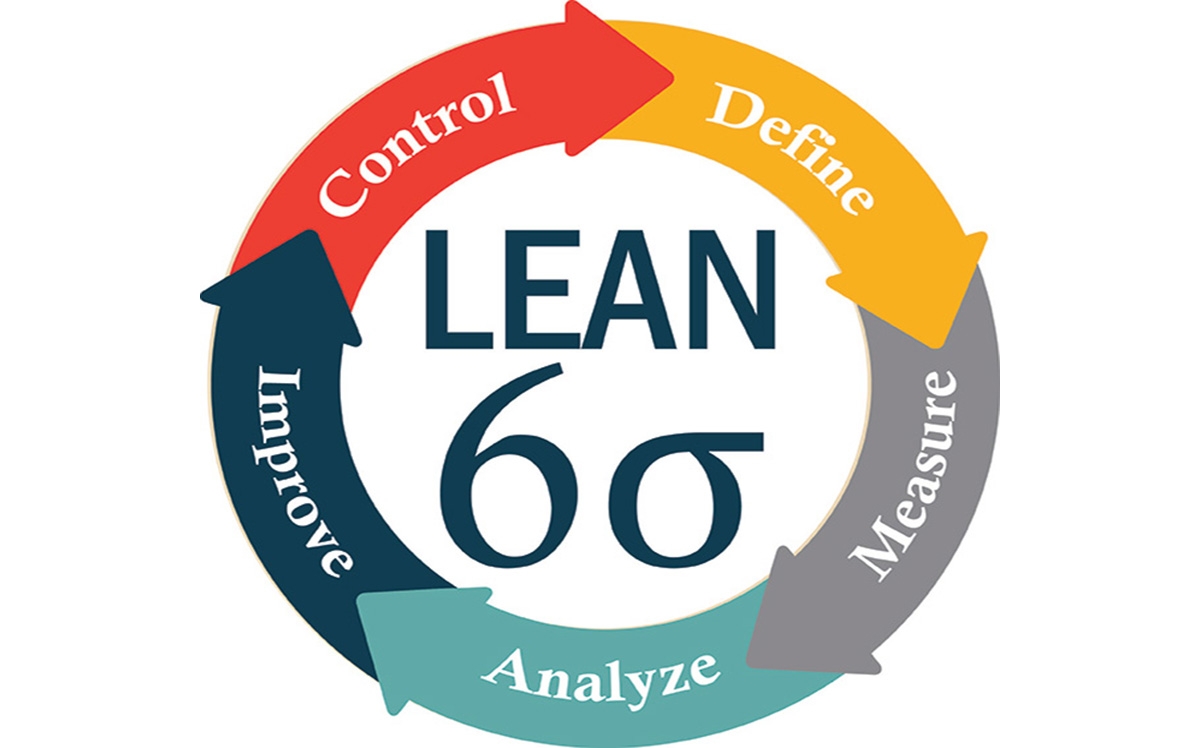
Course Duration
From 2 days to 10 days, depending on the level: Lean Process and Six Sigma Training 2 days, Yellow Belt 4 days, Green Belt 6 days and Black Belt 10 days.
What affects Six Sigma training costs in South Africa
The cost of Six Sigma training depends on a few clear factors:
- The belt level and the number of training days.
- How many delegates you send.
- Whether training runs in-house, at BOTI’s venue or online.
- Whether you want the content built around your own processes and data.
In-house training for a group is often the most practical option when several people need the same level, because the team can work on real problems from your own workplace. Tell us the belt level, your group size and your preferred format, and we will request a quote for you.
Six Sigma and project management training in South Africa
Six Sigma and project management overlap. Every improvement is run as a project, with a charter, a scope, a sponsor and milestones. If your team also needs core project skills, Project Management Fundamentals (2 days) covers planning, scheduling and controlling a project.
For a formal qualification, BOTI offers the Occupational Certificate: Project Manager (SAQA ID 101869). It ends in an External Integrated Summative Assessment (EISA), and the QCTO issues the certificate. The last date for enrolment is 30 December 2026[1].
Who should attend
These courses suit anyone who wants to improve business processes and build their career. That includes operations and production staff, supervisors, quality and continuous improvement teams, and managers who sponsor improvement projects.
Testimonials
“Six Sigma was concise, lively and informative.”
“Very informative, systematic approach.”
“From my side everything went well.”
“Learning how to improve the process and avoid waste as much as we can.”
Accreditation
BOTI’s Lean Six Sigma courses are professional skills programmes. They are not QCTO or SETA qualifications. Each Lean Six Sigma belt course (Yellow, Green and Black Belt) also includes an international certification exam, written online in class at the end of the course.
Frequently asked questions
How much do Six Sigma training courses cost in South Africa?
The cost depends on the belt level, the number of training days, the number of delegates and whether training runs in-house, at BOTI’s venue or online. BOTI quotes for each group, so share your belt level, group size and preferred format to get an accurate quote.
Which Six Sigma course should I start with?
Start with the 2-day Lean Process and Six Sigma Training or the 4-day Yellow Belt if you are new to the method. Choose the Green Belt if you will lead improvement projects in your own area, and the Black Belt if you will lead larger cross-functional projects and coach others.
How long is a Six Sigma course?
At BOTI, Lean Process and Six Sigma Training takes 2 days, the Yellow Belt 4 days, the Green Belt 6 days and the Black Belt 10 days.
Is Six Sigma the same as project management training?
No. Six Sigma is a method for improving processes and reducing defects, while project management covers planning and delivering any kind of project. The two work well together, because Six Sigma improvements are run as projects. BOTI offers both short project management courses and the QCTO Occupational Certificate: Project Manager.
Please Contact Us
Phone us to speak to one of our consultants: 011 882 8853
Or fill in the form to request a quote:
Or email us: [email protected]
To bring Lean thinking and Six Sigma problem solving to your team, book Lean Process and Six Sigma Training, or step up to the Yellow, Green or Black Belt. Training runs in-house at your premises, at BOTI’s venue in Sunningdale, Johannesburg, or live online. Call BOTI on 011 882 8853 or email [email protected]. This course is not accredited. It is delivered as a professional skills programme, and delegates receive a BOTI certificate of attendance.
Sources
- SAQA qualification record 101869: Occupational Certificate: Project Manager – South African Qualifications Authority (SAQA), 2026.

Conscious Sedation Courses: What Nitrous Oxide Sedation Training Covers
A conscious sedation course trains registered dentists, doctors and nurses to give nitrous oxide and oxygen (inhalation sedation) safely, so that anxious patients stay awake, relaxed and able to respond during treatment. BOTI does not run conscious sedation, nitrous oxide or dental sedation courses. These are clinical programmes for registered health professionals. BOTI does train the teams who run dental and medical practices, and you can see those courses in our health, safety and wellness training courses.
Course Introduction
Nitrous oxide/oxygen conscious sedation is a technique used in dentistry and minor medical procedures to manage anxiety and pain without general anaesthesia. Training in the technique is offered to registered practitioners as continuing professional development. This guide explains what a typical conscious sedation course covers, who can attend and how to judge whether a course is right for you. It also shows how BOTI can support the rest of your practice team.
Course Outline: what a conscious sedation course typically covers
Most nitrous oxide sedation courses combine a theory component, often studied before the practical, with a supervised practical session. The topics below are typical of the theory part.
Part 1: Theoretical considerations
- Introduction and historical overview
- Overview of the clinical uses of nitrous oxide/oxygen sedation
- The concept of anxiety and pain
- Basic physiology of pain and the endogenous opioid system
- Nitrous oxide interactions with the endogenous opioid system, and how this relates to pain and anxiety control
- Methods of pain and anxiety management, and where nitrous oxide/oxygen sedation fits
- Differences between nitrous oxide/oxygen sedation and general anaesthesia
- Physical and chemical properties of nitrous oxide
- Clinical respiratory anatomy and physiology
- Pharmacology of nitrous oxide/oxygen sedation
- Practical aspects of nitrous oxide/oxygen sedation:
- A. Patient assessment
- B. Importance of titration
- C. Monitoring the patient
- D. Patient involvement
- E. Endpoint or comfort zone, and the ethics of using the correct concentration
- F. Terminating administration
- G. Patient recovery
- H. Equipment, safety and pollution (scavenging) control
Ethical considerations
- Ethical responsibilities of the practitioner
- Prudent practice guidelines
- Ethics of building a practice that offers sedation
The theory component is usually assessed, for example by a multiple-choice test, before the delegate moves on to the practical.
Part 2: Practical Training
- Revision of the key practical, ethical and theoretical points
- Practical demonstration of the nitrous oxide/oxygen sedation technique, with delegate participation and an emphasis on using the technique correctly and ethically
- Questions on nitrous oxide/oxygen sedation
- Conclusion and question time
Customised training for your team. BOTI tailors this course to your organisation and runs it in-house at your premises, at its venue in Sunningdale, Johannesburg, or live online. Request a quote or call 011 882 8853.
How to choose a conscious sedation or nitrous oxide course
Because sedation is a clinical skill, the questions to ask are different from those for a workplace short course. Before you enrol, check the following:
- Who may attend. Courses are meant for registered practitioners such as dentists, medical doctors and suitably registered nurses. Confirm that your registration category allows you to administer sedation.
- CPD recognition. Ask how many continuing professional development points the course carries, including ethics points, and confirm this with your professional council.
- A supervised practical. Theory alone does not make a practitioner competent. Look for a course that includes hands-on administration under supervision.
- Scope. A nitrous oxide course covers inhalation sedation only. Intravenous or oral sedation needs separate training.
- Equipment and safety. The course should cover your own equipment, scavenging to limit staff exposure, and emergency procedures in your practice.
Who should attend
Conscious sedation courses are designed for professionals: dentists, doctors and other registered medical practitioners who want to offer nitrous oxide/oxygen sedation to their patients.
Prior learning requirements
Registration as a medical, dental or nursing practitioner is normally required.
How BOTI supports dental and medical practice teams
A practice that offers sedation also needs a safe workplace, careful handling of patient records and calm, professional front-desk staff. BOTI runs practical short courses for those parts of the work:
- Occupational Health and Safety (OHS) Course: duties under health and safety law, hazard identification and safe work practices.
- Incident and Accident Investigation Training: how to record and investigate incidents and prevent repeats.
- POPIA Basic Training: handling patient personal information lawfully.
- Reception and Telephone Etiquette Training: for the staff who greet patients and book appointments.
- Handling a Difficult Customer Course: calm responses to anxious or upset patients.
- Stress Management Training: for busy clinical and support teams.
Book or Obtain a Quote
BOTI’s courses for practice teams can run at your rooms, online or at BOTI’s venue. Use the button below to ask for a proposal:
Or browse all our courses, run at your offices, online or at a BOTI venue:
Tel: 011 882 8853
Or fill in the form below and a BOTI consultant will contact you.
[email protected]
Frequently asked questions
What does a conscious sedation course cover?
A conscious sedation course with nitrous oxide usually covers the physiology of pain and anxiety, the pharmacology of nitrous oxide, patient assessment, titration, monitoring, recovery, equipment safety and the ethics of sedation. It ends with a supervised practical session.
Who can attend a nitrous oxide sedation course for dentists?
These courses are for registered health professionals such as dentists, medical doctors and suitably registered nurses. Confirm with your professional council that your registration allows you to administer sedation.
Does BOTI offer a dental sedation course or sedation certificate?
No. BOTI does not run conscious sedation, nitrous oxide or dental sedation courses. BOTI trains practice teams in occupational health and safety, incident investigation, POPIA, reception skills and handling difficult patients.
Does a nitrous oxide course cover other forms of sedation such as ketamine or propofol?
No. A nitrous oxide/oxygen course covers inhalation sedation only. Intravenous and other forms of sedation require separate clinical training.
If your practice needs a safer workplace and a team that knows its legal duties, the BOTI course to start with is the Occupational Health and Safety (OHS) Course. Training runs in-house at your premises, at BOTI’s venue in Sunningdale, Johannesburg, or live online. Call BOTI on 011 882 8853 or email [email protected], or request a quote. This course is not accredited. It is delivered as a professional skills programme, and delegates receive a BOTI certificate of attendance.
BOTi – Get On Course

Employment Equity Fundamentals Training
Employment equity training shows HR managers, employment equity committee members and line managers what the Employment Equity Act (EEA) requires and how to meet it in practice: the workforce analysis, consultation, the employment equity plan and annual reporting. BOTI runs Employment Equity Fundamentals Training as a 2-day course. It is one of our human resources, labour and employment equity courses.
Related: Employee Onboarding Training Course.

Course Introduction
Meet Your Equity Targets with our Employment Equity Fundamentals Training Course
This course gives you a broad understanding of the Employment Equity Act. It also helps you understand the link between skills development, employment equity, B-BBEE and your organisation’s strategy.
The course suits HR managers and practitioners, skills development facilitators, members of the employment equity committee, employee and union representatives, and the senior manager assigned to implement the employment equity plan. Delegates leave knowing what the law asks of a designated employer, how to run consultation properly and how to build, monitor and report on a workable plan.
Course Outline
1. History of Learning and Development in South Africa:
- Evolution of learning and development in South Africa.
- Milestones and key developments shaping the educational landscape.
- Historical context influencing current practices.
2. Overview of the National Qualifications Framework:
- Structure and components of the National Qualifications Framework (NQF).
- Its role in organising and recognising qualifications.
- Alignment with international standards.
3. Certification and Assessment:
- Processes involved in certification.
- Assessment methods and criteria.
- Ensuring credibility and reliability.
4. Credibility of Practitioners and Providers:
- Criteria for evaluating the credibility of educators and training providers.
- Standards for professional development.
- Ensuring quality in education delivery.
5. Transformational Legislation:
- Legislation driving transformative changes in skills development.
- Legal frameworks shaping the training landscape.
- Intersection of legislation with organisational goals.
6. Linking Skills Development to Legislation:
- Connecting skills development initiatives with legal requirements.
- Strategies for alignment with legislative goals.
- Working within legal frameworks for effective implementation.
7. Compliance and Ethics:
- Ethical considerations in skills development.
- Ensuring compliance with ethical standards.
- Ethical decision-making in training practices.
8. Statutory Reporting:
- Requirements and processes for statutory reporting.
- Documentation and reporting standards.
- Ensuring accuracy and transparency in reporting.
9. Employment Equity:
- Understanding the concept and importance of employment equity.
- Legal frameworks governing employment equity.
- Impact on organisational diversity and inclusion.
10. Statutory Responsibilities – Reporting and Compliance:
- Employer obligations in reporting and compliance.
- Legal responsibilities related to employment equity.
- Aligning practices with statutory requirements.
11. Setting up an Employment Equity Committee:
- Establishing and structuring an effective committee.
- Roles and responsibilities of committee members.
- Ensuring diversity and representation.
12. Monitor and Evaluate Implementation:
- Developing monitoring and evaluation strategies.
- Assessing the effectiveness of implemented policies.
- Feedback mechanisms for continuous improvement.
13. Construct an EE Blueprint for your Organisation:
- Creating an employment equity blueprint for your organisation.
- Integrating legislative requirements and organisational goals.
- Strategic planning for implementation.
14. Reporting on the Implementation of EE:
- Communicating progress and challenges clearly.
- Transparency in reporting practices.
- Continuous improvement based on what the reports show.
Course duration
2 days
Book This Course or Request a Quote
We run this course in-house at your premises anywhere in South Africa, at our venue in Sunningdale, Johannesburg, or live online, and we can tailor it to your organisation. Use the button below to book, or request a quote for your Employment Equity course.
Book This Course Or Obtain Quote – Now
Please Phone Us Now To Speak to One of Our Friendly Consultants
Tel: 011 882 8853
OR
FOR CELL PHONES CLICK TO CALL
Please Fill in the Form
Please Email Us
[email protected]
The essentials of how to create an employment equity plan: employers can tailor the plan to their own needs

Introduction to the important elements surrounding the creation and implementation of an Employment Equity Plan
This section introduces the important elements of creating and implementing an employment equity plan, as well as affirmative action (AA) and employment equity (EE) in general. The subject is complex, but if you follow the Act, its regulations and the official guidance, the process runs smoothly.
Important factors to be borne in mind
This section also covers critical factors to bear in mind and important documents such as the Code of Good Practice and the user guide published by the Department of Employment and Labour. BOTI’s Employment Equity Fundamentals Training Course takes your team through the detail so that your plan, consultation and reports stand up to scrutiny.
A brief overview of the Employment Equity Plan
Every designated employer must design and implement an employment equity plan. The purpose of the plan is to enable the employer “to achieve reasonable progress towards employment equity”, to help eliminate unfair discrimination in the workplace, and to achieve equitable representation of employees from designated groups through affirmative action measures.
An employment equity plan must set out the steps the employer plans to follow
An employment equity plan must therefore clearly set out the steps the employer will follow to achieve these objectives.
The Department of Employment and Labour has published a Code of Good Practice
To assist employers, the department has published a Code of Good Practice on the Preparation, Implementation and Monitoring of Employment Equity Plans.
10 steps to preparing and implementing an employment equity plan
The department has also published a user guide to the Employment Equity Act, which sets out 10 steps to preparing and implementing an employment equity plan. Every designated employer should have both documents, the Code of Good Practice and the user guide, and should check that it is working from the current versions.
An employment equity plan may be customised
There is no rigid format for an employment equity plan. The Act allows employers to tailor the plan to their own needs, provided it contains what section 20 requires.
Employment equity and affirmative action (AA) apply to all designated employers and their employees
Employment equity and affirmative action apply to all designated employers and their employees, particularly employees from designated groups.
Designated employers
Designated employers are employers with 50 or more employees, municipalities, organs of state, and employers designated by a collective agreement. An employer can also choose to comply voluntarily. The amended Act no longer uses an annual-turnover test to designate employers with fewer than 50 employees. It also allows the Minister to set sectoral numerical targets, which designated employers must take into account when they set their own targets. Read more in our article on the Employment Equity Act amendments.
Exclusions
Certain state bodies are excluded, such as the National Defence Force, the National Intelligence Agency and the South African Secret Service.
Designated groups
Designated groups are African, Coloured and Indian people, women of all races, and people with disabilities. Designated employers must report on their employment equity plans every year, in the submission window the Department of Employment and Labour publishes. Check the current window before you plan your reporting cycle.
Employers are required to take certain affirmative action measures to achieve employment equity
Chapter 3 of the Employment Equity Act requires designated employers to take affirmative action measures to achieve employment equity. These are:
- Employers must consult with unions and employees so that the plan is accepted by everyone concerned and all parties can give fair input.
- Employers must analyse all employment policies, practices and procedures and prepare a profile of their workforce to identify any barriers to employment equity.
- Employers must prepare and implement an employment equity plan that sets out the affirmative action measures they intend to take to reach their employment equity targets.
- Employers must report to the Department of Employment and Labour on the implementation of the plan, so that the department can monitor compliance with the Act.
- Employers must display a summary of the provisions of the Act in the languages relevant to their workforce. The department publishes the prescribed summary.
Want to learn how to create and implement an employment equity plan and how it links to your B-BBEE scorecard? BOTI’s Employment Equity Fundamentals Training Course covers both.

Implementation of Employment Equity (EE)
These documents are relevant when you implement employment equity:
- The Code of Good Practice on the Preparation, Implementation and Monitoring of Employment Equity Plans
- The Employment Equity Act itself
- The Regulations under the Employment Equity Act
- The user guide published by the Department of Employment and Labour
The Code of Good Practice is not law but still needs to be taken into account
The Code of Good Practice is not law. It is published as a guide for employers and gives useful practical guidance. Even though it is not law, employers must take it into account.
Guide to the creation of the Employment Equity Plan
Every designated employer must have an employment equity plan in place that clearly states the objectives, affirmative action measures, timetables, duration, procedures and responsibilities that will be implemented.
ApplicationThe Employment Equity Act applies to all employers, workers and job applicants, but excludes members of: · The National Defence Force · The National Intelligence Agency · The South African Secret Service Who do the provisions of the Act apply to?The affirmative action provisions apply to:
To whom does The Employment Equity Act apply?The Employment Equity Act applies to all employers and workers and protects workers and job seekers from unfair discrimination. It also provides a framework for implementing affirmative action. Click here for further details on what the Act entails: Employment Equity Act Preparation and implementation of the Employment Equity PlanDesignated employers must prepare and implement an employment equity plan that will enable them to reach their employment equity targets in the workplace. What should be included in the Employment Equity Plan?Under section 20 of the Employment Equity Act, an employment equity plan must include:
Also under section 20 of the Employment Equity Act:
|

Book This Course or Request a Quote
We run tailored employment equity training in-house anywhere in South Africa, at our Sunningdale venue or live online. Use the button below to book or to ask for a proposal for your Employment Equity course.
Book This Course Or Obtain Quote – Now
Please Phone Us Now To Speak to One of Our Friendly Consultants
Tel: 011 882 8853
OR
FOR CELL PHONES CLICK TO CALL
Please Fill in the Form
Please Email Us
[email protected]
Frequently asked questions
What is employment equity training?
Employment equity training explains what the Employment Equity Act requires of an employer and how to meet it in practice. It covers unfair discrimination, designated employers and designated groups, the workforce analysis, consultation with employees, the employment equity plan, income differentials and annual reporting to the Department of Employment and Labour.
Who should attend employment equity committee training?
HR managers and practitioners, skills development facilitators, members of the employment equity committee, union and employee representatives, and the senior manager assigned to implement the employment equity plan. Line managers who recruit, promote and develop staff also benefit, because the plan depends on their decisions.
What must an employment equity plan include?
Under section 20 of the Act, the plan sets out yearly objectives, the affirmative action measures to be implemented, numerical goals and timetables where designated groups are under-represented, the duration of the plan (one to five years), how implementation will be monitored and evaluated, how disputes about the plan will be resolved, and the people responsible for implementing it.
How long is BOTI’s employment equity course and where does it run?
Employment Equity Fundamentals Training runs over 2 days. BOTI presents it in-house at your premises, at its venue in Sunningdale, Johannesburg, or live online, and it can be tailored to your organisation’s employment equity plan and committee.
Book employment equity training for your team
To prepare your HR team and employment equity committee for consultation, planning and annual reporting, book Employment Equity Fundamentals Training. If you also need to understand how skills development and employment equity feed into your scorecard, add B-BBEE Fundamentals Training. Training runs in-house at your premises, at BOTI’s venue in Sunningdale, Johannesburg, or live online. Call BOTI on 011 882 8853 or email [email protected].
This course is not accredited. It is delivered as a professional skills programme, and delegates receive a BOTI certificate of attendance.
You might also like: Labour Relations and Labour Law Fundamentals
People Management: Labour Relations & Law, Employment Equity Course

Trading Courses in South Africa: Short-Term Investing and Trading Basics
BOTI does not run a separate short-term investing and trading course. If you are looking for trading courses in South Africa, the closest BOTI option is the two-day Long-Term Investing and Trading Course, delivered in-house, at our Johannesburg venue or live online. You can see it alongside our other finance and investment short courses, and the guide below explains what short-term trading training should cover and how to choose a course.

Course Introduction: Short term Investing & Trading Training
Online trading platforms have made it easy for individuals to buy and sell shares, currencies and derivatives from a laptop or phone. Easy access does not make trading simple. Without a grounding in how markets move and how to control risk, new traders tend to lose money quickly.
A sound trading short course gives you a firm foundation. It covers the techniques traders use to find trading opportunities, the most commonly used trading instruments, and the human frailties a trader must overcome, such as fear, greed and overconfidence. It also explains why you need a trading system and walks through the basics of setting one up.
Because BOTI has no stand-alone short-term version, delegates who want this foundation can book the Long-Term Investing and Trading Course. Ask BOTI to confirm the current outline before you book.
Course Outline: Investing & Trading Training
A foundation course in short-term trading normally covers these topics:
- The emergence of day trading
- Technical analysis – Theory
- Practical charting
- Introduction to derivatives
- Derivatives in South Africa
- Behavioural psychology and trading
- Creating a trading system
What a short-term trading course should cover
Technical analysis and charting. Short-term traders rely mainly on price charts. You should learn to read candlestick and line charts, identify trends, support and resistance levels, and use common indicators such as moving averages. A good course has you practise on real charts rather than only explaining the theory.
Trading instruments. You need to understand what you are trading. This includes shares, exchange-traded products and derivatives such as futures, options and contracts for difference. You should know how leverage works, because it magnifies losses as well as gains.
Risk and money management. This is the part many beginners skip. You should learn to size positions, set stop-losses, decide how much of your capital you are prepared to risk on a single trade, and keep a trading record.
Trading psychology. Behavioural psychology explains why traders hold losing positions too long, close winning trades too early, or trade too often after a loss. Recognising these habits is as important as any chart pattern.
Building a trading system. A trading system is a written set of rules: what you trade, when you enter, when you exit and how much you risk. A course should show you how to draft one, test it on past data and review it honestly.
Short-term trading versus long-term investing
Short-term trading aims to profit from price movements over minutes, days or weeks. It needs regular screen time, quick decisions and strict risk control. Long-term investing aims to grow wealth over years by holding assets and focusing on the underlying value of companies or funds rather than daily price swings.
Many people start with an interest in trading and realise that a long-term approach suits their time and temperament better. Understanding both helps you choose deliberately. BOTI’s related article on long-term investing and trading training explains the longer-term view in more detail.
How to choose a trading course in South Africa
- Be wary of profit promises. No course can guarantee returns. Treat any offer that promises fixed monthly income or “risk-free” trading as a warning sign.
- Separate education from selling. Some trading “courses” exist mainly to open brokerage accounts or sell signals and mentorship subscriptions. A training course should teach you to make your own decisions.
- Check the broker separately. Before you deposit money with any broker, confirm that it is authorised by South Africa’s financial sector regulator.
- Look at the outline. A balanced course spends real time on risk management and psychology, not only on chart patterns.
- Practise first. Use a demo account to test your system before you risk your own capital.
Course duration and quotes: Short term Investing & Trading Training
The closest BOTI course, the Long-Term Investing and Trading Course, runs over two days. It is designed so that the knowledge can be applied practically. Please consult the schedule or contact BOTI for a quote.
If you are looking for trading courses in Cape Town or elsewhere outside Gauteng, live online training lets you attend from anywhere. Companies can also book the training in-house at their own premises.
Recommended Prior Experience and Knowledge: Short term Investing & Trading Training
The training suits individuals who want to start trading or investing their own money, and employees in finance, sales or administration who want to understand how markets and investment products work.
No prior trading experience is required. Basic computer skills help, because charting is done on screen. If you want to build your spreadsheet skills for tracking trades, look at Analysing Data with Excel or Excel Pivot Tables, Dashboards and Power Pivot. If you want to read company results before you invest, consider Finance for Non-Financial Managers Training or the Budgets and Financial Reports Course.
Frequently asked questions
Does BOTI offer trading courses in South Africa?
BOTI does not run a separate short-term trading course. The closest BOTI course is the Long-Term Investing and Trading Course, a two-day course that introduces investing and trading for individuals and teams.
Can I do a trading course online or in Cape Town?
Yes. BOTI runs training live online, so you can attend from Cape Town or anywhere else. Companies can also book the course in-house at their own premises, or attend at BOTI’s venue in Sunningdale, Johannesburg.
Do I need trading experience before a trading short course?
No prior trading experience is needed. Basic computer skills help, because charting and analysis are done on screen.
Will a trading course guarantee that I make a profit?
No. No course can guarantee trading profits. A good course teaches you how markets work, how to manage risk and how to build and test your own trading system.
Is the investing and trading course accredited?
No. It is a professional skills programme, and delegates receive a BOTI certificate of attendance.
Book Now or Obtain a Quote
To build a practical foundation in markets, trading instruments and risk, book the Long-Term Investing and Trading Course. Training runs in-house at your premises, at BOTI’s venue in Sunningdale, Johannesburg, or live online. Call BOTI on 011 882 8853 or email [email protected], or request a quote. This course is not accredited. It is delivered as a professional skills programme, and delegates receive a BOTI certificate of attendance.
Book This Course Or Obtain Quote – Now
Please Phone Us Now To Speak to One of Our Friendly Consultants
Tel: 011 882 8853
OR
FOR CELL PHONES CLICK TO CALL
Please Fill in the Form
Please Email Us
[email protected]

ICT Training: Short Courses for Teams

ICT training for teams
ICT (information and communication technology) training gives staff the computer skills their work depends on: using Windows and Microsoft 365, writing documents, managing email, building spreadsheets, reporting on data and, for some roles, writing code. For most organisations, ICT training is less about technical IT support and more about helping everyone work faster and with fewer errors on the systems they already have.
Related: Programming and Coding Courses in South Africa.
BOTI’s ICT short courses in South Africa run from computer basics and Microsoft Office through to Excel, Power BI, SQL querying and Python. This guide sets out the levels, who each one suits and how to choose the right starting point for each person. To compare every option, browse our ICT and computer skills courses, from Introduction to Computers to Python programming.
ICT short courses: five levels
1. Computer basics and digital safety
For staff who are new to computers or never had formal training. Introduction to Computers and Microsoft Office Basics (2 days) starts from switching the computer on: Windows, files and folders, saving and backing up, safe email and internet use, and first steps in Word, Excel and Outlook. Improving Your Typing Skills: Touch Typing Course (1 day) builds typing speed and accuracy, and Cyber Security Awareness Training (1 day) teaches non-technical staff to spot phishing, scams and risky habits.
2. Microsoft Office and Microsoft 365
For people who use a computer but not yet the Office programs. Microsoft Office Essentials: Word, Excel and PowerPoint Beginners (3 days) covers the three core programs, and Microsoft Office All-in-One (5 days) adds computer basics and Outlook. Separate courses take Word, PowerPoint and Outlook from beginner to advanced level. Microsoft SharePoint End User Training for Microsoft 365 (1 day) covers shared sites and document libraries, and Microsoft Copilot for Productivity (1 day) shows staff how to use the AI assistant in Microsoft 365 for everyday tasks.
3. Excel
Excel has its own ladder. Microsoft Excel Beginners (1 day) covers entering and formatting data, basic formulas and charts. Microsoft Excel Intermediate (1 day) adds lookups, conditional totals and pivot tables, and Microsoft Excel Advanced (1 day) moves on to advanced functions and what-if analysis. Microsoft Excel Beginners to Advanced (3 days) covers all three levels for a group, and Writing Excel Macros with VBA (3 days) automates repetitive reports.
4. Data and reporting
For analysts, managers and anyone who builds reports. Data Analytics Fundamentals with Excel and Power BI (3 days) teaches the analysis process from the business question to the presentation. Microsoft Power BI Basics (3 days) turns spreadsheets and databases into interactive reports and dashboards, and Getting Started with Microsoft SQL Server: SQL Querying (2 days) teaches staff to pull data straight from a database.
5. Programming
For staff who want to automate tasks and work with data in code. The Python Short Course: Introduction to Programming with Python (2 days) needs no programming experience, and Python Programming Training (5 days) goes on to object-oriented programming, data analysis and automating files and Excel workbooks.
How to choose the right ICT course
- Start with the work, not the software. List the tasks each person does every week and where time is lost: retyping data, rebuilding the same report, searching for files.
- Check each person’s level before you book. Ask delegates what they can already do, so that nobody sits through what they know or struggles to keep up.
- Group people by level. A class works well when delegates are at a similar level. A mixed team can split across two courses.
- Match the software version. Tell us whether your team uses Microsoft 365 or an older version of Office, so that the training matches the screens they see at work.
- Plan the next step. ICT skills build on each other. Practising at work between one level and the next helps the skills stick.
ICT training formats and certificates
BOTI runs its ICT courses in-house at your premises anywhere in South Africa, at its venue in Sunningdale, Johannesburg, or online. In-house training suits a group from one department, the venue suits individuals and small groups, and online training suits staff spread across different offices. Every course is hands-on, with each delegate working at a computer, and laptops with the software can be supplied on request.
BOTI’s ICT short courses are not accredited. They are delivered as professional skills programmes, and delegates receive a BOTI certificate of attendance. The National Certificate: IT End User Computing (SAQA 61591) closed to new enrolments on 30 June 2026[1] and continues only for learners who are already enrolled.
Book or request a quote
Tell us which course you need, how many delegates you have and where they are based, and we will send a quote for in-house, venue or online training.
Or browse all our courses – run at your offices, online or at a BOTI venue:
Speak to a BOTI consultant
Phone 011 882 8853 or email [email protected], or fill in the form and we will get back to you.
Frequently asked questions
What ICT short courses does BOTI offer?
BOTI’s ICT short courses cover computer basics, Microsoft Office (Word, Excel, PowerPoint, Outlook, Project and SharePoint), Excel from beginner to advanced, Power BI, SQL Server querying, Python programming, Sage Pastel, CorelDRAW, Adobe software and AutoCAD. Each is a practical course for working staff, run in-house at your premises, at BOTI’s venue in Sunningdale, Johannesburg, or online.
Which ICT course should a beginner start with?
If you are new to computers, start with Introduction to Computers and Microsoft Office Basics, a two-day course. If you can already use a computer but not Office, Microsoft Office Essentials covers Word, Excel and PowerPoint for beginners over three days. From there you can move up the Excel courses, from Beginners to Intermediate and then Advanced.
Are BOTI’s Microsoft Office and computer short courses accredited?
No. The courses in BOTI’s Microsoft Office and computer skills range are delivered as professional skills programmes, not as accredited qualifications, and delegates receive a BOTI certificate of attendance. Each course page sets out the topics covered and the number of days, so you can match the course to the skills your team needs.
How long are ICT short courses?
Many of BOTI’s ICT short courses run for one to three days. For example, Microsoft Excel Beginners is one day, Introduction to Computers and Microsoft Office Basics is two days, and Microsoft Office Essentials is three days. Longer options include Python Programming Training and the Microsoft Office All-in-One course, which run for five days each.
Can ICT training be done online or at our offices?
Yes. BOTI runs its ICT courses in three formats: in-house at your premises, at BOTI’s venue in Sunningdale, Johannesburg, or online. Tell us how many delegates you have, where they are based and which software version they use, and we will recommend the format. Call 011 882 8853 or email [email protected].
If you already work confidently in Excel and want to take your skills further, book the Microsoft Excel Advanced course. BOTI runs it in-house at your premises, at our venue in Sunningdale, Johannesburg, or online, and delegates receive a BOTI certificate of attendance. Call 011 882 8853 or email [email protected].
Sources
- National Certificate: Information Technology: End User Computing (SAQA ID 61591) – qualification record – South African Qualifications Authority (SAQA), 2026.

BOTi Courses Overview – MCSA: SQL Server 2014 Training

Course Introduction
This course teaches the skills and knowledge required to maintain a Microsoft SQL Server 2014 database and how to use SQL Server 2014 product tools and features related to maintaining a database.
Course Outline
Key outcomes of this course include:
Module 1-7
- Install and Plan SQL Server
- Knowledge of system databases, the physical foundation of databases, popular configuration options
- Understand the use of the SQL Server recovery models and the transaction log
- Using SQL Server logins, users, security models and contained databases
- Strategies for backing up that are available with SQL Server
- Back up and restore SQL Server databases
- Export and import data by utilizing wizards, data-tier applications and the utility for bulk copy
- Configure database alerts, notifications and mail
- Produce database plans for maintenance
- Utilize SQL Trace, SQL Server Profiler and Distributed Relay
- Utilize Distributed Management Views and configure data collection
- Understand database and server roles, permissions to secure resources
- Utilizing proxy accounts, and credentials, SQL Server Agent security,
- SQL Server audit utilization and Data Encryption (transparent)
- Using SQL Server Agent for configuration and job execution
Module 8: Assigning Server and Database Roles
This module covers fixed server roles, user-defined server roles, fixed database roles, and user-defined database roles.
- Lessons
- Working with Server Roles
- Working with Fixed Database Roles
- Creating User-defined Database Roles
- Lab : Assigning Server and Database Roles
- Assigning Server Roles
- Assigning Fixed Database Roles
- Creating and Assigning User-defined Database Roles
- Checking Role Assignments
- After completing this module, you will be able to:
- Assign fixed server roles
- Configure fixed database roles
- Create and assign user-defined database roles
Module 9: Authorizing Users to Access Resources
This module covers permissions and the assignment of permissions.
Lessons
- Authorizing User Access to Objects
- Authorizing Users to Execute Code
- Configuring Permissions at the Schema Level
- Lab : Authorizing Users to Access Resources
- Assigning Schema-level Permissions
- Assigning Object-level Permissions
- Testing Permissions
- After completing this module, you will be able to:
- Grant, revoke, and deny permissions on objects
- Configure permissions on executable code
- Configure permissions at schema level
Module 10: Protecting Data by Using Encryption and Auditing
This module describes the available options for auditing in SQL Server, how to use and manage the SQL Server audit feature, and how to implement encryption.
- Lessons
- Options for Auditing Data Access in SQL Server
- Implementing SQL Server Audit
- Managing SQL Server Audit
- Protecting Data by Using Encryption
- Lab : Using Auditing and Encryption
- Determining Audit Configuration and Creating an Audit
- Creating Server Audit Specifications
- Creating Database Audit Specifications
- Testing Audit Functionality
- Using Transparent Data Encryption
- After completing this module, you will be able to:
- Describe options for auditing data access
- Implement SQL Server audit
- Manage SQL Server audit
- Implement Transparent Data Encryption
Module 11: Automating SQL Server 2014 Management
This module describes how to use SQL Server Agent for automation. It also explains the benefits of using master and target servers to centralize the administration of automation.
- Lessons
- Automating SQL Server Management
- Working with SQL Server Agent
- Managing SQL Server Agent Jobs
- Multi-Server Management
- Lab : Automating SQL Server Management
- Creating a Job
- Scheduling a Job
- Troubleshooting a Failing Job
- Creating a Multi-Server Job
- After completing this module, you will be able to:
- Describe methods for automating SQL Server management
- Configure jobs, job step types, and schedules
- Manage SQL Server Agent jobs
- Configure master and target servers
Module 12: Configuring Security for SQL Server Agent
This module describes the considerations for SQL Server Agent security, including proxy accounts and credentials.
- Lessons
- Understanding SQL Server Agent Security
- Configuring Credentials
- Configuring Proxy Server Accounts
- Lab : Configuring Security for SQL Server Agent
- Troubleshooting Job Execution Failure
- Resolving Security Issues
- Performing Further Troubleshooting
- After completing this module, you will be able to:
- Describe the security context for SQL Server Agent jobs
- Configure credentials
- Configure proxy accounts
Module 13: Monitoring SQL Server 2014 by Using Alerts and Notifications
This module covers the configuration of database mail, alerts, and notifications.
- Lessons
- Configuring Database Mail
- Monitoring SQL Server Errors
- Configuring Operators, Alerts, and Notifications
- Lab : Monitoring SQL Server by Using Alerts and Notifications
- Configuring Database Mail
- Implementing Notifications
- Implementing Alerts
- After completing this module, you will be able to:
- Configure Database Mail
- Monitor SQL Server errors
- Configure operators, alerts, and notifications
Module 14: Performing Ongoing Database Maintenance
This module covers database maintenance plans.
- Lessons
- Ensuring Database Integrity
- Maintaining Indexes
- Automating Routine Database Maintenance
- Lab : Performing Ongoing Database Maintenance
- Check Database Integrity by Using DBCC CHECKDB
- Correcting Index Fragmentation
- Creating a Database Maintenance Plan
- Investigating Table Lock Performance
- After completing this module, you will be able to:
- Maintain database integrity by using DBCC CHECKDB
- Maintain indexes
- Configure database maintenance plans
Module 15: Tracing Access to SQL Server 2014
This module describes how to use SQL Server Profiler and SQL Trace stored procedures to capture information about SQL Server. It also describes how to use Distributed Replay to capture trace information from multiple servers and how to monitor locking.
- Lessons
- Capturing Activity by Using SQL Server Profiler
- Improving Performance by Using the Database Engine Tuning Advisor
- Working with Tracing Options
- Distributed Replay
- Monitoring Locks
- Lab : Tracing Access to SQL Server
- Capturing a Trace by Using SQL Server Profiler
- Analyzing a Trace by Using the Database Engine Tuning Advisor
- Configuring SQL Trace
- After completing this module, you will be able to:
- Configure SQL Server Profiler traces and review captured traces
- Use the Database Engine Tuning Advisor
- Understand SQL Server advanced tracing concepts
- Use Distributed Replay
- Monitor locking
Module 16: Monitoring SQL Server 2014
This module explains how to use Distributed Management Views to monitor SQL Server. It also describes how to configure data collection and the SQL Server Utility.
- Lessons
- Monitoring Activity
- Capturing and Managing Performance Data
- Analyzing Collected Performance Data
- SQL Server Utility
- Lab : Monitoring SQL Server
- Creating a Utility Control Point
- Configuring a Health Policy
- Configuring Instances for Data Collection
- Working with Data Collector Reports
- After completing this module, you will be able to:
- Monitor activity in SQL Server
- Configure data collection
- View reports from data collection
- Configure a SQL Server Utility
Course duration
2 days
Who should attend
This course is designed for the following attendees:
Individuals who maintain and administrate SQL Server databases and those
who develop applications that provide content from SQL Server databases.
Prior learning requirements
For the MCSA: SQL Server 2014 Training Course it is advisable that you have the following experience/knowledge:
Basic knowledge of the Microsoft Windows operating system and its core functionality.
Working knowledge of relational databases.
Working knowledge of Transact-SQL.
Database design experience.
Public Course Schedule and Costs
Please click on link below for related public course/s:
Book Now or Obtain Instant Quote
We also offer customized courses across the country: Anytime, Anywhere. Click on the link to get get instant proposal or book you course:
Book This Course Or Obtain Quote – Now
Please Phone Us Now To Speak to One of Our Friendly Consultants
Tel:011-882-8853
OR
FOR CELL PHONES CLICK TO CALL
Please Fill in the Form – We Will Get Back to You Within 15 minutes
Please Email Us Now – We Will Get Back to You Within 15 minutes
[email protected]
Don’t delay. Skill up at BOTi Today.
BOTi – Get On Course

BOTi Courses Overview – AutoCAD Essentials Training

Course Introduction
The aim of this course is to teach you how to use the AutoCAD workspace and user interface. You will also learn how to utilize the basic drawing, viewing and editing feature as well as how to organize drawing objects on layers, symbol insertion, plot layouts, text addition, dimensions and hatching.
Course Outline
Key outcomes of attending this course include:
- AutoCAD Introduction, Cartesian Workspace, commands, viewing and saving
- Using layers to organize drawing
- Projects – Complex Objects Mechanical Projects, Architectural Project, Civil
- Text, annotations, multiline text, formatting
- Editing commands and basic Drawing – erasing objects, polar tracking, drawing shapes
- Projects – simple drawing creation
- Precision drawing, running objects snaps, snap tracking
- Drawing changes, mirroring objects, grips
- Projects – precise drawing, electronics, architectural projects: landscape, mechanical projects
- Hatching and editing hatches
- Dimensions addition, linear, radial and angular dimensions
- Projects – annotating your drawing
- Layout settings
- Advanced object types, arcs, polylines, polygons, elipses
- Drawing information – measuring
- Projects – drawing organization and information
- Beyond basic editing objects
- Blocks insertion
- Printing
- Projects – preparing to print
Customised training for your team. BOTI tailors this course to your organisation and runs it in-house at your premises, at its venue in Sunningdale, Johannesburg, or live online. Request a quote or call 011 882 8853.
Course duration
2 days
Who should attend
This course is suitable for the following individuals:
- New operators of AutoCAD LT or AutoCAD.
- Those who have a practical working knowledge of designing, drafting, or engineering principles and Microsoft Windows.
Accredited Computer Courses
Customized Courses – Book or Obtain Instant Quote
We also offer customized CAD Training South Africa courses across the country: Anytime, Anywhere. Click on the link to get get instant proposal or book you Autocad training:
Book This Course Or Obtain Quote – Now
Please Phone Us Now To Speak to One of Our Friendly Consultants
OR
Please Fill in the Form – We Will Get Back to You Within 15 minutes
Please Email Us Now – We Will Get Back to You Within 15 minutes
BOTi Courses Overview – Marketing Fundamentals Training
See all BOTI sales, marketing and customer care courses.

Course Introduction: Marketing Fundamentals Training
Aimed at delegated who wish to gain knowledge on the concept of “Marketing”.
Rob Terlingen has more than 35 years’ of experience in the following fields: sales, marketing, general management, advertising, corporate planning, business broking, management consulting, finance and business administration in companies of various sizes, in many industries.
The marketing methodology based on his research been refined over a number of years into ‘best practice’. In addition USA and European techniques and his own experience have been incorporated into SMME environment and the RSA corporate environment. The techniques are unique as they are backed up by worksheet templates that contain marketing metrics. The entire course is personally facilitated by Rob Terlingen. The course itself creates many ‘quick win’ and ‘Ah Ha Moments’ for the delegate and his company. The course is motivational and stimulating, and is likely to have a positive impact on your company from the beginning.
Course Outline: Marketing Fundamentals Training
Johannesburg (Sandton), Cape Town, Durban, Port Elizabeth, Pretoria – South Africa
Key outcomes of the course include:
• Concept of “Marketing”?
• Key questions to be asked
• Analysis of Environment, Product and Market
• Importance of researching the market
• Segmentation and Target Markets
• Target Market
• Unique Selling Proposition and Competitive differentiation
• Definition of Marketing Mix?
• CRM and Customer Relationship Management
• Metrics to measure Marketing Performance
• Importance of structured Marketing Plan
• Strategies and marketing objectives
• Branding
BOTI also offers: Strategies and marketing objectives training, Segmentation and Target Markets training, Importance of researching the market training and Customer Relationship Management training.
Course duration and fees: Marketing Fundamentals Training
Our two day training course is designed so that the knowledge acquired is applied practically, so that the business environment can be enhanced.
Please consult schedule for course costs or contact BOTI for a quote.
Recommended Prior Experience and Knowledge: Marketing Fundamentals Training
The course (Marketing Fundamentals Training Course) is designed for the following attendees:
• Small business owners.
•Entrepreneurs
For the Marketing Fundamentals Training Course it is advisable that you have the following experience/knowledge:
Good English Understanding
BOTI also offers: https://boti.co.za/internet-marketing-essentials-training-course/
Book or Obtain Instant Quote
In addition to the related public courses, we offer the above course across the country: Anytime, Anywhere. Click on the link to get an instant proposal or book your course NOW:
Or browse all our courses – run at your offices, online or at a BOTI venue:

Please Phone Us Now To Speak to One of Our Friendly Consultants
Tel:011-882-8853
OR
FOR CELL PHONES CLICK TO CALL
Please Fill in the Form – We Will Get Back to You Within 15 minutes
Please Email Us Now – We Will Get Back to You Within 15 minutes
[email protected]
Don’t delay. Skill up at BOTi Today.
BOTi – Get On Course

AutoCAD Civil 3D Essentials Training
If civil engineering is your thing, then this course is for you
Course Introduction
This course deals with AutoCAD® Civil 3D. It provides delegates with comprehensive knowledge of the tools and advantages of AutoCAD Civil 3D. Practical exercises during the course looks at how to create drawings (two and three dimensional )
The aim is to familiarize delegates with the theory and practical use of the key functions of AutoCAD Civil 3D.
Course Outline
Key outcomes of the course include:
- Function within the Civil 3D environment.
- Import survey data and work with it.
- Points, Surfaces, Parcel Labels, Horizontal alignments for sites: produce, amend and manage.
- Produce a grading solution and grading quantities for sites.
- Produce and amend site profiles.
- Deal with transportation alignments and profiles, transportation assemblies and corridors, cross sections and quantities.
- Create and manage plan sets, Civil 3D data.
- Produce and manipulate site corridors and assemblies.
- Produce and amend site pipe networks.
- 43. Autodesk Vault Overview
Key Terms
Vault Architecture
- 44. Profiles Overview
Repositioning and Deleting Profile Views
- 45. Create Profiles from Surface
- 46. Create a Profile View Style
- 47.Create Profile View Wizard
Practice 7a Working with Profiles Part I
- 48. Finished Ground Profiles
- 49. Create and Edit Profiles
Transparent Commands
Assigning Profile Band Elevations
Profile Segment Types
Profile Labels
Practice 7b Working with Profiles Part II
Practice 7c Working with Profiles
Additional Practice
- 50. Assembly Overview
- Assemblies
- Subassemblies
- 51. Modifying Assemblie
- Attaching Subassemblies
- Detaching Subassemblies
- 52. Creating a Corridor
- Target Mapping
- 53. Corridor Properties
- Information Tab
- Parameters Tab
- Codes
- Feature Lines
- Slope Patterns
- Practice 8c Working with Corridors Part I
- 54. Designing Intersections
- General Tab
- Geometry Details Tab
- Corridor Regions Tab
- Practice 8d Working with Corridors Part II
- 55. Corridor Surfaces
- Overhang Correction
- Surface Boundaries
- 56. Corridor Section Review and Edit
- Practice 8e Working with Corridors Part III
- 57. Corridor Visualization
- Practice 8f Working with Corridors Part IV
- 58. Grading Overview
- 59. Feature Lines
- Feature Line Contextual Tab
- Elevation Editor
- Practice 9b Working with Feature Lines
- 60. Grading Tools
- Grading Creation Tools Toolbar
- Practice 9b Create Grading Groups
- Copying Assemblies
- Mirroring Assemblies
- Select Similar Subassemblies
- Sharing Assemblies
- Getting More Information on Subassemblies
- Practice 8a Creating Assemblies
- Practice 8b Creating Assemblies Additional Practice
- 61. Modifying AutoCAD Civil 3D Grading
- Grading Styles
- Feature Line Labels
- Grading Criteria
- Grading Criteria Set
- Grading Volumes
- Practice 9c Modify Grading and Calculate Volumes
- 62. Pipes Overview
- 63. Pipes Configuration
- Practice 10a Configuring Pipe Networks
- 64. Creating Networks from Objects
- Practice 10b Creating Pipe Networks by Objects
- 65. The Network Layout Toolbar
- Practice 10c Creating Pipe Networks by Layout
- 66. Pressure Pipe Networks
- Practice 10d Create a Pressure Pipe Network
- 67. Network Editing
- Pipe (and Structure) Properties
- Swap Part
- Connect/Disconnect From Part
- Practice 10e Editing Pipe Networks
- 68. Annotating Pipe Networks
- Pipe Networks in Sections
- Pipe Network Reports and Tables
- Practice 10f Annotating Pipe Networks
- 69. Sample Line Groups
- Modifying Sample Line Groups
- Practice 11a Creating Sections Part I
- 70. Section Views
- Section View Wizard
- Practice 11b Creating Sections Part II
- 71. Section Volume Calculations
- Earthwork Volumes
- Mass Haul
- Material Volumes
- Quantity Takeoff Criteria
- Define Materials
- Practice 11c Quantity Take Off Part I
- 72. Pay Items
- Practice 11d Quantity Take Off Part II – Integrated
- 73. Quantity Takeoff
- 74. Plan Production Tools
- Overview
- More Information
- 75. Plan Production Objects
- View Frames
- View Frame Groups
- Match Lines
- 76. Plan Production Object Edits
- Name
- Description
- Object style
- View Frame Geometry Properties Edits
- Match Line Geometry Properties Edits
- Practice 12a Plan Production Tools I
- 77. Creating Sheets
- Practice 12b Plan Production Tools II
- 78. Sheet Sets
- Structuring Sheet Sets
- Editing Sheet Sets
- Sheet Set Manager Properties
- Practice 12c Plan Production Tools III
- 79. Appendix A Design Data
- A.1 Open a Survey Database
- A.2 Design Data
- Parcel Size
- Pipe Size Conversion
- Road Design Criteria
- Traffic Circle Design Criteria
- 80. Appendix B AutoCAD Civil 2013 Certified Professional
- Exam Objectives
Course Duration
2 days
Who should attend
The course (AutoCAD Civil 3D Essentials Training Course) is designed for those individuals who are interested in learning the key functions of AutoCAD Civil 3D for managing, producing and analyzing civil engineering projects and drawings.
Recommended prior learning
For the AutoCAD Civil 3D Essentials Training Course it is advisable that you have the following experience/knowledge:
- Microsoft® Windows® XP, , Microsoft® Windows® 8, Microsoft® Windows® Vista, or Microsoft® Windows® 7
- One should be proficient in AutoCAD or have been a delegate on AutoCAD Essentials
Book or Obtain Instant Quote
In addition to the related public courses, we offer the above course across the country: Anytime, Anywhere. Click on the link to get an instant proposal or book your course NOW:
Or browse all our courses – run at your offices, online or at a BOTI venue:
Please Phone Us Now To Speak to One of Our Friendly Consultants
Tel:011-882-8853
OR
FOR CELL PHONES CLICK TO CALL
Please Email Us Now – We Will Get Back to You Within 15 minutes
[email protected]

Autodesk 3Ds Max Design Essentials Training

Course Introduction: Autodesk 3Ds Max Design Essentials Training
This course, The Autodesk 3Ds Max Design 2013 Fundamentals ( 3ds Max Course or 3ds Max Training) presents a comprehensive introduction to Autodesk 3ds Max Design software that will help assist the new operator to optimize the use of this program and expand the knowledge of current self-taught users. The course deals with real-world tasks faced by the primary operators of Autodesk 3ds Max Design: i.e. Architectural Professionals, Interior Design, Civil and Mechanical Engineers, Product Design Industries.
Autodesk 3ds Max Design is a powerful and robust program that can be very difficult to grasp. This 3ds Max Course offers a good introduction to Autodesk 3ds Max Design assisting operators in making optimum use of this program, as well as expanding the knowledge of current self taught users.
Course Outline: Autodesk 3Ds Max Design Essentials Training
Johannesburg (Sandton), Cape Town, Durban, Port Elizabeth, Pretoria – South Africa
Key outcomes of the 3ds Max Course or 3ds Max Training include:
• Introduction – Visualization Workflow, the Project Folder, Viewport display and Labels
• Configuring -Viewport Navigation, Units Setup, Properties of Layer & Object
• 2D Objects modelling, Lathe Modifier, 2D Booleans, The Sweep Modifier, Snaps for Precision
• Project Files assembly, Importing/linking
• Materials
• Coordinates Mapping and Scale – Spline Mapping
• Techniques for Modeling , Primitives, Transforms, Poly Modeling , Sub-Object, Transform Centers, Cloning
• Lighting
• Lighting and Rendering – Photometric , Exposure Control
• Rendering Mental Ray
• Rendering and Cameras
• Animation
Course duration and fees: Autodesk 3Ds Max Design Essentials Training Course
Our two day 3ds Max Course or 3ds Max Training is designed so that the knowledge acquired is applied practically, so that the business environment can be enhanced.
Please consult schedule for course costs or contact BOTI for a quote.
Recommended Prior Experience and Knowledge: Autodesk 3Ds Max Design Essentials Training Course – 3ds Max Course
The course (Autodesk 3Ds Max Design Essentials Training Courseor or 3ds Max Training ) is designed for the following attendees:
The course is designed in the context of “real-world tasks” faced by users of
Autodesk 3d Max Design.
For the Autodesk 3Ds Max Design Essentials Training Course it is advisable that you have the following experience/knowledge:
Engineering, drafting and designing practices
3D modeling experience
Exposure to Microsoft® Windows® programs
Book or Obtain Instant Quote
In addition to the related public courses, we offer the above course across the country: Anytime, Anywhere. Click on the link to get an instant proposal or book your course NOW:
Or browse all our courses – run at your offices, online or at a BOTI venue:
Please Phone Us Now To Speak to One of Our Friendly Consultants
Tel:011-882-8853
OR
FOR CELL PHONES CLICK TO CALL
Please Fill in the Form – We Will Get Back to You Within 15 minutes
Please Email Us Now – We Will Get Back to You Within 15 minutes
[email protected]
Don’t delay. Skill up at BOTi Today.
BOTi – Get On Course
AutoCAD Electrical Essentials Training Course

Introduction: AutoCAD Electrical Essentials
Training
This course, AutoCAD Electrical Fundamentals (Autocad Electrical Training; Autocad Electrical Courses; Autocad Electrical Training Courses), deals with the key major subjects for operating AutoCAD Electrical. One will produce schematic drawings (point to point and ladder logic), PLC-I/O circuits, panel drawings, utilizing commands that are automated for symbol insertion, tagging of component, numbering of wires, and modification of drawing. Also, the training material sets out techniques for customizing AutoCAD Electrical symbols, databases and circuits. Further areas covered deal with, reporting tools, title block linking, project files and templates
Outline: AutoCAD Electrical Essentials
Training
Johannesburg (Sandton), Cape Town, Durban, Port Elizabeth, Pretoria – South Africa
Key outcomes of the Autocad Electrical Training (or Autocad Electrical Courses; Autocad Electrical Training Courses) include:
• Basic Workflow & Design Environment
• Project Basics, Project Manager, Lists, Projects management
• Configurations and settings. Wire Types, Reference Files, Drawing Properties, Symbols, Icon, Footprints
• Schematic Wiring. Ladders, Point-to-Point, Signals
• Schematic Components. Insertion of Symbols, from Lists, includes Multiple Phase Circuits, Circuit Builder
• Schematic Editing. Basic Utilities, Catalog, Updating Blocks, Auditing
• Schematic Reports and Panel Layouts – utilizing the Terminal Strip Editor
• Managing Part Catalog Databases, Pin List Database, Terminal Properties Database, Title Block Attributes
• Automation Tools. Schematics from Spreadsheets
• PLC Modules
• Advanced Tools – Adding Wire Data and Managing Cables
Course duration and fees: AutoCAD Electrical Essentials Training Course
Our two day Autocad Electrical Training is designed so that the knowledge acquired is applied practically, so that the business environment can be enhanced.
Please consult schedule for course costs or contact BOTI for a quote.
Recommended Prior Experience and Knowledge: AutoCAD Electrical Essentials Training Course
The course is designed for the following attendees:
Targeted at new users of Autodesk AutoCAD Electrical Essentials.
For the AutoCAD Electrical Essentials Training Course it is advisable that you have the following experience/knowledge:
Designing, Drafting, engineering principles, Microsoft.
AutoCAD Essentials
Book or Obtain Instant Quote
In addition to the related public courses (viz Autocad Electrical Training,
Learn to use Autocad Electrical
Autocad Electrical Courses; Autocad Electrical Training Courses) , we offer the above course across the country: Anytime, Anywhere. Click on the link to get an instant proposal or book your course NOW:
Or browse all our courses – run at your offices, online or at a BOTI venue:
Please Phone Us Now To Speak to One of Our Friendly Consultants
Tel:011-882-8853
OR
FOR CELL PHONES CLICK TO CALL
Please Fill in the Form – We Will Get Back to You Within 15 minutes
Please Email Us Now – We Will Get Back to You Within 15 minutes
[email protected]

PowerPoint Intermediate Course: Skills and Course Outline
A PowerPoint course at intermediate level teaches you to go beyond basic slides. You learn to customise PowerPoint, apply themes and templates, and work confidently with tables, SmartArt, charts, animation, sound and video. BOTI covers these skills in its two-day Microsoft PowerPoint Beginners to Advanced course, which is one of its Microsoft Office and computer skills courses.

Course Introduction: Microsoft Office PowerPoint Intermediate Training
Intermediate PowerPoint training builds on the basics: creating slides, adding text and running a slide show. Delegates customise PowerPoint by working with the Ribbon and changing application settings. They apply themes and templates so every slide follows the same design.
The training then covers SmartArt graphics, tables, charts, multimedia content and interactive elements such as hyperlinks and action buttons. It ends with the practical side of sharing a finished presentation, for example saving it as a PDF or exporting it as a video.
BOTI does not run a separate PowerPoint Intermediate course. The intermediate topics on this page form part of the two-day Microsoft PowerPoint Beginners to Advanced course. If your team needs only the basics or only the advanced features, BOTI also runs one-day options, described below.
Customised training for your team. BOTI tailors this course to your organisation and runs it in-house at your premises, at its venue in Sunningdale, Johannesburg, or live online. Request a quote or call 011 882 8853.
Course Outline: Microsoft Office PowerPoint Intermediate Training
Key outcomes of the course include:
- Tables: insert and format tables, and add data from Excel worksheets.
- Additional enhancements: WordArt, text and object actions, equations, screen clippings and hyperlinks.
- Animation: apply ready-made animations and transitions, then customise their timing, order and effects.
- Visual elements: modify pictures, customise diagrams, format charts, arrange and group graphics, and add alt text so slides work with screen readers.
- Sound and video: insert sounds and videos, and control how they play during a slide show.
- Themes and templates: apply a consistent design and use the slide master to change every slide at once.
- Sharing: prepare a presentation for others, including saving it as a PDF.
Course duration: Microsoft Office PowerPoint Intermediate Training
The Microsoft PowerPoint Beginners to Advanced course runs over two days. It is built around hands-on exercises, so delegates apply each skill to the kind of presentations they produce at work.
BOTI runs the course in three ways:
- in-house at your premises;
- at BOTI’s venue in Sunningdale, Johannesburg;
- live online.
To plan training for a group, request a quote or contact BOTI.
Recommended Prior Experience and Knowledge: Microsoft Office PowerPoint Intermediate Training
This training suits people who already use PowerPoint and want to work faster and produce more professional slides. Typical delegates include administrators, personal assistants, sales and marketing staff, trainers and managers who present to clients or boards.
Before you start the intermediate topics, you should have completed a beginners PowerPoint course or have equivalent knowledge. In practice, that means you can create a presentation, add and format text, insert pictures and run a slide show.
Choosing the right PowerPoint course level
A quick self-check helps you choose the right level:
- New to PowerPoint, or self-taught with gaps: start with Microsoft PowerPoint Beginners (1 day).
- Comfortable with the basics but slow, or slides look inconsistent: the two-day Microsoft PowerPoint Beginners to Advanced course covers the intermediate skills on this page.
- Already confident and you want the advanced features: go to Microsoft PowerPoint Advanced (1 day).
Software skills are only half of a good presentation. If your team also needs to structure a message and deliver it with confidence, see the Presenting with Impact online masterclass. You can also read BOTI’s guide to presentation design training.
Practical intermediate PowerPoint tips
These habits separate an intermediate user from a beginner. They are the kind of skills the course practises:
- Use the slide master, not manual formatting. Set fonts, colours and logo placement once in the slide master, so every new slide matches.
- Choose SmartArt or a chart over bullet lists. A process, hierarchy or comparison is often clearer as a diagram than as text.
- Link to Excel data carefully. Decide whether a chart should update when the source workbook changes or stay as a fixed copy.
- Keep animation purposeful. Use it to reveal points in order or to show a sequence, not as decoration.
- Test sound and video before you present. Check playback settings and file locations, especially on a different computer or in an online meeting.
- Add alt text to pictures and charts. This makes the presentation easier to use for people with screen readers, and makes the file more useful when shared.
- Share in the right format. Send a PDF when people only need to read the slides, and the PowerPoint file when they need to edit them.
Frequently asked questions
What does a PowerPoint intermediate course cover?
It covers customising PowerPoint, applying themes and templates, using the slide master, working with tables, SmartArt and charts, adding animation, sound and video, adding alt text, and sharing presentations, for example as a PDF.
How long is BOTI’s PowerPoint course?
BOTI covers intermediate PowerPoint skills in its two-day Microsoft PowerPoint Beginners to Advanced course. There is also a one-day PowerPoint Beginners course and a one-day PowerPoint Advanced course.
Do I need to do a beginners PowerPoint course first?
You need beginners-level knowledge, such as creating slides, formatting text, inserting pictures and running a slide show. If you do not have it, start with the one-day PowerPoint Beginners course.
Can BOTI run the PowerPoint course for our team online or at our offices?
Yes. BOTI runs the training in-house at your premises, at its venue in Sunningdale, Johannesburg, or live online.
To build intermediate PowerPoint skills across your team, book the Microsoft PowerPoint Beginners to Advanced course. Training runs in-house at your premises, at BOTI’s venue in Sunningdale, Johannesburg, or live online. Call BOTI on 011 882 8853 or email [email protected]. This course is not accredited. It is delivered as a professional skills programme, and delegates receive a BOTI certificate of attendance.
Upcoming Public Courses
Please click on a link below for related public courses:
Book or Obtain a Quote
As well as the public courses above, BOTI runs this course in-house at your premises, at its venue in Sunningdale, Johannesburg, or live online. Click the button below to get a quote or book the course:
Or browse all our courses, run at your offices, online or at a BOTI venue:
Please Phone Us Now To Speak to One of Our Friendly Consultants
Tel: 011 882 8853
OR
FOR CELL PHONES CLICK TO CALL
[email protected]
Don’t delay. Skill up at BOTi Today.
BOTi – Get On Course

BOTi Courses Overview – Financial Management Training
Looking for a practical financial management course in South Africa? BOTI’s two-day Finance for Non-Financial Managers Training gives managers and entrepreneurs the core skills they need: sourcing finance, handling tax and payments, managing bank accounts and budgeting. It is part of BOTI’s wider range of finance and financial management short courses, which run in-house, at BOTI’s venue or live online.
See all BOTI leadership and management courses.
Related: Leadership & Management Training in Johannesburg.
Related: Online Retail Management Course With Certificate (Accredited).

Financial Management Courses in South Africa: Basic Business Finance Training
This financial management course gives managers and entrepreneurs a working grasp of business finance. It follows the life of a business through three stages: starting up, day-to-day operation and growth. Each idea is explained in plain terms and applied to South African examples, so delegates can use it at work straight away. When you understand how the finances of a business work, you gain:
- Quicker, better-informed decisions
- Improved planning and budgeting
- Greater efficiency in how money is spent
- Better integration between finance and the rest of the business
Customised training for your team. BOTI tailors this course to your organisation and runs it in-house at your premises, at its venue in Sunningdale, Johannesburg, or live online. Request a quote or call 011 882 8853.
Course Outline: Financial Management Courses in South Africa: Basic Business Finance
Key outcomes of the course include:
- Learning how to source finance for a business
- Taking care of tax obligations and payments
- Managing business bank accounts
- Understanding why budgeting matters, and how to build and track a budget
What financial management training covers
Financial management is about planning, controlling and reporting on the money that flows through a business or department. A good short course does not try to turn managers into accountants. Instead, it gives them the confidence to read the numbers, ask the right questions and make sound spending decisions. Most financial management courses for managers deal with these areas:
- Budgeting: preparing a budget, comparing actual results with the plan and explaining the variances.
- Financial statements: what the income statement, balance sheet and cash flow statement show, and how they connect.
- Cash flow: why a profitable business can still run short of cash, and how to manage payments and receipts.
- Sourcing finance: the difference between own funds, loans and other forms of funding, and what lenders look for.
- Tax and compliance: the basic tax and payment obligations a business must keep up with.
- Costing and pricing: understanding fixed and variable costs so that prices cover costs and leave a margin.
Choosing the right financial management course
BOTI runs several finance courses, so you can match the training to the role and the depth your team needs:
- Finance for Non-Financial Managers Training (2 days): the core financial management programme for managers and entrepreneurs without a finance background.
- Budgets and Financial Reports Course (1 day): a focused day on preparing budgets and reading financial reports.
- Business Unit Budgeting: Apply the Budget Function (3 days): for managers who own a departmental or business unit budget.
- Costing and Pricing Training for a Business Venture (3 days): for owners and managers who set prices or control costs.
- VAT & Tax Basics for Finance Professionals (1 day): for staff who handle VAT and tax administration.
- Public Finance Management (PFMA) Training (2 days): for officials in government departments and public entities.
- Advanced Excel and Financial Modelling for Accountants (3 days): for finance staff who build forecasts and models in Excel.
If you are not sure which option suits your team, tell BOTI about the roles involved and what you want them to do differently after the training. BOTI will recommend a course or combine topics into an in-house programme.
Online financial management courses
BOTI’s finance courses can be delivered live online. A facilitator teaches in real time, so delegates can ask questions, work through examples and discuss their own budgets and reports, just as they would in a classroom. Online delivery suits teams spread across different offices, and experienced leaders who cannot step away from work for long.
For a short refresher, the 3-hour online masterclass Finance for Non-Finance Managers: Reading the Numbers Fast covers the essentials of reading financial information. BOTI holds a Google rating of 4.8 from more than 790 reviews across its training.
Course duration and fees: Basic Business Finance
This is a two-day training course. It is designed so that delegates apply what they learn in practice, using examples that reflect their own business environment.
For current course costs, please check the course page or request a quote.
Recommended Prior Experience and Knowledge: Financial Management Courses in South Africa
The course (Basic Business Finance) is designed for:
- Delegates who need basic knowledge of finance, such as managers, team leaders, project managers, entrepreneurs and small business owners
For the Basic Business Finance Training Course, it is advisable that you have the following experience or knowledge:
- A working knowledge of the English language
No accounting background is needed. Delegates who are comfortable with basic arithmetic will be able to follow the examples.
Frequently asked questions
What does a financial management course cover?
A practical financial management course covers how money moves through a business: sourcing finance, budgeting, managing bank accounts and payments, meeting tax obligations and reading basic financial reports. BOTI’s two-day Finance for Non-Financial Managers Training is built for managers and entrepreneurs who need these basics in a South African context.
Can I do a financial management course online?
Yes. BOTI runs its finance courses live online with a facilitator, as well as in-house at your premises and at BOTI’s venue in Sunningdale, Johannesburg. For a shorter introduction, BOTI also offers a 3-hour online masterclass, Finance for Non-Finance Managers: Reading the Numbers Fast.
Who should attend financial management training?
The training suits managers, team leaders, project managers, entrepreneurs and small business owners who make spending or budget decisions but have no formal finance background. The only requirement is a working knowledge of English.
How long is the financial management course?
The Finance for Non-Financial Managers Training runs over two days. Teams that need more depth in one area can add a one-day course such as Budgets and Financial Reports or VAT and Tax Basics for Finance Professionals.
Is this financial management course accredited?
No. It is a non-accredited professional skills programme that focuses on practical workplace finance skills, and delegates receive a BOTI certificate of attendance.
Book or Request a Quote
BOTI runs this course for your team in-house, at its venue or live online. Use the button below to book or request a quote:
Or browse all BOTI courses, run at your offices, online or at the BOTI venue:
To build practical financial management skills in your team, book Finance for Non-Financial Managers Training. Call BOTI on 011 882 8853 or email [email protected]. Training runs in-house at your premises, at BOTI’s venue in Sunningdale, Johannesburg, or live online. This course is not accredited. It is delivered as a professional skills programme, and delegates receive a BOTI certificate of attendance.
Please Phone Us Now To Speak to One of Our Friendly Consultants
Tel: 011 882 8853
OR
FOR CELL PHONES CLICK TO CALL
Please Fill in the Form
Please Email Us
[email protected]
BOTi Courses Overview – Sales Team Management Training

Course Introduction: Sales Team Management Training
In this course, delegates will be taught how to manage a sales team. Upon completion of the course, delegates will be able to know how to unify team members, recruit new staff and successfully interview candidates, therefore making sure that business targets are reached.
Course Outline: Sales Team Management Training
Johannesburg (Sandton), Cape Town, Durban, Port Elizabeth, Pretoria – South Africa
Key outcomes of the course include:
• How to motivate sales teams
• Recruitment of sales people
• Learning about sales territories
• Learning how to lead sales meetings
BOTI offers: Recruitment of sales people training, sales territories training, how to lead sales meetings training and motivate sales teams training.
Course duration and fees: Sales Team Management Training
Our two day training course is designed so that the knowledge acquired is applied practically, so that the business environment can be enhanced.
Please consult schedule for course costs or contact BOTI for a quote.
BOTI offers: Recruitment of sales people training, sales territories training, how to lead sales meetings training and motivate sales teams training.
Recommended Prior Experience and Knowledge: Sales Team Management Training Course
The course (Sales Team Management Training Course) is designed for the following attendees:
• Delegates who are interested in learning how to effectively manage their sales teams.
For the Sales Team Management Training Course it is advisable that you have the following experience/knowledge:
• None
Related Public Course Schedule and Costs
Please click on link below for our related public course/s
Book Now or Obtain Instant Quote
We also offer customized courses across the country: Anytime, Anywhere. Click on the link to get get instant proposal or book you course:
Book This Course Or Obtain Quote – Now
See all BOTI leadership and management courses.
Please Phone Us Now To Speak to One of Our Friendly Consultants
Tel:011-882-8853
OR
FOR CELL PHONES CLICK TO CALL
Please Fill in the Form – We Will Get Back to You Within 15 minutes
Please Email Us Now – We Will Get Back to You Within 15 minutes
[email protected]
kill up at BOTi Today.
BOTi – Get On Course
BOTi Courses Overview – Sales Skills: Basic Training
Course Introduction: Sales Skills Basic Training
This course introduces delegates to the basics of selling. Delegates will learn how to display professional behavior, how to use sales terminology, and how to give powerful sales pitches. Additionally, delegates will learn methods to professionally deal with objections.
Course Outline: Sales Skills Basic Training
Johannesburg (Sandton), Cape Town, Durban, Port Elizabeth, Pretoria – South Africa
Key outcomes of the course include:
• Introduction to sales basics
• Developing a professional character
• How to deal with objections during a presentation
• Learning how to handle customers professionally
BOTI offers: Basics of sales training, Developing a professional character training, How to deal with objections during a presentation training, Learning how to handle customers professionally training.
Course duration and fees: Sales Skills: Basic Training
Our two day training course is designed so that the knowledge acquired is applied practically, so that the business environment can be enhanced.
Please consult schedule for course costs or contact BOTI for a quote.
BOTI offers: Basics of sales training, Developing a professional character training, How to deal with objections during a presentation training, Learning how to handle customers professionally training.
Recommended Prior Experience and Knowledge: Sales Skills: Basic Training
The course (Sales Skills: Basic Training Course) is designed for the following attendees:
• Delegates who wish to learn how to effectively manage their sales teams.
For the Sales Skills: Basic Training Course it is advisable that you have the following experience/knowledge:
0
BOTI offers: Basics of sales training, Developing a professional character training, How to deal with objections during a presentation training, Learning how to handle customers professionally training.
Book or Obtain Instant Quote
In addition to the related public courses, we offer the above course across the country: Anytime, Anywhere. Click on the link to get an instant proposal or book your course NOW:
See all BOTI sales, marketing and customer care courses.
Or browse all our courses – run at your offices, online or at a BOTI venue:
BOTI also offers: https://boti.co.za/personal-productivity-training-course/
Please Phone Us Now To Speak to One of Our Friendly Consultants
Tel:011-882-8853
OR
FOR CELL PHONES CLICK TO CALL
Please Fill in the Form – We Will Get Back to You Within 15 minutes
Please Email Us Now – We Will Get Back to You Within 15 minutes
[email protected]
kill up at BOTi Today.
BOTi – Get On Course

BOTi Courses Overview – Developing Positive Assertiveness Training

Course Introduction
This course is designed to help you gain a sense of assertiveness in order to feel more self confident in the workplace as well as in your personal life. You will learn how to use the body and language as tools to aid you in effective communication. Upon completion of this course you will know how to use assertive words correctly, be noticed in a group, and feel more confident.
Course Outline
This course is offered in the following major centres: Johannesburg (Sandton), Cape Town, Durban, Port Elizabeth, Pretoria – South Africa
Key outcomes of this course include:
• Developing constructive assertiveness
• How to manage feelings and emotions
• How does assertiveness change your behaviour
• How to be assertive during a Confrontation
BOTI offers training in developing constructive assertiveness, how to manage feelings and emotions, how does assertiveness change your behavior and how to be assertive during a confrontation.
Customised training for your team. BOTI tailors this course to your organisation and runs it in-house at your premises, at its venue in Sunningdale, Johannesburg, or live online. Request a quote or call 011 882 8853.
Course duration
2 days
Who should attend
The course is designed for the following individuals
- Those who wish to gain constructive assertiveness in their life.
Book Now or Obtain Instant Quote
We also offer customized courses across the country: Anytime, Anywhere. Click on the link to get get instant proposal or book you course:
Book This Course Or Obtain Quote – Now
Please Phone Us Now To Speak to One of Our Friendly Consultants
Tel:011-882-8853
OR
FOR CELL PHONES CLICK TO CALL
Please Fill in the Form – We Will Get Back to You Within 15 minutes
Please Email Us Now – We Will Get Back to You Within 15 minutes
[email protected]
Don’t delay. Skill up at BOTi today.
BOTi – Get on Course.
BOTi Courses Overview – Black Economic Empowerment Fundamentals Training
Looking for an empowerment course or empowerment training in South Africa? BOTI’s one-day Black Economic Empowerment (B-BBEE) Fundamentals Training explains the B-BBEE Act, the Codes of Good Practice and the scorecard in plain language. It shows your managers what compliance means for your business. It forms part of BOTI’s strategy, risk, governance and compliance training courses.

Course Introduction: Black Economic Empowerment Fundamentals Training
In the Black Economic Empowerment Fundamentals course, delegates learn how B-BBEE legislation applies to their business and what the organisation can do to support transformation. The course introduces each element of B-BBEE and how it is measured, so that owners and managers can plan with confidence instead of guessing.
BOTI is a Level 1 B-BBEE contributor and a QCTO-accredited Skills Development Provider. B-BBEE is part of how we run our own business, not only a subject we teach.
What is B-BBEE?
Broad-Based Black Economic Empowerment (B-BBEE) is the South African government’s policy to increase the participation of black South Africans in the economy. It is set out in the Broad-Based Black Economic Empowerment Act 53 of 2003 and the Codes of Good Practice issued under it. Some industries also have their own sector codes.
A business’s B-BBEE performance is measured on a scorecard, and the result is a B-BBEE status level from Level 1 to Level 8, or non-compliant. The generic scorecard covers these elements:
- Ownership
- Management control
- Skills development
- Enterprise and supplier development
- Socio-economic development
Customers, and public-sector buyers in particular, often look at a supplier’s B-BBEE status when they choose who to work with. Understanding how the scorecard works helps a business make informed decisions about where to focus. For a closer look at how the elements fit together, read our guide to the B-BBEE scorecard.
Course Outline: Black Economic Empowerment Fundamentals Training
Training runs in-house at your premises, at BOTI’s venue in Sunningdale, Johannesburg, or live online.
Key outcomes of the course include:
- Understanding the definition of B-BBEE
- Understanding how the B-BBEE Act affects you
- Learning how to comply
- Learning about the scorecard
In practice, delegates work through:
- The purpose of the B-BBEE Act and the Codes of Good Practice, and where sector codes apply
- How the scorecard elements are measured and how a status level is reached
- The difference between a verification certificate and the sworn affidavit that smaller businesses may use, with the thresholds set in the Codes
- Which records and evidence a business needs to keep for each element
- How B-BBEE links to procurement, supplier choices and day-to-day management decisions
- How skills development spend fits into the scorecard, and how it connects to your Workplace Skills Plan
If skills development is your main area of interest, our article on understanding B-BBEE skills development covers that element in more depth.
Course duration and fees: Black Economic Empowerment Fundamentals Training Course
The B-BBEE Fundamentals course runs over one day. It is designed so that delegates can apply what they learn straight away to their own organisation’s situation.
For course costs, consult the public schedule or request a quote for your team.
Recommended Prior Experience and Knowledge: Black Economic Empowerment Fundamentals Training Course
The course is designed for:
- Delegates involved in the running of small and medium-sized enterprises
- Business owners and directors who sign off B-BBEE decisions
- HR, skills development and transformation staff
- Procurement and finance staff who deal with supplier B-BBEE status
No prior experience or knowledge is required.
Smaller businesses may also find our guide to B-BBEE for small business useful before attending.
Related training
B-BBEE often sits alongside other compliance responsibilities. Employment equity is governed by separate legislation, and BOTI’s Employment Equity Fundamentals Training covers it. For boards and senior managers, the Corporate Governance Training Course builds the wider governance picture.
Public Course Schedule and Costs
Please click on the link below for our related public courses:
Book or Obtain Instant Quote
In addition to the related public courses, we run this course in-house at your premises, at our Sunningdale venue or live online. Click on the link to get a proposal or book your course:
Or browse all our courses, run at your offices, online or at a BOTI venue:
Frequently asked questions
What is an empowerment training course?
In South Africa, an empowerment training course usually means training on Broad-Based Black Economic Empowerment (B-BBEE). BOTI’s B-BBEE Fundamentals course explains the B-BBEE Act, the Codes of Good Practice, the scorecard and what a business needs to do to comply.
How long is the B-BBEE Fundamentals course?
The B-BBEE Fundamentals course runs over one day. It can be delivered in-house at your premises, at BOTI’s venue in Sunningdale, Johannesburg, or live online.
Who should attend B-BBEE training?
The course suits business owners, directors and managers of small and medium-sized enterprises, as well as HR, transformation, procurement and finance staff. No prior knowledge of B-BBEE is needed.
What does B-BBEE training cover?
Delegates learn what B-BBEE is, how the B-BBEE Act affects their business, how the scorecard elements are measured, how a status level is reached and which records are needed to show compliance.
To book or tailor the course for your team, see the Black Economic Empowerment (B-BBEE) Fundamentals Training page. Call BOTI on 011 882 8853 or email [email protected]. Training runs in-house at your premises, at BOTI’s venue in Sunningdale, Johannesburg, or live online. This course is not accredited. It is delivered as a professional skills programme, and delegates receive a BOTI certificate of attendance.
Please Phone Us Now To Speak to One of Our Friendly Consultants
Tel: 011 882 8853
OR
FOR CELL PHONES CLICK TO CALL
[email protected]
Don’t delay. Skill up at BOTi Today.
BOTi – Get On Course
BOTi Courses Overview – The Consumer Protection Act Fundamentals Training Course

Course Introduction: The Consumer Protection Act Fundamentals Training
This course was designed to help delegates understand the basics of The Consumer Protection Act. It is highly recommended for delegates who trade as vendors or those who need to boost their ethical behaviour in the market place. This act can also empower Customers with knowledge of their rights and responsibilities.
Course Outline: The Consumer Protection Act Fundamentals Training
Johannesburg (Sandton), Cape Town, Durban, Port Elizabeth, Pretoria – South Africa
Key outcomes of the course include:
• Understanding whom the Law applies to
• Learning how the Law can protect you
• The rights and responsibilities of a Customer
• The rights and responsibilities of a Vendor
• Learning how to appropriately deal with complaints
Course duration and fees: The Consumer Protection Act Fundamentals Training Course
Our two day training course is designed so that the knowledge acquired is applied practically, so that the business environment can be enhanced.
Please consult schedule for course costs or contact BOTI for a quote.
Recommended Prior Experience and Knowledge: The Consumer Protection Act Fundamentals Training Course
The course (The Consumer Protection Act Fundamentals Training Course) is designed for the following attendees:
• Delegates in various businesses that involve external customer interactions on a daily basis.
For the The Consumer Protection Act Fundamentals Training Course it is advisable that you have the following experience/knowledge:
• Grade 12 certificate with English as a passed subject.
Public Course Schedule and Costs
Please click on link below for related public course/s:
Book Now or Obtain Instant Quote
We also offer customized courses across the country: Anytime, Anywhere. Click on the link to get get instant proposal or book you course:
Book This Course Or Obtain Quote – Now
Please Phone Us Now To Speak to One of Our Friendly Consultants
Tel:011-882-8853
OR
FOR CELL PHONES CLICK TO CALL
Please Fill in the Form – We Will Get Back to You Within 15 minutes
Please Email Us Now – We Will Get Back to You Within 15 minutes
[email protected]
Don’t delay. Skill up at BOTi Today.
BOTi – Get On Course

Chairing Disciplinary Hearings Training
Course Introduction: Chairing Disciplinary Hearings Training
Chairing Disciplinary Hearings course will empower delegates who participate in disciplinary enquiries with relevant up-to-date labour legislation procedures within the South African legal framework. Upon completion of the course, delegates will better understand fairness in employee disciplinary cases, and be able to identify and apply appropriate laws for specific cases.
Upcoming Public Courses
Please click on link below for related public course/s:
Please consult schedule for course costs or contact BOTI for a quote.
Recommended Prior Experience and Knowledge: Chairing Disciplinary Hearings Training
The course (Chairing Disciplinary Hearings Training Course) is designed for the following attendees:
There are no minimum requirements to attend this course.
For the Chairing Disciplinary Hearings Training Course it is advisable that you have the following experience/knowledge:
• None
Public Course Schedule and Costs
Please click on link below for our related public course/s
Book or Obtain Instant Quote
In addition to the related public courses, we offer the above course across the country: Anytime, Anywhere. Click on the link to get an instant proposal or book your course NOW:
See all BOTI human resources, labour and employment equity courses.
Or browse all our courses – run at your offices, online or at a BOTI venue:
Please Phone Us Now To Speak to One of Our Friendly Consultants
Tel:011-882-8853
OR
FOR CELL PHONES CLICK TO CALL
Please Fill in the Form – We Will Get Back to You Within 15 minutes
Please Email Us Now – We Will Get Back to You Within 15 minutes
[email protected]
Don’t delay. Skill up at BOTi Today.
BOTi – Get On Course

Start Your Own Business, Become an Entrepreneur Training

Course Introduction
Start Your Own Business, Become an Entrepreneur is an exciting course for people who would like to become entrepreneurs or those who own small businesses and wish to expand. This course will give you guidance on how to get started. Upon completion, you will be able to identify and pursue a business idea, know which channels to follow to finance your idea, as well be equipped to handle risks.
Course Outline
Key outcomes of this course include:
• Knowing your personal strengths
• Turning simple ideas into feasible business ideas
• How to write a winning business plan
Course duration
2 days
Who should attend
The course (Start Your Own Business, Become an Entrepreneur Training Course) is designed for the following attendees:
• Delegates who are in the process of starting their own businesses
• New business owners
Prior learning requirements
None
Public Course Schedule and Costs
Please click on link below for related public course/s:
Book Now or Obtain Instant Quote
We also offer customized courses across the country: Anytime, Anywhere. Click on the link to get get instant proposal or book you course:
Book This Course Or Obtain Quote – Now
Please Phone Us Now To Speak to One of Our Friendly Consultants
Tel:011-882-8853
OR
FOR CELL PHONES CLICK TO CALL
Please Fill in the Form – We Will Get Back to You Within 15 minutes
Please Email Us Now – We Will Get Back to You Within 15 minutes
[email protected]
Don’t delay. Skill up at BOTi today.
BOTi – Get on course.
BOTi Courses Overview – Project Management Advanced Training

Course Introduction: Project Management Advanced Training
Project Management Advanced enhances the knowledge gained in Project Management: Intermediate. At this level delegates will be introduced to integration, procurement, contracts as well as the project management process. Delegates will focus their attention on identifying the roles of different deliverables of project management, especially implementation, group evaluations and effective reporting.
Course Outline: Project Management Advanced Training
Johannesburg (Sandton), Cape Town, Durban, Port Elizabeth, Pretoria – South Africa
Key outcomes of the course include:
• Introduction to Procurement Planning
• Administration of contract and the Closeout
• Plan development and Project Integration
• Change control and Plan Implementation
Course duration and fees: Project Management Advanced Training
Our two day training course is designed so that the knowledge acquired is applied practically, so that the business environment can be enhanced.
Please consult schedule for course costs or contact BOTI for a quote.

Recommended Prior Experience and Knowledge: Project Management Advanced Training
The course (Project Management Advanced Training Course) is designed for the following attendees:
• Delegates in leadership positions who wish to improve their knowledge of procurement, the project management process, solicitation, or even computers.
For the Project Management Advanced Training Course it is advisable that you have the following experience/knowledge:
• None
Upcoming Public Courses
Please click on link below for related public course/s:
>
Book or Obtain Instant Quote
In addition to the related public courses, we offer the above course across the country: Anytime, Anywhere. Click on the link to get an instant proposal or book your course NOW:
See all BOTI project management, agile and process improvement courses.
Or browse all our courses – run at your offices, online or at a BOTI venue:
Please Phone Us Now To Speak to One of Our Friendly Consultants
Tel:011-882-8853
OR
FOR CELL PHONES CLICK TO CALL
Please Fill in the Form – We Will Get Back to You Within 15 minutes
Please Email Us Now – We Will Get Back to You Within 15 minutes
[email protected]
Don’t delay. Skill up at BOTi Today.
BOTi – Get On Course

Project Management Intermediate Training

Course Introduction
This course is the next level up from the Basic Project Management course. At this level you will be taught how to handle projects risks, motivate team members and communicate effectively. The course content will cover monitoring and control of project risks, designing a risk management plan, and conducting an audit. You will engage in discussions about good and poor management skills as well as performance evaluation skills.
Course Outline
Key outcomes of this course include:
• Quality Management Training
• Quality Control and Assurance
• Identifying and managing Risk
• Analyzing response, control and risk
Course duration
2 days
Who should attend
The course is designed for the following attendees:
- Team leaders and supervisors wishing to gain skills for team motivation and handling project risks.
Prior learning requirements
• None
Upcoming Public Courses
Please click on link below for related public course/s:
Book or Obtain Instant Quote
In addition to the related public courses, we offer the above course across the country: Anytime, Anywhere. Click on the link to get an instant proposal or book your course NOW:
See all BOTI project management, agile and process improvement courses.
Or browse all our courses – run at your offices, online or at a BOTI venue:
Please Phone Us Now To Speak to One of Our Friendly Consultants
Tel:011-882-8853
OR
FOR CELL PHONES CLICK TO CALL
Please Fill in the Form – We Will Get Back to You Within 15 minutes
Please Email Us Now – We Will Get Back to You Within 15 minutes
[email protected]
Don’t delay. Skill up at BOTi today.
BOTi – Get on Course.

Business Protocol and Etiquette Training
Course Introduction
Yes We all Need: Business Etiquette Coaching! This course will demonstrate the impact of positive or negative Business Protocol and Etiquette on a company. You will be able to identify and apply personality and communication styles, learn how to portray a positive friendly image as well as how to interact in diverse contexts. Delegates will also learn how to generally hold better conversations.
See all BOTI corporate training courses.

Course Outline
Key outcomes of this course include:
Introduction to Business Ethics:
- Principles and Values: Business ethics revolves around the core principles and values that guide the decision-making processes within an organization. These principles often include honesty, integrity, fairness, and accountability. Understanding and applying these values helps create a moral compass for individuals and the organization as a whole.
- Stakeholder Impact: Business decisions have far-reaching consequences, affecting various stakeholders such as employees, customers, investors, and the community. Exploring the impact of decisions on these stakeholders is crucial for aligning business practices with ethical standards. By prioritizing stakeholder interests, organizations can build trust and credibility.
Learning about Office Etiquette:
- Communication Etiquette: Office etiquette emphasizes effective and respectful communication. This involves active listening, clear and concise expression, and appropriate use of communication channels. Understanding and practicing good communication etiquette fosters a positive and open dialogue among team members.
- Professional Appearance: Beyond verbal communication, one’s physical presence matters in a professional setting. Dressing appropriately for the workplace, maintaining personal hygiene, and presenting oneself in a polished manner contribute to a professional image. This aspect of office etiquette reflects a commitment to professionalism and self-respect.
How to Address Other Employees:
- Hierarchy and Respect: Acknowledging and respecting the organizational hierarchy is crucial when addressing colleagues. Understanding the appropriate level of formality or informality in communication contributes to a positive work environment. Proper titles and addressing colleagues with respect enhance professional relationships.
- Constructive Feedback: Learning how to provide constructive feedback and handle criticism is essential for effective communication. Offering feedback in a constructive and respectful manner promotes a culture of continuous improvement and encourages a positive exchange of ideas among team members.
How to Keep a Professional Image:
- Online Presence: In the digital age, maintaining a professional image extends to one’s online presence. Being mindful of social media behavior, ensuring a professional email signature, and managing an updated LinkedIn profile contribute to a positive and consistent professional image.
- Adaptability and Learning: Demonstrating a commitment to ongoing learning and adaptability reinforces a professional image. This involves staying updated on industry trends, acquiring new skills, and showcasing a proactive approach to professional development. A dynamic and evolving professional image signals competence and dedication.
This course is a form of Business Etiquette Coaching.
Course duration
2 days
Please Phone Us Now To Speak to One of Our Friendly Consultants
Tel:011-882-8853
OR
FOR CELL PHONES CLICK TO CALL
Please Fill in the Form – We Will Get Back to You Within 15 minutes
Please Email Us Now – We Will Get Back to You Within 15 minutes
[email protected]

Professional Business Writing Training
Course Introduction
“Write Right”: Express yourself with ease with our Professional Business Writing Training
The Professional Business Writing course provides you with key business writing basics that will enable you to draft business letters, proposals as well as reports. The term business writing deals with reports, proposals, memorandums, reports, emails, and other types of writing used in business to communicate externally and internally. Business writing is a form of professional communication. It is also often referred to as business communication and professional writing.
Course Outline and Advantages of Attending Our Writing Course
Course duration
2-3 days
Who should attend
This course is suitable for the following individuals:
- Leaders and managers who wish to improve on their business writing skills.
- Sales People to improve proposals.
- Staff who communicate internally or externally with customers or stakeholders.
Some Testimonials on Business Writing Courses
“This will help me write more meaningful and effective reports” Day Break
“Well presented in an easy and understandable format” Day Break
“The Training was well organised, and I enjoyed all the activities” Sage
Actions you intend applying ? “Watching my tone style when sending out emails, putting myself is the other persons shoes when it comes to complains.” Sage
Contact us for Instant Quote
Please Phone Us Now To Speak to One of Our Friendly Consultants
Tel:011-882-8853
Please Fill in the Form – We Will Get Back to You Within 15 minutes
See all BOTI communication and business writing courses.
Please Email Us Now – We Will Get Back to You Within 15 minutes
[email protected]
BOTi Courses Overview – Performance Management Training
Avoid Poor Performance Management with Our Performance Management Training Course
Performance Management course provides a platform where delegates can gain knowledge of creating performance agreements for employees and getting their employees to stick to them. In our Performance Management Courses in South Africa (Johannesburg, Cape-Town, Durban, Pretoria) delegates will learn the process of conducting meetings and writing performance plan documents. The course will also cover coaching methods for employees and learning how to give constructive criticism to staff.
Course Outline: Performance Management Training
Johannesburg (Sandton), Cape Town, Durban, Port Elizabeth, Pretoria – South Africa
Key outcomes of the Performance Management Courses in South Africa (Johannesburg, Cape-Town, Durban, Pretoria) include:
• Overview of performance management
• Planning for Meetings
• How to handle appraisal of employee’s performance
• How to conduct a legal appraisal
• How to improve performance
Benefits: performance management course
Some of the benefits of a performance management course (Performance Management Courses in South Africa (Johannesburg, Cape-Town, Durban, Pretoria) include:
- Making sure that the workers comprehend the value of their contributions to the organizational objectives and goals.
- Making sure each staff member comprehends exactly what is anticipated from them and similarly establishing whether the workers have the needed abilities and assistance for satisfying such expectations.
- Developing a clear linkage in between efficiency and payment
- Offering adequate knowing and advancement chances by representing the staff members in management advancement programs, and so on
- Assessing efficiency and dispersing rewards and benefits on a reasonable and related basis.
- Developing clear efficiency goals by assisting in an open interaction and a joint discussion.
- Acknowledging and rewarding excellent efficiency in a company.
- Supplying optimal chances for professional development.
- Guaranteeing correct aligning or connecting of goals and helping with reliable interaction throughout the company.
- Helping with a cordial and an unified relationship in between a staff member and the line supervisor based upon trust and empowerment.
- Routinely supplying open and transparent task feedback to the workers.
Course duration and fees: Performance Management Training
Our two day training course is designed so that the knowledge acquired is applied practically, so that the business environment can be enhanced.
Please consult schedule for course costs or contact BOTI for a quote.
Recommended Prior Experience and Knowledge: Performance Management Training
The course (Performance Management Training Course or Performance Management Courses in South Africa) is designed for the following attendees:
• Team leaders and managers who wish to learn how to manage their employees’ performance effectively.
For the Performance Management Training Course it is advisable that you have the following experience/knowledge:
• None
Upcoming Public Courses
Please click on link below for related public course/s:
Book or Obtain Instant Quote
In addition to the related public courses (viz Performance Management Courses in South Africa (Johannesburg, Cape-Town, Durban, Pretoria))

, we offer the above course across the country: Anytime, Anywhere. Click on the link to get an instant proposal or book your course NOW:
Related: Talent Management Strategies in South Africa.
See all BOTI human resources, labour and employment equity courses.
Or browse all our courses – run at your offices, online or at a BOTI venue:
Please Phone Us Now To Speak to One of Our Friendly Consultants
Tel:011-882-8853
OR
FOR CELL PHONES CLICK TO CALL
Please Fill in the Form – We Will Get Back to You Within 15 minutes
Please Email Us Now – We Will Get Back to You Within 15 minutes
[email protected]

Email Etiquette Training

Course Introduction
This course introduces you to the world of effective emailing. You will learn how to apply a compelling and professional voice to your writing, making use of all available tools. You will also be trained in online security; and learn about password protection and e-policies. General email applications such as how to attach files, writing in the subject line, email forwarding, etc will also be covered.
Course Outline
Key outcomes of this course include:
• Introduction to E-mail basics
• Understanding policies of E-mail
• Constructing E-mail messages
• How to compose a strong correspondence
Who should attend
The course (Email Etiquette Training Course) is designed for the following individuals:
• Thosse who are interested in learning how to use E-mail effectively.
Prior learning requirements
None
Upcoming Public Courses
Please click on link below for related public course/s:
Accredited Computer Courses
Communication and Business Writing Courses
Public Course Schedule and Costs
Please click on link below for our related public course/s
Book or Obtain Instant Quote
In addition to the related public courses, we offer the above course across the country: Anytime, Anywhere. Click on the link to get an instant proposal or book your course NOW:
See all BOTI communication and business writing courses.
Or browse all our courses – run at your offices, online or at a BOTI venue:
Please Phone Us Now To Speak to One of Our Friendly Consultants
Tel:011-882-8853
OR
FOR CELL PHONES CLICK TO CALL
Please Fill in the Form – We Will Get Back to You Within 15 minutes
Please Email Us Now – We Will Get Back to You Within 15 minutes
[email protected]
Don’t delay. Skill up at BOTi today.
BOTi – Get on Course.

Telephone Skills and Etiquette Training

Course Introduction
This course will help you improve your communication skills on the telephone by introducing you to various ways and means of politely answering the phone, how to come across as friendly and professional and directing calls and taking messages in style. You will also learn to master t he art of effective listening especially when dealing with difficult callers.
Course Outline
Key outcomes of this course include:
• Using other technology in the office
• How to deal with difficult Callers
• Handling incoming and outgoing calls
• How to properly take Messages
Course Benefits
Being prepared when you take calls from customers reveals to them that you are serious and that you truly desire their patronage. Keeping customers waiting too long while holding on, speaking incoherently and illegibly, playing music in the background or speaking curtly/rudely to them can seriously harm the reputation of your business and is a sure way of chasing them away.
Impressions are lasting, and typically such impressions are created over the phone. A customer will evaluate your company by the tone and quality of the discussion. If you have the skills to wow your customers, this will end their search for alternative products or services.
When a call is responded to expertly, courteously, and warmly, and customers enjoy your products or services, they will return with repeat orders and recommendations. For an organisation, the telephone is frequently the very first and only point of contact it has with certain clients. and the quality of a call can make or break a company’s reputation and relationships.
Who should attend
This course is designed for the following individuals:
• General office staff such as, receptionists and secretaries.
Upcoming Public Courses
Please click on link below for related public course/s:
Book or Obtain Instant Quote
In addition to the related public courses, we offer the above course across the country: Anytime, Anywhere. Click on the link to get an instant proposal or book your course NOW:
Or browse all our courses – run at your offices, online or at a BOTI venue:
Please Phone Us Now To Speak to One of Our Friendly Consultants
Tel:011-882-8853
OR
FOR CELL PHONES CLICK TO CALL
Please Fill in the Form – We Will Get Back to You Within 15 minutes
Please Email Us Now – We Will Get Back to You Within 15 minutes
[email protected]
Don’t delay. Skill up at BOTi today.
BOTi – Get on course.
BOTi Courses Overview – Call Centre Management Training

Course Introduction
Improve customer service and sales with our Call Centre Management Training. This course introduces you to the proper management of a call centre settings, from learning about the different roles of the staff involved in the running of the centre, to establishing service goals and effective communication. You will also be trained in terms of how to motivate employees in order to get the best out of them.
Course Outline
Key outcomes of this course include:
• How to motivate and monitor employees
• How to manage Employees
• How to manage Customers
• How to manage a team effectively
• How to communicate information to executives
Specifically, the following will be covered:
1. Contact Centre Basics
Starting a call centre
Putting together the call centre
2. Call Centre Systems
Service and computerized information
Call load and staffing
3. Personnel Encouragement and Supervising
Personnel encouragement
Communication with operators
Employee effectiveness evaluation
Employee surveillance tools
4. Employee Control
Minimize turnover
Stress management
Training course
5. Customer Management
Clients requirements
Customer relationship management
6. Managing for Superb Service
Establishing professional service levels
Accomplishing service levels
Assessing reports
7. Communicating Relevant Information to Managements
Relevant information that executives require
Communicate with heads
Who should attend
This course is suitable or those who are required to manage a call centre and wish to upgrade their skills.
Prior learning requirements
None
Upcoming Public Courses
Please click on link below for related public course/s:
Finance and Risk Courses
Human Resources and Labour Legislation
Interpersonal Skills/ Conflict Management Skills and Diversity Management Skills
Leadership and Supervisory Skills
Accredited Computer Courses
Book or Obtain Instant Quote
In addition to the related public courses, we offer the above course across the country: Anytime, Anywhere. Click on the link to get an instant proposal or book your course NOW:
See all BOTI sales, marketing and customer care courses.
Or browse all our courses – run at your offices, online or at a BOTI venue:
Please Phone Us Now To Speak to One of Our Friendly Consultants
Tel:011-882-8853
OR
FOR CELL PHONES CLICK TO CALL
Please Fill in the Form – We Will Get Back to You Within 15 minutes
Please Email Us Now – We Will Get Back to You Within 15 minutes
[email protected]
Don’t delay. Skill up at BOTi today.
BOTi – Get on Course.

Sage Pastel Payroll Training: Payroll Administration Course
BOTI runs practical payroll administrator courses in South Africa for people who process salaries and wages. The main one is a Sage Pastel payroll course, and there is also a shorter Sage VIP payroll option. Both teach delegates how to set up and run a compliant monthly payroll. You can see all our payroll, bookkeeping and accounting short courses on the finance and payroll training courses page.
Related: Employment Equity Fundamentals Training.
See all BOTI human resources, labour and employment equity courses.

Course Introduction
The Sage Pastel payroll course teaches you to get full use out of your payroll software. You will learn how a payroll system works from start to finish, and how to run one accurately every pay period. An accurate payroll matters for two reasons. It keeps the organisation compliant with tax and labour requirements, and it keeps employees confident that they will be paid correctly and on time.
Course Outline
Key outcomes of this course include:
- How to run a payroll office effectively
- Using Sage Pastel Payroll to its full potential
- Learning how to tax employees correctly
- How to report on Sage Payroll
What a payroll administrator does in South Africa
A payroll administrator makes sure every employee is paid the right amount, on the right day, with the right deductions. In a South African business, that usually means:
- Capturing new employees, terminations and changes to pay, hours, overtime and allowances
- Calculating PAYE and processing UIF and other statutory and voluntary deductions
- Accounting for the Skills Development Levy, which is 1% of payroll for employers who must pay it
- Preparing payslips and payment files, and checking the payroll before it is released
- Producing the reports and returns that SARS requires, including employee tax certificates
- Keeping payroll records accurate, confidential and ready for audit
Mistakes in any of these steps can lead to penalties, unhappy staff and a lot of correcting afterwards. A payroll administrator short course gives new and existing payroll staff a structured way to learn the process on the software they will actually use.
Course duration
5 days (Sage Pastel Payroll Administration). A 2-day Sage VIP Payroll course is also available.
Who should attend
This course suits payroll clerks, payroll administrators, HR and admin staff who process salaries, bookkeepers who run payroll for small businesses, and anyone moving into a payroll role. Delegates receive a BOTI certificate of attendance.
Prior learning requirements
Delegates should be comfortable using a computer and have sound reading, writing and basic numeracy skills.
Sage Pastel Payroll or Sage VIP Payroll: which payroll short course?
Choose the course that matches the payroll software your organisation uses, or plans to use.
- Sage Pastel Payroll: the Sage Pastel Payroll Administration Course runs over 5 days. It suits delegates who need to learn the full payroll cycle on Sage Pastel, from setup through to reporting.
- Sage VIP Payroll: Sage VIP Payroll Training is a 2-day course for teams that run their payroll on Sage VIP.
If you are not sure which course fits your team, tell us what software you use and what your staff already know. We will recommend a course, or you can request a quote for a group.
Related courses for payroll and finance staff
Payroll work sits close to bookkeeping and reporting. Many payroll administrators also benefit from these courses:
- Sage Pastel Introduction to Bookkeeping Fundamentals (2 days) covers the bookkeeping principles behind payroll journals.
- Basic Bookkeeping Course (2 days) suits staff who are new to debits, credits and reconciliations.
- Excel Pivot Tables, Dashboards and Power Pivot (2 days) helps delegates analyse payroll exports and build management reports.
For more on running a payroll process, read our guide to payroll process training. For background on the levy that every payroll administrator handles, see our article on the Skills Development Levy.
Payroll training online, in-house or at our venue
You can do BOTI’s payroll courses live online with a facilitator, at BOTI’s venue in Sunningdale, Johannesburg, or in-house at your premises. In-house training works well when several payroll and HR staff need to learn the same system. The examples can then reflect how your organisation pays people, such as monthly salaries, weekly wages or shift allowances.
Book Now or Request a Quote
We also tailor courses for teams and run them across South Africa. Use the links below to book this course or request a proposal:
Book This Course Or Obtain Quote – Now
Frequently asked questions
What payroll administrator courses does BOTI offer?
BOTI offers the Sage Pastel Payroll Administration Course (5 days) and Sage VIP Payroll Training (2 days). Both are practical short courses that teach delegates to set up and run a payroll, handle employee tax and deductions, and produce payroll reports.
Will I get a certificate in payroll administration?
Delegates who complete the course receive a BOTI certificate of attendance. The payroll courses are professional skills programmes, not accredited qualifications.
Can I do a payroll short course online?
Yes. BOTI’s payroll courses can be attended live online with a facilitator. They can also be run at BOTI’s venue in Sunningdale, Johannesburg, or in-house at your premises.
Do I need payroll experience before attending?
No payroll experience is needed. Delegates should be comfortable using a computer and have sound reading, writing and basic numeracy skills.
Book your payroll course
To train your payroll team, book the Sage Pastel Payroll Administration Course. Training runs in-house at your premises, at BOTI’s venue in Sunningdale, Johannesburg, or live online. Call BOTI on 011 882 8853 or email [email protected]. This course is not accredited. It is delivered as a professional skills programme, and delegates receive a BOTI certificate of attendance.

Phone us to speak to one of our consultants
OR
Email us
3-Day Business Management Essentials: A Mini-MBA-Style Short Course
MBA short courses, often called mini-MBAs, give managers and business owners a practical grounding in the core business disciplines without the time and commitment of a postgraduate degree. BOTI’s version covers three areas: marketing, finance, and organisational development and leadership. It suits new managers, specialists moving into management and people who run or plan to run a business. It is a short course with a certificate of attendance, not an MBA.
Related: Leadership and People Management Training in South Africa.

Mini-MBA vs MBA: what is the difference?
People searching for MBA training courses or a mini-MBA in South Africa usually want one of two things. Some want a degree that opens doors to senior roles. Others want a working knowledge of how a business runs, so they can manage a team, a budget or their own company with more confidence. The two needs are met by very different kinds of programme.
An MBA is a postgraduate degree
An MBA (Master of Business Administration) is a postgraduate degree in the higher education system. It involves formal admission requirements, extended study, assessments and research, and it leads to a registered qualification. It is a significant investment of time and effort, usually made with a long-term career plan in mind.
A mini-MBA is a short business management course
A mini-MBA-style course takes some of the core subjects an MBA would cover and introduces them in a compact, practical format. The aim is understanding you can use at work straight away: how marketing plans are built, how to read financial statements, how organisations change as they grow. It does not lead to a degree, it carries no credits and it is not a step towards an MBA.
BOTI’s Essentials of Business Management Course is this second kind of programme. It is designed for people who want the business basics without enrolling for a degree.
What a short business management course covers
The course is built around three subject areas. Each one is taught by a facilitator with practical experience in that field, and each is aimed at helping delegates make better decisions in their own role.
Marketing
- Marketing as a holistic concept, not only advertising or sales
- The marketing planning process, from understanding the market to setting objectives and actions
- Marketing in the internet age, and how online channels change the way businesses reach customers
Finance
- Financial statements and what they tell you about a business
- Basic accounting principles
- The meaning and measurement of profit
- Budgeting
- Working capital management
Organisational development and leadership
- How organisations evolve as they grow, and what changes at each stage
- An effective organisational development process
- The challenges of change management, and what managers can do about them
Together these give a rounded picture of how a business makes money, spends it and organises its people. They are the areas where new managers most often feel out of their depth.
Who a mini-MBA-style course suits
There are no prior learning requirements, so no previous business study is needed. That makes it a sensible option for anyone looking for MBA training for beginners: a first structured look at business essentials before deciding whether longer study is worth pursuing.
New managers
Promotion into management often comes with a budget, targets and a team, but little preparation. A short business management course gives new managers the vocabulary and frameworks to take part in planning, budgeting and change discussions with senior colleagues.
Specialists moving into management
Engineers, accountants, IT professionals and other specialists are often promoted because they are good at their technical work. Managing people and resources calls for a different set of skills. The marketing and organisational development sections are especially useful for specialists who have not worked outside their own discipline before.
Business owners and future owners
Entrepreneurs and people who are interested in owning a business benefit from understanding all three areas at once. A small business owner is often the marketer, the finance manager and the person responsible for growing the team, all at the same time.
What a short course does not replace
A short business management course is honest about its limits. It does not:
- lead to a degree or a registered qualification;
- carry credits that count towards an MBA or any other qualification;
- replace the depth of study, research and assessment that a postgraduate programme involves.
What it does offer is a practical introduction that delegates can apply at work immediately. For some people that is all they need. For others it confirms whether a longer programme is the right next step.
Building on the essentials
Once the foundations are in place, many delegates want more depth in one area. BOTI runs focused short courses that follow on naturally from the three subject areas.
Finance and budgeting
Managers who want to get comfortable with the numbers quickly can start with the Finance for Non-Finance Managers: Reading the Numbers Fast online masterclass. Those responsible for a departmental or business unit budget can go further with Business Unit Budgeting: Apply the Budget Function.
Leadership and people management
For the people side of management, Leadership and People Management covers the day-to-day work of managing a team, while Management and Leadership Development Training builds broader management capability. Senior managers and executives may find the Executive and Senior Management Programme a closer fit than an introductory course.
Commercial skills
Managers who deal with suppliers, customers or internal stakeholders often benefit from Key Negotiation Skills, which turns negotiation into a planned, repeatable process.
You can see the full range of management programmes on BOTI’s Leadership and Management courses page.
Choosing between a mini-MBA and an MBA
A few questions can help you decide which route suits you or your team:
- Do you need a formal qualification for a specific role or career move? If so, a degree programme is the route to explore.
- Do you need practical business knowledge for the job you have now? A short course is a quicker and more focused way to get it.
- Are you unsure whether business study suits you? A short course is a low-commitment way to find out.
- Are you training a group of managers at once? An in-house short course can be arranged around your organisation’s schedule and examples.
This course is not accredited. It is delivered as a professional skills programme, and delegates receive a BOTI certificate of attendance.
Frequently asked questions
Is a mini-MBA the same as an MBA?
No. An MBA is a postgraduate degree. A mini-MBA-style course is a short business management course that introduces some of the same core subjects in a practical, compact format. BOTI’s Essentials of Business Management Course covers marketing, finance, and organisational development and leadership, and delegates receive a BOTI certificate of attendance.
What does the Essentials of Business Management Course cover?
It covers three areas. Marketing covers marketing as a holistic concept, the marketing planning process and marketing in the internet age. Finance covers financial statements, basic accounting, the meaning and measurement of profit, budgeting and working capital management. Organisational development and leadership covers how organisations evolve as they grow, an effective organisational development process and the challenges of change management.
Is this a suitable MBA course for beginners?
Yes, in the sense that it needs no previous business study. There are no prior learning requirements. It suits new managers, specialists moving into management, entrepreneurs, business owners and people interested in owning a business. It is a first structured look at business essentials, not a degree programme.
Does the course count towards an MBA or another qualification?
No. The course is not accredited and carries no credits, so it cannot be counted towards an MBA or any other qualification. It is a professional skills programme, and delegates receive a BOTI certificate of attendance.
Where does the training run?
BOTI runs the course in-house at your premises, at its venue in Sunningdale, Johannesburg, or live online. Call 011 882 8853 or email [email protected] to arrange dates for yourself or your team.
To book this programme for yourself or your team, enquire about BOTI’s Essentials of Business Management Course. It introduces marketing, finance, and organisational development and leadership in one practical programme for managers and business owners. Call BOTI on 011 882 8853 or email [email protected]. Training runs in-house at your premises, at BOTI’s venue in Sunningdale, Johannesburg, or live online.

Web Design: HTML & CSS Beginners Training
Course Introduction: Web Design HTML & CSS Beginners Training
This course is targeted at delegates who want to learn web design for their personal use or for business purposes (HTML course) . Upon successful completion of this course, delegates will be able to: create a basic web page, structure content, apply styles using CSS, work with tables and navigate a website.
HTML & CSS Beginners course is highly recommended to delegates who wish to acquire web design skills for their personal or business use. At the end of the course delegates will be able to confidently create their own website from scratch.
Course Outline: Web Design: HTML & CSS Beginners Training
Johannesburg (Sandton), Cape Town, Durban, Port Elizabeth, Pretoria – South Africa
Key outcomes of the course include:
• How to create a basic web page
• How to structure content
• Using CSS to apply Styles
• How to Navigate a website
Course duration and fees: Web Design: HTML & CSS Beginners Training
Our two day training course is designed so that the knowledge acquired is applied practically, so that the business environment can be enhanced.
Please consult schedule for course costs or contact BOTI for a quote.
Recommended Prior Experience and Knowledge: Web Design: HTML & CSS Beginners Training
The course (Web Design: HTML & CSS Beginners Training Course: HTML courses) is designed for the following attendees:
• Delegates interested in learning web design for business or personal use.
For the Web Design: HTML & CSS Beginners Training Course it is advisable that you have the following experience/knowledge:
• Understanding of word processing
• Ability to operate on Mac or Windows operating systems
Book Now or Obtain Instant Quote
We also offer customized courses across the country: Anytime, Anywhere. Click on the link to get get instant proposal or book you course:
Book This Course Or Obtain Quote – Now
Please Phone Us Now To Speak to One of Our Friendly Consultants
Tel:011-882-8853
OR
FOR CELL PHONES CLICK TO CALL
Please Fill in the Form – We Will Get Back to You Within 15 minutes
Please Email Us Now – We Will Get Back to You Within 15 minutes
[email protected]
Don’t delay. Skill up at BOTi Today.
BOTi – Get On Course

CompTIA Strata IT Fundamentals Training

Course Introduction
The CompTIA Strata IT Fundamentals course instills knowledge and understanding of PC functionality required by those in the information technology environments.
Course Outline
Key outcomes of the course include:
• Understanding how Computer Hardware work
• Working on upgrades and maintenance
• Understanding security and Troubleshooting
Course duration
2 days
Who should attend
The course (CompTIA Strata IT Fundamentals Training Course) is designed for the following individuals:
• Delegates who wish to enter the IT work environment.
Prior learning requirements
For the CompTIA Strata IT Fundamentals Training Course it is advisable that you have the following experience/knowledge:
• Literacy in English
Book or Obtain Instant Quote
In addition to the related public courses, we offer the above course across the country: Anytime, Anywhere. Click on the link to get an instant proposal or book your course NOW:
Or browse all our courses – run at your offices, online or at a BOTI venue:
Please Phone Us Now To Speak to One of Our Friendly Consultants
Tel:011-882-8853
OR
FOR CELL PHONES CLICK TO CALL
Please Fill in the Form – We Will Get Back to You Within 15 minutes
Please Email Us Now – We Will Get Back to You Within 15 minutes
[email protected]
Don’t delay. Skill up at BOTi today.
BOTi – Get on Course.

CompTIA A+ and PC Technician Courses: NQF Level and Your Options

CompTIA A+ is an international vendor certification for entry-level PC technicians. It is not a qualification registered by SAQA on the South African National Qualifications Framework, so it has no NQF level of its own. BOTI does not run CompTIA A+ or PC technician training. For teams that need stronger everyday computer skills, see BOTI’s Microsoft Office and computer skills courses.
Related: Microsoft Access Intermediate Training: Queries, Forms and Reports.
Related: ICT Training: Short Courses for Teams.
Introduction: CompTIA A+ and PC Technician Training
A PC technician course teaches people how to install, upgrade, configure and support personal computer hardware and operating systems. The aim is to keep the computers in a business working reliably.
PC technicians, often called computer technicians or desktop support technicians, help companies and staff with hardware and software problems. In a business that depends on technology, they are the people who get a broken laptop, a failed upgrade or a dead network connection working again.
This page explains what CompTIA A+ is, how it relates to the NQF, what a computer technician course usually covers and how to check a course before you pay for it. It also covers which BOTI courses suit staff who use computers every day but do not repair them.
Outline: What a PC Technician Course Usually Covers
Most PC technician and CompTIA A+ style courses are hands-on. Typical topics include:
- A step-by-step method for troubleshooting hardware and software faults
- How memory works, and how to identify, install and upgrade it
- Working with expansion cards and internal components
- Using and maintaining different devices for data storage
- Connecting computers to each other and to a network
- Installing and configuring operating systems and drivers
- Basic security and safe working practice when handling equipment
If you are comparing computer technician courses, use this list to check that the course covers practical hardware work, not only theory.
CompTIA A+ and the NQF: What You Need to Know
Searches for “CompTIA A+ NQF level” come up often. Many people assume every IT certificate fits somewhere on the NQF, but it does not work that way.
The NQF is South Africa’s 10-level system for classifying registered qualifications. SAQA keeps the register. Every registered qualification has a record showing its NQF level, credits, last date for enrolment and last date for achievement.
A vendor certification such as CompTIA A+ is awarded after the candidate passes the vendor’s own exams. It is a recognised industry credential, but it is not a SAQA-registered qualification. That is why it has no official NQF level.
Some local courses combine vendor exam preparation with a registered qualification or skills programme. If a provider tells you a technician course carries an NQF level, ask for the SAQA qualification ID and check it on the SAQA register. Also confirm that the provider is accredited for that qualification by the QCTO, the quality council for occupational qualifications and skills programmes.
How to Choose an IT Technician Course
Before you enrol yourself or a staff member, ask these questions:
- What will the learner receive? A vendor certification, a registered occupational qualification, a skills programme certificate or a certificate of attendance. These are different things.
- Is there an NQF level, and can you see the SAQA record? Without a SAQA ID, there is no NQF level.
- Is the provider accredited for this specific programme? Accreditation is granted per qualification or skills programme, not to a provider in general.
- How much practical work is included? Technicians learn by working on real equipment.
- Can it run online? Theory can be taught live online, but hardware practice needs equipment in front of the learner.
The legacy qualification system and the newer QCTO system are explained in BOTI’s guide to SETA versus QCTO.
BOTI Courses for Everyday Computer Users
BOTI does not train PC technicians. Many organisations searching for “PC training” really need their staff to use computers and Microsoft Office with confidence. BOTI’s closest courses are:
- Introduction to Computers and Microsoft Office Basics (2 days) covers the basics of using a computer, files and folders, and the core Office programs.
- Occupational Skills Programme: Basic End User Computing – SP-240201 is a QCTO skills programme for staff who need a formal, accredited computer skills route. It ends in a Final Integrated Supervised Assessment (FISA) run by BOTI, and the QCTO issues the certificate.
- Intermediate End User Computing – SP-240202 and Advanced End User Computing – SP-240203 are the next steps on the same QCTO route.
- Microsoft Office All-in-One: Word, Excel, PowerPoint, Outlook and OneNote (5 days) suits staff who need a broad grounding across the Office programs.
- Cyber Security Awareness Training (1 day) teaches staff how to recognise phishing, protect passwords and handle devices safely.
To see why these skills matter, read the importance of computer literacy in the workplace. If you are not sure which level suits your team, ask BOTI to help you assess your staff’s current computer skills. You can also request a quote.
Frequently asked questions
What NQF level is CompTIA A+?
CompTIA A+ has no NQF level. It is an international vendor certification, not a qualification registered by SAQA on the National Qualifications Framework. If a course claims an NQF level, ask for the SAQA qualification ID and check the record.
Does BOTI offer a PC technician course?
No. BOTI does not run CompTIA A+ or PC technician training. BOTI offers computer skills courses for everyday users, including Introduction to Computers and Microsoft Office Basics and the QCTO End User Computing skills programmes.
What does a computer technician course cover?
A computer technician course usually covers troubleshooting, memory, expansion cards, data storage devices, connecting computers to a network, and installing and configuring operating systems. Good courses include plenty of hands-on practice on real equipment.
Can I do a computer technician course online?
The theory can be taught live online, but hardware skills need practice on real equipment, so check how a provider handles the practical work. BOTI’s computer skills courses for everyday users run in-house, at BOTI’s venue in Sunningdale, Johannesburg, or live online.
Which BOTI course suits staff who need better computer skills?
For beginners, Introduction to Computers and Microsoft Office Basics is the starting point. For a formal accredited route, the QCTO skills programme Basic End User Computing SP-240201 leads on to the intermediate and advanced programmes.
Book Now or Obtain a Quote
For staff who need to use computers with confidence rather than repair them, start with Introduction to Computers and Microsoft Office Basics. Training runs in-house at your premises, at BOTI’s venue in Sunningdale, Johannesburg, or live online. Call BOTI on 011 882 8853 or email [email protected]. This course is not accredited. It is delivered as a professional skills programme, and delegates receive a BOTI certificate of attendance.
Book This Course Or Obtain Quote – Now
Please Phone Us to Speak to a Consultant
Tel: 011 882 8853
OR
FOR CELL PHONES CLICK TO CALL
Please Fill in the Form
Or Email Us
[email protected]

Improve Your Typing Skills Training
The quick brown fox jumped over the lazy dog – just took on a whole new meaning
Course Introduction
The Improve Your Typing Skills training course will help you improve your typing skills in just one day. You will be taught touch typing skills and be assessed on your words per minute speed at the end of the course. You will be taught how to apply all your fingers when you type.
Course Outline
Key outcomes of this course include:
• Introduction to The Five Key Phases
• Working with sentences and words
• Working on the Numeric Keypad
• Improving Accuracy and Speed
Course Duration
2 days
Who should attend
The course is suitable for those who wish to improve their typing skills.
Upcoming Public Courses
Please click on link below for related public course/s:
Accredited Computer Courses
Book Now or Obtain Instant Quote
We also offer customized courses across the country: Anytime, Anywhere. Click on the link to get get instant proposal or book you course:
Book This Course Or Obtain Quote – Now
Please Phone Us Now To Speak to One of Our Friendly Consultants
Tel:011-882-8853
OR
FOR CELL PHONES CLICK TO CALL
Please Email Us Now – We Will Get Back to You Within 15 minutes
[email protected]

BOTi Courses Overview – Sage Pastel Partner V14 Intermediate Training

Course Introduction
This all-inclusive training course will empower you with the understanding and skills needed to use Sage Pastel Partner Version 14. to perform bookkeeping and trial balance functions.
Course Outline
Key outcomes of the course include:
• Testing skills on a demo company
• Learning how to create a new company
• Learning how to edit master files
• Processing of customers and cashbook
Course duration
2 days
Who should attend
The course is designed for the following attendees:
- Those who wish to improve on their basic knowledge of bookkeeping and how to apply it to a computerized system.
Prior learning requirements
For the Sage Pastel Partner V14 Intermediate Training Course it is advisable that you have the following experience/knowledge:
• NQF level 3 bookkeeping qualification
• NQF level 3 Computer literacy
• Grade 10 mathematics or Grade 12 Mathematical literacy
Book or Obtain Instant Quote
In addition to the related public courses, we offer the above course across the country: Anytime, Anywhere. Click on the link to get an instant proposal or book your course NOW:
See all BOTI finance courses.
Or browse all our courses – run at your offices, online or at a BOTI venue:
Please Phone Us Now To Speak to One of Our Friendly Consultants
Tel:011-882-8853
OR
FOR CELL PHONES CLICK TO CALL
Please Fill in the Form – We Will Get Back to You Within 15 minutes
Please Email Us Now – We Will Get Back to You Within 15 minutes
[email protected]
Don’t delay. Skill up at BOTi today.
BOTi – Get on Course.

CorelDRAW for Beginners Training
Drawing by design
Course Introduction
The CorelDRAW Beginners cocurse is planned around teaching delegates the CorelDRAW graphics program. The course will introduce the program using simple-to-follow exercises to make sure that delegates can confidently apply CorelDRAW graphics to their drawings.
Course Outline
Key outcomes of this course include:
- Understanding how to work with different file formats
- Introduction to Corel basics
- Introduction to Corel techniques
- Application of layout, photos and design
Course Duration
2 days
Who should attend
This course is designed for those who wish to enhance their graphic design skills.
Book or obtain instant quote
We also offer the above course across the country: Anytime, Anywhere. Click on the link to get an instant proposal or book your course NOW:
Book Course, Anytime, Anywhere
Or browse all our courses – run at your offices, online or at a BOTI venue:
Testimonials
Nessie Zulu – Freedom Stationery (Pty) Ltd
‘It was interesting for me to see for the first time all these different tools on Corel which are being used to draw/create artwork/pictures. Since it was my first time, I needed more attention and the instructor was helpful and patient. Instruction manuals were also provided for more practice at a later stage.’
Jo-Ann Paton – Freedom Stationery (Pty) Ltd
‘Learning a new program is always beneficial. I feel that I can now offer to help with basic artwork requirements for work and home use when required. It was a great environment to learn in, not too formal. I found everything to be just right! I enjoyed the tasks laid out to test the skills we had learned.’
Business Optimization Training Institute
Please Phone Us Now To Speak to One of Our Friendly Consultants
OR
Please Email Us Now – We Will Get Back to You Within 15 minutes

Autodesk Revit MEP Essentials Training Course
BOTI runs Revit MEP training in South Africa as a 3-day Autodesk Revit MEP Essentials course. It is for engineers, technicians and drafters who need to model mechanical, electrical and plumbing (MEP) systems and produce construction documents in Revit. It sits with BOTI’s other graphic design and CAD training courses, and runs in-house, at BOTI’s venue in Sunningdale, Johannesburg, or live online.

Course Introduction: Autodesk Revit MEP Essentials Training
This course teaches the concepts and principles of building 3D parametric models and producing construction documentation from them. By the end of the course, delegates will be able to use Revit MEP to create engineering models and the drawings that go with them.
Customised training for your team. BOTI tailors this course to your organisation and runs it in-house at your premises, at its venue in Sunningdale, Johannesburg, or live online. Request a quote or call 011 882 8853.
Course Outline: Autodesk Revit MEP Essentials Training
The key outcomes of the course are:
- Getting started in Autodesk Revit MEP
- Using the basic editing and drawing tools
- Annotating construction documents
- Working with tags and schedules
The course is practical. Delegates work in the software throughout, so they leave able to open a project, model with the core tools, and produce annotated, scheduled drawings.
What MEP modelling in Revit involves
MEP stands for mechanical, electrical and plumbing: the building services that heat, cool, ventilate, power, light and supply water to a building. In traditional 2D drafting, each services drawing is drawn separately and has to be checked by hand against the architectural and structural drawings.
Revit works differently. You build one parametric model, and plans, sections, elevations, tags and schedules are all views of that model. When a component changes in the model, the views and schedules that show it update with it. This is why many engineering offices move their services teams onto Revit for coordination and documentation.
For a new user, the hard part is usually the way of working rather than any single command. You think in terms of model elements and views, not lines on a sheet. An essentials course gives you that foundation, so that later practice on live projects builds on the right habits.
Who should attend Revit MEP training
The course suits:
- Mechanical, electrical and plumbing draughtspersons moving from 2D drafting to modelling
- Engineering technicians and junior engineers who need to produce or check services drawings
- CAD and drawing office staff who support building services teams
- Delegates who want to learn the fundamentals of Autodesk Revit MEP
Course duration: Autodesk Revit MEP Essentials Training
The course runs over 3 days. It is designed so that the knowledge gained is applied practically in the delegate’s own work. For a group quote, contact BOTI or request a quote.
Recommended Prior Experience and Knowledge: Autodesk Revit MEP Essentials Training
Delegates should know how to use the Microsoft Windows operating system. A background in building services or technical drawing helps you follow the examples. If your team is new to drawing conventions, the Introduction to Technical Drawing Course is a useful first step.
Revit MEP and AutoCAD: which course does your team need?
AutoCAD and Revit are both Autodesk products, but they are used differently. AutoCAD is a general drafting tool for 2D drawings and 3D geometry. Revit is a building information modelling tool, in which the model carries the information. Many drawing offices use both.
If your team mainly produces 2D services layouts, start with AutoCAD Essentials (2D). Electrical teams that draw schematics and panel layouts may prefer AutoCAD Electrical Essentials Training. Teams that coordinate with architects and structural engineers on the same Revit project can add Autodesk Revit Architecture Essentials or Autodesk Revit Structure Essentials. Drawing office managers planning a move to Revit may also find Managing a Drawing Office Training useful.
Skill up at BOTI today.
Book or Request a Quote
BOTI runs this course for teams at your offices, at BOTI’s venue in Sunningdale, Johannesburg, or live online. Use the button below to book or ask for a proposal:
Or browse all our courses – run at your offices, online or at a BOTI venue:
Please Phone Us Now To Speak to One of Our Friendly Consultants
Tel:011-882-8853
OR
FOR CELL PHONES CLICK TO CALL
Please Fill in the Form
Please Email Us
[email protected]
Frequently asked questions
What is Revit MEP training?
Revit MEP training teaches you to model mechanical, electrical and plumbing building services in Autodesk Revit and to produce construction documents from that model. BOTI’s essentials course covers getting started, the editing and drawing tools, annotating construction documents, and working with tags and schedules.
How long is the Revit MEP course at BOTI?
The Autodesk Revit MEP Essentials course runs over 3 days. It can run in-house at your premises, at BOTI’s venue in Sunningdale, Johannesburg, or live online.
Is this an accredited or MEP certification course?
No. The course is not accredited and is not a vendor certification exam. It is delivered as a professional skills programme, and delegates receive a BOTI certificate of attendance.
Do I need AutoCAD experience before a Revit MEP course?
AutoCAD experience is not a listed requirement. Delegates should know how to use the Microsoft Windows operating system, and a background in building services or technical drawing helps you follow the examples.
Can BOTI run Revit MEP training for our engineering team?
Yes. BOTI can run the course for a group at your offices, at its Sunningdale venue or live online. Call 011 882 8853 or email [email protected] to arrange dates and a quote.
To build your team’s skills in modelling and documenting building services, book the Autodesk Revit MEP Essentials (3 days) course. Training runs in-house at your premises, at BOTI’s venue in Sunningdale, Johannesburg, or live online. This course is not accredited. It is delivered as a professional skills programme, and delegates receive a BOTI certificate of attendance. Call BOTI on 011 882 8853 or email [email protected].
BOTi – Get On Course

Autodesk Revit Structure Essentials Training Course
Autodesk Revit Structure Essentials training teaches engineers, drafters and technicians to set up grids and levels, model walls and columns, and produce schedules and documentation in Revit, using Building Information Modelling (BIM). BOTI’s course runs over three days – see all BOTI graphic design and CAD courses.
See all BOTI corporate training courses.
Course Introduction: Autodesk Revit Structure Essentials Training
In this Revit Structure training delegates will learn about the basics of Autodesk Revit® Structure. Tools for analysis, parametric design, and documentation will be covered, and delegates will also be introduced to Building Information Modeling concepts. Through extensive practical exercises, delegates will be taught the basic features of Autodesk Revit Structure, 3D parametric design tools, and conclude with design visualization and construction documentation.

Customised training for your team. BOTI tailors this course to your organisation and runs it in-house at your premises, at its venue in Sunningdale, Johannesburg, or live online. Request a quote or call 011 882 8853.
Course Outline: Autodesk Revit Structure Essentials Training
Key outcomes of Revit Structure training include:
• Autodesk Revit Structure introduction
• Grids and Levels Setup
• How to start structural projects
• How to add walls and Columns
• Schedule treatment
Course duration
Three days, in-house at your premises, at BOTI’s venue in Sunningdale, Johannesburg, or live online.
Related Autodesk courses at BOTI: Autodesk Revit Architecture Essentials (3 days), Autodesk Revit MEP Essentials (3 days) and AutoCAD Essentials (2D) (3 days).
Recommended Prior Experience and Knowledge: Autodesk Revit Structure Essentials Training
The Revit Structure training is designed for the following attendees:
• Autodesk software users with an interest in learning Autodesk Revit Structure’s essential elements.
For the Autodesk Revit Structure Essentials Training Course it is advisable that you have the following experience/knowledge:
• Understanding of drafting, engineering and structural Design principles.
• Familiarity with Microsoft Windows software
• CAD experience is not necessary
Request a quote
Frequently asked questions
What does Revit Structure Essentials training cover?
It covers the basics of Autodesk Revit for structural work: setting up grids and levels, starting structural projects, adding walls and columns, schedules, and tools for analysis, parametric design and documentation.
Do I need AutoCAD experience?
No. CAD experience is not necessary, but you should understand drafting, engineering and structural design principles and be comfortable with Windows.
How long is the course?
Autodesk Revit Structure Essentials runs over three days.
Can I do Revit training online?
Yes. BOTI runs the course live online as well as in-house and at its venue in Sunningdale, Johannesburg.
Book BOTI’s Autodesk Revit Structure Essentials (3 days) course. Training runs in-house at your premises, at BOTI’s venue in Sunningdale, Johannesburg, or live online. Call BOTI on 011 882 8853 or email [email protected], or request a quote. This course is not accredited. It is delivered as a professional skills programme, and delegates receive a BOTI certificate of attendance.

BOTi Courses Overview – AutoCAD Inventor Essentials Training

Course Introduction: AutoCAD Inventor Essentials Training
This course presents delegates with the finest techniques to be employed for parametric design values through a practice-packed curriculum. Delegates will gain critical knowledge needed to turn conceptual sketches into the design models. Delegates will gain the much needed knowledge of complex design elements.
Course Outline: AutoCAD Inventor Essentials Training
Johannesburg (Sandton), Cape Town, Durban, Port Elizabeth, Pretoria – South Africa
Key outcomes of the course include:
• How to use added Sketching Tools
• Manipulation of Model and Display
• Working on design animation and presentation
• How to make Drawing with detail
Customised training for your team. BOTI tailors this course to your organisation and runs it in-house at your premises, at its venue in Sunningdale, Johannesburg, or live online. Request a quote or call 011 882 8853.
Course duration and fees: AutoCAD Inventor Essentials Training
Our two day training course is designed so that the knowledge acquired is applied practically, so that the business environment can be enhanced.
Please consult schedule for course costs or contact BOTI for a quote.
Recommended Prior Experience and Knowledge: AutoCAD Inventor Essentials Training
The course (AutoCAD Inventor Essentials Training Course) is designed for the following attendees:
• Delegates who are new to Autodesk Inventor
For the AutoCAD Inventor Essentials Training Course it is advisable that you have the following experience/knowledge:
• Familiarity with design, engineering and drafting principles.
• Ability to work on Microsoft Windows 7 or 8, Microsoft Windows XP or Microsoft Windows Vista
Please click on link below for our related public course/s
Book Now or Obtain Instant Quote
We also offer customized courses across the country: Anytime, Anywhere. Click on the link to get get instant proposal or book you course:
Book This Course Or Obtain Quote – Now
Please Phone Us Now To Speak to One of Our Friendly Consultants
Tel:011-882-8853
OR
FOR CELL PHONES CLICK TO CALL
Please Fill in the Form – We Will Get Back to You Within 15 minutes
Please Email Us Now – We Will Get Back to You Within 15 minutes
[email protected]
Don’t delay. Skill up at BOTi Today.
BOTi – Get On Course
About Us
- We are a diverse and dynamic team of passionate training specialists who believe that self-betterment and ongoing education are transformative elements that can help people realise their full potential. We are in the constant pursuit of excellence and proud of our authentic B-BBEE roots. We want to work with companies who share our vision. Learn More


Contact us now – we reply within 15 minutes during office hours
Monday to Friday, 08:00–17:00. After hours, we reply on the next working day – or call 011 882 8853.