
Free Training & Career Tips... Subscribe to Get Weekly Career Tips

By Subscribing You are Agreeing to Terms and Conditions
Media and public relations training prepares the people who speak for your organisation to deal with journalists, write a clear media statement, give a confident interview and communicate well in a crisis. This guide sets out those skills in plain terms and explains what BOTI’s one-day PR training covers. For related skills such as presentations, report writing and business writing, see BOTI’s communication and business writing courses.
The current course runs at your offices anywhere in South Africa, live online or at a BOTI venue. The course page has the up-to-date outline and group prices.
See the current courseGet a quote for your teamSee all Communication and Business Writing courses
Learning on your own? Self-paced e-learning from R595 (excl. VAT) · Ask your employer to pay
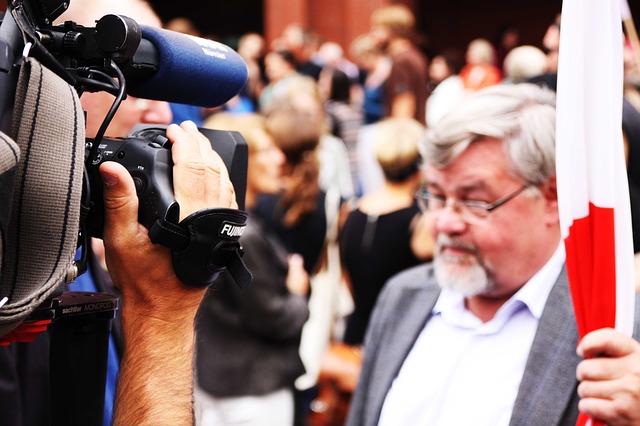
Any organisation can find itself in the news: a product launch, a leadership change, a service failure, an incident at a site or a complaint that spreads on social media. When a journalist calls, the person who answers helps shape the story. Media training in South Africa is usually aimed at:
Journalists have a job to do, usually on a tight deadline. Treating them as a nuisance rarely helps your organisation; helping them get the facts right usually does. A few principles go a long way:
A media statement, or press release, gives journalists your organisation’s position in writing so that it can be quoted accurately. A good statement is short and clear:
Check every fact, keep jargon out and agree in advance who must approve a statement before it is released, so that approval does not take a day when the story is moving in hours.
Most interviews go wrong because the spokesperson arrived unprepared. Before any interview:
A crisis is the worst time to work out who speaks, who approves and who must be told. A basic crisis communication plan settles this in advance: how to gauge how serious an incident is, who sits on the response team, who the spokesperson is, how information will be distributed to staff, customers, the media and other stakeholders, and how the overall impact will be tracked afterwards.
When a crisis breaks, a short holding statement buys time. Acknowledge what has happened, show concern for anyone affected, say what you are doing and say when you will give an update. Then update as promised. Speak with one voice, tell your own employees before or at the same time as the public, and correct mistakes quickly rather than defending them.
Media relations is one part of public relations. Reputation is also shaped by how staff talk about the organisation, how it uses social media, how it handles complaints and whether it keeps its promises. Clear employee communication, consistent messages across every channel and the habit of monitoring what is said about you all make it easier to be believed when something goes wrong.
BOTI’s Media and Public Relations Course is a one-day public relations short course that prepares spokespeople to face the press at a launch, a leadership change or a crisis. It covers:
A one-day course gives practical tools; it is not a public relations qualification. BOTI also offers customised courses across the country, so a team can train together on the situations it is most likely to face.
The courses in this list are not accredited. They are delivered as professional skills programmes, and delegates receive a BOTI certificate of attendance. For a short session, BOTI’s people and communication masterclasses run live online for 3 hours.
Phone 011 882 8853 or email [email protected], or fill in the form and we will get back to you. You can also browse all BOTI courses.
BOTI’s course covers networking and first impressions, business writing (letters, proposals, reports and executive summaries), setting SMART objectives, media relations for television, print and the web, issues and crisis communication planning, social media as a PR tool, and employee communication, including verbal and non-verbal communication, email etiquette and negotiation.
The course runs for one day. BOTI delivers it in-house at your premises, at its venue in Sunningdale, Johannesburg, or online, so a team can train together without travelling. It is not an accredited course, and delegates receive a BOTI certificate of attendance. Call 011 882 8853 or email [email protected] to arrange a date for your group.
The media relations component looks at working with television, print and online media, including a web presence, blogs and the internet. It sits alongside a crisis communication component that covers gauging the level of an impending crisis, offering suggestions and insights, deciding how information will be distributed and tracking the overall impact of what is communicated.
Agree two or three key messages, list the difficult questions you are likely to face and prepare honest answers, and practise giving short, clear replies. Find out the journalist’s deadline and the angle of the story beforehand, stick to facts you can confirm, and assume that anything you say may be published.
No. The Media and Public Relations course is a practical short course that is not accredited. It is delivered as a professional skills programme, and delegates receive a BOTI certificate of attendance rather than NQF credits. It suits staff who deal with the media and the public and need practical tools rather than a formal qualification.
To prepare your spokespeople and communication staff, BOTI runs this one-day media and PR course in-house at your premises, at our venue in Sunningdale, Johannesburg, or online. It is not accredited, and delegates receive a BOTI certificate of attendance. Call 011 882 8853 or email [email protected] to book a date for your team.
About Us




Monday to Friday, 08:00–17:00. After hours, we reply on the next working day – or call 011 882 8853.
Copyright text 2026 by Business Optimization Training Institute.