How to Manage the Invisible Weight of Change

In 2026, the professional landscape is inseparable from the global one. We are all aware of the “vibrations” from external events – shifts in the economy, global tensions, and resource fluctuations – that create an atmosphere of uncertainty. When these external pressures meet internal workplace transitions, the result can be overwhelming. As leaders and professionals, our task is to provide the structure and the “heart” required to steer the ship through these choppy waters.

Communication as a Safety Net

The first casualty of rapid change is often clarity. When things are moving fast, communication shouldn’t just be frequent; it must be grounded and human.
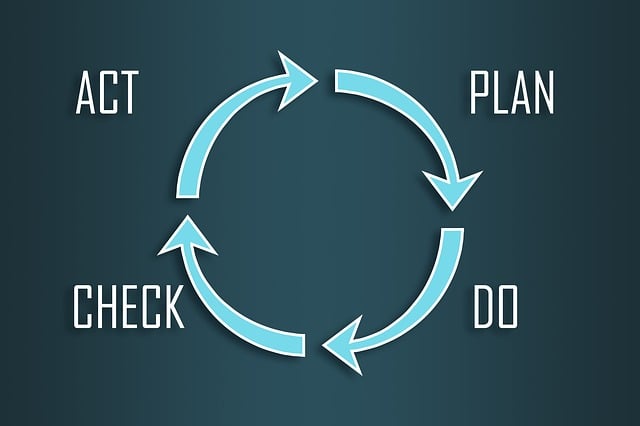
  • Why it helps: Clear communication reduces the “background noise” of anxiety, allowing the team to focus on the “Human Engine” of their work.
  • Tip 1: Use “The Rule of Three.” When explaining a change, focus on three clear points: What is changing, Why it’s happening, and How it affects the individual.
  • Tip 2: Practice “Active Feedback Loops.” Don’t just broadcast information; create channels where the team can report back on how the change is landing on the ground.

The Power of “Micro-Certainty”

In a complex ecosystem, “Big Picture” goals can sometimes feel too far away or too fragile. The antidote to a sense of powerlessness is creating “Micro-Certainty.”

  • Why it helps: It restores a sense of competence and control, which are the primary drivers of workplace motivation.
  • Tip 1: Implement “Daily Huddles.” A quick 10-minute check-in to set the goals for the next eight hours provides a predictable anchor for the day.
  • Tip 2: Protect the “Unchangeables.” Identify rituals or processes that will not change, such as a Friday morning coffee or a specific team meeting. These provide a sense of continuity.

The Emotional Arc

Change management is often treated as a logical project, but it is fundamentally a human experience. People move through stages of denial, resistance, and exploration before reaching commitment.

  • Why it helps: Acknowledging the “Human Element” prevents burnout and ensures that the transition is sustainable in the long run.
  • Tip 1: Normalize the struggle. Use phrases like, “It’s natural to feel a bit unsettled right now,” to validate your team’s feelings without over-egging the situation.
  • Tip 2: Reward the “Early Adopters.” Highlight those who are finding creative ways to handle the new reality. Their success will act as a roadmap for others.

Cultivating Cognitive Flexibility

The most successful organizations are those that can pivot without breaking. This requires a shift from a “Fixed Mindset” to a “Growth Mindset.”

  • Why it helps: Cognitive flexibility allows for “Strategic Agility” – the ability to see an obstacle not as a wall, but as a puzzle to be solved.
  • Tip 1: Conduct “After-Action Reviews.” When a new process is tried, ask: What did we expect? What actually happened? What can we learn?
  • Tip 2: Encourage “Role-Storming.” Have team members look at a problem from the perspective of a different department or a client. This breaks the “we’ve always done it this way” cycle.

Ethical Stewardship in Times of Flux

High-level leadership is most visible during a crisis. Managing change with conscience and accountability ensures that even if the path is difficult, the integrity of the team remains intact.

  • Why it helps: Fairness and transparency are the “glue” that holds a team together when external forces are trying to pull them apart.
  • Tip 1: Be the “Umbrella.” Protect your team from unnecessary “noise” or panic from higher levels of the organization so they can stay focused.
  • Tip 2: Focus on long-term sustainability. Ask yourself: “Will this change protect our people and our organization’s future two years from now?”

Rooted in Purpose, Moving with Agility

Change is not something to be feared; it is the environment in which we prove our resilience. By focusing on transparent communication, small certainties, and emotional intelligence, we turn “uncertainty” into “opportunity.” In 2026, the mark of a true professional is the ability to remain unshakable – not because the world is quiet, but because their “inner compass” is steady.

Professional growth during times of change is the highest form of excellence. It is a personal renaissance that prepares you for whatever the future holds.

Please Contact Us Now - We Will Respond in 15 Minutes


    Administrative Contracting Accredited

    Software & IT Accredited

    Accredited Courses Unit Standard

    Leadership & Management Accredited

    Process Improvement Accredited

    Soft Skills Non-Accredited

    Leadership & Management Non-Accredited

    Software & IT Non-Accredited

    Top Rated

    Business Optimization Training Institute (Pty) Ltd · 97 Greenlands Crescent, Sunningdale, 2192, Johannesburg · Reg 2017/286086/07 · VAT 4770208033 · Level 1 B-BBEE Contributor · 011 882 8853 · Facebook · LinkedIn
    © 2026 Business Optimization Training Institute. All rights reserved. · Privacy Policy
    Don’t Wait to Start Training — Contact us Today