
Free Training & Career Tips... Subscribe to Get Weekly Career Tips

By Subscribing You are Agreeing to Terms and Conditions
Positive affirmation is the practice of repeating short, positive, present-tense statements to direct your attention, steady your mood and support the habits you want to build. You can practise it alone in a few quiet minutes each morning or evening. At work it sits naturally alongside goal setting, confidence building and stress management, which BOTI covers in its personal effectiveness masterclasses.
Before looking at how to activate the power and potential of positive affirmation, it helps to pause and reflect. What are we attracting into our lives through our thoughts, words and actions? Any new season or new year brings possibilities, opportunities and a host of unknowns waiting to be explored. This is where the practice of positive affirmation comes in.
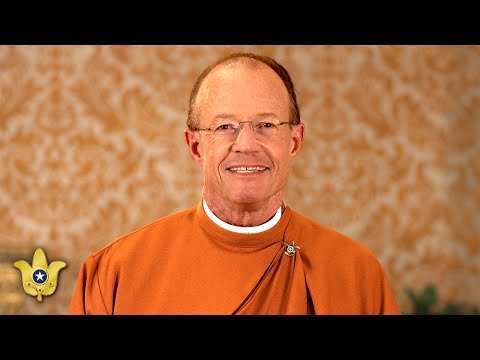
Long before affirmations became part of popular self-help, Paramahansa Yogananda, an Indian monk, yogi and spiritual teacher, was teaching audiences in India how to use affirmations to draw on the healing capacity he believed lies within every human being. He brought these teachings to American audiences in the 1920s. Through the 1930s and 1940s he regularly opened or closed his services by leading those present through an affirmation for healing, for strengthening willpower or devotion, or for awareness of the presence of God. His affirmation techniques are still widely practised today.
In his book Scientific Healing Affirmations, Paramahansa Yogananda explained the technique as follows:
“Words saturated with sincerity, conviction, faith, and intuition are like highly explosive vibration bombs, which, when set off, shatter the rocks of difficulties and create the change desired. Sincere words or affirmations repeated understandingly, feelingly, and willingly are sure to move the Omnipresent Cosmic Vibratory Force to render aid in your difficulty. Appeal to that Power with infinite confidence, casting out all doubt; otherwise, the arrow of your attention will be deflected from its mark.”

Yogananda recommended practising affirmations straight after waking up or just before bedtime. Sit in a meditation posture if you can, or sit comfortably in a chair that supports your back. Keep your spine upright and close your eyes. In his method, you then focus your attention on the medulla oblongata, at the base of the skull where the brainstem meets the spinal cord. Clear your mind of restlessness and worries before you begin.
Choose one of the affirmations below, which Yogananda recommended. Repeat it aloud at first. Then say it more softly and more slowly until your voice becomes a whisper. Move to repeating it mentally, aiming for deep, uninterrupted concentration. As you sense a growing peace, Yogananda taught that you should deepen your concentration further, so that the affirmation takes hold. You can also write your own affirmations to suit your circumstances.
“I am submerged in eternal light. It permeates every particle of my being. I
am living in that light. The Divine Spirit fills me within and without.”
“God is within and around me, protecting me; so I will banish the fear that
shuts out His guiding light.”
“I know that God’s power is limitless; and as I am made in His image, I, too,
have the strength to overcome all obstacles.”
“I relax and cast aside all mental burdens, allowing God to express through
me His perfect love, peace, and wisdom.”
“Thy light of goodness and Thy protective power are ever shining through me. I saw them not, because my eyes of wisdom were closed. Now Thy touch of peace has opened my eyes; Thy goodness and unfailing protection are flowing through me.”
“My Heavenly Father, Thou art Love, and I am made in Thine image. I am the cosmic sphere of Love in which I behold all planets, all stars, all beings, all creation as glimmering lights. I am the Love that illumines the whole universe.”
“I will help weeping ones to smile, by smiling myself,
even when it is difficult.”
“I will radiate love and goodwill to others, that I may open
a channel for God’s love to come to all.”
In Scientific Healing Affirmations, Yogananda also gives guidance on how to use affirmations effectively:
“After you have sown in the soil of Cosmic Consciousness your vibratory prayer-seed, do not pluck it out frequently to see whether or not it has germinated. Give the divine forces a chance to work uninterruptedly.”
“As one uses different affirmations, his attitude of mind should change; for example, will affirmations should be accompanied by strong determination; feeling affirmations by devotion; reason affirmations by clear understanding. When healing others, select an affirmation that is suitable to the conative, imaginative, emotional, or thoughtful temperament of your patient. In all affirmations intensity of attention comes first, but continuity and repetition mean a great deal, too. Impregnate your affirmations with devotion, will, and faith, intensely and repeatedly, unmindful of the results, which will come naturally as the fruit of your labours.”
Yogananda sets out his principles for using focused thought, not only for physical wellbeing but also for meeting challenges and succeeding in life generally. His book gives detailed guidance and a wide range of affirmations covering areas such as healing the body, building confidence, awakening wisdom and breaking bad habits. Affirmations are a personal and spiritual practice. They do not replace medical or psychological care, and anyone struggling with their health or with anxiety should also speak to a qualified professional.
You do not need a spiritual framework to use affirmations at work. Many people use them in a simple, practical way: as short reminders of how they intend to think and behave before a demanding meeting, a presentation or a difficult conversation. The guidelines below help make workplace affirmations useful rather than empty.
Teams can use the same idea through agreed statements of intent, for example “We respond to every customer query clearly and courteously”. Managers can repeat these in team meetings and back them up with clear standards and regular feedback.
Social media gives us a modern analogy. On platforms such as Facebook and TikTok, the algorithms notice what you watch or read and send you more of the same content. Our attention behaves in a similar way. The thoughts and words we repeat most often tend to shape what we notice, what we expect and how we respond. Seen this way, positive affirmations are a deliberate “search” for the kind of life and work we want to build.
Activating the power of positive affirmation is about using the ‘word’ to express our intentions and act on them. As a final word, those who share the article’s faith may bear in mind the scripture that all things were created through the ‘word’.
Quotations are from Paramahansa Yogananda, Scientific Healing Affirmations.
Positive affirmation is the practice of repeating short, positive statements in the first person and present tense. The aim is to focus your attention, steady your mood and reinforce the behaviour or outlook you want to build.
Sit comfortably with an upright spine, ideally just after waking or before bed. Choose one affirmation and repeat it aloud, then more softly, then silently, while concentrating fully on its meaning. Repeat the practice daily.
Affirmations can help people prepare for demanding situations and keep their attention on the behaviour they want. They work best when they are specific and believable, and when they are paired with clear goals and actions.
BOTI does not run a dedicated affirmation training course. The closest BOTI options are the Personal Mastery: Goals, Habits and a Growth Mindset masterclass, the Assertiveness and Self-Confidence Course and Stress Management Training.
BOTI does not run a dedicated affirmation training course. If you want to turn a positive mindset into lasting habits at work, the closest BOTI programme is Personal Mastery: Goals, Habits and a Growth Mindset. Related courses include the Assertiveness and Self-Confidence Course, Stress Management Training, Goal Setting and Getting Things Done and Mastering Emotional Intelligence. Training runs in-house at your premises, at BOTI’s venue in Sunningdale, Johannesburg, or live online. Call BOTI on 011 882 8853 or email [email protected], or request a quote.
This course is not accredited. It is delivered as a professional skills programme, and delegates receive a BOTI certificate of attendance.
About Us




Monday to Friday, 08:00–17:00. After hours, we reply on the next working day – or call 011 882 8853.
Copyright text 2026 by Business Optimization Training Institute.