
Free Training & Career Tips... Subscribe to Get Weekly Career Tips

By Subscribing You are Agreeing to Terms and Conditions
A soft skills course teaches the non-technical abilities that shape how people work together: emotional intelligence, communication, collaboration, adaptability and problem-solving. BOTI runs practical, short soft skills training for South African teams, from one-day workshops to multi-day programmes for managers. You can see the full range in our workplace essentials and soft skills training courses.
Disruptive events in recent years have created uncertainty on many levels. Power interruptions, economic pressure and humanitarian crises around the world make it hard to keep a level head. Yet uncertain times also show us what matters most, personally and professionally. The question is not only what we are trying to achieve, but how we act in a world that keeps changing.
Shifts in perspective highlight the non-technical competencies that all of us, and especially our leaders, need to develop in how we handle ourselves. These are known as ‘soft skills’. They can be defined as a set of skills and positive character attributes that improve work performance, productivity and relationships. Soft skills are closely linked to emotional intelligence (EQ), and include attributes such as empathy, resilience, time management and problem-solving. In contrast, ‘hard skills’ are technical expertise, theoretical knowledge, operational proficiency and task-specific competencies that let people perform in their particular roles and disciplines.
Many employers now look for people who show emotional intelligence and who can communicate and collaborate well with their teams. Hard skills are easy to quantify and measure. Soft skills are harder to pinpoint, but they matter just as much.
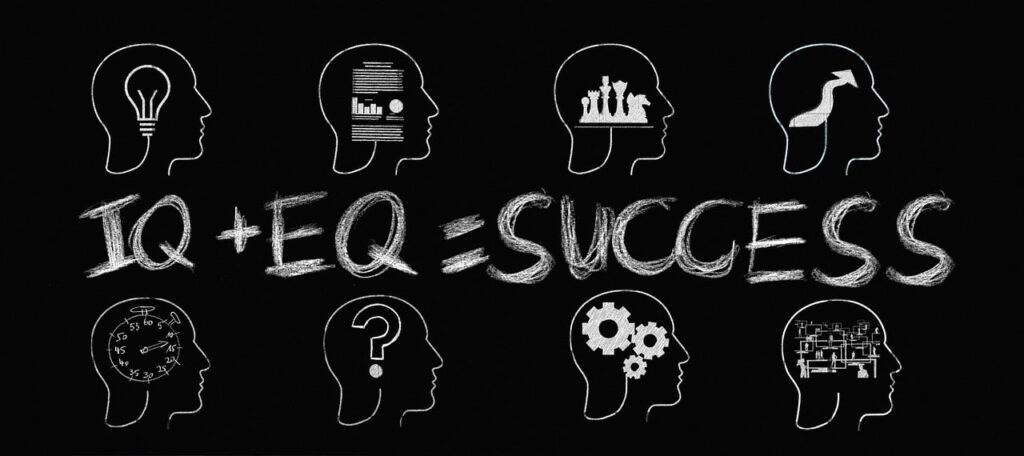
Employees with strong soft skills can have a significant effect on how well an organisation functions, both inside its own structure and in its wider industry. Technical expertise and computational skills used to be the main requirements for employability. Soft skills are now seen as essential, and in some roles they count for more than technical knowledge.
The traditional workplace has changed a great deal. Many offices now include breakout spaces, social areas and quiet spaces, and many people work from remote offices. Smartphones, computers and virtual meeting platforms have changed how we work and have given us more flexibility in our personal and professional lives.
Succeeding in a more flexible workplace demands stronger communication skills and the ability to collaborate and interact with others, often across screens rather than across a desk. Some soft skills come naturally, and others can be learned and practised. Communicating clearly, listening well and delegating effectively are good examples. Here are some tips on how to build some of the most important soft skills during times of uncertainty.
Emotional intelligence lets you lead with empathy and compassion. When communicating with teams and other stakeholders, leaders need to recognise the uncertainty and anxiety employees may be feeling and show concern, while still giving clear insight and guidance. In uncertain times, employees rely on their leaders for a sense of stability and hope.
A practical starting point is to notice your own reactions before you respond. Pause, name what you are feeling, and ask what the other person may be experiencing. Over time, this habit makes difficult conversations calmer and more productive.
To build strong team connections, leaders should be transparent and honest when they communicate. They should not mask a situation, hide unwelcome news or avoid explaining why the business model or direction is changing. Leaders who hold back the facts risk being seen as untrustworthy and lacking credibility, and that can hurt business performance later on.
In practice, transparency means saying what you know, what you do not yet know and when you will update people. Regular, short updates usually build more trust than one long announcement after the fact.
Real collaboration starts when people know they are in this together. When team members understand each other and show empathy, unity grows and teamwork improves, especially when difficult tasks and projects are on the table. Agree on shared goals, make roles clear and give everyone a fair chance to contribute in meetings, including colleagues who join online.
Adapting to changing circumstances starts with an open mindset. This means accepting change rather than resisting it, and becoming good at solving problems when conditions are difficult. It is easier to adapt when you have a range of ideas and solutions to draw on. For each project, list as many alternatives as you can for getting the job done, and get into the habit of testing ideas so that you keep learning and refining your approach.
In uncertain times, people rely on their leaders for guidance on how to move forward. Reliable and trustworthy leadership is therefore critical for business success. To lead effectively and transparently, leaders should draw on their soft skills to build trust within their teams, while working to reduce workplace stress and anxiety.
A good soft skill development programme is practical. Delegates should spend most of their time practising, not listening to theory. Typical topics include:
Before booking soft skills training, decide which two or three behaviours you most want to change in your team. That makes it easier to choose the right course and to see whether the training has made a difference back at work.
Managers and team leaders need the same core soft skills as everyone else, plus a few more: giving feedback, delegating, managing performance, handling conflict and leading people through change. Management soft skills training should use real workplace scenarios, such as a difficult performance conversation or announcing a change in direction, so that managers can rehearse before they face the real situation.
BOTI’s soft skills courses can be run for one team or for mixed groups. Courses that suit the topics in this article include:
For a closer look at the individual skills, read our guide to the 10 soft skills you need at work.
A soft skills course is practical training in the non-technical abilities people use every day at work, such as communication, emotional intelligence, teamwork, adaptability, problem-solving and time management. Delegates practise these skills through discussion, role-play and real workplace examples.
Managers benefit most from courses on emotional intelligence, giving feedback, delegation, conflict resolution and leading change. BOTI’s Taking Charge as a Leader programme and its Leadership and People Management course focus on these management soft skills.
Yes. Some people find certain soft skills come more naturally, but communication, listening, empathy and problem-solving can all be improved with structured practice and feedback. Training works best when delegates apply what they learn at work straight afterwards.
Yes. BOTI runs soft skills training in-house at your premises, at its venue in Sunningdale, Johannesburg, or live online, so you can choose the format that suits your team.
To build these skills in your team, book BOTI’s 10 Soft Skills You Need course. Training runs in-house at your premises, at BOTI’s venue in Sunningdale, Johannesburg, or live online. Call BOTI on 011 882 8853 or email [email protected], or request a quote. This course is not accredited. It is delivered as a professional skills programme, and delegates receive a BOTI certificate of attendance.
About Us




Monday to Friday, 08:00–17:00. After hours, we reply on the next working day – or call 011 882 8853.
Copyright text 2026 by Business Optimization Training Institute.