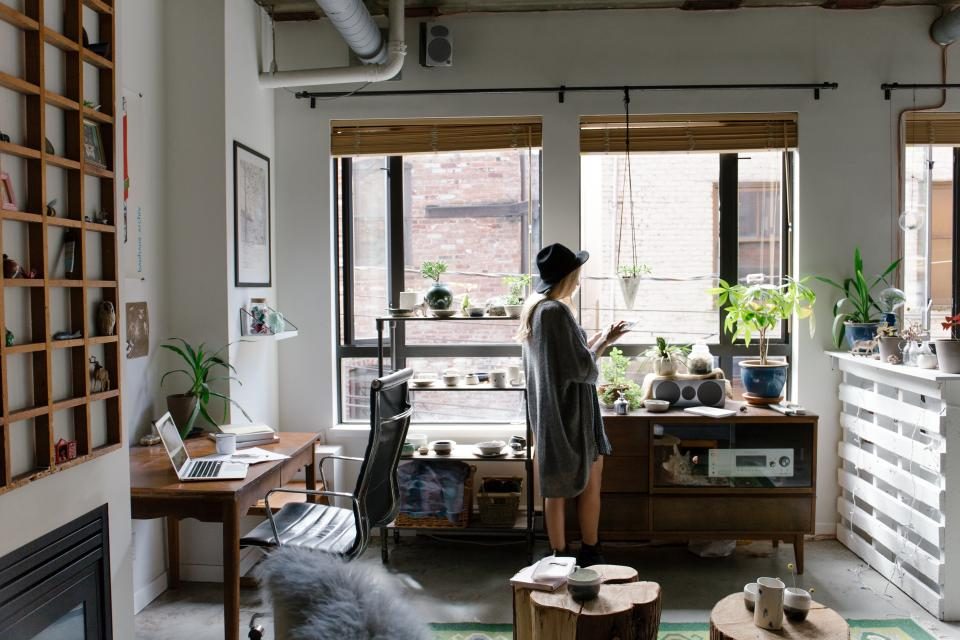
Interior decorating skills can be learned. Good rooms come from a few teachable principles: a clear focal point, scale and proportion, colour, lighting and careful planning on paper. BOTI does not run an interior decorating course, but its graphic design, technical drawing and CAD courses build the visual and drawing skills that decorators and design assistants use every day.
Interior decorating – is there science in the art?
When people think of interior decorating, they often assume it takes a specialist with a natural eye. Talent helps, but much of what makes a room work follows principles that can be taught and practised. Nobody is simply born with the skill or locked out of it for good. Learning those principles, and then applying them room after room, is how decorators become confident.
To be clear from the start: BOTI does not offer an interior decorating or interior design course. BOTI’s closest courses are in design and drawing. These include Graphic Design Fundamentals Training for layout, colour and composition, Introduction to Technical Drawing for measured plans, and CAD courses for anyone who wants to draw spaces digitally. The principles below are a practical starting point, whichever route you take.
Interior decorating skills you can learn
Give the room a focal point
Every room needs somewhere for the eye to land. Valuable items and investment pieces, such as a good artwork, a statement chair or a family heirloom, should sit in clear view rather than be tucked away out of modesty. The owner chose or earned these pieces, and the room should show them off. A decorator places them front and centre, then arranges furniture and lighting so they read as the main feature of the room.
Add height to a room
You cannot raise a ceiling without building work, but you can create the illusion of height. One approach is to keep most furniture low and add a few pieces with strong vertical lines. A large mirror or a tall grandfather clock draws the eye upwards and makes the room feel taller than it is. Curtains hung close to the ceiling, tall shelving and vertical patterns work the same way. The aim is a room that is pleasing to the eye and comfortable to live in.
Work with scale and proportion
Furniture should suit the size of the room and the other pieces in it. An oversized couch can swamp a small lounge, while very small pieces can look lost in a large open-plan space. Before buying, measure the room and the furniture. Leave walkways clear and check that tables, rugs and lights relate sensibly in size to what sits around them.
Use colour with a plan
Colour changes how big, warm or calm a room feels. Many decorators choose one main colour, a secondary colour and a small accent, and repeat them across walls, fabrics and accessories so the room hangs together. Light colours tend to make a space feel more open. Darker colours can make a large room feel more intimate. Always test paint samples in the room’s own light, because the same colour can look very different by morning and by evening.
Layer the lighting
One ceiling light rarely does a room justice. Combine general lighting with task lighting for reading, cooking or working, and accent lighting that picks out the focal point. Lamps at different heights also help with the illusion of height and make the room usable at different times of day.
Balance and repetition
Balance does not have to mean perfect symmetry. A heavy piece on one side of a room can be offset by a group of smaller items on the other. Repeating a shape, colour or material in two or three places gives a room a deliberate, finished look.
Plan on paper before you buy
A measured floor plan saves money and mistakes. Drawing the room to scale, with doors, windows and plug points marked, lets you test furniture layouts before anything is delivered. This is where drawing and CAD skills become useful for anyone who decorates professionally or manages office fit-outs.
Interior decorating vs interior design
The two terms are often used interchangeably, but they usually mean different things. Interior decorating focuses on the look and feel of a space: furniture, colour, fabrics, lighting and accessories. Interior design often goes further into space planning, layouts, and how a space is built and used. That work typically calls for measured drawings and, increasingly, drawing software. If you are weighing up interior decorating courses or interior design courses, look at how much of each course is styling and how much is planning and drawing. Then choose based on the work you want to do.
Where BOTI’s design and drawing courses fit
If you, or the people in your organisation, handle office layouts, showroom displays, fit-outs or visual presentation, these BOTI courses build the related skills:
- Graphic Design Fundamentals Training (2 days): design principles, colour, layout and composition.
- Introduction to Technical Drawing Course (2 days): reading and producing measured drawings.
- AutoCAD Essentials (2D) (3 days): drawing floor plans and layouts digitally.
- Autodesk Revit Architecture Essentials (3 days): modelling buildings and interior spaces.
If you are not sure which course suits your team, request a quote and tell BOTI what the work involves.
Frequently asked questions
Does BOTI offer an interior decorating course?
No. BOTI does not run an interior decorating or interior design course. Its closest courses are Graphic Design Fundamentals Training, Introduction to Technical Drawing, AutoCAD Essentials (2D) and Autodesk Revit Architecture Essentials, which build design, drawing and space-planning skills.
What interior decorating skills can be learned?
Most decorating skills can be learned. They include creating a focal point, adding the illusion of height, working with scale and proportion, planning colour, layering lighting, balancing a room and drawing a measured floor plan before buying furniture.
Do interior decorators need drawing or CAD skills?
Not always, but measured drawings help decorators test layouts and explain ideas to clients. Technical drawing and CAD skills are especially useful for anyone involved in space planning, office fit-outs or work with architects and builders.
Do BOTI’s design courses come with a certificate?
BOTI’s graphic design and CAD short courses are not accredited. Delegates receive a BOTI certificate of attendance.
To build the visual and layout skills behind good interiors, start with Graphic Design Fundamentals Training. Call BOTI on 011 882 8853 or email [email protected]. Training runs in-house at your premises, at BOTI’s venue in Sunningdale, Johannesburg, or live online. This course is not accredited. It is delivered as a professional skills programme, and delegates receive a BOTI certificate of attendance.
Please click on link below for our related public course/s
Book Now or Obtain Instant Quote
We also offer customised courses across the country. Click on the link to get a proposal or book your course:
Book This Course Or Obtain Quote – Now
OR
FOR CELL PHONES CLICK TO CALL
Please Fill in the Form